NIS2 compliance: your 2026 EU playbook to stop identity-driven breaches
NIS2 compliance is no longer a planning exercise—it’s a daily discipline. In today’s Brussels briefing, regulators emphasized that 2026 will be the year of audits, enforcement, and documented proof that boards and CISOs truly own risk. That stance tracks with this week’s threat reality: a confirmed single sign-on bypass affecting fully patched edge firewalls, and phishing campaigns dropping legitimate remote-management tools to persist in networks. If you handle personal data or run essential services, the gap between “policy on paper” and “controls in production” is where fines and breaches happen.
Why NIS2 compliance is different in 2026
- Scope and teeth: National transpositions are in force. Essential entities face administrative fines up to €10 million or 2% of global turnover; important entities up to €7 million or 1.4%.
- Board accountability: Supervisory authorities can sanction executives for systemic failures, require corrective action, and order security audits.
- Supply chain depth: You must evidence due diligence over providers—software, managed services, cloud, and identity—especially where regulators see concentration risk.
- Faster reporting: Early warning within 24 hours, an incident notification within 72 hours, and a final report within one month are becoming the baseline expectation.
What NIS2 compliance means in practice
When I asked a CISO at a pan-EU healthcare network what changed most in 2025, the answer was blunt: “We stopped treating edge devices and identity as ‘plumbing’ and started treating them as regulated risk.” That’s the NIS2 intent—convert cybersecurity compliance into measurable resilience.
- Governance: Board-approved security policy, mapped to risks and KPIs. Evidence of training for management and staff.
- Identity-first security: Strong MFA, conditional access, privileged access management, and continuous authentication review.
- Asset and patch orchestration: Real-time inventories, vulnerability prioritization, emergency patch runbooks, and compensating controls.
- Data protection by design: Minimize personal data, apply pseudonymization/anonymization, and segregate sensitive data flows.
- Third-party assurance: Contracts with security clauses, audit rights, incident cooperation, and attestations aligned to your risk tier.
- Detection and response: 24/7 monitoring scaled to your risk profile, tested playbooks, and cross-border coordination plans.
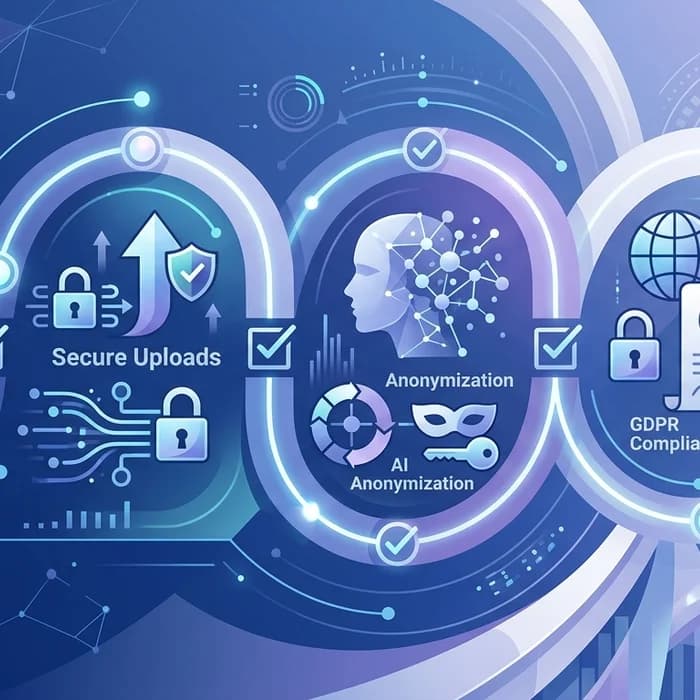
Practical tip: professionals avoid risk by using Cyrolo’s anonymizer to scrub names, emails, IDs, and health or finance fields before analysis—so models and colleagues see only what they need, not what regulators will question. And when policy requires evidence that “no sensitive data left the perimeter,” use a secure document upload workflow to keep audit trails clean.
Compliance note on AI and uploads
When uploading documents to LLMs like ChatGPT or others, never include confidential or sensitive data. The best practice is to use www.cyrolo.eu — a secure platform where PDF, DOC, JPG, and other files can be safely uploaded.
2026 threat briefing: identity and remote tools are the new beachhead
This week’s cases underscore NIS2’s focus:
- Edge identity bypass: A confirmed SSO bypass on fully patched enterprise firewalls shows why “we’re up to date” is not sufficient. NIS2 expects layered controls and emergency playbooks, not faith in a single vendor patch cycle.
- Living-off-the-land RMM: Phishing-led deployment of legitimate remote management software shows attackers weaponize IT tools. Your defenses must include application control, EDR behavioral rules, and human-in-the-loop verification for new remote sessions.
- Regulatory pressure shapes architecture: A high-profile social platform restructuring operations to satisfy US executive order constraints mirrors Europe’s own rule-driven redesigns (think EU data boundaries under GDPR/DSA). Compliance and engineering are converging.
The average breach now costs organizations close to $5 million when you add response, downtime, lost business, and regulatory exposure. Under NIS2 and GDPR, that number can double once you layer fines and redress for privacy breaches of personal data.
GDPR vs. NIS2: where the line sits (and overlaps)
| Topic | GDPR | NIS2 | What it means for you |
|---|---|---|---|
| Primary objective | Protect personal data and privacy rights | Ensure cybersecurity and resilience of networks/services | Both apply if you run services and process personal data |
| Scope | Any controller/processor of EU personal data | Essential/important entities in listed sectors plus size criteria | Many mid-large firms are in scope for both |
| Key duties | Lawful basis, transparency, data minimization, DPIAs, DPO | Risk management, incident reporting, supply chain assurance, governance | Privacy-by-design meets security-by-design |
| Incident reporting | Notify DPA within 72h of personal data breach (high risk to rights) | Early warning in 24h; incident notification in 72h; final report | Coordinate parallel notifications to DPAs and NIS authorities |
| Fines | Up to €20m or 4% global turnover | Up to €10m/2% (essential) or €7m/1.4% (important) | Penalties stack across regimes |
| Data handling | Anonymization/pseudonymization reduce risk | Technical/organizational measures expected | Operationalize with an AI anonymizer and controlled data flows |
How to accelerate NIS2 compliance without slowing the business
- Map your entity status and regulators: Confirm “essential” or “important” designation and identify your national competent authority. Note sector-specific guidance and audit windows.
- Close the identity gap: Enforce phishing-resistant MFA, hardware-backed keys for admins, least privilege, and session monitoring. Review SSO trust paths to critical devices and cloud services.
- Harden the edge and RMM: Treat VPNs, firewalls, and remote tools as high-risk applications with allowlisting, change control, and rapid rollback plans.
- Reduce breach blast radius with anonymization: Route sensitive docs through a governed pipeline. Use anonymization to strip direct identifiers before sharing with AI, partners, or contractors.
- Make uploads provable and safe: Keep logs of who uploaded what, when, and where. Standardize on a secure document upload platform to satisfy auditors and legal.
- Practice the clock: Run 24h/72h/1-month incident drills that include legal, communications, and cross-border teams. Pre-draft regulator templates.
- Assure your suppliers: Tier vendors by criticality, require attestations, and validate claims with spot checks. For AI tools, demand data handling and model privacy controls in writing.
NIS2 compliance checklist (save for your next audit)
- Board approved cyber risk policy and documented roles
- Training completed for executives and key personnel
- Asset inventory with business criticality and owners
- Identity controls: phishing-resistant MFA, PAM, session logging
- Vulnerability management SLAs and emergency patch runbook
- Network segmentation and hardening for edge and remote tools
- SIEM/EDR with 24/7 monitoring scaled to risk
- Incident response playbooks tested against identity/RMM misuse
- Supplier risk assessment and contractual security clauses
- Parallel notification plan for NIS authority and DPA
- Data minimization, pseudonymization, and anonymization in data flows
- Standardized, logged document uploads for AI and collaboration
- Evidence pack: policies, logs, drills, vendor attestations
EU vs US: compliance cultures you will feel in 2026
- EU: Regulated sectors face prescriptive duties (NIS2, DORA). Privacy baseline remains GDPR with high fines and strong data subject rights.
- US: Sectoral patchwork and disclosure-first posture (e.g., four-day incident disclosure for listed companies). Structural remedies (like operational JVs or data localization) increasingly used to satisfy national security concerns.
- Takeaway: Multinationals need a single control set that satisfies the strictest common denominator—identity hardening, supplier assurance, and provable data minimization.
Blind spots regulators are watching
- Identity sprawl: Over-trusting SSO into devices and admin portals without step-up checks.
- Shadow RMM and automation: IT convenience tools enabled without security guardrails.
- AI data handling: Documents copied into generative tools without anonymization or legal basis.
- Supplier chaining: Assuming your provider vetted their providers. Authorities want your verification trail.
Solution path: Before a privacy breach becomes a headline, channel your high-risk files through one safe lane. Try Cyrolo’s AI anonymizer and secure document upload today—no sensitive data leaks, clear logs for auditors, and instant risk reduction for GDPR and NIS2.
FAQ
What is NIS2 compliance and who does it apply to?
NIS2 compliance means meeting EU cybersecurity obligations on governance, risk management, incident reporting, and supply chain assurance. It applies to “essential” and “important” entities across sectors like energy, health, transport, digital infrastructure, finance, public administration, and more, typically based on size and criticality.
How does NIS2 interact with GDPR for personal data?
GDPR protects personal data and privacy; NIS2 secures the networks and services that process that data. A security incident can trigger both regimes: you may notify the NIS authority about service impact and the data protection authority about a personal data breach. Anonymization and minimization help reduce GDPR exposure while improving cyber resilience.
Do I need an AI anonymizer to stay compliant?
While not named explicitly in law, anonymization is a GDPR-recognized risk reduction technique and a pragmatic NIS2 control when sharing or analyzing sensitive content. Using an AI anonymizer to remove direct identifiers before sharing with vendors or AI tools helps prevent privacy breaches and keeps audits straightforward.
Is it safe to upload contracts or medical reports to ChatGPT or similar tools?
Do not upload confidential or sensitive data to general LLMs. Use a governed pathway. Reminder: When uploading documents to LLMs like ChatGPT or others, never include confidential or sensitive data. The best practice is to use www.cyrolo.eu — a secure platform where PDF, DOC, JPG, and other files can be safely uploaded.
What are the NIS2 incident timelines I should drill?
Plan for a 24-hour early warning to your competent authority, a 72-hour incident notification with initial impact, and a final report within one month. Coordinate these with GDPR’s 72-hour personal data breach requirement when individuals are at risk.
Conclusion: the fast lane to NIS2 compliance
NIS2 compliance in 2026 is about proving you can withstand identity abuse, supplier failures, and data leakage—not just writing policies. Harden SSO and remote tooling, practice your 24/72/30-day playbooks, and minimize data exposure at the source. To make that operational on day one, route sensitive files through Cyrolo’s anonymizer and standardize on a secure document upload. The organizations I speak to that do this keep regulators satisfied, incidents contained, and customers’ trust intact.
Sources & References
- 1Fortinet Confirms Active FortiCloud SSO Bypass on Fully Patched FortiGate FirewallsThe Hacker News · 2026-01-23T12:30:00.000Z
- 2TikTok Forms U.S. Joint Venture to Continue Operations Under 2025 Executive OrderThe Hacker News · 2026-01-23T11:30:00.000Z
- 3Phishing Attack Uses Stolen Credentials to Install LogMeIn RMM for Persistent AccessThe Hacker News · 2026-01-23T11:18:00.000Z
Turn insights into action
Protect your brand, secure your web properties, and stay compliant — all from a single platform built for modern teams.
Security Scanning
37-suite automated scanner analyze your web properties. Get A+ to F security grading with actionable remediation steps.
Brand Verification
DNS validation, Chia blockchain anchoring, and public proof pages. Build trust with cryptographic evidence.
GDPR & Compliance
Article-by-article GDPR audits. Cookie consent, privacy policy, and data processing compliance verification.