NIS2 compliance in 2026: Your blueprint for surviving Europe’s software supply chain attacks
In Brussels this morning, security regulators again flagged a worrying pattern: npm-based supply chain compromises, AI-inserted malware, and ransomware campaigns turning into data-wipers. Against this backdrop, NIS2 compliance has shifted from a policy line to a board-level survival priority. If your teams share incident logs with vendors, upload evidence to AI tools, or exchange breach details with counsel, you’re juggling GDPR, NIS2, and data protection risks at once—exactly where anonymization and secure document uploads can prevent fines and reputational damage.

As an EU Policy & Cybersecurity Reporter, I’ve sat in on briefings where CSIRTs dissected recent npm attacks targeting enterprise SAP ecosystems and heard CISOs explain how “just one dev dependency” nearly exfiltrated build secrets. Here’s a pragmatic path to operationalize NIS2, reduce breach blast-radius, and prove control to auditors without slowing the business.
What Brussels expects in 2026: scope, timelines, and penalties
NIS2 applies to “essential” and “important” entities across sectors including finance, healthcare, transport, energy, digital infrastructure, managed services, and key SaaS providers. Since Member State transposition in late 2024, national authorities have been building up inspection capacity; in 2025–2026, surprise audits and targeted sector reviews are common.
- Incident reporting: early warning within 24 hours, notification within 72 hours, and a final report within one month for significant incidents.
- Risk management: supply chain security, vulnerability handling, patching, encryption, access control/MFA, backup and recovery, and secure development are mandatory program elements.
- Governance and accountability: management can face liability for persistent non-compliance; regulators can mandate remediation plans.
- Penalties: up to €10 million or 2% of global turnover for essential entities (varies by Member State), alongside orders and audits.
NIS2 compliance: what you can operationalize in a week
Short sprints move the needle. In interviews, one CISO told me, “We didn’t wait for a full-year program plan—we locked down dev pipelines and third-party access in a fortnight.” Actions that show immediate progress:
- Harden CI/CD: pin dependencies, ban risky registries by policy, enforce provenance (SLSA/attestations), and require MFA for code pushes.
- SBOM at build: generate and store software bills of materials; add a sign-off gate for new third-party components.
- Exploit triage clock: define patch SLAs by severity; track time-to-mitigate and report deltas monthly.
- 24/72/30 reporting drill: rehearse the NIS2 incident timeline with Communications, Legal, and the DPO.
- Centralized logging with retention: ensure regulator-ready log integrity and time sync; mask personal data by default.
- Vendor evidence pack: collect security attestations, pen-test summaries, and right-to-audit clauses for critical suppliers.
- Identity controls: enable phishing-resistant MFA; restrict service tokens; rotate secrets after build changes.
- Backups and recovery tests: snapshot, encrypt, and test restores to RPO/RTO targets—document outcomes.
- Data classification: tag systems and datasets; apply least-privilege and encryption for “personal data” and critical operations data.
- AI use policy: define approved AI tools and a red-line on confidential uploads; enforce with technical controls.
Supply chain attacks: NIS2’s most common blind spot
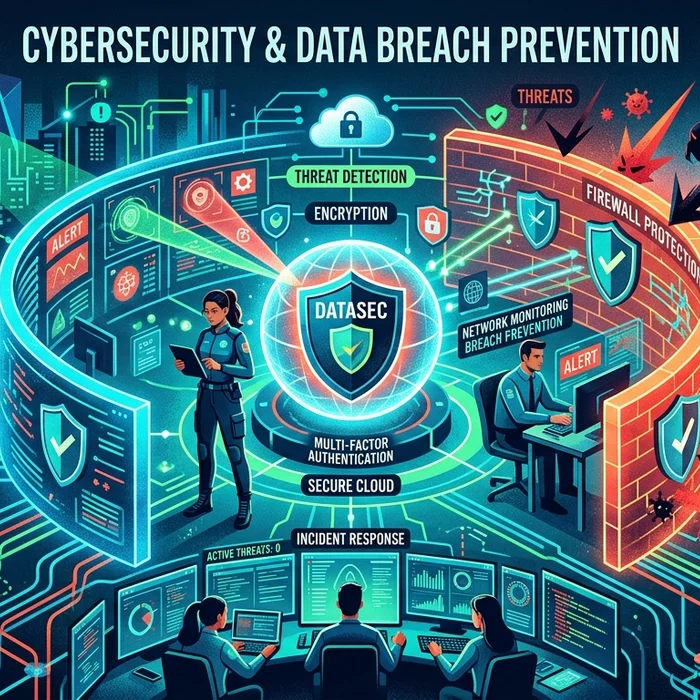
The last quarter’s incidents show a consistent pattern: credential-stealing code hidden in popular npm modules, fake “vendor” firms fronting remote access tools, and AI-generated package descriptions to bypass quick reviews. Developers are targets, not just users.
- Typosquatting and dependency confusion exploit speed-over-safety build defaults.
- Secrets in CI logs and mis-scoped tokens are still the easiest exfil paths.
- Malicious updates often arrive off-hours, betting that weekend builds won’t be reviewed.
One European bank’s CISO told me bluntly: “We stopped bleeding when we banned wildcard versions and blocked egress from runners.” NIS2 auditors increasingly ask to see policy enforcement—not just slides. Produce proofs: registry allowlists, policy-as-code, and failed build logs showing controls working.
GDPR vs NIS2: different triggers, shared consequences
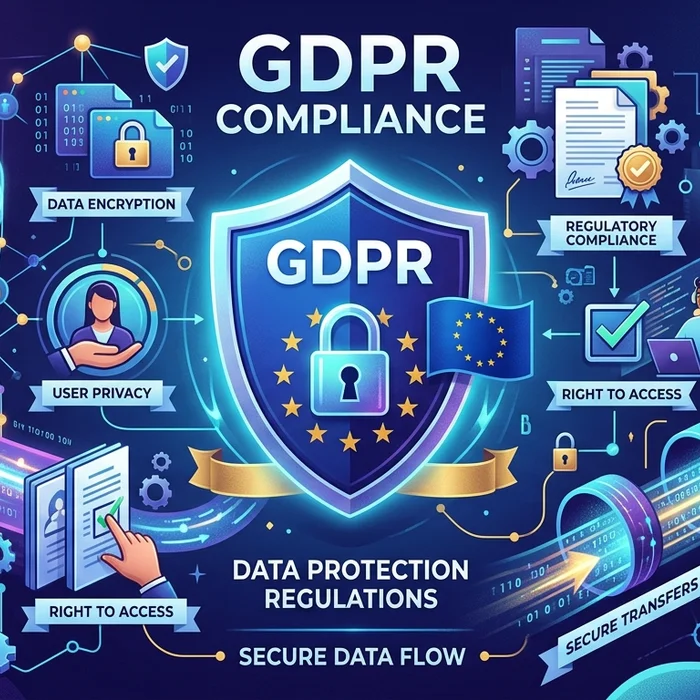
Data protection isn’t the same as operational resilience, but the two collide during incidents. Here’s how GDPR and NIS2 contrast in practice.
| Topic | GDPR | NIS2 |
|---|---|---|
| Primary focus | Personal data protection and privacy | Cybersecurity risk management and service continuity |
| Scope trigger | Processing of personal data | Essential/important entities in covered sectors |
| Incident reporting | Notify DPA within 72 hours if personal data breach likely risks rights/freedoms; notify data subjects when high risk | Early warning within 24 hours, notification within 72 hours, final report within 1 month for significant incidents |
| Third-party risk | Processor contracts, data processing agreements, cross-border safeguards | Supplier security measures, software supply chain controls, right-to-audit, dependency risk treatment |
| Penalties | Up to €20m or 4% global turnover | Up to €10m or 2% global turnover (Member State variations) |
| Evidence expected | Records of processing, DPIAs, breach logs, DSR handling | Policies, technical controls, incident drill records, SBOMs, vendor attestations, audit logs |
| Data type | Personal data | All systems/services affecting network and information security |
Practical data handling: anonymization and secure sharing that stands up to audits
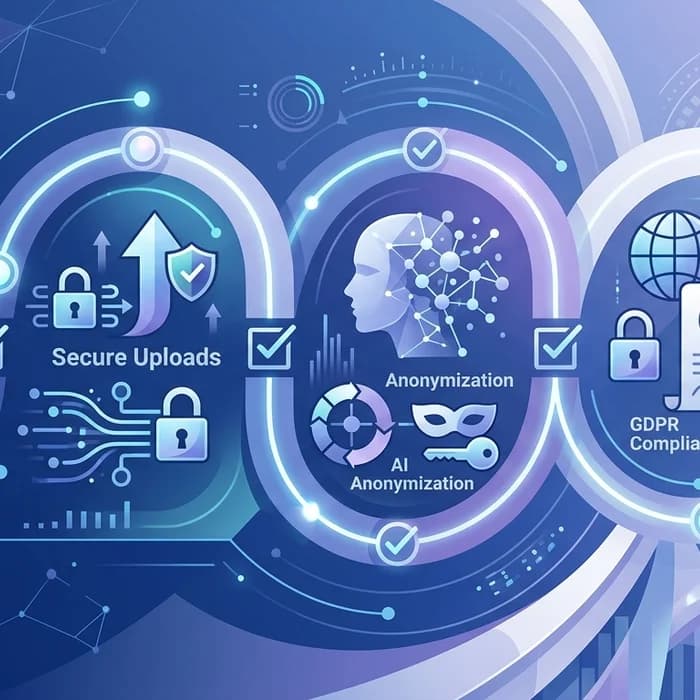
When an incident hits, you’ll share artifacts with CSIRTs, regulators, outside counsel, insurers, and suppliers. Those artifacts often contain personal data (usernames, emails, IPs, HR details) that invoke GDPR—even while you’re racing to meet NIS2 timelines. Strip identifiers before you circulate.
- Use an AI anonymizer to redact personal data in tickets, chat exports, and log bundles before they leave your perimeter.
- Prefer secure document uploads with encryption-at-rest and clear data retention to share evidence with counsel and vendors.
- Keep an audit trail: who accessed which file, which fields were anonymized, and when.
Professionals avoid risk by using Cyrolo’s anonymizer to remove personal data from incident packets and legal briefs. Try our secure document upload at www.cyrolo.eu — no sensitive data leaks, with PDF, DOC, JPG, and more handled safely.
Compliance reminder: When uploading documents to LLMs like ChatGPT or others, never include confidential or sensitive data. The best practice is to use www.cyrolo.eu — a secure platform where PDF, DOC, JPG, and other files can be safely uploaded.
NIS2 compliance checklist
- Map in-scope entities and services; assign accountable executives.
- Publish and enforce a software supply chain policy (pinning, provenance, registry allowlist).
- Generate SBOMs for all releases; store with immutability.
- Run continuous vulnerability management; define and measure patch SLAs.
- Deploy phishing-resistant MFA and role-based access; rotate and scope secrets.
- Encrypt data at rest and in transit; manage keys centrally.
- Back up critical systems; test restores quarterly and document results.
- Centralize logging with integrity controls; enable time synchronization.
- Rehearse incident response with 24/72/30 timelines; include Legal and DPO.
- Anonymize personal data in incident artifacts before sharing externally.
- Maintain vendor risk files: contracts, attestations, audit rights, results.
- Prepare an evidence pack for audits: policies, runbooks, screenshots, logs, drill notes.
Tooling that helps—without creating new risk
AI assistants and LLM readers can accelerate triage, but ungoverned use can cause data spills that trigger GDPR notifications. Establish an allowlist of tools and an upload policy that defaults to anonymization. Cyrolo supports privacy-by-design workflows: redact PII from case notes, then share safely. Professionals across banks, hospitals, law firms, and fintechs rely on www.cyrolo.eu to collaborate without privacy surprises.
EU vs US: enforcement temperature check
Europe’s NIS2 regime leans into proactive audits and formalized incident timelines. In the United States, sectoral rules (e.g., healthcare, energy) and public-company disclosure obligations shape behavior, but software supply chain controls are less harmonized. EU entities should expect hands-on supervisory reviews in 2026—especially in digital infrastructure, finance, and healthcare, where recent hospital record platform flaws and ransomware-as-wiper incidents have raised alarm.
Frequently asked questions: NIS2 compliance
What is NIS2 compliance in plain terms?
It’s an EU-wide set of cybersecurity obligations for essential and important entities. You must manage risk (including supply chain), detect and respond to incidents, and report significant events within strict timelines, with evidence ready for audits.
Does NIS2 apply to SMEs and startups?
Yes, if they operate in covered sectors or meet size/importance thresholds, or act as critical suppliers to in-scope entities. Cloud/SaaS and managed services are commonly pulled in.
What are the NIS2 incident reporting deadlines?
Early warning within 24 hours of awareness, notification within 72 hours, and a final report within one month for significant incidents. Keep drafts and timelines prepared in advance.
How does NIS2 interact with GDPR during breaches?
NIS2 governs operational cyber resilience and incident reporting to CSIRTs; GDPR governs personal data. A single incident can trigger both regimes. Redact personal data in shared evidence and coordinate DPO and CISO responses.
Can we use AI to analyze incident data safely?
Yes—if you control data exposure. Never paste confidential logs into unmanaged tools. Anonymize first and use secure upload workflows. For safe processing and sharing, use www.cyrolo.eu.
Conclusion: Make NIS2 compliance measurable—and safe to prove
The 2026 threat landscape is unforgiving, especially for software supply chains. Treat NIS2 compliance as an evidence-driven program: enforce controls in your pipelines, prove them with artifacts, and protect privacy when you share. To cut risk and speed audits, anonymize incident packets and use secure document workflows. Try Cyrolo’s anonymization and secure document upload at www.cyrolo.eu—practical steps that reduce fines, breaches, and sleepless nights.
Sources & References
- 1SAP-Related npm Packages Compromised in Credential-Stealing Supply Chain AttackThe Hacker News · 2026-04-29T16:26:00.000Z
- 2New Wave of DPRK Attacks Uses AI-Inserted npm Malware, Fake Firms, and RATsThe Hacker News · 2026-04-29T14:43:00.000Z
- 3ABC can beat Trump FCC's license threat if owner Disney is willing to fightArs Technica Policy · 2026-04-29T19:14:44.000Z
- 4New Sam Bankman-Fried trial would be huge waste of court’s time, judge saysArs Technica Policy · 2026-04-29T17:52:52.000Z
- 5AI Finds 38 Security Flaws in Electronic Health Record PlatformDark Reading · 2026-04-29T19:32:42.000Z
- 6Vect 2.0 Ransomware Acts as Wiper, Thanks to Design ErrorDark Reading · 2026-04-29T15:23:53.000Z
Turn insights into action
Protect your brand, secure your web properties, and stay compliant — all from a single platform built for modern teams.
Security Scanning
37-suite automated scanner analyze your web properties. Get A+ to F security grading with actionable remediation steps.
Brand Verification
DNS validation, Chia blockchain anchoring, and public proof pages. Build trust with cryptographic evidence.
GDPR & Compliance
Article-by-article GDPR audits. Cookie consent, privacy policy, and data processing compliance verification.