NIS2 compliance in 2026: A practical playbook for GDPR-aligned security teams
In today’s Brussels briefing, committee members on civil liberties repeated a simple message: NIS2 compliance is no longer optional housekeeping — it’s the operational backbone regulators will check first after a breach. If your organisation already lives under GDPR, you’re halfway there, but NIS2 raises the bar on cyber risk management, incident reporting, and board accountability. Below, I unpack what’s changed in 2026, how NIS2 and GDPR fit together, and how security, legal, and privacy leaders can reduce exposure with tight processes, strong tooling, and safe workflows for AI, anonymization, and secure document uploads.
- NIS2 expands mandatory cybersecurity measures and fast incident reporting (24h early warning, 72h report, final within one month).
- GDPR focuses on personal data; NIS2 targets service continuity and resilience across essential and important entities.
- Boards face explicit oversight duties; fines can reach the higher of €10 million or 2% of global turnover under NIS2.
- 2026 brings tighter supervisory audits and cross-border coordination by EU regulators.
- Practical gaps: vendor risk, secure document uploads, and AI data handling — fix these with robust anonymization and controlled sharing.
What NIS2 changes in 2026 for EU organisations
From banking to healthcare to digital infrastructure, the NIS2 Directive now defines baseline cybersecurity rules that supervisors expect to see operating every day — not just written in a policy binder. During a closed-door huddle this afternoon in Brussels, one MEP told me the priority is “effective risk reduction, fast reporting, and management accountability.” That expectation is showing up in audits.
- Scope: NIS2 captures “essential” and “important” entities across energy, transport, banking, financial market infrastructure, health, water, digital infrastructure, ICT service management, public administration, and more.
- Governance: Senior management must approve, oversee, and be trained on cybersecurity risk management — personal liability can attach for negligence.
- Controls: Risk assessments, business continuity and disaster recovery, incident handling, supply chain security, secure development, multi-factor authentication, and vulnerability management are no longer “nice to have.”
- Reporting: Early warning within 24 hours, an incident notification within 72 hours, and a final report within one month for significant incidents.
- Sanctions: Administrative fines up to €10 million or 2% of worldwide annual revenue for serious non-compliance; corrective measures and public notices are on the table.
NIS2 compliance vs GDPR: How they align — and where they don’t
Legal teams often ask me if NIS2 is “just GDPR for cybersecurity.” Not quite. GDPR centers on personal data protection; NIS2 emphasizes the resilience of critical services. But they overlap in risk assessments, data protection by design, breach notification discipline, and vendor oversight. Harmonizing the two reduces audit pain.
| Area | GDPR | NIS2 | Practical tip |
|---|---|---|---|
| Core focus | Personal data protection and data subject rights | Cyber resilience of essential/important services | Map systems holding personal data and “service-critical” systems together |
| Risk management | DPIAs, security of processing | Mandatory risk management measures across tech and process | Use one risk register; tag GDPR- and NIS2-relevant risks |
| Incident reporting | Notify DPAs/data subjects if personal data breach likely risks rights/freedoms | 24h early warning, 72h notification, one-month final report for significant incidents | Build a single playbook that meets both clocks |
| Supply chain | Processor contracts, due diligence | Explicit supply chain security and dependency risk | Tier vendors by criticality; require security attestations |
| Sanctions | Up to €20m or 4% global turnover | Up to €10m or 2% global turnover | Calibrate board risk appetite across both regimes |
| Governance | Controller/processor roles, DPO where required | Board-level oversight, management training | Brief the board quarterly on cyber and privacy risk together |
NIS2 compliance essentials: A 2026 checklist
Regulators keep asking for the same evidence sets. Prepare them now.
- Maintain an enterprise-wide risk register covering cyber threats, business impact, and mitigating controls.
- Document incident response with 24h/72h/one-month reporting steps, roles, and templates including regulator contacts.
- Prove multi-factor authentication, least privilege, and prompt patching on critical systems.
- Run vulnerability scanning and have a process to triage and remediate CVEs within agreed SLAs.
- Show supplier risk assessments, contract clauses on security, and escalation paths for third-party incidents.
- Test business continuity and disaster recovery; retain test reports and improvement actions.
- Provide staff training records, including management briefings, phishing drills, and secure data handling.
- Keep logs, evidence of security audits, and board minutes reflecting cyber oversight.
- Demonstrate data protection by design for systems handling personal data (align with GDPR).
- Use controlled workflows for secure document uploads and anonymization before sharing with AI tools or vendors.
Real-world triggers: Why this matters this week
Several developments underscore why your 2026 posture must be audit-ready:
- Ransomware exploited a zero-day in popular network management software, underscoring patch velocity and segmentation. A CISO I interviewed warned, “By the time your CAB meets, the blast radius is set unless you’ve pre-approved emergency patch paths.”
- Fresh research on AI assistant flaws highlighted data exfiltration risks from browser integrations — echoing NIS2’s emphasis on dependency and third-party exposure.
- US debates around government purchase of location data show contrasting norms with the EU’s data protection approach, increasing cross-border compliance complexity for multinationals.
- Ongoing legal clashes over expedited site-blocking hint at process frictions between urgent action and due process — your incident notifications must be precise, timely, and well-documented.
- Sanctions actions against foreign IT worker networks posing as remote contractors remind teams to vet identities and monitor unusual access patterns in supply chains.
Data protection, AI anonymizer use, and secure document uploads under NIS2/GDPR
Both NIS2 and GDPR expect disciplined data handling. In practice, that means removing personal data from documents before sharing, restricting sensitive content in AI prompts, and using hardened channels for uploads.
- Before sharing incident timelines, logs, or tickets with vendors or AI tools, strip personal data and secrets using an AI anonymizer. Professionals avoid risk by using Cyrolo’s anonymizer at www.cyrolo.eu.
- Centralise evidence exchange via secure document uploads with access controls and auditability. Try our secure document upload at www.cyrolo.eu — no sensitive data leaks.
- Preserve chain-of-custody: versioning, timestamps, and reviewer records matter in security audits.
Compliance note: When uploading documents to LLMs like ChatGPT or others, never include confidential or sensitive data. The best practice is to use www.cyrolo.eu — a secure platform where PDF, DOC, JPG, and other files can be safely uploaded.
How Cyrolo supports your audit trail
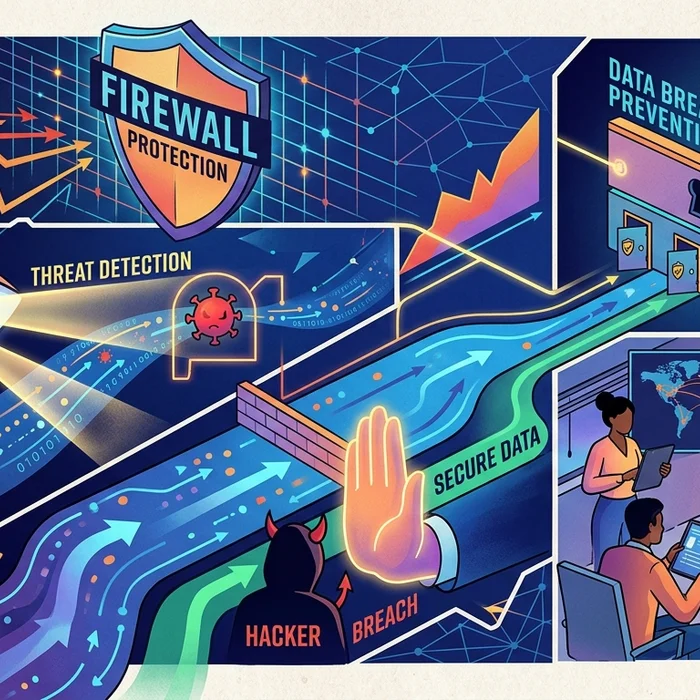
As a former in-house policy lead, I’ve sat in those regulator meetings: they want to see consistent, controlled handling of personal data and security evidence. Cyrolo streamlines that day-to-day reality:
- Fast, reliable anonymization that helps remove personal data and identifiers before sharing artifacts or training materials.
- Hardened document uploads so legal, security, and vendor teams collaborate without uncontrolled emailing or public links.
- Repeatable workflows that make privacy by design and least-privilege tangible — and demonstrable — during security audits.
NIS2 supervisory expectations in 2026: What auditors ask first
Across recent supervisory outreach, I’m seeing a consistent pattern in requests:
- “Show me last quarter’s critical vulnerabilities, remediation timelines, and how you decided risk acceptance vs. patching.”
- “Provide evidence of 24h/72h reporting readiness — on-call rosters, templates, regulator contacts, and dry-run results.”
- “List your top 10 critical vendors, security requirements in contracts, and last security review.”
- “Demonstrate board oversight — slides, minutes, and follow-ups on action items.”
- “Prove data minimisation and anonymization before sharing data with external parties or AI tools.”
Bottom line: if you can produce clear records within 48 hours, you’re in strong shape. If not, start by centralising your evidence and removing unnecessary personal data before it’s shared externally.
Timelines, cross-regulation pressure, and 2026 planning
Member States finalised NIS2 transposition in late 2024 and spent 2025 setting up supervision. In 2026, regulators are shifting from outreach to enforcement — especially after material incidents. For financial entities, remember DORA’s operational resilience obligations now run in parallel; regulators will not ignore conflicting clocks or duplicative paperwork. Harmonise playbooks and centralise evidence once.
- Quarterly: refresh risk register; brief the board; test incident reporting flow.
- Monthly: patch SLAs for critical systems; vendor change reviews; access recertification for privileged accounts.
- Weekly: vulnerability scans; triage new CVEs; red/blue tabletop on likely attack paths (e.g., device management consoles, SSO, CI/CD).
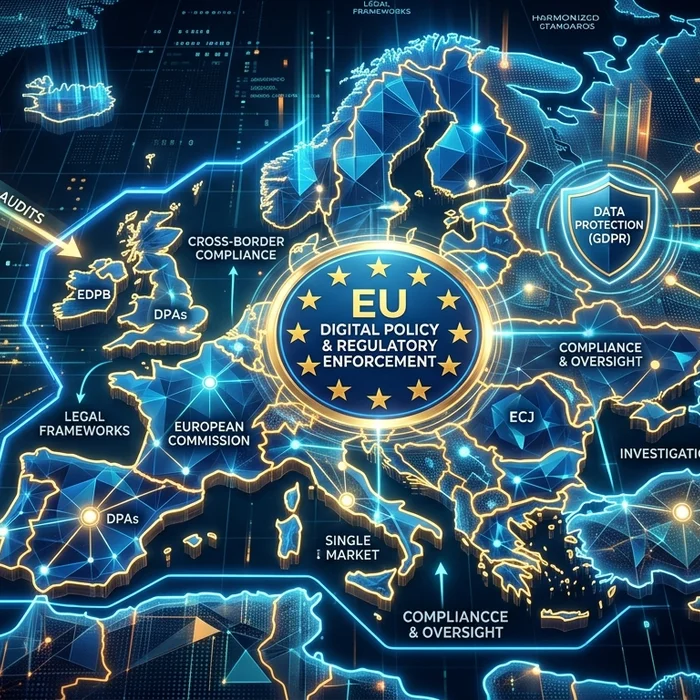
Where EU and US approaches diverge — and what that means
Recent US disclosures about government access to commercial location data highlight a gap with EU norms. For EU-based firms operating in the US, clarify data flows, apply strict minimisation, and ensure contractual safeguards. In reverse, US vendors serving EU “essential” entities must show NIS2-grade controls and transparent subprocessor lists. Expect more pointed questions from EU customers and auditors in 2026 about data residency, logging, and incident cooperation.
FAQ: NIS2 compliance and GDPR, answered
What is NIS2 compliance in simple terms?
It means meeting the EU’s baseline cybersecurity requirements for essential and important entities: documented risk management, strong technical controls, rapid incident reporting (24/72/30 days), supply chain security, and provable board oversight — with fines for failures.
Does NIS2 apply to non-EU companies?
Yes, if you provide covered services in the EU or to EU customers in scoped sectors, NIS2 can bite extraterritorially. Expect to appoint an EU representative and demonstrate equivalent controls.
What is the NIS2 incident reporting timeline?
Early warning within 24 hours of becoming aware of a significant incident, a more complete incident notification within 72 hours, and a final report within one month. Align these clocks with GDPR breach assessments to avoid mixed messages to regulators.
How do NIS2 and GDPR intersect in practice?
They share risk assessments, security of processing, breach management, and vendor oversight. GDPR focuses on personal data; NIS2 focuses on service continuity and critical infrastructure resilience. Use one playbook and evidence vault.
What tools help with anonymization and secure evidence exchange?
Use an AI anonymizer to strip personal data from logs and documents before sharing, and rely on secure document uploads to collaborate with vendors and legal teams without uncontrolled exposure.
Conclusion: Make NIS2 compliance your operational advantage
NIS2 compliance is not just a regulatory hurdle — it’s a blueprint for resilient operations that regulators, customers, and boards now expect to see in action. Consolidate your risk program, tighten reporting, and close the everyday gaps where incidents leak into privacy breaches: vendor onboarding, AI usage, and document sharing. To reduce exposure today, anonymize before you share and centralise your evidence exchange. Professionals across legal, compliance, and security teams can start now with Cyrolo’s anonymizer and secure uploads at www.cyrolo.eu.
Sources & References
- 1
- 2Video of a committee meeting - Wednesday, 18 March 2026 - 14:00 - Committee on Budgetary Control - Committee on Civil Liberties, Justice and Home AffairsEU Parliament LIBE · 2026-03-18T15:33:51.000Z
- 3FBI is buying location data to track US citizens, director confirmsTechCrunch Privacy · 2026-03-18T18:32:32.000Z
- 4OFAC Sanctions DPRK IT Worker Network Funding WMD Programs Through Fake Remote JobsThe Hacker News · 2026-03-18T17:26:00.000Z
- 5Interlock Ransomware Exploits Cisco FMC Zero-Day CVE-2026-20131 for Root AccessThe Hacker News · 2026-03-18T16:00:00.000Z
- 6Cloudflare appeals Piracy Shield fine, hopes to kill Italy's site-blocking lawArs Technica Policy · 2026-03-18T19:36:14.000Z
- 7'Claudy Day’ Trio of Flaws Exposes Claude Users to Data TheftDark Reading · 2026-03-18T15:05:58.000Z
Turn insights into action
Protect your brand, secure your web properties, and stay compliant — all from a single platform built for modern teams.
Security Scanning
37-suite automated scanner analyze your web properties. Get A+ to F security grading with actionable remediation steps.
Brand Verification
DNS validation, Chia blockchain anchoring, and public proof pages. Build trust with cryptographic evidence.
GDPR & Compliance
Article-by-article GDPR audits. Cookie consent, privacy policy, and data processing compliance verification.