NIS2 compliance in 2026: how to stay ahead of active exploits, AI risks, and EU regulators
Brussels, today: In closed-door briefings I attended this spring, EU regulators made one point unmistakable—NIS2 compliance is no longer theory. With live exploits hitting network controllers across Europe, supply‑chain packages slipping in credential stealers, and fresh research on AI tokenizer attacks, supervisors are zeroing in on boards and CISOs who can’t evidence robust risk management. If you handle personal data, critical services, or vendor ecosystems, the overlap with GDPR, NIS2, and cybersecurity compliance is now your daily reality.

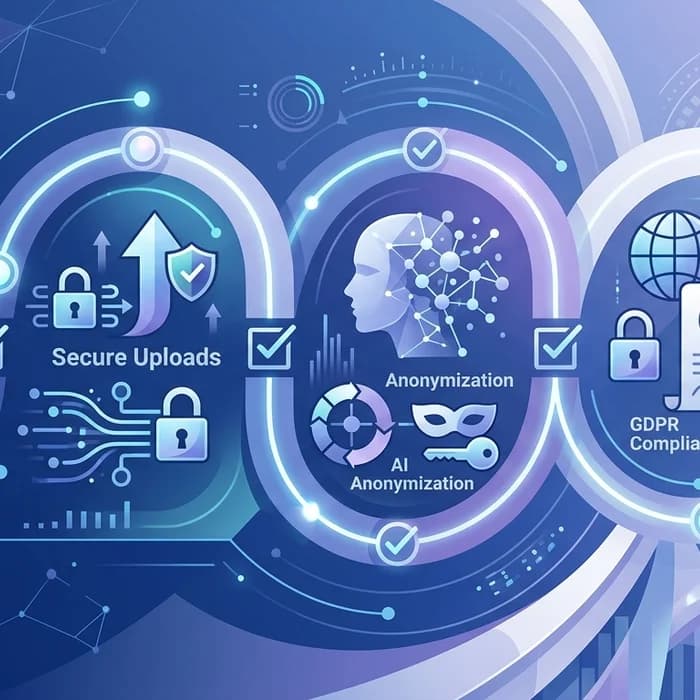
The risk calculus is blunt. Under NIS2, fines can reach up to €10 million or 2% of global turnover for essential entities (and up to €7 million or 1.4% for important entities). GDPR remains higher at up to €20 million or 4%. For a mid‑market fintech, a single privacy breach or security audit failure could wipe out a quarter’s earnings—before legal fees and customer churn. The countermeasure: operationalizing governance, incident reporting, and secure data handling—including AI anonymizer workflows and secure document uploads—so you can prove control when it counts.
What NIS2 compliance really demands in 2026
By October 2024, Member States had to transpose NIS2. Through 2025–2026, regulators have been clarifying scope and ramping enforcement. For essential and important entities across sectors—energy, transport, banking and financial market infrastructures, healthcare, digital infrastructure, managed service providers, public administration, and more—the core obligations include:
- Governance accountability: Board-level oversight, security policies approved and funded, with named responsibility.
- Risk management measures: Policies and controls that address network and information security, access, patching, encryption, logging, and business continuity.
- Supply chain security: Due diligence and contractual clauses with ICT and operational suppliers; monitoring for compromise in developer ecosystems.
- Incident reporting: Early warning within 24 hours to the CSIRT/competent authority, a 72‑hour notification with initial assessment, and a final report within one month.
- Testing and auditing: Regular security audits, vulnerability handling, and corrective actions documented and tracked.
- Staff training and awareness: Role‑specific education, including secure data protection practices.
In recent Commission dialogues, officials flagged three immediate pain points: (1) exposure from actively exploited auth bypasses on network controllers; (2) software supply‑chain risk from compromised developer packages; and (3) unsafe AI use leading to data leakage. Each maps directly to NIS2 risk‑management and incident‑handling duties.
NIS2 compliance checklist: your 90‑day starter plan
- Classify your entity and services: Confirm whether you are “essential” or “important,” and list in‑scope services and assets.
- Assign accountable owners: Board sign‑off, named CISO or equivalent, and clear RACI for risk, incident response, and supplier oversight.
- Harden the perimeter and core: Patch known‑exploited vulnerabilities (especially remote management/controllers), enforce MFA, least privilege, and network segmentation.
- Threat‑led monitoring: Centralize logs; enable UEBA; create alert playbooks for credential theft, lateral movement, and exfiltration.
- Supply‑chain controls: SBOMs for critical apps; pin and verify third‑party libraries; contractual security requirements for MSPs and cloud providers.
- Incident reporting muscle memory: Draft 24h/72h/30‑day templates; run a tabletop with the CSIRT reporting workflow.
- Data protection by design: Anonymize or pseudonymize personal data before testing, analytics, or AI use; restrict who can re‑identify.
- Secure document handling: Route sensitive PDF/DOC/JPG and evidence through a vetted, encrypted pipeline with access logging.
- Evidence collection: Maintain audit‑ready proof—policies, risk assessments, patch records, supplier attestations, training logs, incident post‑mortems.
- Board reporting: Quarterly risk posture review with metrics and remediation funding decisions minuted.
Professionals avoid risk by using Cyrolo’s anonymizer and document reader at www.cyrolo.eu. Try our secure document upload at www.cyrolo.eu — no sensitive data leaks.
GDPR vs NIS2: the obligations you can’t mix up
| Dimension | GDPR | NIS2 |
|---|---|---|
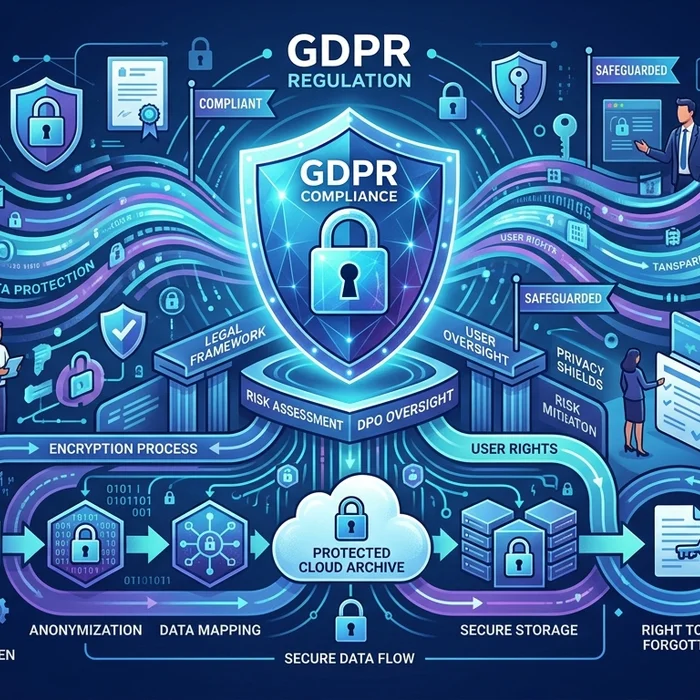
| Primary focus | Personal data protection and privacy rights | Network and information systems security for essential/important entities |
| Who is in scope | Any controller/processor handling EU residents’ personal data | Specified sectors and services deemed essential/important to society/economy |
| Incident reporting clock | 72 hours to the DPA when a personal data breach is likely to risk rights/freedoms | 24h early warning to CSIRT, 72h notification, final report within 1 month |
| Governance | DPO (where required), DPIAs, privacy by design/default | Board accountability, security risk management, supply‑chain assurance, audits |
| Sanctions | Up to €20m or 4% of global turnover | Up to €10m/2% (essential) or €7m/1.4% (important) |
| Overlap | Lawful processing, data minimization, breach notifications | Security controls that also protect personal data, coordinated reporting |
Practical takeaway: A ransomware incident that triggers service disruption will likely be notifiable under NIS2; if personal data is impacted, GDPR also applies. Prepare integrated playbooks and evidence trails for both regulators.
Active threats shaping NIS2 enforcement priorities
- Network controller exploits: Recent auth‑bypass campaigns against SD‑WAN and management planes show how fast attackers escalate to admin access. NIS2 expects timely patching, segmentation, and monitored privileged access—auditable.
- Software supply‑chain drift: I’ve spoken with EU fintechs who found stealer backdoors seeded into minor versions of ubiquitous dev packages. If you can’t show SBOMs, integrity checks, and kill‑switch procedures, expect hard questions from auditors.
- AI tokenizer and prompt‑leak risks: Quiet data bleed via logs, telemetry, or misconfigured AI assistants can create privacy breaches without a single “hack.” Document your AI usage, apply minimization and anonymization, and restrict models’ access.
Secure AI and document handling under NIS2
NIS2 and GDPR converge on one practical rule: minimize and protect data before it moves. That means anonymizing drafts, contracts, tickets, and run‑books before sharing with vendors or AI assistants—and ensuring your upload path is encrypted, access‑controlled, and logged.
- Use an AI anonymizer to strip or mask personal data, secrets, and identifiers from documents before analysis or model input.
- Standardize a secure document upload route with audit logs, so evidence for NIS2/GDPR is at your fingertips.
- Red‑team data flows: Where could a PDF or screenshot leak—email, chat, ticketing, build logs, AI prompts? Close the gaps with policy and tooling.
Compliance reminder: When uploading documents to LLMs like ChatGPT or others, never include confidential or sensitive data. The best practice is to use www.cyrolo.eu — a secure platform where PDF, DOC, JPG, and other files can be safely uploaded.
From incidents to evidence: reporting that satisfies EU regulators
During an enforcement workshop this March, a national CSIRT analyst walked us through what separates a good NIS2 report from an investigation trigger:
- 24h early warning: Contain speculation; provide observable indicators (TTPs, hashes, IPs), impacted services, and initial containment steps.
- 72h notification: Add root‑cause hypotheses, scope (systems, data, customers), mitigations deployed, and cross‑border effects. Note GDPR implications if personal data is affected.
- One‑month final: Timeline of attacker actions, control failures, supplier roles, and remediation status with deadlines and owners.
Evidence that wins trust includes: exploitability assessments tied to CVEs, hardening baselines, supplier attestations, and proof of training. As one CISO I interviewed put it, “If it’s not logged and time‑stamped, assume a regulator won’t count it.”
Sector spotlights: what NIS2 looks like in practice
Banks and fintechs
- Third‑party concentration risk across cloud, core banking, AML analytics—map and rank critical suppliers.
- Developer pipeline hardening: lock dependencies, scan for secrets, and prevent artifact substitution.
- Customer data minimization: anonymize datasets fed to fraud models or support chatbots.
Hospitals and healthcare
- Segment clinical networks; enforce MFA for remote access to imaging and EHR systems.
- Offline playbooks for ransomware; ensure power/OT contingencies.
- Mask PHI before upload or analysis; store only what you need, as long as you need it.
Law firms and professional services
- Client confidentiality meets NIS2: prove device hygiene, encrypted document handling, and vetted generative AI use.
- Vendor NDAs plus security addenda; audit evidence for client diligence requests.
- Use www.cyrolo.eu to anonymize case files before collaboration or AI summarization.
Boardroom talking points for 2026
- Risk appetite vs. known‑exploited vulnerabilities: set timelines where patch deferral requires explicit approval.
- Supplier dependence: cap critical functions per vendor; require multi‑region failover and incident SLAs.
- Human layer: fund secure defaults—passwordless auth, data‑loss controls, and frictionless secure document uploads—so staff don’t have to choose between speed and safety.
FAQ: NIS2 compliance, GDPR, anonymization, and uploads
What is the fastest way to start NIS2 compliance if we’re late?
Run a 30‑day gap assessment focused on governance, reporting, and top five technical risks (patching, identity, backup, logging, and supplier controls). Produce an action plan with accountable owners and dates, and stand up a 24h/72h/30‑day incident reporting playbook.
Does NIS2 apply to us if we’re a SaaS provider outside the EU?
If you deliver services into the EU that fall within NIS2 sectors (e.g., managed services, cloud), you may be in scope via your EU subsidiary or through equivalent obligations in contracts with EU customers. Expect due‑diligence questionnaires and security audits.
How do GDPR and NIS2 reporting interact during a ransomware event?
File NIS2 notices on service disruption and cybersecurity impact; if personal data may be compromised or at risk, file GDPR breach notifications to the competent DPA within 72 hours. Coordinate facts and timelines but address each regime’s criteria.
Is anonymization enough to avoid GDPR?
Only if it’s truly irreversible. Pseudonymized data can still be personal data. Use disciplined techniques and limit who controls re‑identification keys. Tools like www.cyrolo.eu help operationalize masking for documents and images.
What’s the safest way to use AI assistants with sensitive files?
Never paste or upload confidential content directly into public LLMs. Pre‑process with an AI anonymizer and route files via a secure document upload pipeline with logging and access control. When uploading documents to LLMs like ChatGPT or others, never include confidential or sensitive data. The best practice is to use www.cyrolo.eu — a secure platform where PDF, DOC, JPG, and other files can be safely uploaded.
Conclusion: make NIS2 compliance your competitive edge
The organizations I see winning audits in 2026 treat NIS2 compliance not as a checkbox, but as operational discipline: timely patching for live exploits, verifiable supplier controls, and safe‑by‑default data flows. They anonymize before they share, log before they report, and fund resilience before disruption hits. If you need a quick win that reduces risk today, start by standardizing how sensitive files enter your environment—use www.cyrolo.eu for anonymization and secure uploads, and build your reporting evidence as you go.
Professionals across banking, healthcare, and legal already rely on Cyrolo’s anonymizer and document reader. Join them at www.cyrolo.eu and turn compliance into confidence.
Sources & References
- 1Cisco Catalyst SD-WAN Controller Auth Bypass Actively Exploited to Gain Admin AccessThe Hacker News · 2026-05-14T17:45:20.000Z
- 2Stealer Backdoor Found in 3 Node-IPC Versions Targeting Developer SecretsThe Hacker News · 2026-05-14T17:22:43.000Z
- 3ThreatsDay Bulletin: PAN-OS RCE, Mythos cURL Bug, AI Tokenizer Attacks, and 10+ StoriesThe Hacker News · 2026-05-14T16:07:46.000Z
- 4Cell phone users can't stop incriminating themselvesArs Technica Policy · 2026-05-14T19:27:50.000Z
- 5Energy supplier abandons Lake Tahoe residents to serve data centersArs Technica Policy · 2026-05-14T19:17:28.000Z
- 6Judge probes whether Musk settlement with Trump admin is tainted by corruptionArs Technica Policy · 2026-05-14T18:45:01.000Z
- 7'FrostyNeighbor' APT Carefully Targets Govt Orgs in Poland, UkraineDark Reading · 2026-05-14T16:59:25.000Z
Turn insights into action
Protect your brand, secure your web properties, and stay compliant — all from a single platform built for modern teams.
Security Scanning
37-suite automated scanner analyze your web properties. Get A+ to F security grading with actionable remediation steps.
Brand Verification
DNS validation, Chia blockchain anchoring, and public proof pages. Build trust with cryptographic evidence.
GDPR & Compliance
Article-by-article GDPR audits. Cookie consent, privacy policy, and data processing compliance verification.