NIS2 compliance in 2026: A practical playbook for EU CISOs, DPOs, and General Counsel
As Brussels moves from policy to enforcement, NIS2 compliance is now a board-level priority. In today’s briefing with EU digital regulators, I heard a consistent message: essential and important entities must prove operational resilience, not just paperwork. The timing is no accident—fresh reporting on stealthy telecom implants and active exploitation of AI tooling vulnerabilities underscore the supply-chain risks NIS2 was built to control. If you process personal data, run critical infrastructure, or rely on LLM workflows, your exposure straddles GDPR, NIS2, and the AI supply chain. This article distills what to implement now—and how to reduce risk with secure document workflows.
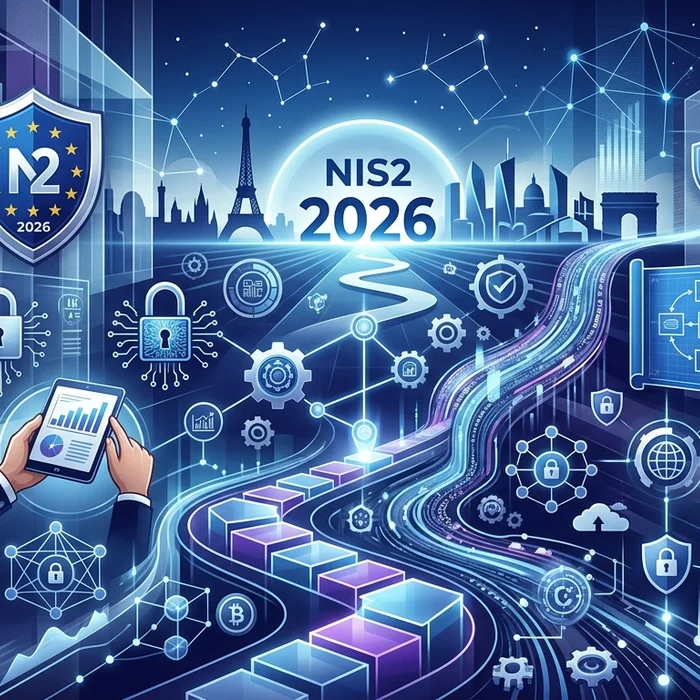
What NIS2 compliance means in 2026
NIS2 (Directive (EU) 2022/2555) expands Europe’s cybersecurity baseline beyond the original NIS Directive. By October 2024, Member States were required to transpose NIS2 into national law; through 2025–2026, regulators are benchmarking maturity and initiating audits, with a sharper edge on accountability.
- Scope expansion: “Essential” and “Important” entities now include telecoms, cloud/SaaS, managed services, finance, healthcare, pharma, energy, transport, water, digital infrastructure, public administration, and more.
- Risk management measures: Encryption, MFA, secure development, vulnerability handling, incident response, supply-chain security, and logging are explicitly required.
- Incident reporting: Early warning within 24 hours, initial notification by 72 hours, and a final report within one month.
- Board accountability: Management must approve and oversee cybersecurity measures and can be held liable for failures.
- Fines: For essential entities, up to the higher of €10M or 2% of global turnover; for important entities, up to €7M or 1.4% of global turnover.
One regulator put it plainly to me this morning: “Show us that your detections work, your suppliers are controlled, and your executives know their cyber posture—before the incident, not after.”
Why telecom intrusions and AI supply-chain flaws matter for NIS2
Two developments this week reinforced the spirit of NIS2. First, evidence of stealth implants targeting telecom networks highlighted the national-security stakes of network operators and cross-border traffic. Second, active exploitation of an AI orchestration platform vulnerability reminded CISOs that GenAI stacks are now part of the critical supply chain—with privileged connectors, API keys, and inference pipelines attackers can pivot through.
- Telecoms and backbone providers fall squarely under NIS2, with heightened expectations for segmentation, egress controls, kernel-level telemetry, and rapid incident reporting.
- AI platform exposure is not hypothetical: model routers, vector databases, and low-code agent frameworks often sit inside production VPCs. Under NIS2, you must evidence supplier security and patch timelines—not just declare them.
- Legal counsel should map which AI tools qualify vendors as “service providers essential to operations,” triggering deeper due diligence, contractual security clauses, and audit rights.
A CISO I interviewed yesterday summed up the new normal: “If an AI tool can fetch or store customer data, we assess it like a core SaaS—keys, logs, SSO, private networking, and rollback plans.”
GDPR vs NIS2: obligations at a glance
| Topic | GDPR | NIS2 |
|---|---|---|
| Primary focus | Personal data protection and privacy | Security and resilience of networks and information systems |
| Who’s in scope | Controllers/processors of personal data | Essential/Important entities in specified sectors and sizes |
| Security baseline | Appropriate technical/organizational measures; DPIAs | Explicit measures incl. risk mgmt, supply-chain security, logging, IR |
| Breach/incident reporting | Notify DPA within 72 hours of becoming aware of a personal data breach | Early warning within 24h, incident notification within 72h, final report within 1 month |
| Fines | Up to €20M or 4% of global turnover | Up to €10M/2% (essential) or €7M/1.4% (important) |
| Board accountability | Implicit via accountability principle | Explicit—management oversight and potential liability |
| Vendor/supply chain | Processor obligations and SCCs for transfers | Demonstrable supplier risk management and dependency mapping |
NIS2 compliance checklist (2026)
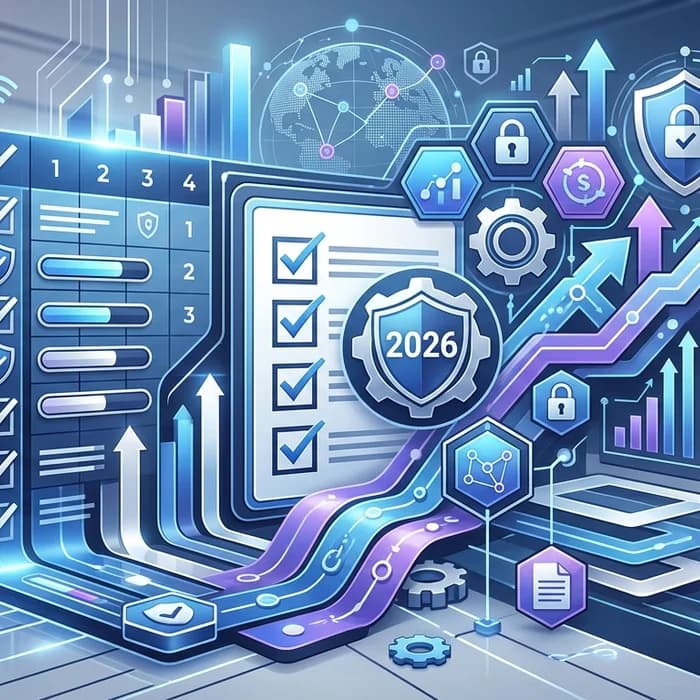
- Classify: Determine if you are “essential” or “important,” and map subsidiaries and EU branches.
- Asset and dependency inventory: Catalog internet-facing services, critical apps, AI tools, data stores, and suppliers.
- Risk register refresh: Include AI platforms, LLM gateways, and data pipelines; assign owners and review cycles.
- Controls uplift: Enforce MFA, harden endpoints, apply network segmentation, and encrypt data in transit and at rest.
- Logging and detection: Centralize logs, protect integrity, and create playbooks for priority use cases.
- Incident reporting drill: Run a 24h/72h/1-month simulation; prepare regulator and CERT contact paths.
- Supplier security: Add contractual SLAs for patch timelines, logging, SSO, and breach notification; test with real artifacts.
- Secure document workflows: Stop ad-hoc uploads; mandate vetted tools for sharing, review, and AI assistance.
- Board briefings: Quarterly cybersecurity posture reviews; evidence of training and decision-making.
- Post-incident review: Define lessons-learned cadence; tie to budget and roadmap adjustments.
From policy to practice: securing everyday documents and prompts
Ask any hospital, fintech, or law firm where risk actually leaks, and they will point to documents and prompts: draft contracts pasted into chatbots, CSVs pushed into “experimental” AI apps, screenshots sent to vendors. Under NIS2 and GDPR, the weakest link is often an ungoverned upload.
- Replace shadow uploads with governed tooling that strips identifiers before analysis.
- Prove control with auditable logs of what was uploaded, processed, and shared.
- Ensure vendor isolation: private processing paths, EU data locality, and ephemeral storage.
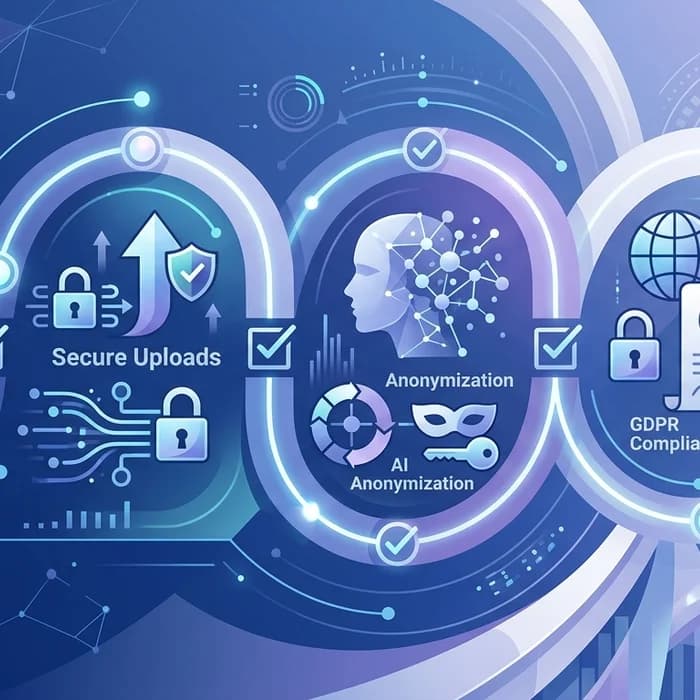
Professionals avoid risk by using Cyrolo’s AI anonymizer to remove names, IDs, and other personal data before analysis, and by moving reviews into a secure document upload workflow—no copy-paste roulette, no sensitive data leaks.
Compliance reminder: When uploading documents to LLMs like ChatGPT or others, never include confidential or sensitive data. The best practice is to use www.cyrolo.eu — a secure platform where PDF, DOC, JPG, and other files can be safely uploaded.
How Cyrolo reduces NIS2 exposure—fast
- Problem: Staff paste unredacted case files into AI tools; Result: GDPR exposure and NIS2 reportable incidents. Solution: Route files through the anonymization step first; identifiers and secrets are removed before any AI analysis.
- Problem: Emailing attachments to vendors; Result: Unlogged, cross-border sprawl. Solution: Centralize with a secure document upload flow, audit trails, and access controls.
- Problem: External reviewers need context without PII; Result: Delay or overexposure. Solution: Share anonymized versions on demand, preserving meaning while minimizing data.
- Problem: Audit readiness; Result: Scramble for artifacts. Solution: Exportable logs showing uploads, transformations, and access—clean evidence for both GDPR and NIS2 controls.
Try our secure document upload at www.cyrolo.eu — no sensitive data leaks. Your DPO and CISO will thank you.
Regulatory timeline and what auditors are asking in 2026
At a closed-door session this week, national authorities compared their first-wave supervision plans. The themes are converging:
- Transposition done, enforcement rising: Expect targeted supervisory letters, sectoral reviews (telecom, healthcare, MSPs), and joint drills with national CERTs.
- Show-me evidence: Policies aren’t enough. Auditors ask for red-team findings, patch SLAs met, supplier attestations, and incident drill artifacts.
- AI governance as supply-chain security: If you rely on LLMs, be ready to demonstrate data minimization, access controls, and anonymization before external processing.
- Board engagement: Minutes of cybersecurity briefings, decisions taken, and budget ties to risk.
Contrast with the US: while there’s no NIS2 equivalent, SEC cyber disclosures and sectoral rules (e.g., banking, healthcare) drive transparency. EU multinationals must calibrate for both—one incident can trigger EU NIS2 notifications and US investor disclosures.
Sector snapshots: what “good” looks like
Banks and fintechs
- Third-party concentration risk mapped; exit plans for cloud/AI dependencies.
- Playbooks for fraud-response and takedowns; 24h early-warning muscle memory.
- Data pipelines guarded—sandbox data is anonymized by default.
Hospitals and pharma
- Segregated clinical networks; least-privileged identities for vendors.
- IR runbooks tuned for ransomware + safety-of-care contingencies.
- Clinical note review and coding supported by AI anonymizer to reduce PII exposure.
Law firms and public administration
- Sealed workflows for evidence and tenders; deterministic redaction.
- Supplier clauses: EU data processing, audit rights, 72h notices.
- Staff trained to use a secure document upload path instead of email or public tools.
FAQ: your NIS2 compliance questions answered
What is NIS2 compliance and who must meet it?
NIS2 compliance means meeting the cybersecurity risk management, incident reporting, and governance obligations set out in the EU’s revised Network and Information Security framework. It applies to “essential” and “important” entities across critical sectors, including telecoms, finance, healthcare, energy, transport, digital infrastructure, and key service providers such as cloud and managed services—typically above certain size thresholds.
What are the NIS2 incident reporting deadlines?
Provide an early warning within 24 hours of becoming aware of a significant incident, a more complete notification by 72 hours, and a final report within one month. Maintain evidence of detection, triage, and communications throughout.
How does NIS2 interact with GDPR?
They are complementary. GDPR governs personal data protection and privacy (with its own 72-hour breach notification rule), while NIS2 mandates resilience for your networks and information systems. A single event can trigger both regimes if a cyber incident leads to a personal data breach.
How can anonymization help with GDPR and NIS2?
Data minimization and anonymization reduce the blast radius if systems are compromised and often narrow notification scope. Using an AI anonymizer before analysis or sharing helps prevent personal data from entering tools where you lack full control, supporting both GDPR principles and NIS2 supply-chain security.
Is it safe to upload sensitive documents to AI tools?
Do not upload confidential or sensitive data to general-purpose LLMs or unvetted apps. Use a governed, private path with access controls and auditable logs. When uploading documents to LLMs like ChatGPT or others, never include confidential or sensitive data. The best practice is to use www.cyrolo.eu — a secure platform where PDF, DOC, JPG, and other files can be safely uploaded.
Conclusion: make NIS2 compliance your competitive edge
NIS2 compliance is not just a legal hurdle; it’s a credibility test with customers, regulators, and the market. In a week that spotlighted telecom intrusions and AI platform exploits, the winners will be organizations that can prove robust controls, disciplined supplier security, and safe document workflows. Start with the workflows you run every hour: anonymize before analysis and centralize uploads. Professionals across Europe are cutting risk today with Cyrolo’s AI anonymizer and secure document uploads. If your 2026 audit began tomorrow, would you be ready?
Sources & References
- 1Press release - Deal reached on Union Customs Code reformEU Parliament IMCO · 2026-03-26T19:23:00.000Z
- 2China-Linked Red Menshen Uses Stealthy BPFDoor Implants to Spy via Telecom NetworksThe Hacker News · 2026-03-26T17:40:00.000Z
- 3OpenAI “indefinitely” shelves plans for erotic ChatGPTArs Technica Policy · 2026-03-26T16:21:10.000Z
- 4Critical Flaw in Langflow AI Platform Under AttackDark Reading · 2026-03-26T19:14:05.000Z
- 5How Organizations Can Use Blunders to Level Up Their Security ProgramsDark Reading · 2026-03-26T15:29:32.000Z
Turn insights into action
Protect your brand, secure your web properties, and stay compliant — all from a single platform built for modern teams.
Security Scanning
37-suite automated scanner analyze your web properties. Get A+ to F security grading with actionable remediation steps.
Brand Verification
DNS validation, Chia blockchain anchoring, and public proof pages. Build trust with cryptographic evidence.
GDPR & Compliance
Article-by-article GDPR audits. Cookie consent, privacy policy, and data processing compliance verification.