NIS2 compliance in 2026: Lessons from Poland’s grid attack and the AI governance gap
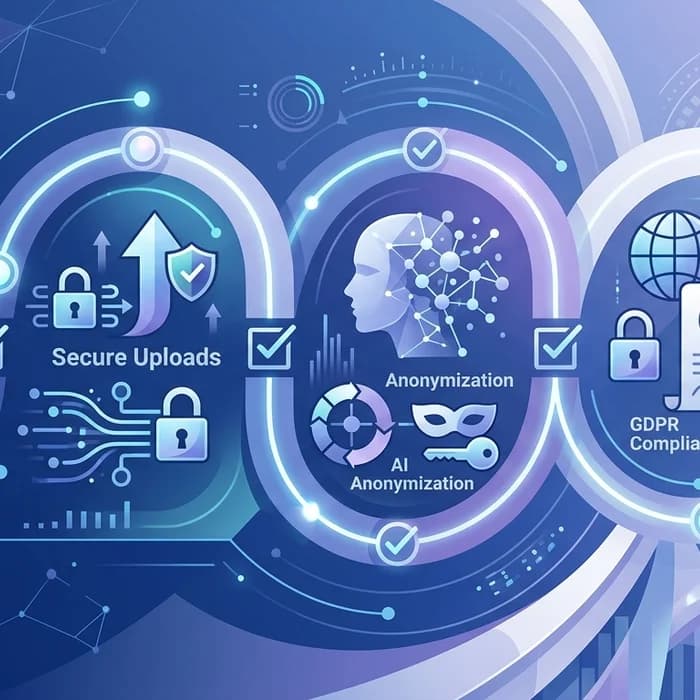
In today’s Brussels briefing, regulators quietly acknowledged what the last 48 hours made obvious: NIS2 compliance is no longer a box-ticking exercise but an operational survival plan. A destructive wiper attack on Poland’s power grid, attributed by several researchers to a nation-state unit, collided with a fresh controversy in Washington over a US agency drafting safety rules with AI assistance. For European CISOs, DPOs, and legal leads, the message is unmistakable—cyber resilience and responsible AI use must be built into day-to-day workflows, from incident reporting to AI anonymizer practices and secure document uploads.
- Critical infrastructure disruption is a live EU risk; NIS2 reporting clocks start within hours.
- AI-driven processes are expanding fast; governance needs to keep pace with GDPR and the EU AI Act.
- Practical controls—role-based access, redaction, and vetted upload workflows—reduce fines and breach fallout.
Why NIS2 compliance just became non-negotiable
After the grid incident in Poland, one CISO I interviewed in a Central European utility summarized the week bluntly: “We learned that our 72-hour playbook was really a 7-hour playbook.” NIS2 requires prompt incident handling and reporting, with early warnings to CSIRTs within 24 hours for significant incidents and fuller notifications within 72 hours, followed by a final report within a month. Boards are expected to oversee risk management, and managers can be held liable for negligent non-compliance in many Member States.
What changes in 2026?
- Regulators in several capitals are moving from awareness to audits, including surprise requests for supplier risk documentation and security audits.
- Administrative fines are biting: many countries have set penalties up to €10 million or 2% of worldwide turnover (whichever is higher), with management liability and possible supervisory bans for serial non-compliance.
- Incident response must consider operational impact and personal data: a privacy breach under GDPR can ride along with an availability attack under NIS2.
AI is writing rules—who is reviewing the data?
Across the Atlantic, a transport regulator’s use of AI to draft safety rules triggered backlash about transparency and the handling of inputs. In the EU, the AI Act’s high-risk obligations start phasing in over the next 12–24 months, and they intersect with GDPR and NIS2 in tricky ways: training or prompting AI with operational logs or personal data may create data protection and security exposure. The quick win is to build safe data pipelines now—minimize, anonymize, and control uploads.
Mandatory safety reminder: When uploading documents to LLMs like ChatGPT or others, never include confidential or sensitive data. The best practice is to use www.cyrolo.eu — a secure platform where PDF, DOC, JPG, and other files can be safely uploaded.
Practical guardrails for regulated teams
- Adopt a “no raw data in AI” rule: strip direct identifiers and quasi-identifiers before prompts.
- Use a vetted AI anonymizer to redact names, emails, IDs, health fields, IBANs, and free-text PII.
- Route all model interactions through secure document uploads with logging, role controls, and retention policies.
- Segment incident logs: store forensic copies separately; only share minimum necessary details with vendors or models.
- Run periodic privacy and security impact assessments for AI-enabled workflows.
GDPR vs NIS2: What each law expects
| Topic | GDPR | NIS2 |
|---|---|---|
| Scope | Processing of personal data of individuals in the EU | Network and information security for essential and important entities across sectors (energy, transport, health, finance, digital infra, etc.) |
| Core obligation | Lawful, fair, transparent processing; data minimization; purpose limitation; security of processing | Risk management measures; incident prevention, detection, response; supply-chain security; business continuity |
| Incident reporting | Notify supervisory authority within 72 hours of becoming aware of a personal data breach | Early warning within 24 hours for significant incidents; incident notification within 72 hours; final report within one month |
| Governance | DPO for certain processing; DPIAs for high-risk processing | Board-level oversight; potential personal liability; security audits and supervisory orders |
| Fines | Up to 4% global annual turnover or €20M, whichever is higher | Commonly up to €10M or 2% global turnover (Member State variations), plus corrective measures |
| AI implications | Pseudonymisation/anonymisation to reduce risk; consent or other lawful basis | Ensure AI does not increase systemic risk; protect logs and ops data used to inform AI models |
A 30-day NIS2 compliance checklist
- Map services and assets in scope; label “essential” vs. “important” entities and critical suppliers.
- Refresh incident classification and thresholds; align with 24/72-hour reporting windows.
- Run a tabletop exercise simulating a destructive attack and concurrent privacy breach.
- Harden log pipelines; segregate forensic logs; implement least privilege for responders.
- Update supplier contracts to codify vulnerability disclosure and notification timelines.
- Deploy redaction/anonymisation for tickets, chat transcripts, and evidence before external sharing.
- Stand up a secure upload workflow for regulators and auditors with immutable evidence trails.
- Brief the board on management duties and personal liability under NIS2.
- Schedule a security audit focused on incident reporting readiness and backup integrity.
- Document and rehearse communications to regulators, customers, and media.
Sector snapshots: What this means in real life
Energy operator
After the Poland incident, a regional TSO told me they now treat wiper malware like physical sabotage. Playbooks must include grid islanding procedures and clear decision trees for “early warning” vs “incident notification” under NIS2. AI tools can assist triage, but only with sanitized inputs.
Banks and fintechs
Payment telemetry often includes direct identifiers and device fingerprints. Share only the minimum with threat intel vendors. Use an AI anonymizer before generating cross-team summaries, and log every document upload used for model prompts.
Hospitals
Health records combine the highest GDPR sensitivity with NIS2 criticality. Mask names, MRNs, and free-text diagnoses before clinical AI use. Confirm that your secure upload path enforces at-rest encryption and retention limits.
Law firms
Legal memos for clients in regulated sectors often blend operational details with personal data. A partner in Brussels told me they moved to a “sanitize-first, upload-second” policy for all AI-assisted drafting to avoid privilege leaks and privacy breaches.
EU vs US: Different paths, same risks
US sectors remain governed by a patchwork (HIPAA, GLBA, state breach laws) and voluntary frameworks. The uproar over an agency letting AI draft safety rules underscores a credibility gap: who vetted sources, and was any sensitive data exposed? Europe’s approach is prescriptive—GDPR, NIS2, and the AI Act create tighter guardrails and higher liability. But the unintended consequence I keep hearing from CISOs is “tool sprawl”: too many dashboards, too little secure content handling. The fix is ruthlessly simple—minimize data surface before it hits systems or models.
How Cyrolo reduces breach and audit risk
- Rapid redaction and pseudonymisation: Strip PII and operational secrets from PDFs, Word docs, images, and logs using the AI anonymizer before sharing internally or externally.
- Controlled evidence handling: Use secure document uploads to centralize regulator and auditor submissions with traceability and retention controls.
- Compliance by design: Aligns with GDPR minimization and NIS2 incident documentation needs; supports security audits and reduces the blast radius of human error.
Professionals avoid risk by using Cyrolo’s anonymizer at www.cyrolo.eu. Try our secure document upload at www.cyrolo.eu — no sensitive data leaks.
FAQs: NIS2 compliance and AI data handling
What is NIS2 compliance and who is in scope?
NIS2 sets cybersecurity and incident reporting duties for “essential” and “important” entities across sectors like energy, transport, health, finance, water, and digital infrastructure, as well as key suppliers. Compliance means demonstrable risk management, timely reporting, and board oversight.
How does NIS2 differ from GDPR?
GDPR protects personal data and mandates breach notification to data protection authorities. NIS2 focuses on operational resilience and reporting to cybersecurity authorities/CSIRTs. In many incidents, both regimes apply, so data protection and security teams must coordinate.
What are the NIS2 incident reporting timelines?
For significant incidents: an early warning within 24 hours of becoming aware, an incident notification within 72 hours, and a final report within one month. Keep evidence logs and communications templates ready.
Can we use AI tools with operational logs under GDPR and NIS2?
Yes, if you minimize and anonymize. Remove direct identifiers and sensitive business details before prompts. Route all model use through a secure upload and logging process. When uploading documents to LLMs like ChatGPT or others, never include confidential or sensitive data. The best practice is to use www.cyrolo.eu — a secure platform where PDF, DOC, JPG, and other files can be safely uploaded.
What are the penalties for non-compliance?
GDPR fines can reach 4% of global turnover; NIS2 penalties in many Member States go up to €10 million or 2% of global turnover, alongside corrective orders and potential management liability.
Conclusion: Make NIS2 compliance routine, not a fire drill
The Poland grid attack proves resilience is the new baseline. The AI drafting controversy shows governance gaps can appear even in safety-centric contexts. Put both lessons to work by operationalizing NIS2 compliance: tighten incident reporting workflows, reduce data exposure, and sanitize content before it touches vendors or models. Start today with Cyrolo: use the AI anonymizer and secure document uploads at www.cyrolo.eu to cut breach risk, speed audits, and meet EU regulations with confidence.
Sources & References
- 1“Wildly irresponsible”: DOT's use of AI to draft safety rules sparks concernsArs Technica Policy · 2026-01-26T20:13:47.000Z
- 2Sandworm Blamed for Wiper Attack on Poland Power GridDark Reading · 2026-01-26T21:30:14.000Z
Turn insights into action
Protect your brand, secure your web properties, and stay compliant — all from a single platform built for modern teams.
Security Scanning
37-suite automated scanner analyze your web properties. Get A+ to F security grading with actionable remediation steps.
Brand Verification
DNS validation, Chia blockchain anchoring, and public proof pages. Build trust with cryptographic evidence.
GDPR & Compliance
Article-by-article GDPR audits. Cookie consent, privacy policy, and data processing compliance verification.