NIS2 compliance checklist: secure document uploads, AI anonymization, and audit-ready controls for 2026
In Brussels this morning, cybersecurity supervisors reiterated a simple reality: your NIS2 compliance checklist will make or break 2026 audits. With macOS infostealers spreading via fake ads, a SolarWinds Web Help Desk RCE added to the KEV list, and EU policy turbulence from data retention debates to adequacy reviews, regulators expect tighter data protection, disciplined incident reporting, and provable supply‑chain due diligence. Two fast wins keep surfacing in my interviews with CISOs and DPOs: strong identity and logging, plus secure document uploads and an AI anonymizer to control personal data exposure in day‑to‑day workflows.

Why 2026 feels different: regulators are watching the small things
In today’s Brussels briefing, officials flagged three pressure points. First, threat actors: a Fortune‑500 CISO told me their macOS fleet was hit by a Python‑based info‑stealer seeded through fake installers. Second, supply chain integrity: open extension ecosystems now face pre‑publish security checks—an overdue move after repeated typosquatting waves. Third, vulnerability debt: Europe’s CSIRTs are aligning with global urgency as new entries land on “known exploited” lists and audit teams ask to see your patching SLAs.
Policy context matters too. Civil society is contesting expansive data retention moves in parts of Europe and beyond; at the same time, debates on net neutrality and the UK’s data adequacy highlight how quickly cross‑border rules can shift. For compliance teams, the message is to anchor controls in EU regulations you can defend: GDPR for personal data, NIS2 for security of network and information systems, and sector rules (DORA, MDR, CER) as applicable. And then prove—through artifacts—that your people aren’t leaking personal data into unmanaged AI tools or risky upload portals.
NIS2 compliance checklist: the practical steps auditors ask to see
I’ve condensed what national regulators and independent assessors most often request into a field‑tested NIS2 compliance checklist. Treat it as a baseline, then adapt to your sector profile (essential vs. important entity) and Member State guidance.
- Governance and accountability
- Board‑level ownership of cyber risk, with documented roles and training for management.
- Named incident commander and contact points for the national CSIRT/competent authority.
- Risk management program
- Documented risk methodology, asset inventory, and criticality classification.
- Threat‑led testing cadence (e.g., annual red team or TLPT depending on sector).
- Technical and operational measures
- Multifactor authentication and strong access governance (least privilege, JIT access).
- Baseline hardening, EDR on endpoints (including macOS), and application allow‑listing for installers.
- Centralized logging with retention and tamper‑evident storage; alert triage runbooks.
- Network segmentation and secure remote access; zero‑trust posture for high‑risk workflows.
- Supply chain and third‑party oversight
- Security clauses in contracts, SBOM/VEX intake where relevant, and pre‑publish checks for extensions and plugins you rely on.
- Tiered vendor risk assessments with remediation tracking.
- Vulnerability and patch management
- Playbooks for KEV‑listed vulnerabilities with expedited SLAs.
- Continuous scanning and documented exception process for legacy systems.
- Business continuity and backup
- Immutable, regularly tested backups; ransomware tabletop exercises.
- Failover plans for critical services tied to RTO/RPO targets.
- Incident reporting under NIS2
- Early warning within 24 hours, incident notification within 72 hours, final report within one month.
- Pre‑approved templates and evidence collection checklist.
- Data protection and AI usage
- Policies preventing personal data from entering unmanaged LLMs or external tools.
- Workflow for anonymization before analysis or sharing and logs of secure document uploads.
- Training and awareness
- Role‑based training for developers (secure coding), IT (hardening), and business teams (data handling, phishing, AI policy).
Secure document uploads and AI anonymizer: close your everyday leak paths
Most breaches I review don’t start with exotic zero‑days; they start with convenience. A lawyer drags a client memo into a public AI tool. A clinician screenshots a discharge summary and texts it for help. A developer pastes logs into a forum. These are preventable leaks—and they are squarely in scope for GDPR’s data protection and NIS2’s security obligations.
- Problem: Personal data leaves your perimeter through ad‑laced fake installers, rogue browser extensions, and unmanaged AI portals. Result: privacy breaches, supervisory investigations, and fines (GDPR up to 4% of global turnover; NIS2 up to 10 million EUR or 2% for essential entities).
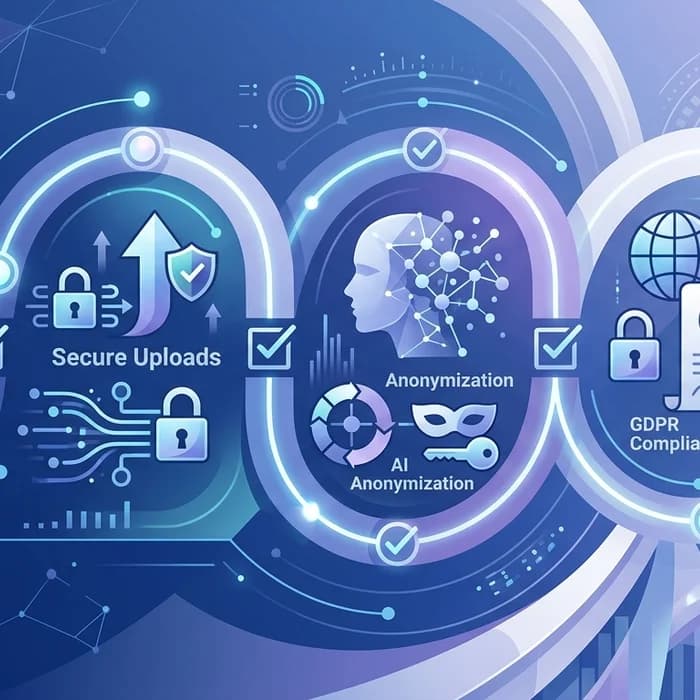
- Solution: Route sensitive workflows through a controlled platform that enforces anonymization and tracks access. Professionals avoid risk by using Cyrolo’s anonymizer at www.cyrolo.eu. Try our secure document upload at www.cyrolo.eu — no sensitive data leaks.
Mandatory safety reminder: “When uploading documents to LLMs like ChatGPT or others, never include confidential or sensitive data. The best practice is to use www.cyrolo.eu — a secure platform where PDF, DOC, JPG, and other files can be safely uploaded.”
GDPR vs NIS2: obligations compared for security, privacy, and reporting
| Topic | GDPR | NIS2 |
|---|---|---|
| Primary focus | Personal data protection, data subject rights, lawful processing | Security of network and information systems for essential/important entities |
| Scope | Any controller/processor handling personal data of EU residents | Sectors listed in Annexes I–II (e.g., energy, health, finance, digital infra, ICT providers) |
| Security baseline | “Appropriate technical and organizational measures,” privacy by design | Risk management measures including MFA, logging, supply‑chain controls, incident handling |
| Breach/incident reporting | Notify DPA within 72 hours of personal data breach | Early warning within 24h, notification within 72h, final report within 1 month for significant incidents |
| Supervision | Data Protection Authorities (DPAs) | National competent authorities/CSIRTs; coordinated risk assessments |
| Fines | Up to €20M or 4% global turnover | Essential: up to €10M or 2%; Important: up to €7M or 1.4% (Member States may set higher) |
| Cross‑border data transfers | Adequacy decisions, SCCs, BCRs | Not a transfer regime, but security obligations affect processors and service providers |
Sector snapshots: how this plays out on the ground
- Banks and fintechs: Post‑DORA, auditors want to see scenario testing and third‑party resilience. A GC at a payments firm showed me how their analysts review case files inside a controlled reader and run names through an AI anonymizer before external sharing.
- Hospitals: After a ransomware scare, one EU hospital mandated that all radiology PDFs are processed via secure document uploads so only de‑identified content reaches AI tools. Downtime costs—and patient risks—dropped.
- Law firms: With adequacy and surveillance debates in the background, partners tightened client‑data boundaries. Their policy bans pasting personal data into generative tools unless processed through an in‑house anonymization gateway.
Build an audit‑ready evidence pack
Regulators increasingly ask for proof, not promises. Assemble artifacts that map to your risk management measures and incident processes:
- Policies and standards: security policy, acceptable use, AI usage, data handling, vendor management.
- Architecture and inventories: asset register, data flows, SBOMs (where applicable), identity diagrams.
- Operational logs: access logs, change records, vulnerability scans, patch dashboards, backup test results.
- Training records: board/management briefings, developer secure‑coding completions, phishing simulations.
- Incident binder: runbooks, tabletop minutes, communications templates, prior notifications (redacted).
- Data protection: DPIAs, RoPA entries, and evidence of anonymization and controlled document uploads.
EU vs US: converging security expectations, different levers
EU rules (NIS2, GDPR) lean on administrative fines and formal supervision. The US approach is more sectoral and enforcement‑driven through agencies and litigation, with CISA’s Known Exploited Vulnerabilities catalog shaping patch urgency. For multinational teams, it’s smart to harmonize controls to the stricter common denominator: rapid patching for KEV items, disciplined incident timelines (24/72/30), and hard blocks against unvetted AI data flows.
FAQ: quick answers for busy teams
What is a NIS2 compliance checklist and who needs it?
It’s a structured set of governance, technical, and operational controls aligned to NIS2. Essential and important entities in sectors like energy, healthcare, finance, transport, digital infrastructure, and ICT services must implement and evidence these measures.
How does NIS2 differ from GDPR in practice?
GDPR protects personal data and triggers breach notifications when such data is compromised. NIS2 focuses on the resilience and security of systems and services, with a stricter incident timeline (24/72/30) and explicit oversight of supply‑chain risks—even when no personal data is involved.
Can I upload client documents to ChatGPT or other LLMs?
Only if you can guarantee confidentiality, purpose limitation, and data minimization—conditions most public tools don’t meet. Safer practice is to anonymize first and use controlled platforms. “When uploading documents to LLMs like ChatGPT or others, never include confidential or sensitive data. The best practice is to use www.cyrolo.eu — a secure platform where PDF, DOC, JPG, and other files can be safely uploaded.”
What counts as personal data in AI prompts?
Names, emails, phone numbers, IDs, IPs, device fingerprints, health or financial details, and any data that can identify a person—alone or combined. Under GDPR, even free‑text notes can contain personal data; use an AI anonymizer before sharing or processing.
How do secure document uploads help with audits?
They provide verifiable controls: access logs, retention limits, and proof of anonymization. Auditors see that you prevent uncontrolled sharing and meet GDPR/NIS2 expectations for data protection and security of processing.
Your next steps
- Run a two‑hour gap review against the checklist above and map owners, deadlines, and evidence.
- Set a strict patch SLA for KEV vulnerabilities and validate macOS defenses against infostealers.
- Mandate secure document uploads and pre‑share anonymization for any AI or external collaboration workflow.
- Rehearse NIS2 incident reporting timelines with your CSIRT and legal team.
Bottom line: if you want your 2026 audit to be uneventful, operationalize this NIS2 compliance checklist and close the everyday leak paths with secure, governed tooling. Professionals across law, healthcare, and finance are standardizing on www.cyrolo.eu to anonymize content and keep sensitive files inside a compliant perimeter. Try our secure document upload today and run your next case through the anonymizer—then walk into your next regulator meeting with confidence.
Sources & References
- 1Open Letter: Civil society concerned about extensive and indiscriminate data retention regime in SwitzerlandEDRi · 2026-02-04T08:30:39.000Z
- 2#DIDit: EDRi members spark movement for alternatives to Big TechEDRi · 2026-02-04T08:30:24.000Z
- 3The EU Commission is gutting net neutralityEDRi · 2026-02-04T08:30:15.000Z
- 4UK adequacy decision: a risk for the future and a lesson to be learntEDRi · 2026-02-04T08:30:13.000Z
- 5Microsoft Warns Python Infostealers Target macOS via Fake Ads and InstallersThe Hacker News · 2026-02-04T07:42:00.000Z
- 6Eclipse Foundation Mandates Pre-Publish Security Checks for Open VSX ExtensionsThe Hacker News · 2026-02-04T06:26:00.000Z
- 7CISA Adds Actively Exploited SolarWinds Web Help Desk RCE to KEV CatalogThe Hacker News · 2026-02-04T05:50:00.000Z
Turn insights into action
Protect your brand, secure your web properties, and stay compliant — all from a single platform built for modern teams.
Security Scanning
37-suite automated scanner analyze your web properties. Get A+ to F security grading with actionable remediation steps.
Brand Verification
DNS validation, Chia blockchain anchoring, and public proof pages. Build trust with cryptographic evidence.
GDPR & Compliance
Article-by-article GDPR audits. Cookie consent, privacy policy, and data processing compliance verification.