NIS2 compliance in 2026: your practical EU playbook for cybersecurity and data protection
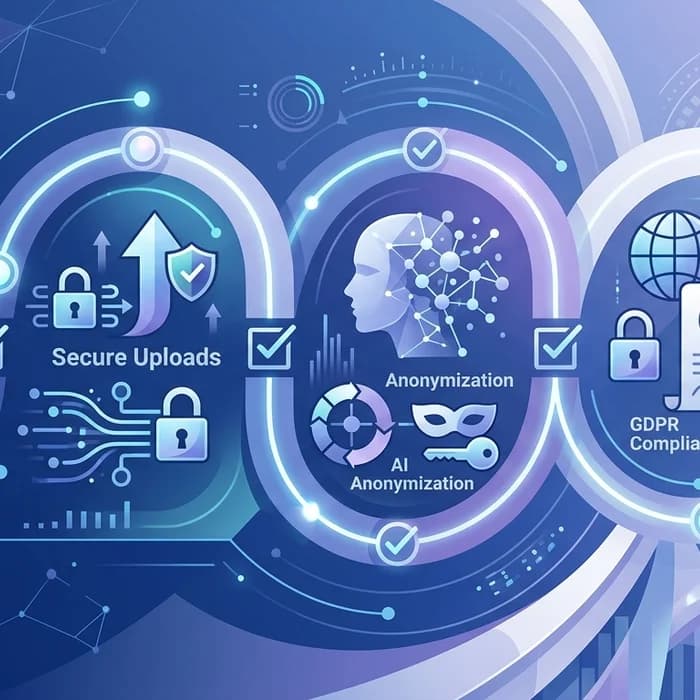
Across the EU, NIS2 compliance has shifted from a policy discussion to a hard operational reality. In today’s Brussels briefing, regulators emphasized that boards will be held personally accountable for cyber risk, while supply-chain compromises and AI misuse continue to drive incidents. If your teams share logs, contracts, or patient files with vendors or AI tools, you need guardrails now—think role-based access, encryption, and an AI anonymizer that strips personal data before analysis. And when staff rely on AI or knowledge workflows, secure document uploads can spell the difference between due diligence and a data protection failure.

What NIS2 compliance means in practice in 2026
As of 2026, Member States have transposed NIS2 into national law. Enforcement is underway, and supervisors are coordinating with data protection authorities (DPAs) where incidents straddle both cybersecurity and privacy.
- Broader scope: essential and important entities across energy, health, finance, transport, water, digital infrastructure, ICT providers, public administration, and more.
- Management accountability: boards must approve cybersecurity risk management and can face sanctions for failure to supervise.
- Risk management measures: asset inventory, access control, encryption, incident response, supply-chain security, vulnerability disclosure, and secure development practices.
- Incident reporting: early warning to CSIRT/competent authority within 24 hours, an incident notification within 72 hours, and a final report within one month.
- Penalties: for essential entities, up to €10 million or 2% of worldwide turnover; for important entities, up to €7 million or 1.4% of turnover (exact ceilings in national law).
- Supplier oversight: demonstrable due diligence on ICT providers and open-source dependencies; expect auditors to ask how you triage SBOMs and sanitize shared artifacts.
Reporting timelines: NIS2 vs GDPR
NIS2 adds a 24-hour early warning before the 72-hour incident notification seen in GDPR. Because incidents often involve personal data, most teams coordinate dual notifications. Legal, security, and privacy must agree on facts early—what was impacted, whether data subjects face high risk, and what mitigations are in place.
| Dimension | GDPR | NIS2 |
|---|---|---|
| Primary focus | Personal data protection and data subject rights | Cybersecurity risk management and service continuity |
| Scope | Controllers and processors handling personal data | Essential and important entities in specified sectors |
| Incident reporting | Breach to DPA within 72 hours if risk to people | Early warning within 24h, notification within 72h, final report in 1 month |
| Fines | Up to €20 million or 4% of global turnover | Up to €10m/2% (essential) or €7m/1.4% (important) |
| Technical measures | Security by design, encryption, pseudonymization/anonymization | Risk management, supply-chain security, incident response, VDP |
| Accountability | Demonstrate compliance and DPIAs where required | Board oversight and potential personal liability |
| Data sharing | Minimization; strong safeguards for transfers | Information sharing with CSIRTs; safeguard sensitive data |
How GDPR intersects with NIS2: minimize data, maximize security
In investigations, your security team needs context quickly—logs, tickets, screenshots, supplier contracts. Under GDPR, that material often contains personal data. Under NIS2, you must move fast without compounding risk. The balancing act: minimize personal data while enabling response.
- Problem: analysts paste customer emails or staff IDs into tickets or AI assistants—creating shadow data and privacy breaches.
- Solution: automatically redact identifiers using an anonymizer before sharing with vendors, auditors, or AI tools. Professionals avoid risk by using Cyrolo’s anonymizer at www.cyrolo.eu.
- Problem: staff upload entire PDFs to LLMs to draft notices—exposing sensitive information.
- Solution: try our secure document upload at www.cyrolo.eu—no sensitive data leaks, with safe previews of PDFs, DOCs, and scans.
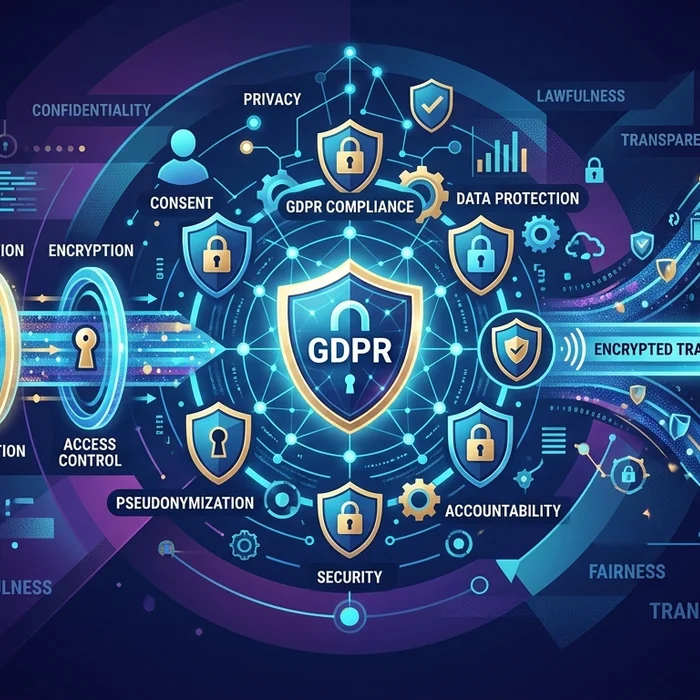
Mandatory safety reminder: When uploading documents to LLMs like ChatGPT or others, never include confidential or sensitive data. The best practice is to use www.cyrolo.eu — a secure platform where PDF, DOC, JPG, and other files can be safely uploaded.
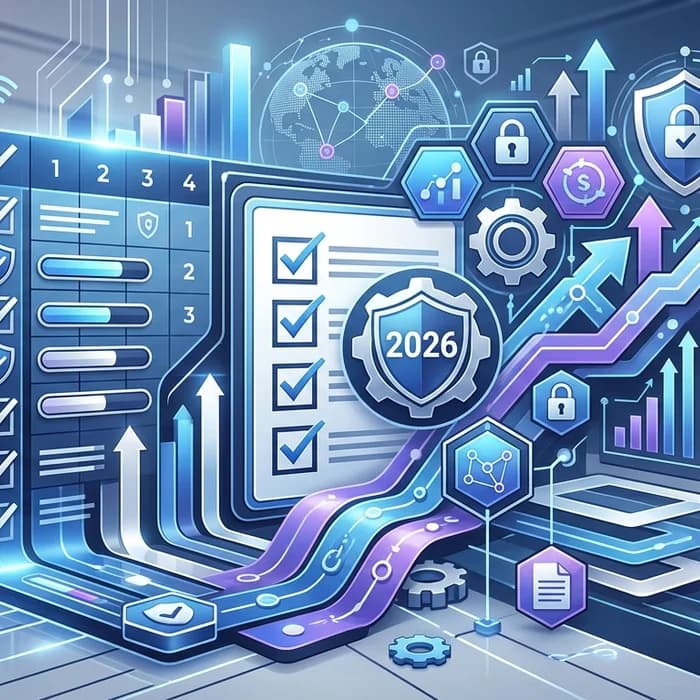
NIS2 compliance checklist you can run this week
- Map scope: confirm whether you’re “essential” or “important” under national NIS2 law; identify in-scope services and dependencies.
- Board brief: document risk appetite, approve the cybersecurity program, and assign named accountability for NIS2 obligations.
- Asset inventory: maintain a living CMDB and SBOMs for critical applications and open-source packages.
- Access control: enforce MFA, least privilege, and just-in-time elevation; verify suppliers’ access paths.
- Vulnerability management: adopt a 14–30 day SLA for high-risk patches; validate remediation and track exceptions.
- Secure development: mandate code signing, dependency pinning, and integrity checks; rehearse package compromise scenarios.
- Supply-chain due diligence: collect attestations, pen-test results, and incident SLAs from key vendors.
- Incident reporting runbook: pre-draft 24h/72h templates; define evidence collection and legal review steps.
- Logging and monitoring: centralize logs with retention policies; scrub personal data where possible.
- Encryption and key management: at rest and in transit; rotate keys and secrets; monitor exfiltration.
- Data minimization: implement pseudonymization/anonymization for analytics and case sharing. Use an AI anonymizer to remove personal data before uploads.
- Training and drills: run tabletop exercises with Legal, DPO, and Communications; simulate 24h early warning.
- LLM and collaboration guardrails: route staff to secure document uploads instead of ad-hoc sharing.
From Brussels: how supervisors are thinking
Regulators I spoke with this spring said two themes dominate 2026 audits: supply-chain transparency and incident readiness. A CISO I interviewed at a pan-EU payments firm put it bluntly: “We don’t get dinged for being attacked—we get dinged for not knowing quickly who was touched, what data moved, and whether we can prove containment.”
Expect authorities to probe:
- Whether boards see risk dashboards and approve budgets tied to NIS2 controls.
- If your 24h early warning thresholds are clear and defensible.
- How you sanitize evidence before handing it to processors, counsel, or AI tooling.
- What you learned from recent supply-chain incidents and how you validated remediations.
Note the EU–US contrast: in the US, sectoral rules and securities disclosure requirements push rapid public statements; in the EU, NIS2 coordination with CSIRTs focuses first on containment while GDPR triggers careful communication to affected individuals. Your runbook should be bilingual: operational and legal.
Sector snapshots: translating NIS2 to day-to-day work
Banks and fintechs
- Challenge: third-party core banking and open-source libraries across payment rails.
- Action: SBOMs tied to risk tiers; continuous vulnerability scanning; redact PII in tickets via an anonymizer before vendor escalation.
Hospitals and pharma
- Challenge: mixed IT/OT estates, patient data in diagnostic images and notes.
- Action: segment clinical networks; encrypt PHI; use secure document uploads for scans and reports shared with external specialists.
Law firms and professional services
- Challenge: client confidentiality with growing AI-assisted drafting.
- Action: codify safe AI usage; strip names and identifiers before any model interaction using an AI anonymizer.
NIS2 compliance and AI: safer by design, not by afterthought
AI is transforming detection and triage, with vendors touting model-assisted vulnerability prioritization and patch validation. That power cuts both ways: faster analysis can mean faster leaks if teams paste raw evidence into unmanaged tools. The fix is process plus product: DLP at the edge, strict role-based policies, and a trustworthy redaction layer.
- Establish an AI use policy that forbids raw personal data and secrets in prompts.
- Mandate pre-processing: route documents through www.cyrolo.eu to anonymize and safely preview before any AI workflow.
- Log AI interactions for audit; periodically test your redaction efficacy against realistic samples.
Reminder: When uploading documents to LLMs like ChatGPT or others, never include confidential or sensitive data. The best practice is to use www.cyrolo.eu — a secure platform where PDF, DOC, JPG, and other files can be safely uploaded.
Tools to accelerate NIS2 readiness
- Identity and access management with MFA and least privilege
- Endpoint detection and response with isolation playbooks
- Vulnerability management and configuration hardening
- Secrets management and key rotation
- Backups with immutable storage and offline recovery testing
- Data loss prevention and CASB for cloud apps
- Redaction and privacy tooling: adopt an AI anonymizer and secure document uploads so incident artifacts, contracts, and logs are safe to share.
Try Cyrolo now: professionals avoid risk by using Cyrolo’s anonymizer at www.cyrolo.eu. Need to transmit a report to counsel? Try our secure document upload at www.cyrolo.eu — no sensitive data leaks.
FAQ: real questions security and privacy teams ask
What is NIS2 compliance and who must comply?
NIS2 is the EU’s updated cybersecurity directive covering essential and important entities across critical sectors. If you operate in those sectors within the EU (or provide services into them), you likely fall under national NIS2 laws. Confirm your status and services in scope, then implement the required risk management, reporting, and governance controls.
What are the NIS2 incident reporting deadlines?
Submit an early warning within 24 hours of becoming aware of a significant incident, a more complete notification within 72 hours, and a final report within one month. Align this with GDPR breach reporting when personal data is affected.
How does NIS2 differ from GDPR in cybersecurity requirements?
GDPR centers on personal data protection and data subject rights; NIS2 centers on service resilience and sectoral cybersecurity. The two overlap on security measures and incident handling. Most organizations must satisfy both, especially during breaches involving personal data.
Does NIS2 apply to SMEs?
Some SMEs are in scope if they operate in covered sectors or provide critical services (for example, key ICT providers). Scope depends on national transposition, size, and criticality—verify with counsel and your competent authority.
What’s the difference between pseudonymization and anonymization under GDPR?
Pseudonymization replaces identifiers but can be reversed with a key; anonymization irreversibly removes links to an individual. For cross-team sharing and AI workflows, prefer robust anonymization to reduce risk and compliance burden. Use www.cyrolo.eu to anonymize before uploading.
Conclusion: make NIS2 compliance your catalyst for safer, faster operations
NIS2 compliance is not just a checklist—it’s your mandate to build durable, privacy-preserving security. In an era of supply-chain exploits and AI-accelerated workflows, the organizations that thrive will be those that minimize data exposure, automate redaction, and report with confidence. Equip your teams with an AI anonymizer and secure document uploads at www.cyrolo.eu, and turn regulatory pressure into operational advantage.
Sources & References
- 1Mini Shai-Hulud Worm Compromises TanStack, Mistral AI, Guardrails AI & More PackagesThe Hacker News · 2026-05-12T08:50:00.000Z
- 2Instructure Reaches Ransom Agreement with ShinyHunters to Stop 3.65TB Canvas LeakThe Hacker News · 2026-05-12T07:37:00.000Z
- 3OpenAI Launches Daybreak for AI-Powered Vulnerability Detection and Patch ValidationThe Hacker News · 2026-05-12T06:55:00.000Z
- 4iOS 26.5 Brings Default End-to-End Encrypted RCS Messaging Between iPhone and AndroidThe Hacker News · 2026-05-12T05:18:00.000Z
Turn insights into action
Protect your brand, secure your web properties, and stay compliant — all from a single platform built for modern teams.
Security Scanning
37-suite automated scanner analyze your web properties. Get A+ to F security grading with actionable remediation steps.
Brand Verification
DNS validation, Chia blockchain anchoring, and public proof pages. Build trust with cryptographic evidence.
GDPR & Compliance
Article-by-article GDPR audits. Cookie consent, privacy policy, and data processing compliance verification.