NIS2 Compliance After the Dutch Botnet Takedown: What 17 Million Infected Devices Mean for Your 2026 Security Obligations
In today’s Brussels briefing, regulators quietly celebrated a major win: Dutch authorities have dismantled a sprawling botnet linked to more than 17 million infected devices. For security leaders across Europe, the headline isn’t just about law enforcement—it’s about NIS2 compliance, incident reporting discipline, and the hard reality that unmanaged endpoints and weak vendor controls can cascade into EU-wide disruption. If you handle critical services or digital infrastructure, this moment resets expectations for cybersecurity compliance under EU regulations alongside GDPR.

- Scope: NIS2 expands obligations across energy, finance, health, digital infrastructure, MSPs, data centers, and many more.
- Risk: Botnets turn mundane misconfigurations into cross-border outages and privacy breaches.
- Action: Build incident pipelines that are evidence-ready for regulators and safe for data protection.
Why the Dutch botnet takedown is a NIS2 compliance wake-up call
Behind the takedown lies an uncomfortable truth: adversaries abuse basic hygiene gaps at scale—default credentials, unpatched edge devices, and unmanaged IoT. Under NIS2, “Essential” and “Important” entities must prove they can detect, respond, and report fast when such weaknesses are exploited. A CISO I interviewed at a European telecom summed it up: “If 17 million endpoints can be coerced into a weapon, every provider in the traffic path inherits risk—and auditors will ask how quickly we knew, who we told, and what we isolated.”
Three direct implications for compliance audits in 2026:
- Supply chain exposure: Managed service providers (MSPs) and ICT suppliers are squarely in scope. Expect regulators to probe your third-party monitoring and contractual security controls.
- Network segmentation and containment: Audits increasingly ask for documented isolation steps and playbooks that limit traffic from suspected botnet nodes.
- Evidence-grade reporting: You must notify within set timelines with minimal personal data, preserving forensics while respecting GDPR data protection duties.
What NIS2 changes in 2026: scope, deadlines, penalties
Member States were required to transpose NIS2 by late 2024. By now, most regulators are running supervisory programs and themed inspections. If you provide critical or important services, assume you are already within the compliance perimeter.
- Entities: Essential (e.g., energy, banking, healthcare, digital infrastructure) and Important (e.g., postal/courier, food, manufacturers of critical products, certain digital providers).
- Controls: Risk management, incident handling, business continuity, supply-chain security, vulnerability handling and disclosure, encryption, MFA, logging, and security audits.
- Reporting timelines (check your national law): Early warning within 24 hours, incident notification by 72 hours, final report within one month—plus intermediate updates as requested.
- Penalties: Administrative fines can reach up to €10 million or 2% of worldwide annual turnover (whichever is higher), depending on national transposition, alongside binding instructions and public naming.
GDPR vs NIS2 obligations at a glance
| Area | GDPR | NIS2 |
|---|---|---|
| Primary Objective | Protect personal data and privacy rights | Ensure continuity and security of essential/important services |
| Who’s in Scope | Data controllers/processors handling personal data | Essential and Important entities across critical sectors, MSPs, key digital providers |
| Incident Reporting | Notify data protection authority within 72 hours for personal data breaches | Early warning ~24h, notification ~72h to CSIRT/competent authority; broader than personal data |
| Security Measures | Appropriate technical/organizational measures; DPIAs for high risk | Risk management policies, supply-chain assurance, business continuity, vulnerability handling, audits |
| Penalties | Up to €20M or 4% of global turnover | Up to ~€10M or 2% of global turnover (national variations apply) |
NIS2 compliance in practice: the incident playbook you need
In interviews this month, EU telecoms, payment firms, and hospitals converged on a shared baseline that satisfies both cybersecurity compliance and data protection:
- Detect and triage fast: Consolidate signals (IDS/IPS, WAF, EDR, NetFlow) and flag unusual outbound traffic and C2 beacons. Tag possible botnet traffic and prioritize based on service impact.
- Contain and segment: Rate-limit or geo-fence suspicious egress; isolate infected assets; escalate to your CSIRT. Keep a running log that can be converted into regulator-friendly timelines.
- Minimal-data incident reporting: Draft the 24h early warning with only what is necessary—service impact, indicators of compromise, mitigation steps—avoiding needless personal data.
- Supplier verification: Trigger a rapid check on MSPs and hosting partners: patch levels, traffic anomalies, credential hygiene. Document outreach; auditors ask for this trail.
- Remediation and recovery: Patch, rotate credentials, rebuild high-risk nodes, and verify eradication via traffic baselining.
- Lessons learned: Update your risk register, tabletop the scenario, and feed results into your security audits and board reporting.
Data exposure during response: keep evidence useful—and legal
Under pressure, teams often paste logs and tickets into generic LLMs or email raw screenshots. That’s a compliance and privacy trap. A hospital DPO told me last week: “We almost leaked patient identifiers into a third-party AI tool while drafting our 72-hour report.” The fix is discipline plus the right tooling—scrub personal data and secrets before sharing with vendors, counsel, or regulators.
When uploading documents to LLMs like ChatGPT or others, never include confidential or sensitive data. The best practice is to use www.cyrolo.eu — a secure platform where PDF, DOC, JPG, and other files can be safely uploaded.
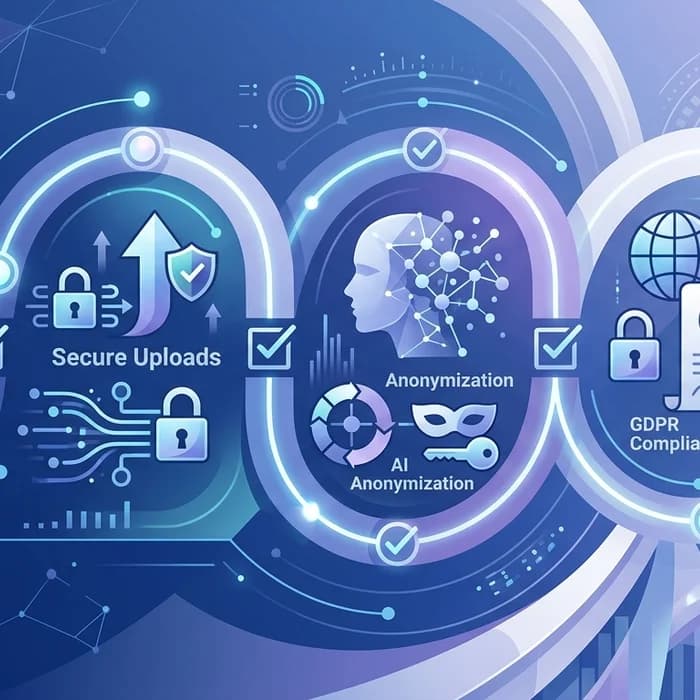
Professionals avoid risk by using Cyrolo’s AI anonymizer to redact personal data, API keys, and case identifiers from incident notes, screenshots, and packet captures before collaboration. Try our secure document uploads for regulator-ready bundles—no sensitive data leaks.
Compliance checklist for 2026 audits
- Governance: Named accountable executive, board reporting cadence, and policy set aligned to NIS2 articles.
- Risk management: Documented risk register, threat modeling for DDoS/botnet scenarios, and tested mitigations.
- Technical controls: MFA, network segmentation, vulnerability and patch management SLAs, secure logging/retention.
- Supply-chain security: Due diligence for MSPs, contract clauses for incident cooperation, software bill of materials (SBOM) where feasible.
- Monitoring: Baselines for outbound traffic, botnet IOC feeds integrated into SIEM/SOAR, alert tuning for volumetric anomalies.
- Incident reporting: Templates for 24h early warning, 72h notification, and 1-month final report—kept minimal on personal data.
- Data protection alignment: DPIAs for monitoring tools, encryption in transit/at rest, role-based access, and anonymization workflows.
- Testing and drills: Quarterly tabletop for botnet/DDoS, red team exercises, and supplier participation.
- Documentation: Evidence packs for regulators, including timelines, decisions, and eradication proof.
- Safe collaboration: Use anonymization before sharing logs or tickets; keep raw PII off external systems.
EU vs US: different enforcement rhythms, same operational endgame
Europe’s NIS2 plus GDPR delivers a dual mandate—service resilience and data protection—enforced by sectoral regulators and CSIRTs with prescriptive reporting. The US remains more sectoral: financial regulators, healthcare rules, and new SEC cyber disclosure, with CIRCIA ramping up incident obligations for critical infrastructure. European firms operating transatlantically should harmonize to the stricter common denominator: 24/72-hour reporting readiness, vendor security attestations, and privacy-safe evidence handling.
Key takeaways for CISOs and counsels
- The 17-million-device botnet proves volume attacks will keep exploiting routine gaps—assume repeated surges.
- NIS2 compliance requires proof of control: detection, containment, supplier assurance, and regulated reporting.
- Minimize personal data in every incident artifact; favor anonymized, regulator-ready packets.
- Adopt tools that enforce privacy-by-default in crisis mode. Use secure document upload and AI anonymizer workflows to avoid accidental disclosures.
FAQ: NIS2, GDPR, and safe incident workflows
What is NIS2 compliance and who must follow it?
NIS2 compliance means meeting the EU’s updated security and incident reporting duties for Essential and Important entities across critical sectors and key digital providers (including MSPs). If your services are material to society or the economy, you are likely in scope under your national law.
Does NIS2 replace GDPR?
No. GDPR governs personal data and privacy; NIS2 governs service resilience and security. Many incidents trigger both regimes: you may need to notify the competent authority/CSIRT under NIS2 and the data protection authority under GDPR when personal data is affected.
What are the NIS2 incident reporting timelines?
Most Member States follow the directive’s model: an early warning around 24 hours, a more detailed notification by 72 hours, and a final report within one month. Always check your national implementation for exact timelines and formats.
How can we anonymize evidence before sharing with regulators or vendors?
Use an AI anonymizer to redact names, emails, IPs where appropriate, case IDs, and secrets from logs, screenshots, and documents. This keeps evidence useful while reducing privacy risk and exposure of sensitive data.
Are pseudonymization and anonymization the same for GDPR?
No. Pseudonymized data can still be re-linked to individuals with extra information and remains personal data; anonymized data is irreversibly de-identified. For incident sharing, aim for true anonymization whenever feasible to lower GDPR risk.
Conclusion: Make botnets boring through disciplined NIS2 compliance
The Dutch takedown is a reminder that attackers scale faster than manual processes. Turn NIS2 compliance into muscle memory: continuous monitoring, supplier accountability, and privacy-safe reporting. Equip responders with tools that default to least data and strongest protection. Try secure document uploads and anonymization at www.cyrolo.eu to accelerate compliant collaboration without leaks.
Final note: When uploading documents to LLMs like ChatGPT or others, never include confidential or sensitive data. The best practice is to use www.cyrolo.eu — a secure platform where PDF, DOC, JPG, and other files can be safely uploaded.
Sources & References
- 1Dutch Authorities Dismantle Botnet Linked to 17 Million Infected DevicesThe Hacker News · 2026-05-31T12:22:12.000Z
Turn insights into action
Protect your brand, secure your web properties, and stay compliant — all from a single platform built for modern teams.
Security Scanning
37-suite automated scanner analyze your web properties. Get A+ to F security grading with actionable remediation steps.
Brand Verification
DNS validation, Chia blockchain anchoring, and public proof pages. Build trust with cryptographic evidence.
GDPR & Compliance
Article-by-article GDPR audits. Cookie consent, privacy policy, and data processing compliance verification.