NIS2 Compliance After Zero‑Day Exploits: A Practical Playbook for EU Security and Legal Teams
Brussels is buzzing again. In today’s morning briefing, officials reiterated that NIS2 compliance is no longer a policy talking point but an operational reality—especially as zero‑day exploits keep breaking into production. This week’s example: an actively exploited FortiWeb vulnerability targeting a widely deployed web application firewall, with EU CSIRTs warning about opportunistic scanning that could pivot into data exposure and service disruption. For CISOs and counsels, the immediate challenge isn’t only patching—it’s documenting incidents fast without leaking personal data, and doing it in a way regulators will accept. That’s where disciplined workflows, defensible audit trails, and safe tooling—like an AI anonymizer and secure document upload—become critical.
Why NIS2 compliance matters now
- Scope: NIS2 extends to essential and important entities across energy, transport, banking and financial market infrastructure, health, digital infrastructure, ICT service management, public administration, and critical manufacturing.
- Penalties: Essential entities face administrative fines up to EUR 10 million or 2% of worldwide annual turnover (whichever is higher). Important entities: up to EUR 7 million or 1.4%.
- Governance: Management bodies must approve and oversee cybersecurity risk-management measures. Negligence can trigger temporary bans and individual liability under national transposition laws.
- Audits and supervision: Competent authorities can order security audits, request evidence, and conduct on‑site inspections. Paper programs won’t survive first contact with a regulator.
I asked a CISO at a major EU hospital network how they prepared. “We built NIS2 into incident response muscle memory. Our playbooks define a 24‑hour ‘early warning’ path and a 72‑hour regulator‑ready report pack. No ad‑hoc PDFs, no uncontrolled sharing, and certainly no pasting logs into random AI tools.”
Zero‑days as compliance stress tests: lessons from the latest WAF exploit
Fortified perimeters aren’t immune. The FortiWeb issue reported this week highlights three recurring weaknesses I keep seeing in post‑incident debriefs:
- Asset clarity gaps: Teams struggle to answer “Which businesses, customers, and apps sit behind that device?” Regulators expect you to know within hours.
- Patch orchestration friction: Mixed vendor stacks and maintenance windows, especially in hospitals and fintechs, slow emergency updates. Document decisions and compensating controls.
- Data gravity risks: Web traffic logs often contain personal data (IP addresses, session identifiers, request payloads). Mishandling them creates a parallel GDPR exposure.
In my interviews this quarter, multiple EU SOC leads admitted they still copy log snippets into general-purpose LLMs to “summarize” IOCs. That’s a compliance and confidentiality hazard. Use controlled, EU‑hosted pipelines and anonymization before any AI processing or sharing.
NIS2 incident reporting: timelines and what to include
Under NIS2, entities must notify the national CSIRT or competent authority using a tiered approach:

- Within 24 hours: Early warning with initial indicators, suspected cause, and any cross‑border impact.
- Within 72 hours: Incident notification with severity assessment, affected systems/services, mitigation actions, and preliminary impact on users.
- Within one month: Final report with root cause, forensics, remediation, and measures to prevent recurrence.
- Without undue delay: Material updates if the situation evolves.
Two realities to prepare for: (1) The 24‑hour flag often lands before you have a full picture—send it anyway and note investigation in progress. (2) Your 72‑hour report must be technically coherent and privacy‑aware. That means structured evidence, sanitized logs, and an auditable chain of custody.
GDPR vs NIS2 in incidents: who you notify and what they expect
Security and privacy teams must coordinate. A single compromised edge device can trigger both cybersecurity and personal data obligations.
| Obligation | GDPR | NIS2 |
|---|---|---|
| Trigger | Personal data breach likely to result in risk to rights and freedoms | Any incident with significant impact on provision of services covered by NIS2 |
| Timeline | Notify supervisory authority within 72 hours of becoming aware | Early warning in 24 hours; full notification in 72 hours; final report in 1 month |
| Who to notify | Data Protection Authority (and affected individuals if high risk) | National CSIRT/competent authority (and potentially recipients/customers under sectoral guidance) |
| Content focus | Nature of breach, categories/volume of data, likely consequences, measures taken | Operational impact, service continuity, technical indicators, remediation, cross‑border effects |
| Fines | Up to 20M EUR or 4% of global turnover | Essential: up to 10M EUR or 2%; Important: up to 7M EUR or 1.4% |
Practical tip: draft one evidence pack with two outputs. Use a common sanitized dataset for both GDPR and NIS2 narratives, with tailored emphasis for each regulator.
Prevent privacy breaches while documenting incidents
When urgency hits, teams paste logs and screenshots into tickets, emails, and chat threads. That spreads personal data and creates discovery risk. A safer pattern:
- Collect raw evidence into a controlled workspace with strict access and retention.
- Apply automated redaction to personal data fields (IPs, emails, device IDs, names) before human review.
- Share only the anonymized set externally—to vendors, MSSPs, or advisors.
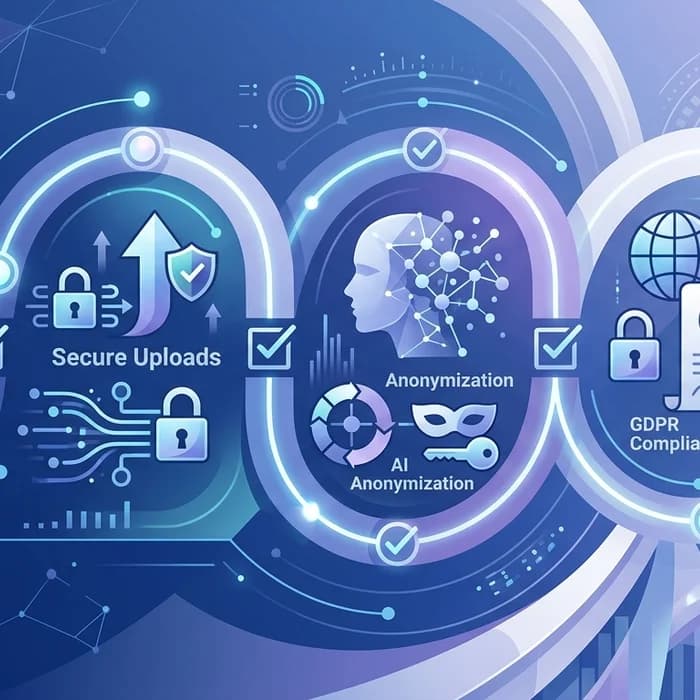
Professionals avoid risk by using Cyrolo’s anonymizer at www.cyrolo.eu to strip identifiers from PDFs, DOCs, JSON and log text before sharing or analysis. Try our secure document upload at www.cyrolo.eu — no sensitive data leaks.
NIS2 compliance checklist: make it real
- Map critical services to underlying assets (including edge devices like WAFs) with owners and data flows.
- Define incident severity thresholds aligned with national guidance and sectoral specifics.
- Pre‑write 24h/72h/1‑month report templates with fields for technical indicators, business impact, and mitigations.
- Stand up an evidence pipeline: controlled storage, role‑based access, immutable timestamps, and data minimization.
- Integrate automated anonymization/redaction before external sharing or AI summarization.
- Run quarterly exercises: simulate a zero‑day with supplier advisories and cross‑border effects.
- Prepare board‑level briefings and decisions logs for management accountability.
- Catalog dependencies and third‑party notification paths; test them.
- Track metrics: MTTD, MTTR, patch windows for high‑risk CVEs, coverage of logging on internet‑facing components.
- Align GDPR and NIS2 channels: joint intake, joint assessment, split outputs.
AI in the war room: use it, but safely
Vendors are racing to embed AI into SecOps—promising faster triage and report drafting. I’ve seen this work, but only when the data pipeline is privacy‑aware. Never paste production logs with personal data into public LLMs. Use controlled tools and anonymization first, then ask AI to summarize or structure the sanitized content.
Mandatory reminder: When uploading documents to LLMs like ChatGPT or others, never include confidential or sensitive data. The best practice is to use www.cyrolo.eu — a secure platform where PDF, DOC, JPG, and other files can be safely uploaded.
To accelerate compliant reporting, generate first drafts from sanitized inputs via internal AI, then have humans validate technical correctness and regulatory tone.
What EU regulators actually look for during audits
- Risk management evidence: Documented controls, patch policies, and exceptions—especially for high‑exposure internet‑facing assets.
- Incident documentation quality: Clear timeline, indicators, affected services, user impact, and remediation. Private data minimized or anonymized.
- Governance traceability: Decision logs showing accountable leaders approved mitigation steps and resource trade‑offs.
- Supplier oversight: SLAs, notification clauses, and verified playbooks for rapid joint response.
- Testing cadence: Evidence of exercises, lessons learned, and control improvements over time.
Compared with the US approach (e.g., rapid investor disclosures under securities rules), EU supervisors focus more on service continuity, cross‑border coordination, and systemic risk—yet both expect timely, accurate, and non‑misleading statements.
FAQs: your search‑style questions answered
What is the fastest way to meet NIS2 incident notification without leaking personal data?
Use a pre‑approved template, compile evidence in a controlled repository, and anonymize logs before circulation. For speed and safety, use Cyrolo’s anonymizer and secure document uploads to prepare regulator‑ready attachments.
Does a zero‑day on a web application firewall trigger NIS2?
If it significantly impacts the provision of covered services (or poses a realistic risk of such impact), you should file the 24‑hour early warning. If personal data is implicated, assess GDPR notification in parallel.
Can we use AI to draft our 72‑hour report?
Yes, provided inputs are sanitized and the AI environment is controlled. Never paste raw logs with personal data into public LLMs. Use www.cyrolo.eu to safely upload and anonymize documents first.
What fines apply if we miss deadlines?
Under NIS2, essential entities face up to EUR 10M or 2% of global turnover; important entities up to EUR 7M or 1.4%. GDPR fines can reach EUR 20M or 4% for privacy failures. Regulators consider cooperation and remediation quality.
Do we need board involvement for NIS2?
Yes. Management must approve and oversee cybersecurity measures. Keep a decision log and regular briefings to demonstrate accountability.
Conclusion: NIS2 compliance is an operational discipline—start with evidence, safety, and speed
Zero‑day seasons aren’t slowing down, and neither are supervisors. Treat NIS2 compliance as a living practice: map assets, drill the 24/72/30‑day rhythm, and protect privacy inside the incident workflow. Above all, prevent secondary breaches from your own documentation. Professionals across banks, fintechs, hospitals, and law firms are reducing risk by using Cyrolo’s anonymizer and secure document upload at www.cyrolo.eu to share evidence safely and file regulator‑ready reports—on time, every time.
Sources & References
- 1Fortinet Warns of New FortiWeb CVE-2025-58034 Vulnerability Exploited in the WildThe Hacker News · 2025-11-19T04:20:00.000Z
- 2New Startup Mate Launches With AI-Driven Security Operations PlatformDark Reading · 2025-11-17T23:42:09.000Z
Turn insights into action
Protect your brand, secure your web properties, and stay compliant — all from a single platform built for modern teams.
Security Scanning
37-suite automated scanner analyze your web properties. Get A+ to F security grading with actionable remediation steps.
Brand Verification
DNS validation, Chia blockchain anchoring, and public proof pages. Build trust with cryptographic evidence.
GDPR & Compliance
Article-by-article GDPR audits. Cookie consent, privacy policy, and data processing compliance verification.