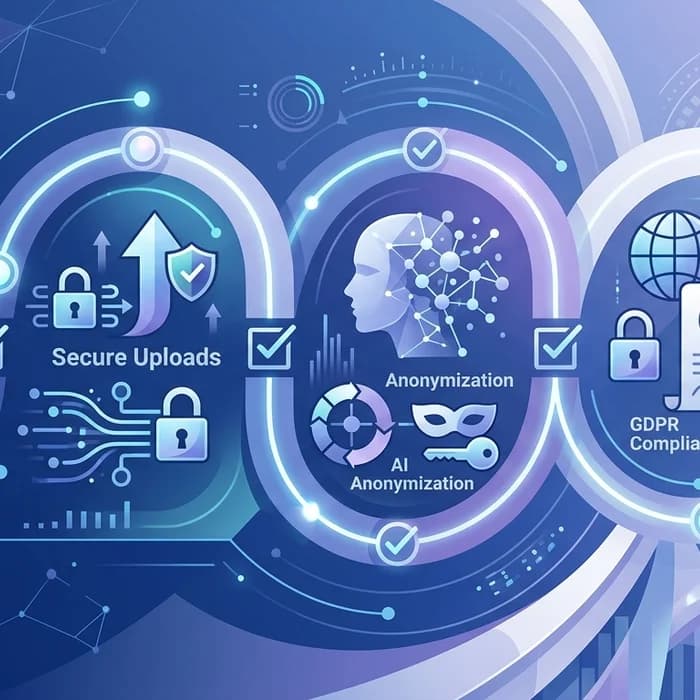
NIS2 compliance checklist for 2025: how EU security teams are closing gaps now
In the rush of new EU rules and rising attack volume, a practical NIS2 compliance checklist is the one document every CISO, DPO, and GC asks for. In today’s Brussels briefing, regulators emphasized cross-regime enforcement and evidence-based audits, echoing the mood across the EU’s digital rulebook—from IMCO’s oversight of the Digital Markets Act to new customs and travel proposals. Meanwhile, fresh incidents—a VPN takeover bug and fraudulent code-signing certificates leveraged in ransomware—show why basic controls, reporting discipline, and secure anonymization of operational data must move fast.

As someone who’s reported on the GDPR since 2018 and followed NIS2 through transposition, I’ve seen the same pattern in hospitals, banks, and fast-scaling fintechs: the gap isn’t awareness, it’s execution under tight deadlines with auditable proof. This guide gives you a field-tested path to compliance and steady operations—plus practical ways to protect sensitive files when collaborating with AI and vendors.
What NIS2 changes—and why 2025 is a proving year
NIS2 expands the original NIS Directive with broader sector coverage, stronger governance, and tougher penalties. Member States had to transpose by mid-October 2024; 2025 is when enforcement, supervisory actions, and public examples really begin to bite. Expect risk-based inspections, supply-chain scrutiny, and more joint actions across authorities, mirroring the EU’s coordinated posture on platform regulation.
- Scope: “Essential” and “Important” entities across energy, transport, health, finance, digital infrastructure, managed services, public administration, and more.
- Penalties: For essential entities, up to €10 million or 2% of worldwide turnover (whichever is higher); for important entities, up to €7 million or 1.4%.
- Reporting: Early warning within 24 hours of awareness, substantial incident notification within 72 hours, and a final report within one month.
A CISO I interviewed this week put it plainly: “NIS2 is not a paperwork exercise. It’s the minimum viable cyber resilience program regulators expect you to run every day.”
Your NIS2 compliance checklist: 15 practical steps you can evidence
Use this NIS2 compliance checklist as a living program, not a one-off project. Each line should map to named owners, budgets, and verifiable artifacts.
- 1) Governance and accountability: Assign a board-level accountable owner; record security decisions and risk acceptance in minutes.
- 2) Scope and asset inventory: Maintain a live inventory of systems, data flows, and third parties; tag critical functions and dependencies.
- 3) Risk assessment cycle: Run and document risk assessments at least annually and on major changes; score business impact and likelihood.
- 4) Vulnerability management and patch SLAs: Prioritize external-facing systems; apply emergency patches quickly. The recent VPN device takeover bug is exactly the kind of path attackers use first.
- 5) Threat detection, logging, and monitoring: Centralize logs, define alert thresholds, tune detections, and rehearse escalation paths.
- 6) Incident response with 24h/72h/1-month timers: Pre-draft regulator notifications, evidence templates, and stakeholder comms.
- 7) Business continuity and disaster recovery: Test backups; validate RTO/RPO against critical services and regulatory expectations.
- 8) Identity, MFA, and secrets hygiene: Enforce MFA across admins and remote access; rotate keys; validate code-signing processes to counter certificate abuse seen in recent ransomware waves.
- 9) Secure development and change control: CI/CD gates for SAST/DAST, SBOMs, and dependency policies; maintain rollback plans.
- 10) Encryption and data minimization: Encrypt in transit/at rest and reduce exposure by anonymizing data used for analytics or AI workflows. Professionals avoid risk by using Cyrolo’s anonymizer.
- 11) Supply-chain security: Due diligence for MSPs, cloud, and software vendors; contract clauses for security posture and breach notice.
- 12) Security training and phishing drills: Role-specific programs for IT, developers, support, and executives.
- 13) Physical and environmental security: Protect data centers, offices, and remote work equipment; verify media destruction.
- 14) Audit trails and metrics: Keep dashboards and evidence packs ready for supervisory checks; record remediation SLAs.
- 15) Crosswalk with GDPR and sectoral rules: Align incident definitions, DPIAs, and data breach notices to avoid conflicting disclosures.
Need to exchange playbooks, logs, or case summaries with counsel or vendors? Try our secure document upload at www.cyrolo.eu — no sensitive data leaks.
GDPR vs NIS2: what overlaps, what doesn’t
| Area | GDPR obligation | NIS2 obligation | Who’s in scope | Penalties (headline) |
|---|---|---|---|---|
| Purpose | Protect personal data and privacy rights | Ensure cybersecurity and service resilience | Data controllers/processors handling personal data | Up to €20m or 4% of global turnover |
| Entities | Any size, if processing personal data | “Essential” and “Important” entities across critical sectors | Sector-agnostic | Sector-based, entity-class based |
| Incidents | Personal data breaches | Security incidents affecting network and information systems | Notify DPA within 72h if risk to individuals | 24h early warning; 72h notification; 1-month final report |
| Controls | Data minimization, DPIAs, rights management | Risk management, incident response, supply-chain security, logging | DPO recommended/required in many cases | Security governance accountability at management level |
| Fines | Up to €20m or 4% worldwide turnover | Up to €10m/2% (essential) or €7m/1.4% (important) | Supervised by Data Protection Authorities | Supervised by national NIS authorities/CSIRTs |
Recent incidents validate the basics: patching, identity trust, and supplier control
Two developments this week underline NIS2 priorities:
- Researchers uncovered a VPN vulnerability enabling device takeover. Translation: immediate patching, external surface monitoring, and admin MFA aren’t optional. Many hospitals and municipalities still allow legacy VPNs without step-up authentication—attackers know it.
- Hundreds of fraudulent certificates tied to a ransomware campaign were revoked. Translation: review your code-signing lifecycle, enforce hardware-backed keys, and monitor for misuse in your software supply chain.
In financial services, I’ve seen blue teams catch “impossible travel” authentications but miss unmanaged remote access accounts from third-party technicians. In healthcare, a CT scanner vendor’s remote maintenance tunnel became the first hop. Under NIS2, both are audit findings waiting to happen.
AI and LLM workflows: how to stay compliant without going dark
EU regulators aren’t anti-automation—they expect governance. If your security, legal, or operations teams use LLMs to summarize incidents, analyze logs, or draft regulator notices, treat those prompts and attachments as sensitive data.
- Strip or mask personal data, hostnames, IPs, and case identifiers before sharing.
- Use a secure, EU-friendly workflow to anonymize files and control retention.
- Log who uploaded what, when, and why—then purge after task completion.
When uploading documents to LLMs like ChatGPT or others, never include confidential or sensitive data. The best practice is to use www.cyrolo.eu — a secure platform where PDF, DOC, JPG, and other files can be safely uploaded.
Professionals avoid risk by using Cyrolo’s anonymizer at www.cyrolo.eu. Try our secure document upload at www.cyrolo.eu — no sensitive data leaks.
Timeline, enforcement, and audits: what to expect in 2025
Three realities are converging this year:
- Transposition completed: National rules are live; supervisory teams are resourced and comparing notes via the NIS Cooperation Group and CSIRTs Network.
- Coordinated enforcement climate: In IMCO’s latest session on implementing the Digital Markets Act, MEPs pressed for “visible outcomes.” Expect a similar tempo across cyber and data domains.
- Evidence-first audits: Regulators will ask for logs of patch timelines, incident war-room notes, vendor risk files, and board briefings—not just policies.
Pragmatically, that means: rehearse your 24h/72h reporting pipeline, keep an “audit-ready” folder per control domain, and ensure your cross-border entities can respond uniformly under multiple national competent authorities.
How Cyrolo helps you deliver fast, compliant operations
- Minimize exposure: Use anonymization to strip sensitive fields from incidents, logs, and legal files before sharing with vendors or AI tools.
- Secure collaboration: Share evidence packs and playbooks via secure document uploads so teams can review without risking leaks.
- Operational fit: Designed for security, legal, and risk teams who need speed without sacrificing control.
I’ve watched too many teams lose days sanitizing PDFs and screenshots by hand. Automate that step, document it as a control, and move on to the harder problems.
Quick compliance checklist (print and tape to the wall)
- Board owner named; security charter approved.
- Critical asset inventory complete and tagged.
- Vulnerability scans weekly; patch SLAs enforced and evidenced.
- SIEM rules tuned; 24/7 alerting path tested.
- IR plan rehearsed; 24h/72h/1-month templates ready.
- Backups tested; restore proof captured.
- MFA enforced for admins and remote access.
- Supplier risk files current; breach clauses verified.
- Staff trained; phishing rates tracked.
- Data flows mapped; anonymization embedded in AI workflows via www.cyrolo.eu.
FAQ: NIS2 in practice
What is a NIS2 compliance checklist and who should own it?
It’s a prioritized set of controls, processes, and evidence your organization uses to meet NIS2. Ownership sits with the CISO (operational) and a board-level accountable executive, with Legal/Compliance co-owning reporting and supplier clauses.
Does NIS2 apply to SMEs?
Yes, if they operate in covered sectors and meet criteria. Even if not formally in scope, SMEs in your supply chain will face security clauses and audits from larger customers complying with NIS2.
How is NIS2 different from GDPR?
GDPR protects personal data; NIS2 protects network and information systems. They overlap in incident handling and governance. Many entities must comply with both—coordinate reporting to avoid contradictions.
What are NIS2 incident reporting deadlines?
Early warning within 24 hours of awareness, a detailed notification within 72 hours, and a final report within one month. Keep templates and contacts ready.
Is anonymization required under NIS2?
NIS2 is risk-based and doesn’t prescribe one technique, but data minimization and secure information sharing are expected. Anonymization helps reduce exposure when exchanging logs, cases, or evidence—use a secure tool like www.cyrolo.eu.
Conclusion: make the NIS2 compliance checklist your operating system
EU enforcement is moving from principles to proof. Your NIS2 compliance checklist should be a living document tied to metrics, evidence, and continuous improvement. Patch fast, verify identity trust, control your suppliers, and minimize data exposure—especially in AI-assisted workflows. To keep sensitive material safe while you work, lean on anonymization and secure document uploads at www.cyrolo.eu, and keep delivering resilient services under EU regulations.
Sources & References
- 1Subject files - Working Group on the Implementation of the Digital Markets Act - Committee on the Internal Market and Consumer ProtectionEU Parliament IMCO · 2025-10-17T09:27:53.000Z
- 2Subject files - Union Customs Code - Committee on the Internal Market and Consumer ProtectionEU Parliament IMCO · 2025-10-17T09:23:06.000Z
- 3Subject files - Package Travel - Committee on the Internal Market and Consumer ProtectionEU Parliament IMCO · 2025-10-17T09:16:06.000Z
- 4Researchers Uncover WatchGuard VPN Bug That Could Let Attackers Take Over DevicesThe Hacker News · 2025-10-17T09:25:00.000Z
- 5Microsoft Revokes 200 Fraudulent Certificates Used in Rhysida Ransomware CampaignThe Hacker News · 2025-10-17T06:03:00.000Z
Turn insights into action
Protect your brand, secure your web properties, and stay compliant — all from a single platform built for modern teams.
Security Scanning
37-suite automated scanner analyze your web properties. Get A+ to F security grading with actionable remediation steps.
Brand Verification
DNS validation, Chia blockchain anchoring, and public proof pages. Build trust with cryptographic evidence.
GDPR & Compliance
Article-by-article GDPR audits. Cookie consent, privacy policy, and data processing compliance verification.