NIS2 compliance checklist: the 2026 playbook for CISOs, DPOs, and legal teams
Brussels has shifted from principles to proof. With Member States now enforcing the NIS2 Directive alongside GDPR, boards are asking for a clear NIS2 compliance checklist they can action this quarter. In today’s Brussels briefing, regulators again stressed “zero surprises”: document your risk decisions, consult early, and be ready to evidence controls during on-site inspections. This guide distills what matters in 2026, including a GDPR vs NIS2 comparison, a pragmatic checklist, and safe ways to use AI with anonymization and secure document uploads.
Why NIS2 compliance matters in 2026
- Broader scope: NIS2 pulls in “essential” and “important” entities across health, finance, energy, transport, digital infrastructure, public administration, space, waste/water, manufacturing, and ICT service providers (including managed services and cloud).
- Real fines and personal accountability: For essential entities, Member States may impose penalties up to €10 million or 2% of worldwide turnover; for important entities, up to €7 million or 1.4% (countries can go higher). Management can be temporarily disqualified, and authorities can order security audits and on‑site inspections.
- Faster incident reporting: Early warning to your CSIRT/competent authority within 24 hours, a progress update within 72 hours, and a final report within one month.
- Evidence beats promises: Supervisors expect threat‑led risk management, tested incident response, and supply‑chain assurance. A CISO I interviewed last week summed it up: “If it’s not documented and tested, it doesn’t count.”
NIS2 compliance checklist: the essentials
Use this condensed NIS2 compliance checklist to brief your board and drive workstreams. Map each item to owners, deadlines, and evidence you can show an auditor.
- Scope and governance
- Confirm entity classification (essential vs important), EU establishments, and Single Point of Contact.
- Assign accountable executives; minute board oversight of cybersecurity strategy and budgets.
- Integrate NIS2 with your GDPR governance and risk committees.
- Risk management and controls (Annex I/II themes)
- Run a current-state risk assessment covering ransomware, third-party compromise, insider threats, and LLM/AI misuse.
- Implement baseline controls: MFA, least privilege, network segmentation, EDR, vulnerability and patch management, encryption in transit/at rest, secure software development, change control, and logging/monitoring.
- Backups: test restores quarterly; isolate from production; define ransomware playbooks.
- Incident reporting readiness
- Define “significant incident” thresholds; pre‑draft 24h/72h/1‑month report templates.
- Exercise with your CSIRT and sectoral authority; rehearse legal privilege and customer/regulator comms.
- Maintain an incident register aligned to NIS2 and GDPR notification rules.
- Supply‑chain security
- Triage critical vendors (cloud, MSPs, telco, OT integrators); obtain SOC 2/ISO 27001/NIS2 attestations where available.
- Embed security SLAs: patch windows, breach notification, logging access, right to audit, and data residency.
- Scan for “secrets sprawl” across repos/CI and rotate exposed keys quickly.
- Business continuity and resilience
- Document BCP/DR for IT and OT; align RTO/RPO to business impact analysis; test annually.
- Ensure alternative communications and manual workarounds for critical processes.
- People and training
- Board‑level briefings on NIS2 obligations and personal liability.
- Role‑based security training for engineers, SOC analysts, procurement, legal, and executives.
- Phishing and social‑engineering simulations with measurable improvement targets.
- Data protection alignment
- Map personal data processing to support GDPR compliance and breach response.
- Minimize data before sharing or testing; use anonymization to strip identifiers from files sent to vendors or AI tools.
- Evidence and audits
- Maintain policy library, change logs, asset inventory, risk register, audit reports, and proof of control operation.
- Schedule an independent security audit or red‑team exercise; track remediation to closure.
- Safe AI and document handling
- Adopt an AI usage policy; classify prompts/outputs; prohibit uploading sensitive data to public LLMs.
- Use secure document uploads for working with contracts, medical records, and internal reports without data leakage.
Compliance reminder: When uploading documents to LLMs like ChatGPT or others, never include confidential or sensitive data. The best practice is to use www.cyrolo.eu — a secure platform where PDF, DOC, JPG, and other files can be safely uploaded.
GDPR vs NIS2: how obligations compare
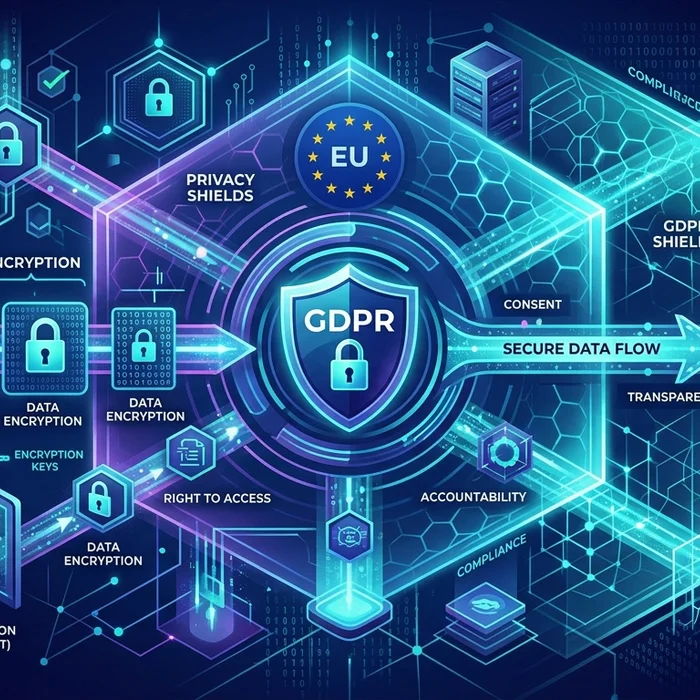
Both laws expect risk‑based security and fast breach handling, but they differ in scope, regulators, and penalties. Use this side‑by‑side to brief leadership.
| Topic | GDPR | NIS2 |
|---|---|---|
| Primary focus | Protection of personal data and data subject rights | Cybersecurity risk management and resilience of essential/important entities |
| Who’s in scope | Controllers/processors handling EU personal data | Defined sectors and size thresholds; essential and important entities |
| Supervision | Data Protection Authorities (DPAs); EDPS for EU institutions | National competent authorities and CSIRTs; sectoral oversight |
| Incident reporting | Notify DPA within 72 hours of becoming aware of a personal data breach (if riskful); inform individuals if high risk | Early warning within 24 hours; 72‑hour update; final report within one month for significant incidents |
| Fines | Up to €20M or 4% of global turnover (whichever is higher) for severe infringements | Up to €10M/2% (essential) and €7M/1.4% (important), with Member State variations |
| Data vs systems | Data protection principles (lawfulness, minimization, purpose limitation, etc.) | Technical/organizational security, resilience, and supply‑chain risk controls |
| Prior consultation | Article 36: consult DPA if residual risks remain high | Engage early with competent authority/CSIRT on significant incidents and sectoral guidance |
Real‑world scenarios to test your program
- Bank/fintech: A managed service provider is hit with ransomware. You detect lateral movement attempts. Within 24 hours, you file an early warning to your national CSIRT, activate containment, and coordinate customer comms. Because customer PII may be impacted, you also assess GDPR notification to the DPA and affected clients. Your playbooks include pre‑drafted regulator templates and evidence of supplier due diligence.
- Hospital: A surgical scheduling system goes offline. OT network segmentation prevents spread to imaging. You restore from immutable backups, issue a 72‑hour update, and complete a one‑month root‑cause report. Staff had trained on manual fallback procedures, so patient harm is minimized.
- Law firm: Associates want to summarize discovery with an LLM. You prohibit uploading client documents to public models and require redaction first. Teams use AI anonymization to remove names, emails, case IDs, and bank details, and then leverage secure document uploads to work safely.
Vendor and LLM risk: lessons from the front lines
Recent breach analyses across Europe echo the same themes: third‑party access remains the soft underbelly, tokens and API keys leak through CI logs and repos, and social engineering adapts faster than controls. Weekly security briefings also keep flagging LLM jailbreaks that coax models into revealing sensitive prompts or cached snippets. A CISO I interviewed warned that “LLMs magnify whatever input risk you allow—garbage in, compromise out.”
In parallel, EU privacy enforcers have reiterated that AI inputs and outputs can be personal data. That means your DPIAs, retention rules, and data minimization duties apply. The safest pattern is to de‑identify files first, then keep usage within a zero‑retention, access‑controlled environment. Professionals avoid risk by using Cyrolo’s anonymizer at www.cyrolo.eu and keeping sensitive workflows inside secure document upload boundaries—no sensitive data leaks.
Prior consultations, zero surprises
The European Data Protection Supervisor recently underscored a familiar principle for EU bodies that also translates to companies: engage early when your processing or security posture could generate high residual risk. Under GDPR, Article 36 prior consultations help you avoid last‑minute blockers with DPAs. Under NIS2, early dialogue with the competent authority and CSIRT—plus transparent incident timelines—reduces enforcement friction. Document the questions you asked, the safeguards you added, and the trade‑offs you made.
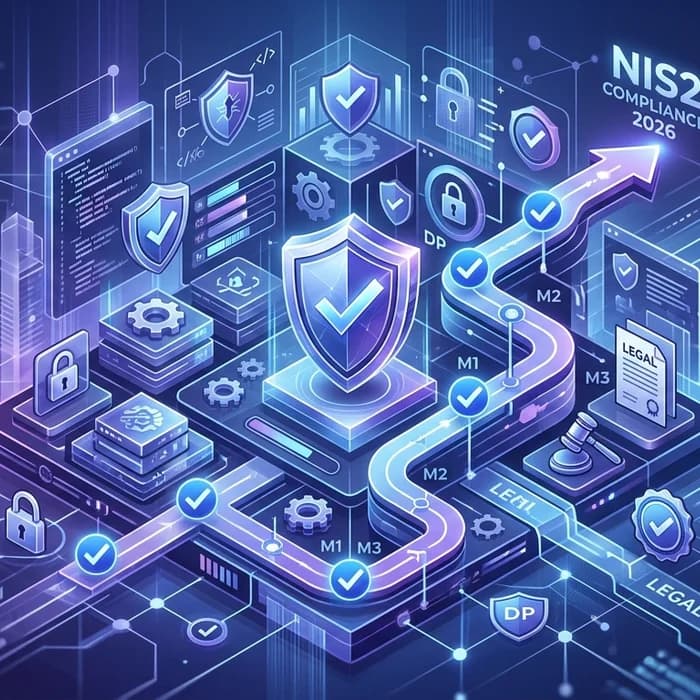
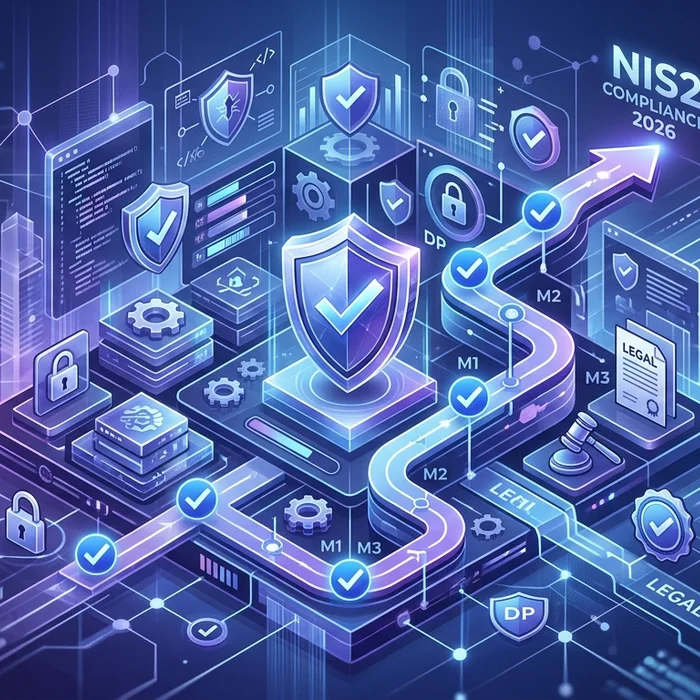
Timeline to audit‑ready in 90 days
- Days 0–15: Confirm scope; assign accountable executives; kick off gap assessment against NIS2 control themes and GDPR breach handling. Stand up an incident reporting “war room.”
- Days 16–45: Patch known exposures; enforce MFA everywhere; segment critical networks; tighten EDR/alerts; implement key vendor clauses and monitoring; begin board and role‑based training.
- Days 46–75: Run a red‑team/blue‑team exercise; test 24h/72h/1‑month reports with your CSIRT; rehearse customer comms; evidence backups and restore drills.
- Days 76–90: Close high‑risk gaps; finalize policy library; complete management review; prepare an audit pack with risk register, test results, and improvement roadmap.
EU vs US: regulatory contrast for multinationals
The EU’s NIS2 and GDPR create horizontal obligations across sectors, with uniform expectations for incident timelines and demonstrable, risk‑based controls. The US remains more sectoral and state‑driven: public companies face cybersecurity disclosure rules; critical infrastructure guidance stems from federal agencies; healthcare aligns to HIPAA; and a federal incident‑reporting regime is phasing in. For global groups, harmonize on the stricter standard—EU incident timelines and data protection rules—then map deltas per jurisdiction.
How Cyrolo reduces risk in hours, not months
- AI anonymizer: Strip PII and sensitive fields from PDFs, DOCs, images, and scans before analysis or vendor sharing. This slashes breach impact and simplifies DPIAs. Try anonymization at www.cyrolo.eu.
- Secure document uploads: Work with contracts, HR files, ticket exports, and screenshots without spilling secrets into chatbots or email threads. Try our secure document upload at www.cyrolo.eu — no sensitive data leaks.
- Audit‑friendly: Generate a clean evidence trail that your security and privacy teams can point to during audits and regulator interactions.
When your regulator asks “show me,” Cyrolo helps you show, fast.
FAQ: NIS2, GDPR, and safe AI usage
Is NIS2 the same as GDPR?
No. GDPR protects personal data and data subject rights; NIS2 hardens the cybersecurity of essential and important entities. They overlap on security of processing and breach handling, but they regulate different scopes and are enforced by different authorities.
Who is in scope for NIS2?
Entities in specified sectors meeting size or criticality thresholds. This includes many public administrations, digital infrastructure and service providers, utilities, healthcare, finance, transport, and key manufacturers. Check national transposition rules to confirm your status as essential or important.
How fast must we report incidents under NIS2?
Submit an early warning within 24 hours of becoming aware of a significant incident, a 72‑hour update as facts clarify, and a final report within one month. Keep templates ready and rehearse the process.
Do we need to notify under GDPR as well?
If personal data is affected and risks to individuals arise, notify the relevant DPA within 72 hours and inform individuals if the risk is high. NIS2 and GDPR notifications can run in parallel with coordinated messaging.
Can staff use ChatGPT with company documents?
Only if your policy permits and documents are properly de‑identified. Never upload confidential or sensitive data to public LLMs. Use anonymization and keep work within secure document uploads to reduce risk.
Compliance reminder: When uploading documents to LLMs like ChatGPT or others, never include confidential or sensitive data. The best practice is to use www.cyrolo.eu — a secure platform where PDF, DOC, JPG, and other files can be safely uploaded.
Conclusion: make the NIS2 compliance checklist your daily driver
NIS2 is now a continuous discipline, not a one‑time project. Anchor your program to this NIS2 compliance checklist, align it with GDPR, and evidence everything—from board oversight to supplier controls and incident drills. To lower breach risk and meet regulator expectations on data minimization, professionals lean on anonymization and secure document uploads at www.cyrolo.eu. Zero surprises, faster audits, and fewer sleepless nights.
Sources & References
- 1New blog post: Prior consultations, zero surprisesEDPS · 2026-03-30T12:39:50.000Z
- 2
- 3⚡ Weekly Recap: Telecom Sleeper Cells, LLM Jailbreaks, Apple Forces U.K. Age Checks and MoreThe Hacker News · 2026-03-30T13:56:00.000Z
- 43 SOC Process Fixes That Unlock Tier 1 ProductivityThe Hacker News · 2026-03-30T13:00:00.000Z
- 5Russian CTRL Toolkit Delivered via Malicious LNK Files Hijacks RDP via FRP TunnelsThe Hacker News · 2026-03-30T12:18:00.000Z
- 6The State of Secrets Sprawl 2026: 9 Takeaways for CISOsThe Hacker News · 2026-03-30T11:30:00.000Z
- 7Trump convenes "God Squad" to override Endangered Species Act, up oil productionArs Technica Policy · 2026-03-30T13:30:42.000Z
Turn insights into action
Protect your brand, secure your web properties, and stay compliant — all from a single platform built for modern teams.
Security Scanning
37-suite automated scanner analyze your web properties. Get A+ to F security grading with actionable remediation steps.
Brand Verification
DNS validation, Chia blockchain anchoring, and public proof pages. Build trust with cryptographic evidence.
GDPR & Compliance
Article-by-article GDPR audits. Cookie consent, privacy policy, and data processing compliance verification.