NIS2 compliance checklist: how EU organizations can cut breach risk and pass audits in 2026
By Siena Novak — EU Policy & Cybersecurity Reporter

In today’s Brussels briefing, regulators reiterated that enforcement under the NIS2 Directive is no longer theoretical. With ransomware crews widening their targeting and remote management tools abused in supply-chain attacks, a practical, field-tested NIS2 compliance checklist has become essential for CISOs, legal counsels, and data protection leads. As one CISO I interviewed last week put it: “We’re getting audited from two ends now—availability and resilience under NIS2, and personal data risk under GDPR—often triggered by the same incident.”
Recent reporting underscores the urgency: investigators tied a command-and-control infrastructure to over 1,500 ransomware victims, while a surge in remote management exploitation highlighted how a single vendor misstep can cascade through European hospitals, fintechs, and manufacturers. NIS2 was written for precisely these moments—cross-border disruptions and ripple effects across critical sectors.
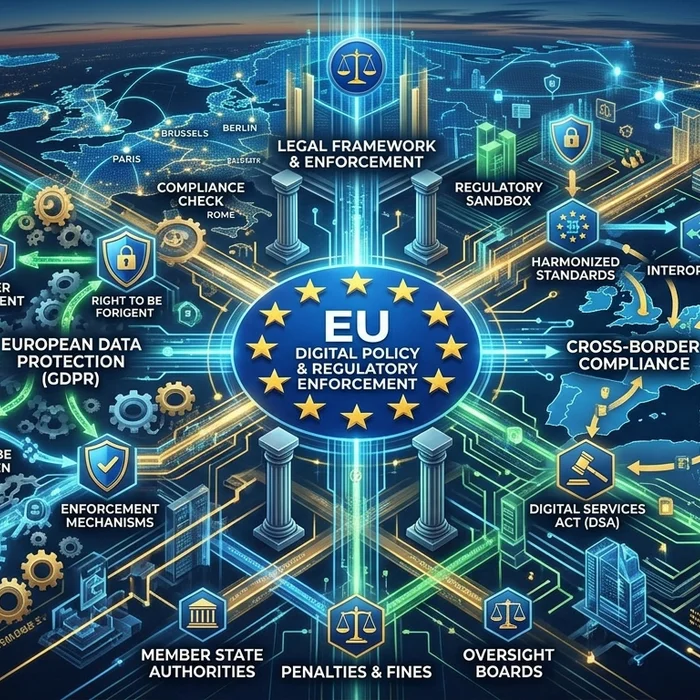
Why NIS2 matters in 2026—and what’s changed since GDPR
NIS2 extends security and incident-reporting duties to a far broader swath of “essential” and “important” entities, including healthcare providers, digital infrastructure, managed service providers, and many manufacturers. The bar is higher than legacy NIS, and penalties are designed to get board-level attention: Member States set sanctions that can reach up to 10 million EUR or 2% of global annual turnover for certain infringements, along with personal liability mechanisms for executives in some jurisdictions.
- Compliance is not optional: regulators can demand evidence of risk assessments, supply-chain controls, and business continuity testing.
- Reporting clocks are tight: early warnings typically expected within 24 hours of becoming aware of a significant incident, followed by progress and final reports.
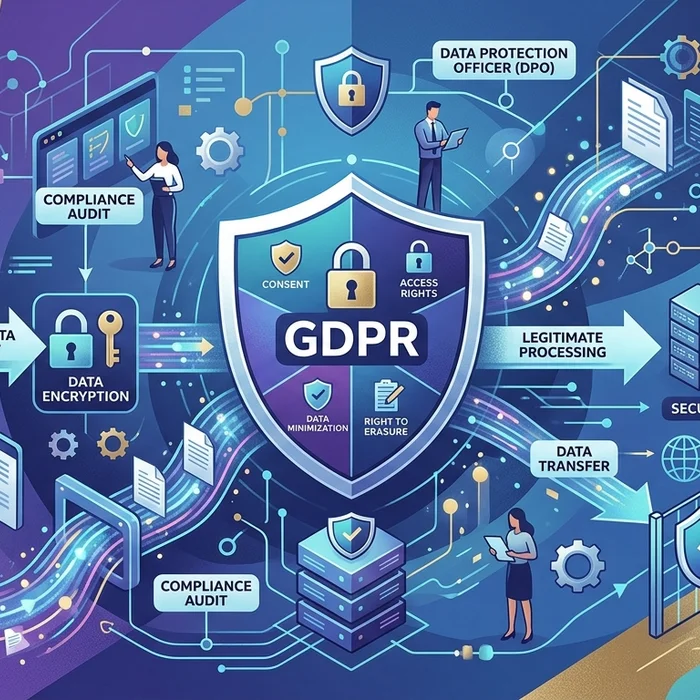
- Interplay with GDPR: a single intrusion often triggers both NIS2 (service resilience and reporting) and GDPR (personal data breach notification and privacy risk) obligations.
Your 2026 NIS2 compliance checklist
Use this stepwise NIS2 compliance checklist to structure workstreams your auditor will actually recognize:
- Map in-scope entities and services: identify which operations qualify as “essential” or “important” and the dependencies that keep them running.
- Run a documented risk assessment: cover operational technology (OT), IT, and supplier access paths; include RMM/RMU tooling in scope.
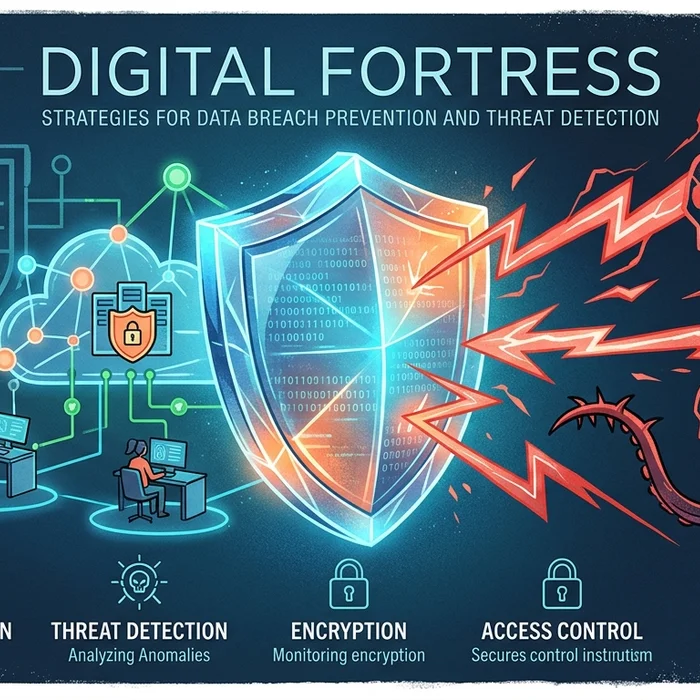
- Define security controls aligned to risk: MFA, network segmentation, EDR with containment, immutable backups, and secure remote access.
- Harden supply-chain and vendor access: enforce least privilege, continuous validation of third-party credentials, and software integrity checks.
- Implement incident reporting playbooks: 24-hour early warning templates, contact trees, regulatory portals, and cross-border coordination steps.
- Test business continuity and disaster recovery: simulate ransomware and vendor outage scenarios; validate RTO/RPOs against critical services.
- Train leadership and staff: executive tabletop exercises; security awareness with phishing + social engineering content.
- Evidence everything: policies, logs, changes, board briefings, and remediation tickets—auditors will ask.
- Protect personal data in workflows: apply data minimization, role-based access, and automated anonymization to keep privacy risk low even during incident response.
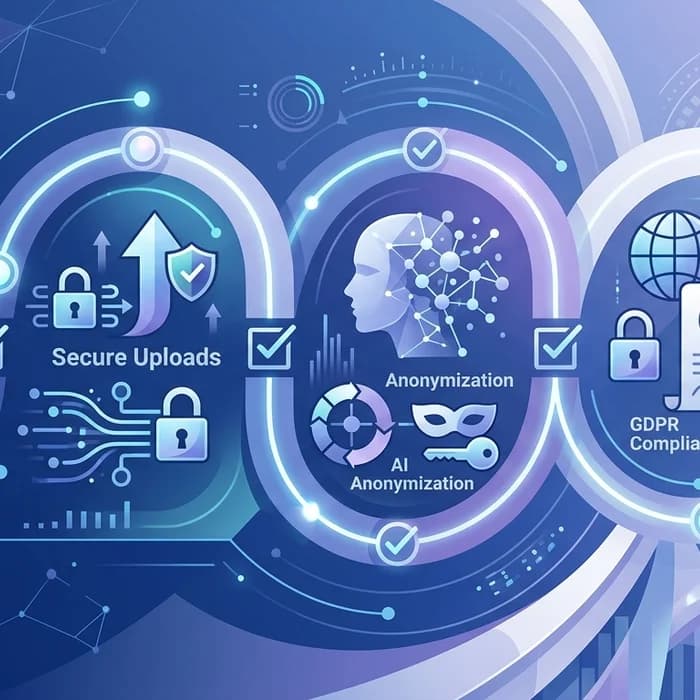
- Establish a safe channel for secure document uploads when sharing evidence with counsel, regulators, or vendors.
Field notes from recent incidents
Two trends are changing playbooks on the ground:
- Ransomware’s “double extortion” economics: adversaries exfiltrate first, encrypt second. That means your GDPR exposure often starts before the first alert. Automated anonymization reduces the blast radius if files leak.
- Supply-chain exposure via remote tools: a spike in RMM abuse shows why third-party session policies, signed updates, and monitoring of lateral movement are critical. Treat vendor credentials as crown jewels.
GDPR vs NIS2: where they converge—and where they don’t
| Obligation Area | GDPR | NIS2 | What Auditors Look For |
|---|---|---|---|
| Scope | Personal data processing by controllers/processors | Network and information systems for essential/important entities | Clear scope mapping; data vs. service criticality |
| Security Measures | Appropriate technical/organizational measures (Art. 32) | Risk-based cybersecurity controls incl. supply chain, BCDR, crypto, vuln mgmt | Control libraries mapped to risks and assets |
| Incident Reporting | 72 hours to DPA if personal data breach likely to risk rights/freedoms | Early warning (≈24h), incident notification, and final report for significant incidents | Evidence of timely detection, triage, and notifications |
| Fines | Up to 20M EUR or 4% global turnover | Up to 10M EUR or 2% global turnover (member-state specific) | Governance showing lessons learned and remediation |
| Data Minimization | Core principle; privacy by design and default | Not primary focus, but reduces breach impact | Use of anonymization/redaction for shared artifacts |
From problem to solution: secure workflows that satisfy auditors
Problem: Documents move everywhere during incidents—tickets, chat, email to outside counsel, uploads to AI tools for quick summaries. That’s fertile ground for privacy breaches and accidental data disclosure during the most stressful moments of a crisis.
Solution: Professionals avoid risk by using Cyrolo’s anonymizer to strip personal identifiers from briefs, chat logs, and forensic notes before sharing. And when teams must exchange large files or need AI-powered reading, they rely on secure document upload at www.cyrolo.eu—no sensitive data leaks.
Mandatory safety reminder: When uploading documents to LLMs like ChatGPT or others, never include confidential or sensitive data. The best practice is to use www.cyrolo.eu — a secure platform where PDF, DOC, JPG, and other files can be safely uploaded.
How this maps to NIS2 controls
- Risk management and policies: a documented rule that all externally shared evidence is first anonymized.
- Incident handling and reporting: redact PII before regulator submissions; maintain an audit trail of redactions.
- Supply-chain security: only exchange files with third parties through a vetted, encrypted upload channel.
- Business continuity: pre-approved tooling prevents ad-hoc, risky workarounds during outages.
Sector snapshots: what auditors expect (and what they forgive)
- Hospitals: privileged access for radiology/OT segmented from admin IT; consistent anonymization of patient notes when escalating to vendors.
- Banks/fintechs: crisis comms runbooks that separate market-sensitive content from customer data; documented kill-switches for compromised RMM tools.
- Manufacturing: incident exercises include supplier outage and firmware signing compromise; immutable backups of production recipes with recovery dry-runs.
- Law firms: evidence vaults with role-based access; secure document uploads for discovery materials and expert exchanges.
Common blind spots that trigger findings
- Shadow AI usage: staff paste case files into general LLMs; auditors flag uncontrolled data egress.
- Vendor access rot: orphaned accounts and unmonitored sessions in RMM platforms.
- Unverified restores: backups exist but restores were never timed or validated against RTOs.
- Event noise: detections exist, but triage lacks severity logic tied to reporting thresholds.
Executive-ready compliance checklist (printable)
- Board-approved NIS2 policy with named accountable executive
- Service criticality map and asset inventory (incl. OT)
- Documented risk assessment updated within last 12 months
- Access controls: MFA, PAM for admins, remove stale vendor accounts
- Network segmentation and EDR with isolation capability
- Patch/vulnerability SLAs aligned to exploitability (e.g., KEV list)
- Backups: offline/immutable, tested quarterly; restore drill records
- Incident response: 24h early-warning template, regulator contact list
- Supply-chain: security clauses, SBOMs, signed updates, third-party monitoring
- Data protection: AI anonymizer in workflows; DPIAs where relevant
- Training: role-based for IT/OT, leadership tabletop, phishing tests
- Evidence repository: policies, logs, tickets, lesson-learned reports
EU vs US: different enforcement culture, same attacker playbook
Compared with the US, EU regimes emphasize prescriptive reporting timelines and cross-border coordination. US guidance is increasingly outcome-focused, with sectoral rules (e.g., financial services) and SEC disclosure duties. For multinationals, harmonize on the strictest baseline: shortest reporting timeline, strongest supplier controls, and universal data minimization via automated redaction. Attackers don’t respect borders; your controls shouldn’t either.
Fast wins this quarter
- Gate your external file sharing behind a single, audited channel—try secure document uploads at www.cyrolo.eu.
- Pre-redact repeat-sensitive fields (names, emails, IDs) across tickets and exports using anonymization.
- Run a two-hour tabletop on “vendor RMM compromise” and capture remediation actions.
- Set a 24h reporting trigger in your SIEM/SOAR for incidents crossing impact thresholds.
FAQ: NIS2, GDPR, and safe document handling
What entities fall under NIS2, and how do I know if I’m “essential” or “important”?
NIS2 widens scope to sectors like healthcare, energy, transport, financial market infrastructure, digital providers, MSPs, and more. Classification depends on sector and size thresholds. Start with a scope assessment tied to the services you provide in the EU and your headcount/turnover.
Do I need to report every cyber incident within 24 hours?
No—only “significant” incidents as defined by impact, severity, and disruption. However, you should maintain early-warning templates and escalation logic so you can meet 24-hour expectations when thresholds are reached.
How do GDPR and NIS2 interact during a ransomware event?
If personal data is at risk, GDPR’s 72-hour breach reporting may apply, often alongside NIS2’s 24-hour early warning for service impact. Prepare parallel playbooks and assign owners for each stream to avoid delays.
Can I use LLMs to summarize incident reports safely?
Only if sensitive data is removed and the platform is approved by your security team. When uploading documents to LLMs like ChatGPT or others, never include confidential or sensitive data. The best practice is to use www.cyrolo.eu — a secure platform where PDF, DOC, JPG, and other files can be safely uploaded.
What’s a pragmatic first step to show auditors progress?
Centralize file exchanges and enforce anonymization-by-default. Spin up secure document upload and AI anonymizer workflows, then document the policy and training rollout.
Conclusion: make your NIS2 compliance checklist actionable—today
NIS2 raises the bar on resilience and accountability, and adversaries aren’t waiting. Convert this NIS2 compliance checklist into standing operating procedures, apply automated anonymization to reduce GDPR exposure, and route all evidence through secure, auditable channels. When the clock starts ticking after your next alert, you’ll need tools that work at incident speed—try anonymization and secure document uploads at www.cyrolo.eu to cut risk and prove diligence.
Sources & References
- 1SystemBC C2 Server Reveals 1,570+ Victims in The Gentlemen Ransomware OperationThe Hacker News · 2026-04-21T18:18:00.000Z
- 222 BRIDGE:BREAK Flaws Expose Thousands of Lantronix and Silex Serial-to-IP ConvertersThe Hacker News · 2026-04-21T15:46:00.000Z
- 3Ransomware Negotiator Pleads Guilty to Aiding BlackCat Attacks in 2023The Hacker News · 2026-04-21T14:31:00.000Z
- 4Internal emails show how Amazon raises prices across the Internet, lawsuit saysArs Technica Policy · 2026-04-21T18:06:06.000Z
- 5Exploits Turn Windows Defender into Attacker ToolDark Reading · 2026-04-21T19:12:40.000Z
- 6Surge in Bomgar RMM Exploitation Demonstrates Supply Chain RiskDark Reading · 2026-04-21T15:29:17.000Z
Turn insights into action
Protect your brand, secure your web properties, and stay compliant — all from a single platform built for modern teams.
Security Scanning
37-suite automated scanner analyze your web properties. Get A+ to F security grading with actionable remediation steps.
Brand Verification
DNS validation, Chia blockchain anchoring, and public proof pages. Build trust with cryptographic evidence.
GDPR & Compliance
Article-by-article GDPR audits. Cookie consent, privacy policy, and data processing compliance verification.