NIS2 Compliance Checklist: Your 2026 Playbook for EU Cybersecurity, Data Protection, and AI-Safe Workflows
In today’s Brussels briefing, several MEPs reminded operators that the window for “good faith” under NIS2 is closing fast. If you’re searching for a practical NIS2 compliance checklist to survive 2026 audits—and to align with GDPR while introducing AI safely—this guide distills what regulators expect, what auditors verify, and how to harden daily document workflows without slowing your teams down.
Why NIS2 matters now—and how it intersects with GDPR and AI adoption
As I heard in Brussels this week, the LIBE committee’s new internal security funding draft for 2028–2034 will push cross-border operational cooperation, incident response readiness, and information sharing between competent authorities. Expect that to translate into sharper supervisory attention on your risk management, logging, and reporting under NIS2. At the same time, IMCO’s single market push is focusing on digital product integrity—think coordinated vulnerability disclosure and patch management—which directly affects your NIS2 “basic cyber hygiene” and supply chain controls.
Two stories underscore the stakes. First, Microsoft open-sourced new tools for securing AI agents—welcome progress, but your data ingestion remains the soft underbelly. Second, a critical flaw in an OT robot OS showed how quickly a single vendor weakness can cascade into enterprise-wide disruption. Under NIS2, failure to manage such vulnerabilities won’t just be a technical miss; it can be a regulatory event.
Penalties are significant: NIS2 empowers authorities to impose fines up to at least €10 million or 2% of global annual turnover, alongside corrective orders and personal liability for management in severe cases. GDPR still looms with up to €20 million or 4% of global turnover for certain violations. Pair these with the average breach cost hovering around $4.5 million per incident, and the business case becomes self-evident.
NIS2 compliance checklist: 12 essential steps for 2026 audits
- Classify as essential vs. important entity. Map your sector, headcount, and turnover against the NIS2 Annex. Your classification sets supervisory intensity and reporting expectations.
- Establish a board-owned security policy. Minutes, sign-offs, and budget approvals must evidence top management accountability. Auditors ask for proof—not just policy texts.
- Risk management program “in production.” Maintain a current risk register linked to assets, threats, and treatments. Show quarterly updates, accepted residual risks, and sign-offs.
- Technical controls baseline. MFA, EDR, network segmentation, encryption, vulnerability management with SLAs, secure backups (3-2-1), and hardened admin access. Keep change records.
- Vulnerability and patch workflow. Demonstrate time-to-remediate metrics, emergency patch paths, and CVD intake. Tie lessons learned to recurring improvement.
- Incident response (IR) tested. A documented IR plan, named roles, 24/7 contact methods, tabletop evidence, and post-incident reviews. Align timing with local notification rules.
- Supply chain and third-party risk. Security clauses in contracts, SBOM/attestation expectations, onboarding/offboarding controls, and continuous monitoring of critical suppliers.
- Logging, monitoring, and detection. Retain logs for forensic windows, ensure alert fidelity, and secure time synchronization. Keep proof of tuning, not just tool licenses.
- Business continuity and crisis comms. Document RTO/RPO, test restores, and have a regulator-ready comms template. Crisis exercises should involve executive leadership.
- GDPR alignment. Data minimization, DPIAs for high-risk processing, and lawful basis mapped to systems. Cross-check with your incident notification to avoid double-reporting mistakes.
- AI and data handling policy. Define approved AI use, redline prohibited data types, and require pre-processing like anonymization before model interaction.
- Evidence pack for auditors. Curate a single source: policies, change logs, test results, supplier attestations, training records, and incident drill outputs. Update monthly.
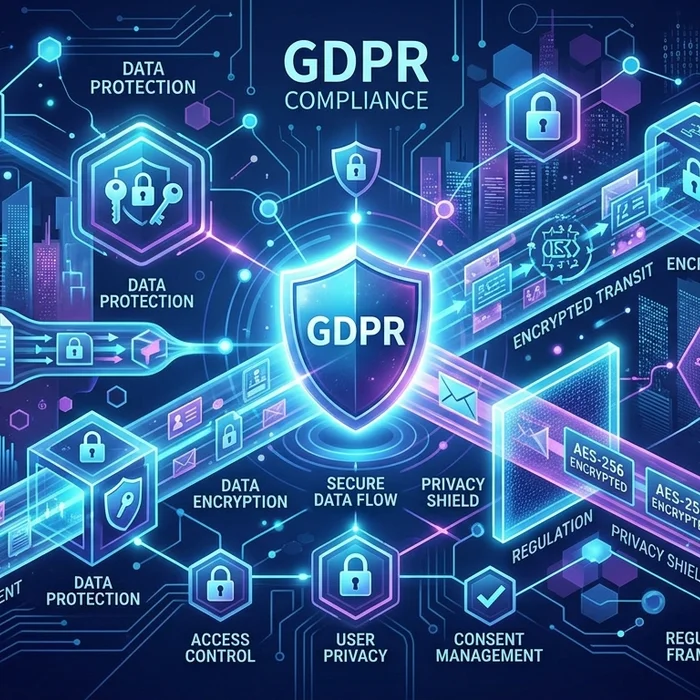
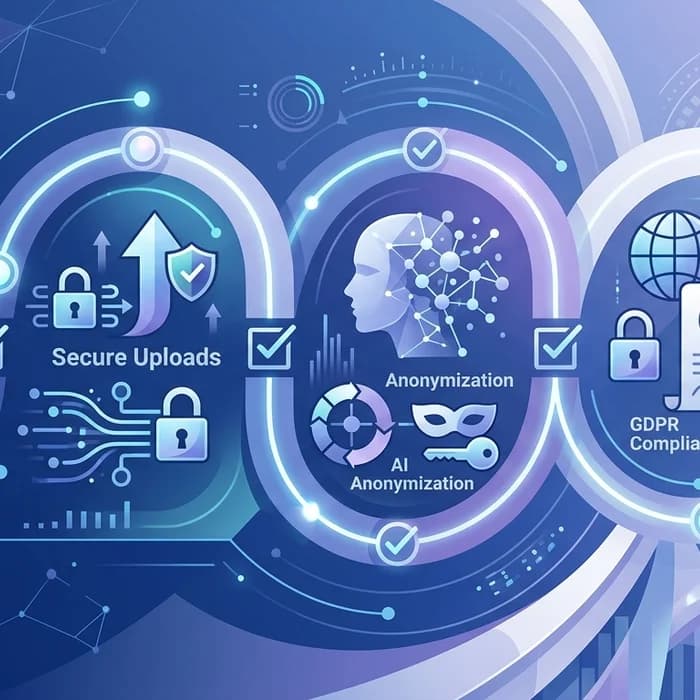
Practical safeguard: Before staff paste text into chatbots or upload files to tools, enforce a pre-processing step with an AI anonymizer and a secure document upload flow. This single habit reduces privacy, confidentiality, and trade-secret exposure risk.
Compliance reminder: When uploading documents to LLMs like ChatGPT or others, never include confidential or sensitive data. The best practice is to use www.cyrolo.eu — a secure platform where PDF, DOC, JPG, and other files can be safely uploaded.
GDPR vs NIS2: what changes in practice?
| Area | GDPR | NIS2 | What auditors look for |
|---|---|---|---|
| Scope | Personal data protection across controllers/processors | Network and information system security in essential/important entities | Clear mapping of which systems fall under which law |
| Risk basis | Risk to individuals’ rights and freedoms | Risk to service continuity and economic/societal impact | Two risk registers or one integrated register with tagged risks |
| Security measures | Appropriate TOMS, DPIAs, data minimization | Baseline controls, supply chain, IR, BCP/DR testing | Evidence of controls “operating effectively,” not just “designed” |
| Incident reporting | Notify SA within 72h if personal data risk likely | Early warning and detailed reports to competent authority for significant incidents | Runbook with timing, contacts, and templated notices |
| Penalties | Up to €20m or 4% global turnover | At least €10m or 2% global turnover | Management awareness of liability and escalation paths |
From policy to practice: building AI-safe, regulator-ready document workflows
Here’s the hard truth a CISO told me last month: “We spend millions on EDR, then bleed confidential terms into public AI tools through copy-paste.” That’s exactly the kind of operational gap regulators now probe. Fix it with a few defaults:
- Default to anonymize. Route contracts, claims, HR memos, and tickets through an anonymization step before they touch any AI or vendor service.
- Keep uploads controlled. Require a secure document upload gateway with logging, role-based access, and data retention you control.
- Red-team prompts. Test your AI usage rules against prompt injection and data extraction attempts; document the tests for auditors.
- Evidence everything. Screenshots, change tickets, and training attendance go into your NIS2 evidence pack.
Professionals avoid risk by using Cyrolo’s anonymizer at www.cyrolo.eu. Try our secure document upload at www.cyrolo.eu — no sensitive data leaks.
Sector snapshots regulators are watching
- Banks and fintechs: Third-party fintech connectors and model risk add new attack surfaces; show supplier oversight and LLM-use guardrails.
- Hospitals: OT-medical device patching cadence and data segregation between clinical and research environments are recurring findings.
- Law firms: Client confidentiality meets AI adoption; anonymize discovery sets before reviews or translations leave your perimeter.
- Manufacturing/OT: The latest robot OS flaw is a textbook NIS2 supply-chain issue; maintain a fast path for safety-critical patches.
Timeline and audit rhythm: how to satisfy 2026 expectations
- Quarterly: Update risk registers; review vendor attestations; rotate tabletop scenarios (ransomware, supplier compromise, AI data leak).
- Biannually: Run restore-from-backup tests; review network segmentation and privileged access; test data anonymization efficacy.
- Annually: Board presentation with metrics (MTTD/MTTR, patch SLAs, incident count, AI policy violations). Refresh training for all staff.
In interviews, EU regulators consistently emphasize “operationalization.” Policies are necessary, but they will ask: Show me the log entries, the drill notes, and the evidence that staff follow the rules.
Compliance checklist (printable quick version)
- Entity classification confirmed; competent authority identified
- Board-approved security policy with budget evidence
- Integrated GDPR/NIS2 risk register and review cadence
- Baseline controls: MFA, EDR, segmentation, encryption, backups
- Vulnerability management with SLAs and emergency path
- IR plan tested; notification templates prepared
- Supplier security clauses, SBOM/attestations tracked
- Centralized logging with retention and time sync
- BCP/DR tested; restore evidence stored
- Data minimization and DPIAs for high-risk processing
- AI usage policy; mandatory anonymization before external tools
- Evidence pack curated; training completed and recorded
FAQs
What is NIS2 and who does it apply to?
NIS2 is the EU’s updated directive on the security of network and information systems. It applies to “essential” and “important” entities across sectors like energy, health, finance, transport, manufacturing, digital infrastructure, and more. Your headcount and turnover also influence inclusion.
How is NIS2 different from GDPR?
GDPR protects personal data and focuses on risks to individuals. NIS2 focuses on the resilience and security of services and their societal/economic impact. Many organizations must comply with both, so integrating risk registers and incident workflows is efficient and audit-friendly.
What are typical NIS2 fines?
Member States must allow fines up to at least €10 million or 2% of global annual turnover for essential entities (and scaled penalties for important entities). Supervisors can also issue orders and, in serious cases, impose management liability.
How do I safely use AI with sensitive documents?
Set policy boundaries, restrict tools, and require pre-processing. An AI anonymizer and a secure document upload workflow protect confidentiality and reduce GDPR/NIS2 exposure.
Can SMEs ignore NIS2?
No. If you’re in scope by sector or thresholds, you must comply. Even if out of scope, customers will increasingly require NIS2-aligned controls through contracts and due diligence.
Conclusion: turn your NIS2 compliance checklist into everyday muscle memory
The fastest way to make NIS2 stick is to operationalize small, repeatable habits: tight patch SLAs, credible incident drills, supplier hygiene—and a safe-by-default document workflow. Build that muscle memory now, and you’ll weather 2026 audits while enabling AI securely. To reduce risk today, run sensitive files through an anonymization step and centralize your secure document uploads. Your NIS2 compliance checklist shouldn’t gather dust—it should guide every upload, every prompt, and every patch window.
Sources & References
- 1
- 2Highlights - Breaking Down Barriers: One Year of the EU Single Market Strategy - Committee on the Internal Market and Consumer ProtectionEU Parliament IMCO · 2026-05-20T15:28:13.000Z
- 3Microsoft Open-Sources RAMPART and Clarity to Secure AI Agents During DevelopmentThe Hacker News · 2026-05-20T17:06:54.000Z
- 4Trump wants $1B to protect White House ballroom from drones and other threatsArs Technica Policy · 2026-05-20T18:59:52.000Z
- 5Minnesota prohibits prediction markets, promptly gets sued by Trump adminArs Technica Policy · 2026-05-20T18:20:56.000Z
- 6Patch Now: Critical Flaw in OT Robot OS Gives Attackers ControlDark Reading · 2026-05-20T16:12:08.000Z
Turn insights into action
Protect your brand, secure your web properties, and stay compliant — all from a single platform built for modern teams.
Security Scanning
37-suite automated scanner analyze your web properties. Get A+ to F security grading with actionable remediation steps.
Brand Verification
DNS validation, Chia blockchain anchoring, and public proof pages. Build trust with cryptographic evidence.
GDPR & Compliance
Article-by-article GDPR audits. Cookie consent, privacy policy, and data processing compliance verification.