NIS2 compliance checklist: the 2026 field guide for EU security leaders
In today’s Brussels briefing, regulators emphasized supply chain risk and executive accountability—two themes at the heart of this NIS2 compliance checklist. If you operate critical or important services in the EU, 2026 is the year your board will expect clear evidence of cybersecurity compliance across governance, incident response, and third-party controls. Below, I unpack what’s changed, what auditors now ask for, and how to operationalize controls without slowing your teams—drawing on interviews with CISOs, DPOs, and supervisors.

What is NIS2 and who must comply in 2026?
NIS2 (Directive (EU) 2022/2555) expands the original NIS regime to more sectors and introduces tougher oversight, higher fines, and personal accountability for management. Member States transposed NIS2 into national law from late 2024, with stepped-up supervisory activity in 2025–2026. If you’re in energy, transport, banking, financial market infrastructures, health, water, digital infrastructure/cloud, ICT service management, public administration, space, postal/courier, waste, chemicals, food production, or manufacturing of critical products, you’re likely in scope as an “essential” or “important” entity—often based on size thresholds, but with room for risk-based inclusion.
- Coverage is broader than GDPR’s “personal data” focus; NIS2 is about the resilience of services.
- Expect incident reporting within 24 hours (early warning), 72 hours (incident notification), and a final report within one month.
- Indicative fines can reach up to the higher of €10 million or 2% global turnover (Member State variations apply). Executives can face temporary bans for serious neglect of duties.
NIS2 compliance checklist
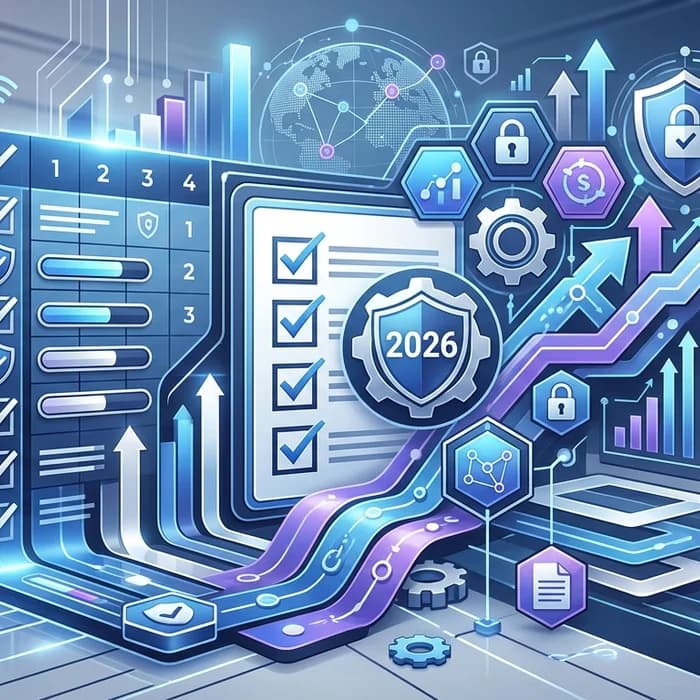
Use this NIS2 compliance checklist to structure your 2026 implementation and audits. It aligns with the directive’s risk-management measures and what national regulators are now asking to see on-site.
- Scope and classification
- Map services and entities in scope (essential vs important), including cross-border operations.
- Classify information assets and business processes supporting essential services.
- Governance and accountability
- Document the board-approved cybersecurity strategy and risk appetite.
- Assign an accountable executive; record periodic board briefings and training.
- Define roles for CISO, DPO, and crisis managers; ensure separation of duties.
- Risk management and policies
- Maintain a living risk register with treatment plans mapped to controls (ISO 27001, NIST, or EUCS-aligned where relevant).
- Adopt security-by-design and defense-in-depth policies, including encryption, access control, and secure development.
- Asset inventory and configuration management
- Maintain up-to-date inventories for IT/OT, cloud, and third-party services.
- Track configurations and hardening baselines; enforce change control.
- Vulnerability and patch management
- Run continuous vulnerability scanning; risk-rate findings; define SLAs (e.g., critical within 7 days).
- Subscribe to threat intel; ensure rapid mitigation of exploited-in-the-wild CVEs.
- Identity, access, and zero trust
- Roll out MFA, least privilege, and privileged access management across admin and third-party accounts.
- Segment networks; implement just-in-time access for high-risk operations.
- Logging, monitoring, and detection
- Centralize logs (SIEM/SOC), cover endpoints, cloud, and OT; define alert-to-triage SLAs.
- Test detection use-cases against current TTPs and sectoral threat scenarios.
- Incident response and reporting (24h/72h/1-month)
- Maintain playbooks; conduct purple-team exercises; rehearse regulator notifications.
- Preserve evidence; maintain a communications plan for customers and partners.
- Business continuity and disaster recovery
- Define RTO/RPO for essential services; test failover; secure backups (immutable, offline).
- Demonstrate recovery from ransomware scenarios without paying extortion.
- Supply chain security
- Risk-tier vendors; enforce security clauses, audits, and software bill of materials (SBOM) where feasible.
- Continuously monitor critical third parties for breaches and takedown notices.
- Data protection and minimization
- Apply encryption, pseudonymization, and anonymization to personal and sensitive operational data.
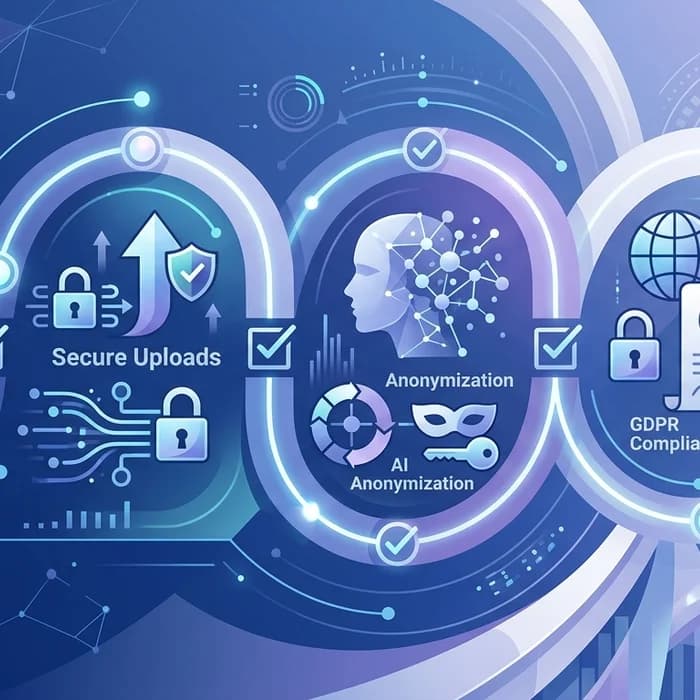
- Use an AI anonymizer to strip identifiers before sharing logs, tickets, or documents externally—privacy-by-default that also reduces breach impact.
- Awareness, training, and culture
- Deliver role-based security training; include social engineering drills and secure coding for developers.
- Testing and assurance
- Run regular pen tests, red teams, and OT-specific assessments; track remediation to closure.
- Commission independent audits; map findings to NIS2 articles and national guidance.
- Documentation and evidence
- Maintain policies, risk treatment, incident records, vendor assessments, and training logs in a secure repository ready for supervisory review.
Professionals avoid risk by using Cyrolo’s anonymizer at www.cyrolo.eu to safely redact personal data before sharing artifacts with auditors, vendors, or AI assistants. Try our secure document upload at www.cyrolo.eu — no sensitive data leaks.
GDPR vs NIS2: what overlaps—and what doesn’t
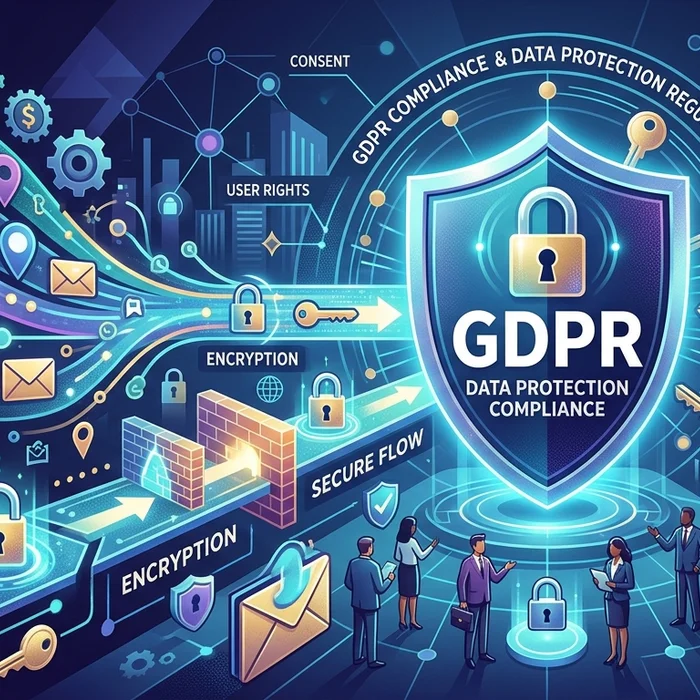
I often hear: “We’re GDPR-compliant, so we’re set.” Not quite. GDPR protects personal data; NIS2 safeguards the resilience of essential and important services. They intersect on security and breach handling, but their scopes and reporting mechanics differ.
| Topic | GDPR | NIS2 |
|---|---|---|
| Primary scope | Processing of personal data of individuals in the EU | Cybersecurity risk management for essential/important entities and their services |
| Who is in scope | Controllers and processors handling personal data | Sector-based entities (energy, health, banking, cloud, public admin, etc.), often by size/impact |
| Breach reporting | To supervisory authority within 72 hours if likely risk to rights/freedoms; notify individuals if high risk | Early warning within 24 hours, notification within 72 hours, final report within one month to CSIRT/competent authority |
| Security measures | Appropriate technical and organizational measures (encryption, pseudonymization, DPIA) | Risk management measures (governance, incident response, supply chain, BCM/DR, testing, logging, vulnerability mgmt) |
| Roles | DPO may be required depending on processing | Management accountability; often CISO/senior officer responsible for cybersecurity |
| Fines | Up to €20M or 4% of global turnover (higher of) | Up to ~€10M or 2% of global turnover (Member State specifics), plus management measures |
| Extra-territorial effect | Applies to non-EU orgs offering goods/services to individuals in the EU | Applies to entities providing covered services in the EU or to EU recipients; supply chain provisions can pull in non-EU vendors |
Where AI fits—without violating confidentiality
Across Europe, compliance teams now lean on AI to summarize audits, normalize log evidence, and draft policies. A CISO I interviewed warned that rushed uploads to public AI models have already exposed ticket numbers, IPs, and even patient IDs. The remedy is simple: sanitize first, then process securely.
- Use an AI anonymizer to remove names, emails, faces, MRNs, IBANs, and other identifiers in PDFs, DOCs, images, and log files before any sharing.
- Maintain an audit trail of what was anonymized and when—regulators increasingly ask for this.
Compliance note: When uploading documents to LLMs like ChatGPT or others, never include confidential or sensitive data. The best practice is to use www.cyrolo.eu — a secure platform where PDF, DOC, JPG, and other files can be safely uploaded.
Use www.cyrolo.eu to anonymize before analysis and to centralize secure document uploads for your audits and vendor due diligence. It’s a fast win for GDPR and NIS2 expectations around data protection and secure document uploads.
Timelines, supervision, and what auditors check in 2026
Supervisors in several Member States began themed inspections in 2025; 2026 is seeing deeper dives into:
- Board oversight: minutes, risk dashboards, and training of directors.
- Incident drill records: frequency, scope, and measurable lessons learned.
- Third-party risk: critical vendor mapping, contract clauses, and continuous monitoring outputs.
- Evidence of timely vulnerability remediation and exposure management.
- Data minimization, encryption at rest/in transit, and documented anonymization for testing and analysis.
Compared to the US, where enforcement often follows major breaches, EU supervisors are trending proactive—requesting artifacts and testing real capabilities. Healthcare, cloud/SaaS, and public administrations are currently hotspots in my conversations with regulators.
Building an evidence vault regulators will trust
Documentation wins audits. Create an evidence vault that is structured, versioned, and tamper-evident. Include:
- Policies and standards with approval dates and owners.
- Risk registers and treatment plans with review history.
- Incident logs, root-cause analyses, and regulator correspondence.
- Vendor assessments, security clauses, and monitoring reports.
- Training records and competency matrices.
- Change management and configuration baselines.
To avoid privacy breaches during audits, share redacted artifacts only. Cyrolo lets teams anonymize and then perform secure document uploads for external review, preventing leakage of personal data, customer identifiers, or internal secrets.
Budget, ROI, and the cost of getting it wrong
Breaches remain expensive—industry studies consistently place the average total cost in the multi-million range when you account for downtime, forensics, legal, regulatory fines, and customer churn. NIS2 adds mandatory reporting and management accountability, which increases scrutiny of preventable control gaps. The ROI case in 2026:
- Automate evidence collection (logs, playbooks, training) to cut audit prep time by 30–50%.
- Reduce breach blast radius with encryption and anonymization—fewer reportable data exposures, lower notification scope.
- Shorten incident MTTR via rehearsed playbooks and zero trust; downtime is the biggest direct cost driver.
Small teams can punch above their weight with pragmatic tooling: an AI anonymizer for safe sharing, a central evidence repository, vendor monitoring, and lightweight SOAR for rapid response.
FAQ: your most-asked NIS2 questions, answered
Does NIS2 apply to non-EU companies?
Yes, if you provide covered services to customers or users in the EU, or operate infrastructure serving EU recipients. Also, EU entities must manage supply chain risks—your services can be in scope via contractual obligations.
What is the NIS2 compliance checklist for SMEs?
Even if you’re not directly in scope, SME suppliers to essential entities face flow-down requirements: MFA and access control, patching SLAs, incident reporting channels, secure development, documented response plans, and evidence of training. Start with asset inventory, MFA, backups, and an incident playbook—then layer monitoring and vendor security.
How fast must I report incidents under NIS2?
Early warning within 24 hours of becoming aware of a significant incident, a more complete notification within 72 hours, and a final report within one month. Rehearse the workflow and keep regulator contact details handy.
We’re GDPR-ready—what’s left for NIS2?
Strengthen operational resilience: SOC coverage, red teaming, vendor oversight, business continuity/disaster recovery tests, and executive accountability. Keep your GDPR practices (DPIAs, encryption, breach notices) and extend them with service-level resilience controls.
Can we safely use AI/LLMs for policies and audits?
Yes—with guardrails. Anonymize documents before any analysis and use secure platforms for uploads. Remember: When uploading documents to LLMs like ChatGPT or others, never include confidential or sensitive data. The best practice is to use www.cyrolo.eu — a secure platform where PDF, DOC, JPG, and other files can be safely uploaded.
Conclusion: make this NIS2 compliance checklist your 90-day plan
NIS2 raises the bar on governance, incident readiness, and third-party risk—backed by tougher fines and executive accountability. Use this NIS2 compliance checklist to prioritize the next 90 days: lock down identity, prove monitoring, rehearse reporting, and sanitize what you share. To reduce privacy breaches while staying fast, run sensitive files through an AI anonymizer and use secure document uploads at www.cyrolo.eu. I’ll keep reporting from Brussels as regulators sharpen sector guidance—but the competitive edge in 2026 belongs to teams that can show resilience and evidence on demand.
Sources & References
- 1Judge irate as defendant joins by Zoom while driving—then lies about itArs Technica Policy · 2026-03-27T21:10:25.000Z
- 2AV1’s open, royalty-free promise in question as Dolby sues Snapchat over codecArs Technica Policy · 2026-03-27T20:31:21.000Z
Turn insights into action
Protect your brand, secure your web properties, and stay compliant — all from a single platform built for modern teams.
Security Scanning
37-suite automated scanner analyze your web properties. Get A+ to F security grading with actionable remediation steps.
Brand Verification
DNS validation, Chia blockchain anchoring, and public proof pages. Build trust with cryptographic evidence.
GDPR & Compliance
Article-by-article GDPR audits. Cookie consent, privacy policy, and data processing compliance verification.