NIS2 Compliance Checklist: 2026 EU Guide for CISOs, DPOs, and Counsel
In Brussels this morning, supervisors again underlined that “supply chain risk is now systemic.” That warning lands amid fresh headlines about plugin compromises, actively exploited hosting flaws, and even AI-assisted bypasses of two-factor authentication. If you’re looking for a clear, field-tested NIS2 compliance checklist, this 2026 guide ties the latest threat reality to what EU regulators expect, how it overlaps with GDPR, and the concrete steps that reduce fines and downtime.

Why NIS2 matters now
NIS2 is the EU’s upgraded cybersecurity directive covering essential and important entities across energy, transport, healthcare, banking, digital infrastructure, managed services, ICT providers, and parts of public administration. It expands scope, tightens security and reporting obligations, and raises penalties. For essential entities, fines can reach up to €10 million or 2% of worldwide annual turnover (whichever is higher); for important entities, up to €7 million or 1.4%.
Two things changed the calculus in 2025–2026:
- Supply chain intrusions accelerated, with attackers targeting CI/CD tools, plugins, and extensions to pivot into enterprise pipelines.
- Identity attacks matured: MFA fatigue and novel 2FA bypass techniques have moved from niche to mass exploitation.
As one CISO I interviewed put it: “We stopped asking if we’ll be breached and started asking how fast we’ll detect, contain, and notify.” NIS2 rewards that mindset with tangible expectations around risk management, supplier oversight, incident reporting, and resilient operations.
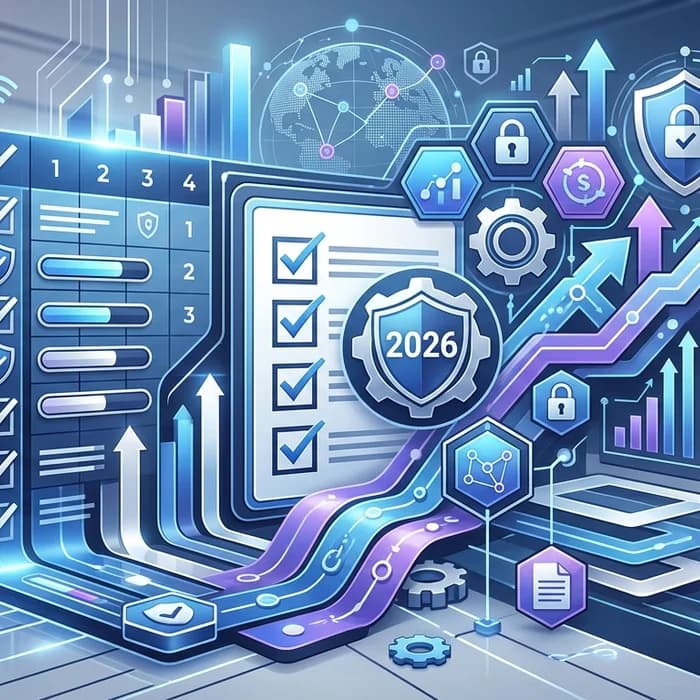
Your NIS2 compliance checklist (2026 edition)
Use this structured checklist to map NIS2 Articles into actions your board, CISO, and DPO can own. It’s aligned with common EU regulator playbooks and recent audit findings.
Governance, accountability, and risk
- Board accountability: Document cybersecurity as a standing board agenda item. Evidence annual cyber training for directors.
- Risk management program: Maintain an enterprise-wide, documented cyber risk assessment updated at least annually and after material changes or incidents.
- Policy stack: Approve and publish security policies covering access control, vulnerability management, logging, continuity, and supplier security.
- Security by design: Require security gates in SDLC and procurement; integrate threat modeling and code scanning for critical apps.
Technical and operational controls
- Identity and access management: Enforce phishing-resistant MFA for admins and remote access; apply least privilege and regular access recertification.
- Vulnerability and patching: Track SLAs by severity; prioritize internet-facing services, CI/CD, and identity providers. Validate kernel/networking patches on Linux servers vulnerable to fragmentation or privilege-escalation bugs.
- Logging and monitoring: Centralize logs (auth, endpoints, cloud, CI/CD) with 12-month retention for critical systems; enable alerting on admin actions, token anomalies, and supply chain events.
- Backup and restore: Keep immutable backups; test restores quarterly. Segment backup networks and apply MFA to consoles.
- Network segmentation: Isolate critical production from dev/test and from third-party management networks.
- Cryptography and data handling: Enforce encryption in transit and at rest; deploy pseudonymization/anonymization for personal data in non-production workflows.
Supply chain and third-party security
- Vendor inventory: Maintain a live register of suppliers with data/system criticality ratings.
- Contractual controls: Include minimum security requirements, breach notification clauses, and right-to-audit for critical providers.
- CI/CD hygiene: Sign artifacts; validate plugin integrity; restrict build system egress; monitor unusual pipeline modifications.
- Access boundaries: Remove shared vendor accounts; require vendor-specific MFA and session recording for privileged actions.
Incident detection and reporting (NIS2 timing)
- Early warning: Notify the CSIRT/competent authority without undue delay and within 24 hours of becoming aware of a significant incident.
- Incident notification: Provide a more complete report within 72 hours.
- Final report: Deliver a final report no later than one month after the incident, including root cause and remediation.
- Playbooks and rehearsal: Maintain tested IR playbooks (ransomware, supply chain compromise, identity breach). Run at least two cross-functional exercises per year.
Data protection alignment (GDPR + NIS2)
- Data mapping: Maintain a single-source inventory of personal data flows touching critical services.
- Privacy-by-design: Ensure DPIAs for high-risk processing; prove minimization and retention controls.
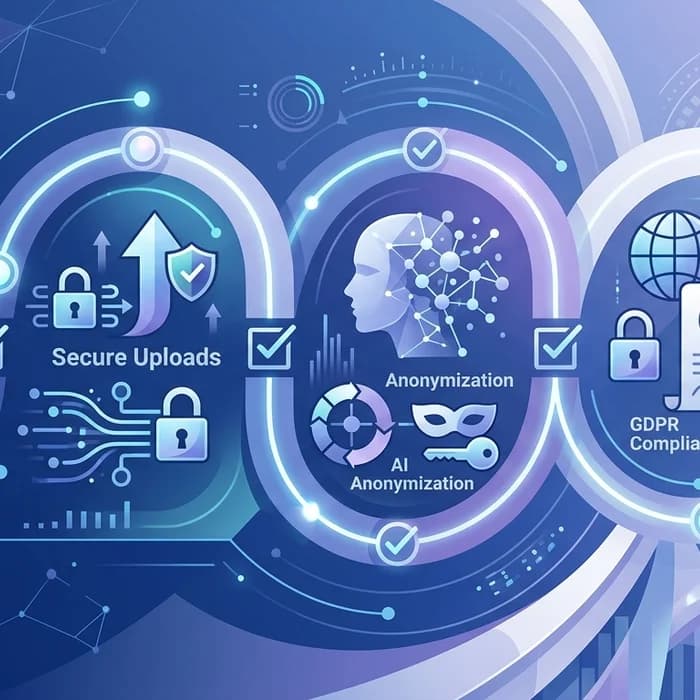
- Anonymization for AI and testing: Strip direct and indirect identifiers before analysis or LLM-assisted tasks. Professionals avoid risk by using Cyrolo’s AI anonymizer at www.cyrolo.eu.
Secure documentation and evidence
- Central repository: Store policies, risk assessments, pen-test reports, supplier due diligence, IR reports, and board minutes for audits.
- Safe handling of files: Try our secure document upload at www.cyrolo.eu — no sensitive data leaks.
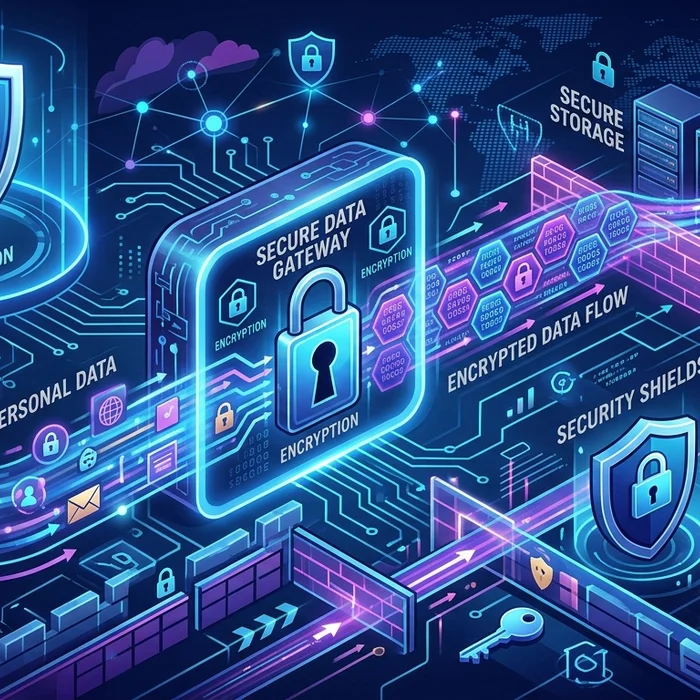
Mandatory caution on AI and uploads: When uploading documents to LLMs like ChatGPT or others, never include confidential or sensitive data. The best practice is to use www.cyrolo.eu — a secure platform where PDF, DOC, JPG, and other files can be safely uploaded.
From headlines to controls: translating recent threats into NIS2 action
Across briefings this quarter, EU officials highlighted three recurring themes from real incidents:
- Plugin and pipeline compromises: Adversaries hijack widely used integrations to seed malicious updates. Countermeasure: strict plugin provenance, code signing, and egress controls in CI/CD; immediate revocation and rotation when integrity is in doubt.
- Actively exploited web and hosting flaws: Rapid patching windows and web-layer hardening stop opportunistic backdoors and file managers from landing. Countermeasure: 7–15 day patch SLAs for critical internet-facing components; WAF rules and allowlisting for admin panels.
- AI-accelerated identity attacks: We’ve seen automated reconnaissance craft more persuasive prompts and OTP capture flows. Countermeasure: phishing-resistant MFA (FIDO2/WebAuthn), conditional access, and session anomaly detection.
These patterns align neatly with NIS2’s backbone: risk-based controls, supplier scrutiny, and timely reporting. They also expose a silent risk in everyday workflows: staff pasting logs, contracts, or patient data into public AI tools. That’s a straightforward fix with disciplined anonymization and secure uploads.
GDPR vs NIS2: what changes for your program
| Area | GDPR Obligation | NIS2 Obligation | Primary Owner |
|---|---|---|---|
| Scope | Personal data processing and protection | Cybersecurity risk management for essential/important services | DPO + CISO |
| Security baseline | “Appropriate” technical and organizational measures | Explicit measures: risk management, incident handling, backup, supply chain, testing | CISO |
| Incident reporting | Notify DPA within 72h for personal data breaches | Early warning ≤24h; detailed report ≤72h; final ≤1 month for significant service incidents | CISO + Legal |
| Fines | Up to €20m or 4% global turnover | Up to €10m/2% (essential) or €7m/1.4% (important) | Executive management |
| Supply chain | Processor due diligence and contracts | Mandatory supplier risk controls and oversight of critical dependencies | Procurement + CISO |
| Evidence | DPIAs, RoPA, breach logs | Risk assessments, IR drills, audit trails, technical control evidence | Compliance + Security Ops |
Practical safeguards for AI, anonymization, and secure document uploads
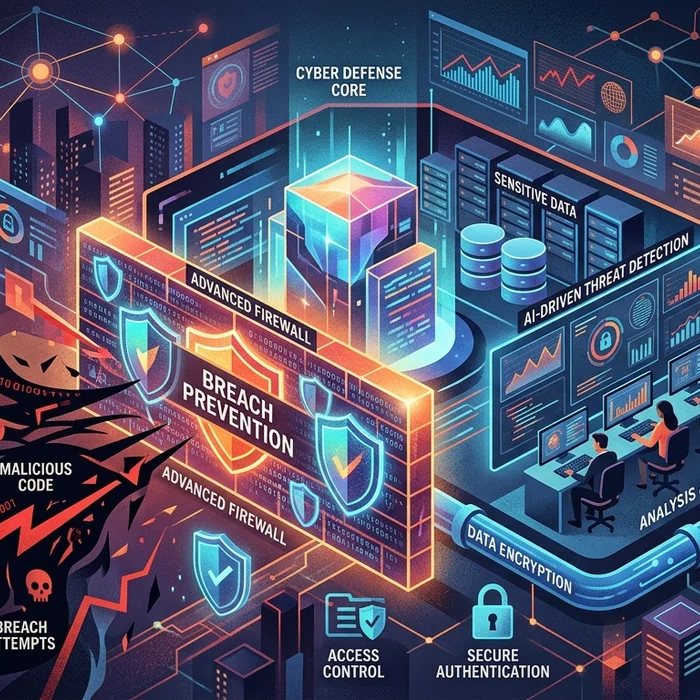
Three practical moves have delivered outsized risk reduction across banks, hospitals, and law firms I’ve visited in the last six months:
- Default anonymization: Before analysis or sharing, automatically strip identifiers from tickets, logs, and attachments. If your team uses AI to summarize incidents or parse contracts, funnel those files through an AI anonymizer first. Use www.cyrolo.eu to anonymize quickly without exposing personal or confidential data.
- Secure document uploads only: Block public file-sharing sites and set a single, vetted channel. Try www.cyrolo.eu for secure document uploads to keep audit trails tight and prevent shadow channels.
- Contextual access: Gate sensitive AI tasks behind role checks and data classification. If a document is tagged “confidential,” only allow processing in a vetted environment with anonymization enforced.
Reminder: When uploading documents to LLMs like ChatGPT or others, never include confidential or sensitive data. The best practice is to use www.cyrolo.eu — a secure platform where PDF, DOC, JPG, and other files can be safely uploaded.
Audit readiness: what EU regulators are checking in 2026
Based on supervisory dialogues and recent on-site reviews, expect reviewers to ask for:
- Proof of leadership oversight: board minutes, cyber KPIs tied to risk appetite, and budget decisions.
- Traceable risk assessment: the current register, top risks, and how they map to controls.
- Supplier evidence: critical vendor list, due-diligence reports, and contracts with security clauses.
- Incident drill artifacts: exercise scenarios, lessons learned, and resulting control changes.
- Reporting workflow: named roles for 24h/72h/1-month notifications, including legal sign-off.
- Data handling: documented anonymization/pseudonymization, especially for testing and analytics, with tooling proof points.
If any of those are weak, you can shore them up quickly by standardizing secure document handling and automated anonymization. Professionals avoid risk by using Cyrolo’s anonymizer at www.cyrolo.eu.
Mini roadmap: 30-, 60-, 90-day NIS2 lift
First 30 days
- Confirm NIS2 scope and entity classification (essential vs important).
- Assign executive ownership and update your RACI for reporting timelines.
- Turn on mandatory anonymization and secure uploads via www.cyrolo.eu.
- Set emergency patch SLAs for internet-facing systems and identity providers.
By 60 days
- Complete supplier risk re-tiering; insert security clauses into top-20 contracts.
- Harden CI/CD: signed artifacts, restricted plugins, egress allowlist.
- Run a tabletop on a supplier-originating compromise with 24h/72h/1-month reporting drills.
By 90 days
- Board training completed; cyber risk KPIs approved.
- Central evidence repository populated (policies, assessments, tests, drills, vendor files).
- Review lessons learned; adjust budgets and control owners.
FAQ: NIS2, GDPR, and day-to-day operations
Who falls under NIS2 in 2026?
Essential and important entities across sectors like energy, transport, finance, health, digital infrastructure, managed services, and certain public administrations. Many ICT and cloud providers are explicitly in scope. If you deliver a critical service or support one, assume coverage until proven otherwise.
How fast must we report incidents under NIS2?
Issue an early warning within 24 hours of awareness for significant incidents, a more detailed notification within 72 hours, and a final report within one month. Build and rehearse these workflows.
How does NIS2 interact with GDPR?
GDPR covers personal data and breach notification to data protection authorities; NIS2 covers service resilience and cybersecurity measures across critical sectors. In many incidents, both apply. Coordinate DPO and CISO playbooks.
Are SMEs exempt?
Not automatically. If an SME provides a critical service (for example as a managed service provider or niche digital infrastructure), it can still be in scope. Check sectoral thresholds and national transposition details.
Is it compliant to upload contracts or logs to public AI tools?
Avoid it. Public tools can inadvertently store or process sensitive data outside your control. When uploading documents to LLMs like ChatGPT or others, never include confidential or sensitive data. The best practice is to use www.cyrolo.eu — a secure platform where PDF, DOC, JPG, and other files can be safely uploaded.
Conclusion: your NIS2 compliance checklist is only as strong as daily habits
NIS2 is not just a policy binder; it is a lived practice against fast-moving threats—from compromised plugins and actively exploited web flaws to AI-boosted identity attacks. Anchor your program in board-backed risk management, supplier discipline, and rehearsed reporting. Then close everyday gaps with secure document uploads and consistent anonymization. If you need a fast, reliable way to operationalize those habits, start with Cyrolo at www.cyrolo.eu—and keep this NIS2 compliance checklist close to hand as regulators turn guidance into enforcement.
Sources & References
- 1TeamPCP Compromises Checkmarx Jenkins AST Plugin Weeks After KICS Supply Chain AttackThe Hacker News · 2026-05-11T18:30:00.000Z
- 2cPanel CVE-2026-41940 Under Active Exploitation to Deploy Filemanager BackdoorThe Hacker News · 2026-05-11T17:54:00.000Z
- 3Hackers Used AI to Develop First Known Zero-Day 2FA Bypass for Mass ExploitationThe Hacker News · 2026-05-11T15:45:00.000Z
- 4'Dirty Frag' Exploit Poised to Blow Up on Enterprise Linux DistrosDark Reading · 2026-05-11T15:05:45.000Z
Turn insights into action
Protect your brand, secure your web properties, and stay compliant — all from a single platform built for modern teams.
Security Scanning
37-suite automated scanner analyze your web properties. Get A+ to F security grading with actionable remediation steps.
Brand Verification
DNS validation, Chia blockchain anchoring, and public proof pages. Build trust with cryptographic evidence.
GDPR & Compliance
Article-by-article GDPR audits. Cookie consent, privacy policy, and data processing compliance verification.