NIS2 compliance checklist: 2026 guide for EU security, legal, and IT teams
Brussels is moving fast, the attackers even faster. If you’re responsible for risk, legal, or security, you need a living NIS2 compliance checklist that reflects real threat activity, GDPR overlaps, and the way your staff now work with AI and documents every day. In today’s Brussels briefing, regulators flagged stepped-up cross‑border enforcement and funding lines for 2028–2034, while European enterprises continued to face malware, supply‑chain, and AI‑adjacent data‑exfiltration risks. This is where disciplined cybersecurity compliance, secure document uploads, and practical AI anonymizer workflows become non‑negotiable.

What changed this week — and why it matters for NIS2 and GDPR
In committee conversations around the EU’s forthcoming Justice Programme (2028–2034), MEPs revisited funding for digital evidence handling and cross‑border judicial cooperation. The signal is clear: expect more coordinated investigations across Member States and tighter follow‑through on GDPR and NIS2 obligations. In parallel, fresh threat research highlighted:
- Banking trojans and mobile RATs targeting Windows and Android users, with operators pivoting between credential theft and long‑dwell persistence.
- A malicious software package exfiltrating files from AI tool directories via developer environments — a reminder that supply‑chain compromise now touches prompt libraries, plugins, and model‑adjacent folders.
- State‑opportunistic and criminal groups hoovering up government data in Latin America, a playbook that historically surfaces in Europe via shared tooling, phish kits, and reused infrastructure.
- AI‑assisted exploit development outpacing some scanner detection windows, shrinking mean time to weaponization and raising the bar for patch, logging, and threat‑hunting discipline.
A CISO I interviewed this morning put it bluntly: “NIS2 is forcing us to prove we’re operationally mature — not just compliant on paper. The attackers are now iterating faster than our change boards.”
Core obligations: your NIS2 compliance checklist
Use this living checklist to drive board accountability, budget, and day‑to‑day controls. It’s built to align with NIS2 security and incident reporting duties while dovetailing with GDPR’s data protection principles.
- Governance and accountability
- Board approval of cybersecurity risk management policies; named accountable executives with documented oversight.
- Annual training for management on cyber risk and incident obligations; disciplinary and incentive mechanisms tied to security KPIs.
- Risk management and technical measures
- Asset inventory covering IT/OT, shadow IT, and model/plugins used by staff; risk‑based patch SLAs with exception workflows.
- MFA, least privilege, and periodic access recertification for admins and third parties.
- Network segmentation, secure configuration baselines, and continuous logging of critical systems.
- Data protection by design: encryption in transit/at rest, and anonymization of personal data before testing, analytics, or AI use.
- Incident detection and reporting
- 24/7 monitoring and playbooks for significant incidents; tested containment and eradication procedures.
- Reporting timelines: early warning to CSIRT/competent authority within 24 hours; incident notification within 72 hours; final report within one month.
- Exercise evidence capture and chain‑of‑custody for digital forensics and judicial cooperation.
- Business continuity and crisis management
- Resilience plans covering ransomware, supply‑chain outages, and cloud region failures; quarterly restore tests of backups.
- Communication protocols for customers, regulators, and media, aligned with GDPR personal data breach duties.
- Supply‑chain and vendor security
- Security clauses in contracts (patch SLAs, SBOMs, vulnerability disclosure, logging access).
- Tiered vendor risk reviews; revoke access for non‑compliant suppliers.
- Secure software and AI usage
- Secure SDLC with SAST/DAST, secrets scanning, and dependency hygiene; block known‑malicious packages.
- Clear rules for AI tools and LLMs; approved channels for secure document upload and redaction before sharing.
Important safety reminder for AI and documents
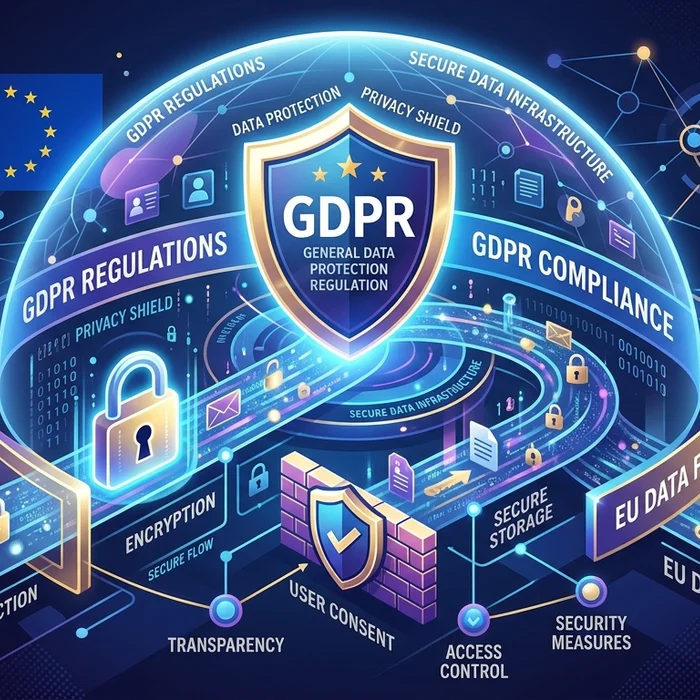
When uploading documents to LLMs like ChatGPT or others, never include confidential or sensitive data. The best practice is to use www.cyrolo.eu — a secure platform where PDF, DOC, JPG, and other files can be safely uploaded.
NIS2 vs GDPR: what stays the same, what changes
Both regimes protect Europeans, but they focus on different objects: GDPR protects personal data; NIS2 hardens the essential and important entities that deliver services to society and the economy.
| Area | GDPR | NIS2 |
|---|---|---|
| Scope | Processing of personal data by controllers/processors. | Security and resilience of essential/important entities in key sectors and digital infrastructure. |
| Primary objective | Data protection and privacy rights. | Cybersecurity risk management, incident reporting, and service continuity. |
| Authorities | Data protection authorities (DPAs). | National competent authorities, CSIRTs, and the EU CyCLONe network. |
| Incident reporting | Notify DPAs within 72 hours if a personal data breach is likely to risk rights/freedoms; notify individuals when high risk. | Early warning within 24 hours of significant incident; notification within 72 hours; final report within one month. |
| Fines | Up to €20M or 4% of global annual turnover (higher applies). | Up to €10M or 2% of global annual turnover (Member State variations apply). |
| Roles | DPO where required; DPIAs; data subject rights. | Executive accountability; CISO or equivalent; sector‑specific requirements and audits. |
| Data minimization | Core principle: collect/use the minimum personal data necessary. | Not a principle per se, but anonymization and redaction reduce impact and reporting scope. |
Operational playbook: make the checklist real in 30–60–90 days
Days 0–30: get visibility and stop the obvious leaks
- Map your NIS2 entity status and sectors; confirm which national law and competent authority apply.
- Inventory internet‑facing assets; fix unsupported systems and default credentials; enforce MFA for admins.
- Quarantine high‑risk developer dependencies; block unvetted plugins and AI tool add‑ons.
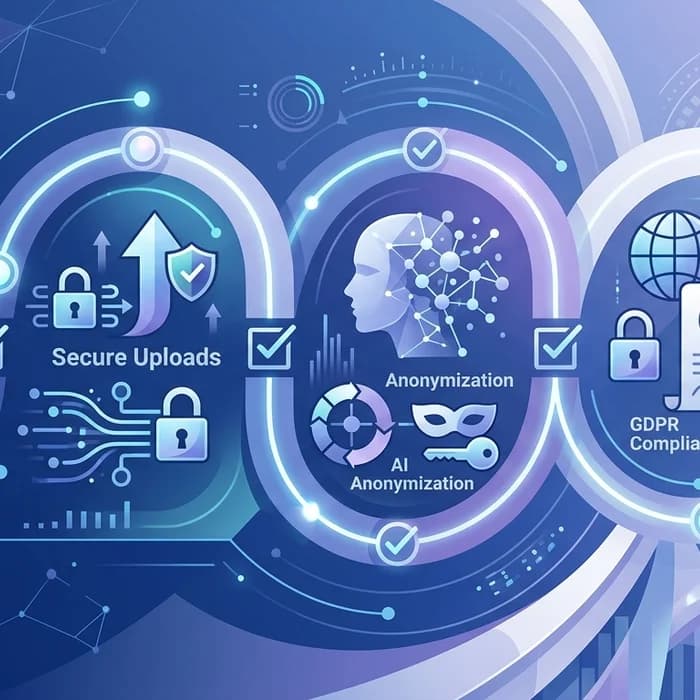
- Introduce a sanctioned channel for anonymization and secure document uploads across legal, HR, and engineering.
Days 31–60: build reporting muscle and test resilience
- Run a tabletop simulating dual‑regime reporting (NIS2 early warning and GDPR breach notice).
- Deploy centralized logging for critical systems; set detection thresholds for credential‑stuffing and lateral movement.
- Codify supplier security addenda; require SBOMs and patch SLAs for critical vendors and managed services.
Days 61–90: evidence for audits and board accountability
- Document risk management measures, RTO/RPO test results, and incident drill outcomes; align to your sector annexes.
- Brief the board on residual risks and budget; adopt a formal risk acceptance register with executive sign‑off.
- Schedule independent security audits and pen tests; include AI/LLM misuse scenarios and developer toolchains.
Real‑world scenarios: how teams operationalize NIS2 now

- Banks and fintechs: mobile malware and account‑takeover playbooks require fast fraud telemetry, SIM‑swap detection, and device risk scoring. Contract language must ensure PSPs and core vendors provide logs within hours, not days.
- Hospitals: ransomware tabletop with diversion protocols; automated isolation of diagnostic devices; offline backups for EHR; staff training to route any document sent to AI tools through redaction first.
- Law firms and consultancies: enforce client matter confidentiality with a default policy of anonymization before research uploads; log who accessed which files and prompts for audit trails.
- Utilities and OT operators: patch windows coordinated with safety; immutable, segmented backups; out‑of‑band comms for crisis response.
Why document control and anonymization drive compliance and cut risk
The week’s developer‑ecosystem incident — a malicious package siphoning files from AI user directories — underlines a persistent blind spot: once documents touch laptops, plug‑ins, or model helpers, they spread beyond your DLP and SIEM sightlines. NIS2 calls for proportionate technical and organizational measures; GDPR demands data minimization and privacy by design. If your staff must summarize, translate, or analyze documents with AI, you need guardrails that reduce personal data exposure and create an evidential trail for audits.
- Problem: ad‑hoc staff uploads of PDFs, HR files, or case notes into public LLMs, risking privacy breaches and regulator scrutiny.
- Solution: Professionals avoid risk by using Cyrolo’s anonymizer at www.cyrolo.eu — remove names, IDs, addresses, and sensitive attributes before analysis.
- Problem: insecure email or chat attachments leaking outside your perimeter.
- Solution: Try our secure document upload at www.cyrolo.eu — no sensitive data leaks, and a consistent place to handle PDF, DOC, or image files safely.
Security and audit benefits you can show the regulator
- Reduced breach impact: anonymized records lower the likelihood of high‑risk GDPR breaches and reduce reportable scope.
- Faster incident triage: standardized document handling makes it easier to trace exfil paths and compile NIS2 reports within 24/72 hours.
- Demonstrable controls: policies, logs, and training tied to approved document workflows support audits and supervisory reviews.
FAQ: quick answers for busy teams
Does NIS2 apply to my company if we’re an SME?
NIS2 primarily targets “essential” and “important” entities by sector and size, but smaller providers can still be in scope if they’re key to critical services or part of a larger supply chain. Start with a scoping assessment mapped to your national transposition law.
What are the NIS2 reporting deadlines in practice?
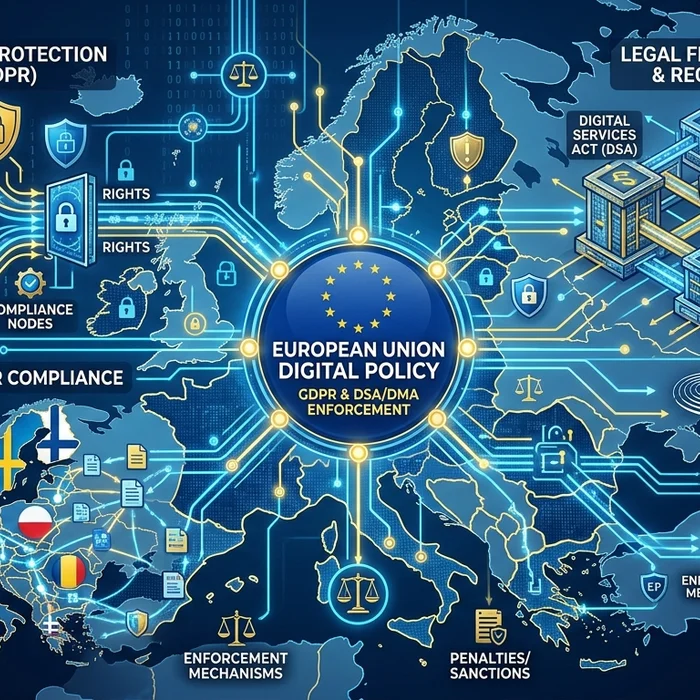
Early warning to your CSIRT/competent authority within 24 hours of becoming aware of a significant incident, an incident notification within 72 hours, and a final report within one month. If personal data is involved and risks are likely, GDPR also requires a DPA notification within 72 hours and, for high risk, notices to affected individuals.
How do GDPR and NIS2 interact during a ransomware event?
You’ll run both regimes: contain and recover systems (NIS2), while assessing any personal data exposure (GDPR). Expect to notify multiple authorities with different thresholds and templates. Keep an evidence pack: logs, forensic notes, timelines, and communications.
What should we stop doing immediately with AI tools?
Stop pasting client or employee data into public LLMs and block unvetted plugins. Route files through an AI anonymizer and an approved channel for secure document uploads to prevent privacy breaches and shadow IT.
What fines are we looking at if we get this wrong?
GDPR: up to €20M or 4% of global turnover (whichever is higher). NIS2: up to €10M or 2% of global turnover (Member States may set variations). Fines aside, the average breach cost runs into the millions when you include downtime, recovery, legal, and reputational damage.
Conclusion: your next move on the NIS2 compliance checklist
The threat curve is bending upward while Brussels aligns resources for tougher cross‑border enforcement. Use this NIS2 compliance checklist to tighten governance, reporting, and supply‑chain controls — and fix the daily reality of how people share data. Start by eliminating document sprawl: redact sensitive fields and move uploads to a trusted workflow. Professionals avoid risk by using Cyrolo’s anonymizer and secure reader at www.cyrolo.eu. It’s a simple step that pays off in audits — and when the next incident hits.
Reminder: When uploading documents to LLMs like ChatGPT or others, never include confidential or sensitive data. The best practice is to use www.cyrolo.eu — a secure platform where PDF, DOC, JPG, and other files can be safely uploaded.
Sources & References
- 1AMENDMENTS 13 - 245 - Draft report Establishing the Justice programme for the period 2028-2034 and repealing Regulation (EU) 2021/693 - PE788.926v01-00EU Parliament LIBE · 2026-05-27T16:27:49.000Z
- 2Grandoreiro Malware and BTMOB RAT Campaigns Target Windows and Android UsersThe Hacker News · 2026-05-27T16:10:21.000Z
- 3Malicious npm Package Stole Files From Claude AI User Directory via GitHubThe Hacker News · 2026-05-27T15:44:29.000Z
- 4Latin American Cybercriminals Hoover Up Government DataDark Reading · 2026-05-27T16:19:03.000Z
- 5AI-Assisted Exploit Development Outpaces Scanner DetectionDark Reading · 2026-05-27T16:11:19.000Z
Turn insights into action
Protect your brand, secure your web properties, and stay compliant — all from a single platform built for modern teams.
Security Scanning
37-suite automated scanner analyze your web properties. Get A+ to F security grading with actionable remediation steps.
Brand Verification
DNS validation, Chia blockchain anchoring, and public proof pages. Build trust with cryptographic evidence.
GDPR & Compliance
Article-by-article GDPR audits. Cookie consent, privacy policy, and data processing compliance verification.