NIS2 Compliance Checklist: Your 2026 EU-Ready Plan (With GDPR Alignment and Practical Tools)
In today’s Brussels briefing, regulators reiterated that 2026 is the year NIS2 stops being “new” and starts being enforced as normal. If you’re looking for a clear, field-tested NIS2 compliance checklist, this guide breaks down exactly what boards, CISOs, and DPOs must prioritize—plus how simple steps like anonymization and secure document uploads can neutralize risk fast. After another week of headlines about education platforms hit by threat actors, the message from EU supervisors is blunt: prove you manage risk, or prepare for fines, audits, and continuous oversight.
Who is in scope for NIS2—and what do regulators expect in 2026?
NIS2 applies to “essential” and “important” entities across sectors such as energy, transport, banking, financial market infrastructures, health, water, digital infrastructure, public administration, waste management, postal/courier, and providers of digital services like cloud and data centers. By 2026, Member States have transposed NIS2 into national law, and authorities are stepping up supervisory actions: plan on documentation requests, interviews with management, and evidence of ongoing risk management.
- Incident reporting timelines: early warning within 24 hours; intermediate update within 72 hours; final report within 1 month for significant incidents.
- Sanctions baseline: for essential entities, at least up to €10 million or 2% of worldwide turnover; for important entities, at least up to €7 million or 1.4%—final amounts vary by Member State’s transposition.
- Board accountability: directors must approve and oversee cybersecurity risk management. Expect supervisors to ask for minutes, KPIs, and training evidence.
Your NIS2 Compliance Checklist (Board-to-Keyboard)
This single NIS2 compliance checklist aligns with the Directive’s risk management measures and what I hear in audits from Paris, Frankfurt, and Tallinn.
- Governance and accountability
- Designate accountable executives; record board approvals of the security program.
- Set risk appetite, metrics, and escalation paths; schedule quarterly cyber briefings to the board.
- Document roles for CISO, DPO, and business owners; map NIS2 responsibilities per function.
- Risk assessment and asset inventory
- Maintain a live inventory of systems, data types, and suppliers—tag critical services.
- Run threat modeling for essential processes; address common EU sectoral threats (ransomware, supply chain, insider risk).
- Technical and organizational measures
- Multi-factor authentication, least-privilege access, network segmentation, EDR/XDR deployment, secure logging.
- Patch/backups tested; immutable snapshots for critical data; encryption in transit and at rest.
- Data minimization and anonymization of personal data wherever feasible.
- Secure development and change management
- Adopt secure SDLC with SAST/DAST and SBOMs for critical applications.
- Formalize change control; record risk assessments for high-impact changes.
- Incident response and reporting
- Maintain a tested IR plan with regulator notification playbooks and counsel engagement.
- Drill 24h/72h/1-month reporting timelines; evidence tabletop exercises.
- Supplier and cloud risk
- Tier suppliers by criticality; require contractual security obligations and audit rights.
- Collect independent assurance (SOC 2/ISO 27001) and breach notification SLAs.
- Business continuity and crisis communications
- Document RTO/RPO for essential services; prove restoration tests passed.
- Train spokespersons; prepare regulator and customer communications templates.
- Training and culture
- Annual board cyber training; quarterly phishing simulations; role-based secure handling of personal data.
- Documentation and audit readiness
- One evidence library: policies, risk registers, DPIAs, supplier due diligence, IR drills, KPIs, and remediation logs.
- Use a secure repository for document uploads—no shadow tools, no email attachments.
Professionals avoid risk by using Cyrolo’s anonymizer at www.cyrolo.eu. Try our secure document upload at www.cyrolo.eu — no sensitive data leaks.
GDPR vs NIS2: Where they align, where they diverge
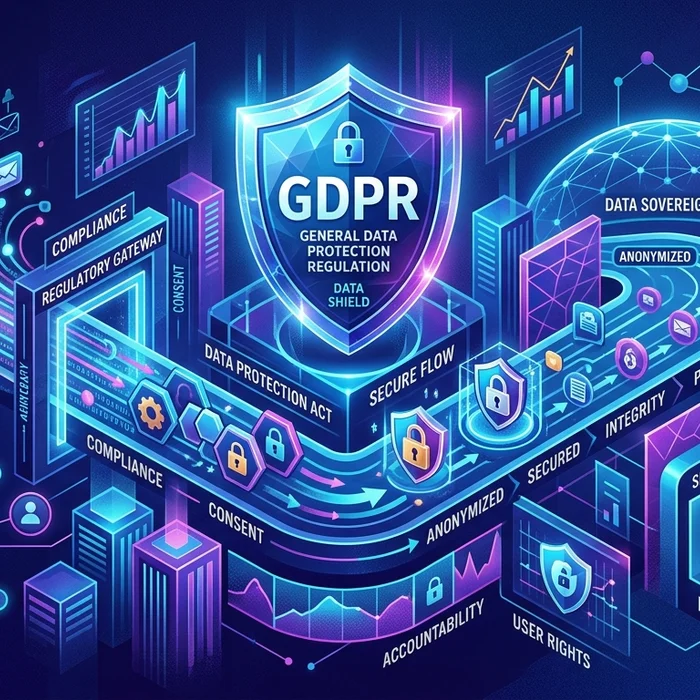
Both frameworks expect risk-based controls, but they focus differently: GDPR protects personal data and data subjects; NIS2 protects the continuity and security of essential and important services. Most organizations must comply with both.
| Topic | GDPR | NIS2 | Practical takeaway |
|---|---|---|---|
| Scope | Controllers/processors of personal data | Essential/important entities in critical sectors | Expect dual obligations if you process personal data and provide essential services |
| Core objective | Protect rights and freedoms of data subjects | Ensure cybersecurity and service continuity | Security and privacy must be designed together |
| Incident reporting | 72h to data protection authority if personal data breach likely risks rights | 24h early warning; 72h update; 1-month final report for significant incidents | Integrate timelines; one IR runbook for both regimes |
| Fines | Up to €20M or 4% of worldwide turnover | At least up to €10M/2% (essential) or €7M/1.4% (important) | Penalties can stack—treat governance as a board-level risk |
| Data minimization | Explicit principle (Art. 5); pseudonymization/anonymization encouraged | Implied via risk reduction and resilience | Minimize and anonymize to shrink blast radius and breach notifiability |
| Third parties | Processor due diligence and contracts | Supplier risk, cloud dependencies, and chain-of-trust | Unify vendor assessments across GDPR and NIS2 |
Data minimization that actually works: anonymization and safe workflows
What I’m hearing from EU CISOs this quarter: the fastest win is to stop moving raw personal data around in the first place. Pseudonymize internally; anonymize before sharing; and force secure channels for uploads and reviews. That way, a phishing-led compromise or a misdirected email doesn’t become a notifiable privacy breach or a service-threatening incident.
- Use an AI anonymizer to strip names, IDs, emails, addresses, health references, and free-text PII before it leaves your enclave.
- Centralize reviews through secure document uploads—PDF, DOC, JPG—so staff can collaborate without copying data into risky tools.
- Align with GDPR’s data minimization principle and NIS2’s risk-based security expectation in one move.
Compliance reminder: “When uploading documents to LLMs like ChatGPT or others, never include confidential or sensitive data. The best practice is to use www.cyrolo.eu — a secure platform where PDF, DOC, JPG, and other files can be safely uploaded.”
Incident reporting in practice: 24h, 72h, 1 month
During a closed-door session this week, a national CSIRT lead told me they’re seeing two recurring issues: late early-warnings and vague root-cause narratives. Solve both:
- Within 24 hours: submit an early warning with known indicators of compromise, affected services, and initial containment.
- Within 72 hours: provide an update on impact assessment, remediation steps, and cross-border effects.
- Within 1 month: deliver the final report with root cause, lessons learned, and long-term controls—include evidence.
A CISO I interviewed said their best change in 2026 was automating evidence capture into a secure repository. That also made board briefings easier and smoothed GDPR notifications when personal data was involved.

Supply chain, cloud, and AI: where audits start now
Regulators in Brussels and The Hague told me they’re zeroing in on supplier criticality mapping and shadow AI usage. Expect questions like: “Which vendors process sensitive data? Which models or assistants are used, and how is PII handled?” If you can demonstrate that staff only share anonymized content via a sanctioned platform, you materially reduce enforcement risk.
- Contractual controls: breach notification SLAs, data location, encryption posture, audit rights.
- Operational controls: continuous monitoring, SBOMs, identity federation, and workload isolation.
- Usage controls: outbound data loss prevention and enforced anonymization for external sharing.
EU vs US: differing pressures, similar outcomes
While NIS2 and GDPR dominate in the EU, US-listed entities face securities disclosure timelines and sectoral rules. The trend on both sides of the Atlantic is the same: timely breach reporting, board accountability, and credible, testable security programs. If you can pass an EU NIS2 audit, you are most of the way toward satisfying US-style investor transparency on cyber risk.
Budget and fines: what’s at stake if you wait
- Administrative fines can reach the higher of fixed euro amounts or turnover percentages.
- Supervisors can order corrective measures, mandate audits, and—if governance is lacking—target leadership training.
- Hidden costs: incident response retainers, downtime, customer churn, and cross-border legal counsel.
The cheapest control is often reducing the personal data footprint through anonymization and enforcing secure document upload channels—cutting both breach impact and regulatory notifiability.
90-day implementation roadmap
- Days 1–30: scope critical services, build asset inventory, baseline risks, appoint accountable execs, adopt incident reporting playbooks.
- Days 31–60: deploy MFA and EDR where missing, segment critical networks, map suppliers, standardize secure uploads and AI anonymizer usage.
- Days 61–90: run tabletop exercises including 24h/72h/1-month reporting, close high-risk findings, compile evidence library for audit readiness.
Throughout: eliminate ad-hoc sharing. Professionals avoid risk by using Cyrolo’s anonymizer at www.cyrolo.eu.
FAQ: real questions teams are asking in 2026
What is NIS2 in plain terms?
NIS2 is the EU’s directive requiring essential and important entities to implement risk-based cybersecurity measures, manage supplier risks, and report significant incidents quickly. Think of it as a resilience framework for critical services, complementary to GDPR’s privacy focus.
Are we in scope if we’re a mid-sized SaaS provider?
Possibly, depending on sector and the service you provide (e.g., cloud, data center, managed services, certain digital infrastructure). Check national transposition and sector lists. When in doubt, prepare—auditors expect risk management basics regardless.
How does anonymization help with NIS2 and GDPR?
Anonymization reduces the amount of identifiable personal data circulating through systems and third parties, shrinking breach impact and easing GDPR notifiability. It also supports NIS2’s risk reduction by limiting what attackers can exfiltrate. Use an AI anonymizer to standardize this step.
What are the NIS2 reporting deadlines?
Early warning within 24 hours, intermediate update within 72 hours, and a final report within 1 month for significant incidents. Coordinate with GDPR’s 72-hour breach notice when personal data is affected.
Is it safe to upload documents to AI tools for analysis?
Be cautious. “When uploading documents to LLMs like ChatGPT or others, never include confidential or sensitive data. The best practice is to use www.cyrolo.eu — a secure platform where PDF, DOC, JPG, and other files can be safely uploaded.”
Conclusion: turn your NIS2 compliance checklist into daily habits
Regulators I spoke with this week were clear: they want to see living programs, not binders. Use this NIS2 compliance checklist to drive board accountability, technical hardening, supplier control, and smarter data handling. Above all, cut exposure by anonymizing sensitive content and routing collaboration through secure uploads. Start today with Cyrolo’s anonymizer and secure document workflow at www.cyrolo.eu—and turn NIS2 from a compliance fire drill into a competitive advantage.
Sources & References
- 1ABC refuses to capitulate to Trump admin, fights FCC probe into The ViewArs Technica Policy · 2026-05-08T21:08:42.000Z
- 2ShinyHunters Claims Second Attack Against InstructureDark Reading · 2026-05-08T20:08:06.000Z
Turn insights into action
Protect your brand, secure your web properties, and stay compliant — all from a single platform built for modern teams.
Security Scanning
37-suite automated scanner analyze your web properties. Get A+ to F security grading with actionable remediation steps.
Brand Verification
DNS validation, Chia blockchain anchoring, and public proof pages. Build trust with cryptographic evidence.
GDPR & Compliance
Article-by-article GDPR audits. Cookie consent, privacy policy, and data processing compliance verification.