NIS2 Compliance Checklist: A 2026 Playbook for GDPR-Ready, Secure Document Workflows
From Brussels this morning, one theme echoed across regulator briefings and CISO roundtables: NIS2 enforcement is no longer theoretical. Essential and important entities are being audited, supply-chain controls are tested, and breach reporting clocks are ticking. This NIS2 compliance checklist is your practical guide to align cybersecurity measures with GDPR-grade data protection, reduce the risk of privacy breaches, and operationalize secure document uploads and anonymization across teams.
Why this matters now: regulators, ransomware, and supply-chain blind spots
In today’s Brussels briefing, policymakers emphasized “operational resilience as a measurable outcome”—not just policy on paper. A CISO I interviewed last week described developer laptops as “the new CI/CD pipeline,” reflecting a surge in attacks that exploit build tools, npm packages, and endpoint misconfigurations. Recent patches across major vendors and the uptick in phishing-driven business disruption reinforce what ENISA has warned for years: attackers go where processes are brittle—email, contractors, unmanaged endpoints, and document handling.
- EU regulations tightening: NIS2 brings sector-wide cybersecurity duties; GDPR continues to drive data protection and privacy-by-design.
- Compliance deadlines met, audits underway: With NIS2 transposed, authorities are checking incident response, logging, and supplier assurance.
- Big-fine exposure: GDPR penalties can reach 20 million EUR or 4% of global turnover; NIS2 fines can reach up to 10 million EUR or 2% of global turnover for essential entities.
NIS2 compliance checklist
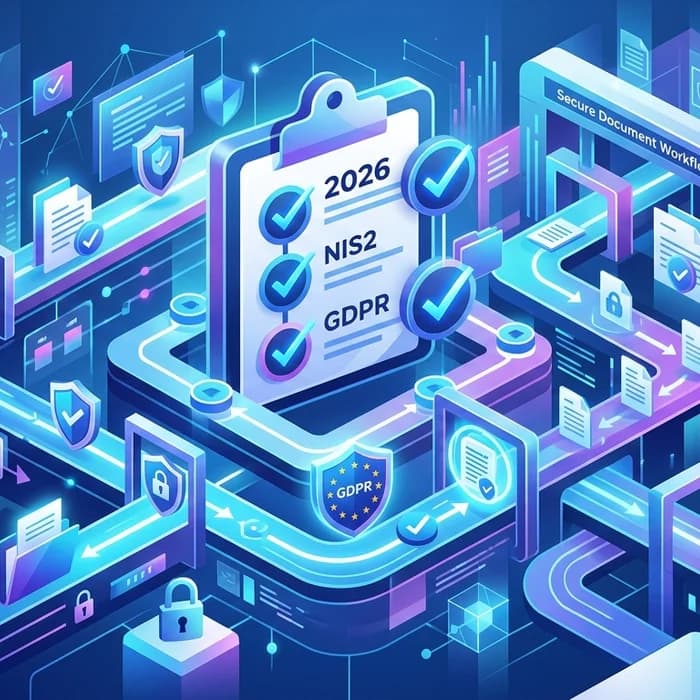
Use this NIS2 compliance checklist to baseline your program. Map each control to GDPR where personal data is involved—especially where documents, logs, and tickets may contain names, IDs, or health data.
1) Governance and risk
- Board oversight: Document cybersecurity risk ownership and reporting cadence to executives and the board.
- Risk assessment: Maintain a living risk register capturing threat scenarios (phishing, supply chain, insider) and business impact.
- Policies and roles: Define clear responsibilities for incident response, vulnerability management, and vendor risk. Train leadership on legal duties.
- Security-by-design: Integrate security and data protection requirements into project gates and procurement.
2) Technical and organizational measures
- Identity and access: Enforce MFA, least privilege, and just-in-time admin access. Review privileged accounts quarterly.
- Patch and harden: Target high-impact attack paths first—VPNs, SSO, developer endpoints, remote access, and exposed services.
- Network segmentation: Separate critical systems and restrict east–west movement. Protect backups with immutability and isolation.
- Monitoring and logging: Centralize logs; detect anomalous behavior; set retention aligned to incident investigations and GDPR minimization.
- Data protection: Classify data; encrypt at rest/in transit; apply data minimization and AI anonymizer workflows for personal data in tickets, docs, and training sets.
3) Incident reporting and readiness
- Runbooks: Maintain playbooks for ransomware, email compromise, data exfiltration, and supplier outages.
- Exercises: Test the 24/72-hour notification clock. Coordinate legal, DPO, PR, and CERT/CSIRT.
- Forensics-ready: Preserve evidence; ensure time-synced logs; pre-contract external responders.
- Stakeholder mapping: Know your national competent authority, sectoral CSIRTs, and regulator contacts.
4) Supply chain and developer workstation security
- Vendor assurance: Require security attestations, SBOMs where feasible, patch SLAs, and breach notification terms.
- Dependency hygiene: Gate external packages; scan for malicious uploads; pin versions; monitor for typosquatting.
- Developer endpoints: Treat laptops as production-adjacent—harden, monitor, and isolate build credentials.
- Secure document handling: Prevent data leakage via tickets, email, and collaboration tools with secure document uploads and automatic redaction.
5) Business continuity
- Backups: Test restores; maintain offline copies; validate RTO/RPO for critical processes.
- Continuity plans: Prioritize vital services (payments, EHR, OT) and document manual workarounds.
GDPR vs NIS2: how they overlap and why both matter
Security leaders often ask whether “GDPR coverage” is enough. Short answer: no. GDPR protects personal data; NIS2 ensures resilience of network and information systems in key sectors. Most organizations need both—and they reinforce one another when implemented together.
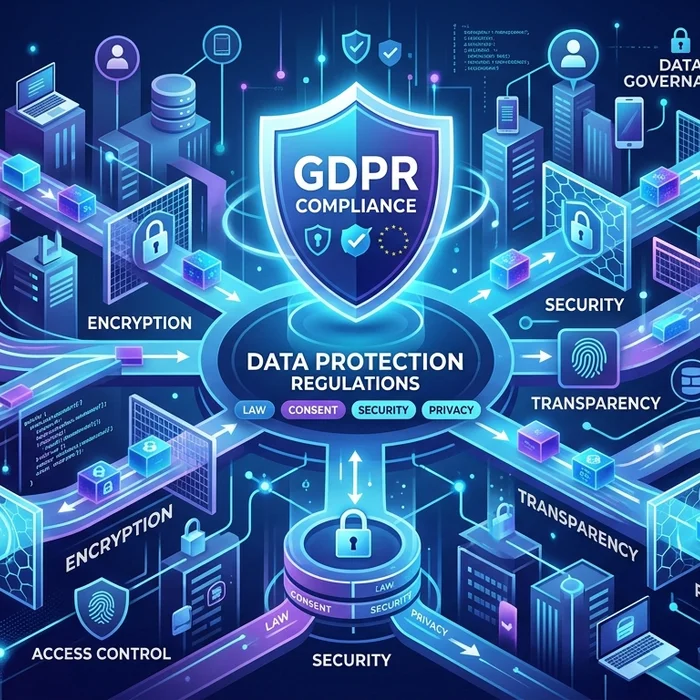
| Topic | GDPR | NIS2 | Practical impact |
|---|---|---|---|
| Primary focus | Personal data protection and privacy rights | Cybersecurity and service resilience in essential/important sectors | Data privacy plus operational uptime are both required |
| Scope | Controllers/processors of personal data | Designated entities in sectors (energy, finance, health, digital infra, etc.) | Many firms are in scope for both, directly or via supply chain |
| Security requirements | “Appropriate” technical/organizational measures | Concrete risk-management measures (policies, incident handling, supply-chain security) | NIS2 is more prescriptive on resilience and vendor oversight |
| Incident reporting | Notify DPA of personal data breach within 72 hours (if risk to rights/freedoms) | Report significant incidents to competent authority within tight timeframes (early warning) | Dual reporting tracks may apply for the same event |
| Fines | Up to 20M EUR or 4% of global turnover | Up to 10M EUR or 2% (essential); up to 7M EUR or 1.4% (important) | Material financial exposure under both regimes |
| Individual rights | Access, erasure, portability, objection | No data-subject rights; focuses on service provision and risk | GDPR processes must coexist with NIS2 operational controls |
| Suppliers | Processor due diligence and DPAs | Supply-chain cybersecurity assurance and oversight | Vendor governance must cover privacy and security resilience |
Turn policy into practice: anonymization and secure document uploads that teams actually use
In my audits of banks, hospitals, and law firms this spring, the most common leakage vector wasn’t a zero-day—it was documents: screenshots in tickets, spreadsheets emailed to vendors, PDFs shared into chat, and “quick” uploads to AI tools for summarization. Here’s how high-performing teams fix it without slowing down:
Make “secure-by-default” the easy path
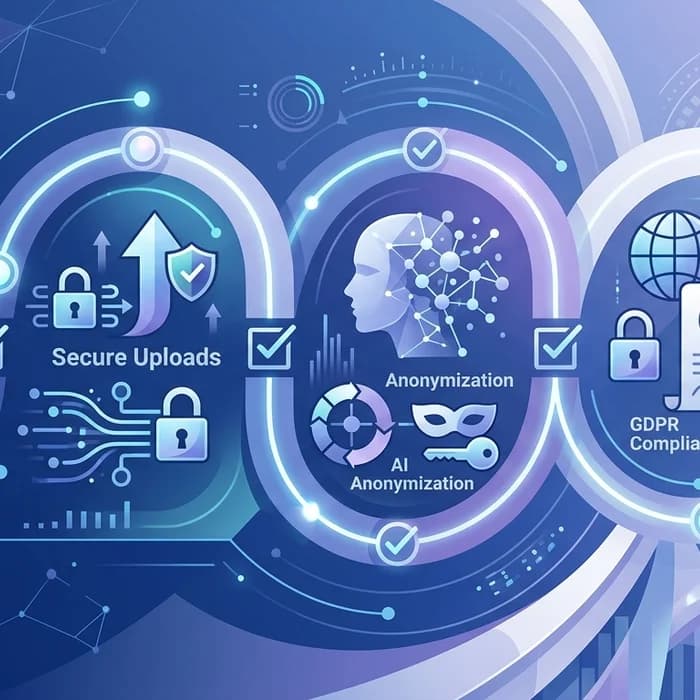
- Route everyday files through secure document uploads to prevent accidental sharing, enforce encryption, and log access for security audits.
- Strip or mask personal data and identifiers with an AI anonymizer before files enter tickets, vendor portals, or LLM prompts—protecting privacy and reducing breach scope.
- Automate redaction templates for recurring use cases: invoices (names, IBANs), HR files (IDs, addresses), medical docs (patient identifiers).
Professionals avoid risk by using Cyrolo’s anonymizer at www.cyrolo.eu. Try our secure document upload at www.cyrolo.eu — no sensitive data leaks.
Compliance note: When uploading documents to LLMs like ChatGPT or others, never include confidential or sensitive data. The best practice is to use www.cyrolo.eu — a secure platform where PDF, DOC, JPG, and other files can be safely uploaded.
Sector snapshots: what “good” looks like in 2026
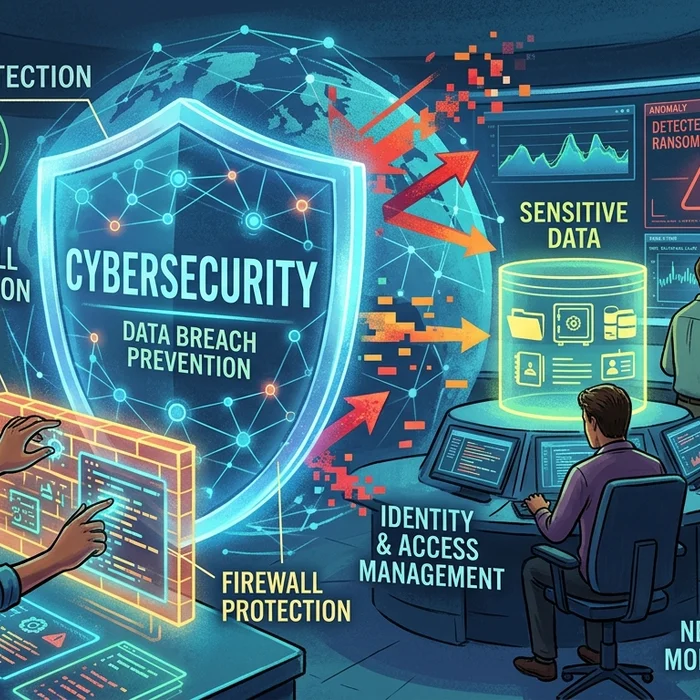
- Bank/fintech: Enforce MFA for all privileged access; segregate payment rails; anonymize statements before customer support escalations; pre-stage regulator contact lists.
- Hospital/healthtech: Segment EHR/OT; maintain offline backups; pre-approve breach comms; anonymize scans and referrals shared with external specialists.
- Law firm: Lock down matter repositories; redact client names in research briefs; require vendor security attestations; monitor for data exfiltration via email and cloud links.
- Critical infrastructure/OT: Inventory assets; patch external interfaces first; tabletop grid/plant outage scenarios; validate supplier patch SLAs.
EU vs US: compliance contrasts worth noting
EU frameworks (GDPR + NIS2) combine privacy rights with systemic resilience and regulator-led supervision. The US landscape tends to be sectoral and disclosure-driven (e.g., SEC incident disclosures, healthcare rules). For globally active firms, an EU-first baseline (privacy-by-design and demonstrable operational resilience) typically satisfies or exceeds parallel expectations abroad—provided incident disclosure and state-level requirements are mapped per jurisdiction.
Audit readiness in weeks, not months: a compact action plan
- Map scope: Identify if you’re an essential or important entity under NIS2; log GDPR processing activities touching personal data.
- Close top risks: Patch externally exposed services; enforce MFA; harden developer endpoints; lock down backups.
- Operationalize documents: Mandate secure document uploads and default-to-AI anonymizer for any file leaving a trusted boundary.
- Drill reporting: Rehearse 24/72-hour escalation with legal and the DPO; set comms templates; pre-assign spokespersons.
- Prove it: Keep evidence binders—policies, training logs, vendor attestations, exercise reports, and security metrics.
FAQ: real questions teams are asking
What is a NIS2 compliance checklist and who needs it?
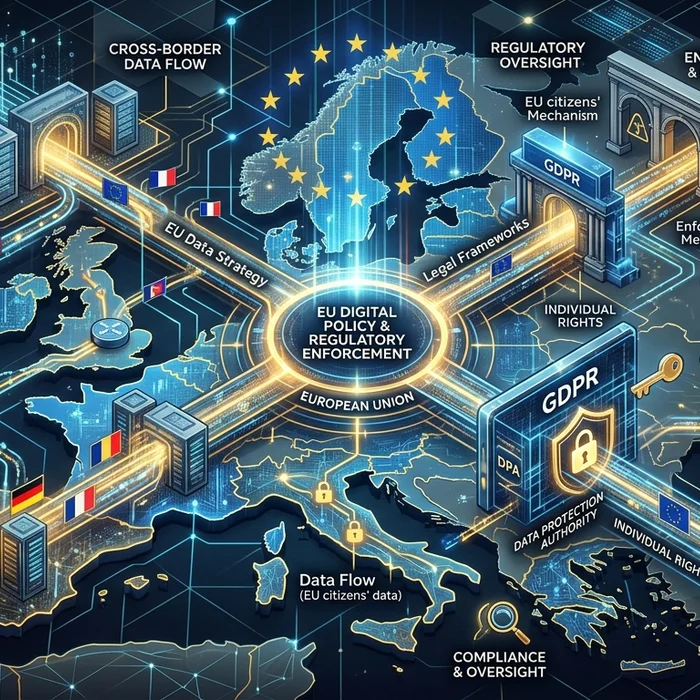
It’s a practical control set mapping NIS2’s risk management, incident handling, and supply-chain duties into implementable steps. Essential and important entities (and their key suppliers) across sectors like energy, finance, health, and digital infrastructure should use it—ideally tied to their risk register and audit program.
How do GDPR and NIS2 interact during a breach?
If personal data is impacted, GDPR triggers DPA notification within 72 hours (and, in some cases, data subject communication). If service delivery or network/information system security is significantly affected, NIS2 triggers early warnings and incident reports to the competent authority. Many incidents require both tracks—plan for dual notifications.
Is it safe to upload internal documents to ChatGPT to summarize incidents?
Do not upload confidential or sensitive data to general LLMs. Use a secure platform designed for enterprise workflows. Compliance note: When uploading documents to LLMs like ChatGPT or others, never include confidential or sensitive data. The best practice is to use www.cyrolo.eu — a secure platform where PDF, DOC, JPG, and other files can be safely uploaded.
How can we anonymize tickets and PDFs quickly without slowing teams?
Adopt an AI anonymizer that learns recurring patterns (names, IDs, bank details) and provides one-click redaction in your workflow. Pair it with secure document uploads so every file is encrypted, logged, and policy-checked before sharing.
What evidence do regulators expect during a NIS2 review?
Risk assessments, policies, incident runbooks, training records, supplier assurances, patch/backup tests, monitoring coverage, and proof of exercises. For GDPR overlap, add DPIAs, records of processing, and breach notification evidence.
Conclusion: make your NIS2 compliance checklist operational—and privacy-first
NIS2 is testing real-world readiness: people, process, and tooling under pressure. By aligning your NIS2 compliance checklist with GDPR-grade data protection—especially around document handling, anonymization, and supply-chain assurance—you cut breach exposure, withstand audits, and keep services online. If your teams handle files daily, close the biggest gap first: move to secure document uploads and default-on AI anonymizer workflows at www.cyrolo.eu and turn compliance into a competitive advantage.
Sources & References
- 1
- 2
- 3How to Reduce Phishing Exposure Before It Turns into Business DisruptionThe Hacker News · 2026-05-18T13:00:00.000Z
- 4Developer Workstations Are Now Part of the Software Supply ChainThe Hacker News · 2026-05-18T11:23:41.000Z
- 5Ivanti, Fortinet, SAP, VMware, n8n Patch RCE, SQL Injection, Privilege Escalation FlawsThe Hacker News · 2026-05-18T10:54:05.000Z
- 6Four Malicious npm Packages Deliver Infostealers and Phantom Bot DDoS MalwareThe Hacker News · 2026-05-18T08:57:26.000Z
- 7The Boring Stuff is Dangerous NowDark Reading · 2026-05-18T13:00:00.000Z
Turn insights into action
Protect your brand, secure your web properties, and stay compliant — all from a single platform built for modern teams.
Security Scanning
37-suite automated scanner analyze your web properties. Get A+ to F security grading with actionable remediation steps.
Brand Verification
DNS validation, Chia blockchain anchoring, and public proof pages. Build trust with cryptographic evidence.
GDPR & Compliance
Article-by-article GDPR audits. Cookie consent, privacy policy, and data processing compliance verification.