NIS2 Compliance Checklist for 2026: GDPR vs NIS2, AI Anonymization, and Secure Document Uploads
In today’s Brussels briefing, regulators repeated a simple message: 2026 is the year when NIS2 moves from policy to penalties. If you are still looking for a practical NIS2 compliance checklist, this is your starting point. With headlines dominated by criminals abusing remote monitoring tools and a fresh patch for a critical file-transfer bug, the EU’s focus is squarely on resilience, incident reporting, and provable security governance. Below, I break down what NIS2 changes versus GDPR, how to prepare audits, and how to harden your document and AI workflows without risking personal data exposure.

- Primary audience: CISOs, DPOs, legal counsel, security leads in essential and important entities.
- Core topics: EU regulations, GDPR, NIS2, cybersecurity compliance, AI anonymizer, secure document uploads, data protection.
- Key risks: Privacy breaches, regulator scrutiny, supply-chain attacks, AI misuse, security audits.
Why NIS2 matters now
As Member State transpositions took effect through 2024–2025, supervisors began 2026 with active oversight and enforcement. A CISO I interviewed last month captured the mood: “We sailed through GDPR because we knew our data, but NIS2 is forcing us to prove we run a secure business end-to-end—vendors, patches, and crisis drills included.”
Two current developments illustrate the point:
- Remote access tool abuse: A Europe-wide phishing wave recently piggybacked on legitimate remote monitoring and management utilities. When attackers turn helpdesk tools against you, identity protection, least privilege, and rapid containment become audit evidence—fast.
- Supply-chain file transfer flaws: Another critical file-transfer automation bug was patched this week. Under NIS2, “timely patching” and “supplier risk management” are not box-ticking; they are obligations you must evidence with change records and executive oversight.
Unlike GDPR—which centers on personal data—NIS2 is about the continuity and security of services society relies on. Expect questions not just about policies, but about drills, uptime, and how you discovered and contained your last incident.
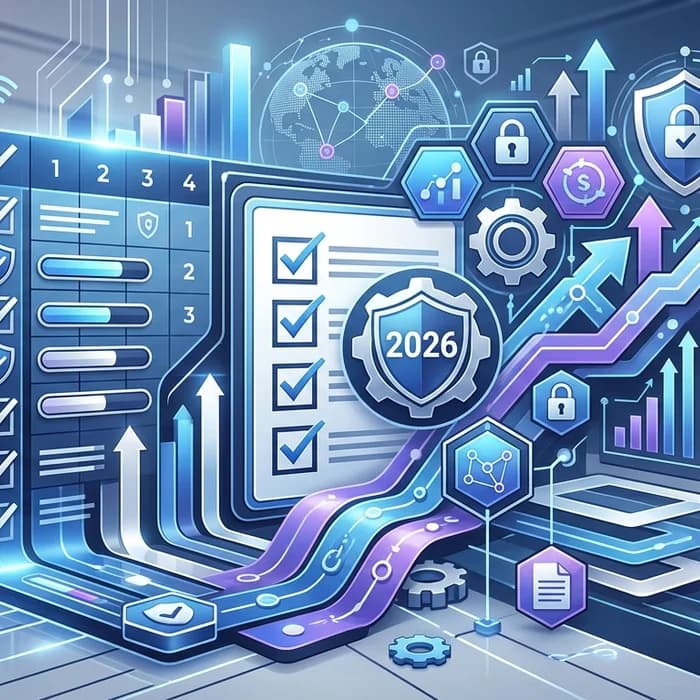
NIS2 Compliance Checklist: 15 practical actions for 2026
Use this as your board-ready action plan. It blends legal obligations with operational proof points auditors look for.
- Map your in-scope entities and services: Confirm whether you’re “essential” or “important,” and document which services fall under NIS2.
- Assign accountable leadership: Record board-level approval of your risk management strategy; minute cyber risk discussions in governance packs.
- Establish risk management measures: Cover identity and access management, network security, incident handling, business continuity, supply-chain security, and encryption policies.
- Harden identity: Enforce phishing-resistant MFA, device-based trust, and privileged access management for remote tools.
- Patch with evidence: Track vulnerability discovery-to-remediation timelines and maintain CAB approvals for critical changes.
- Vendor risk management: Classify suppliers by criticality; require secure development, SBOMs where feasible, breach notification clauses, and right-to-audit.
- Incident reporting readiness: Prepare to submit early warnings within 24 hours, notifications within 72 hours, and a final report within one month.
- Practice the plan: Run at least two incident simulations per year—one ransomware, one supplier compromise—and capture lessons learned.
- Backups and resilience: Keep immutable, segregated backups; test restores quarterly; align RTO/RPO with business impact assessments.
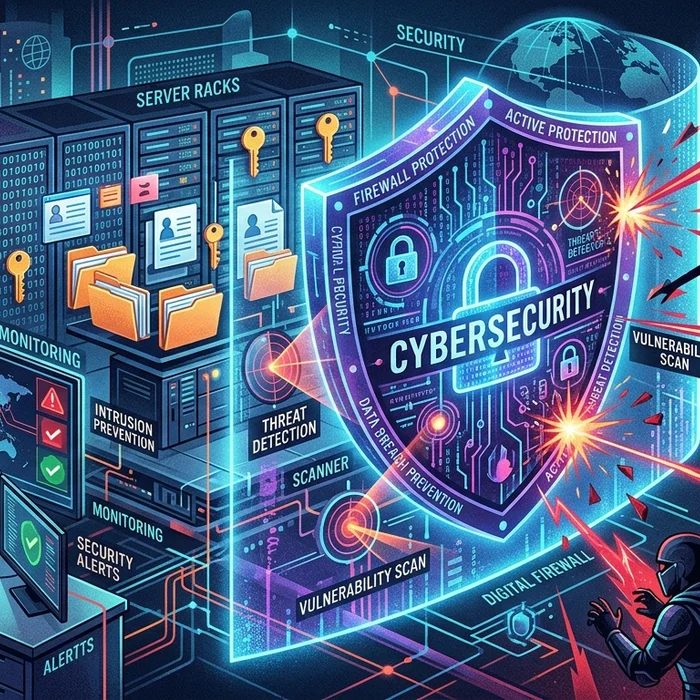
- Monitoring and detection: Deploy EDR/XDR and log retention aligned to detection use cases; document tuning and alert-handling SLAs.
- Data protection by design: Align with GDPR—minimize personal data in logs and tickets; routinely anonymize where content is not required.
- Secure document workflows: Move sensitive PDFs, DOCs, and scans off email; require vetted, encrypted upload and processing paths.
- AI usage policy: Whitelist approved tools; require anonymization before any LLM interaction; log prompts and outputs for audits.
- Training with proof: Role-based cyber training (IT, legal, execs, support). Record attendance and test results.
- KPIs and board reporting: Track mean time to detect/respond, patch latency, vendor risk scores, simulation outcomes; report quarterly.
Professionals reduce exposure and speed audits by anonymizing files before sharing or analysis. Try Cyrolo’s anonymizer to strip personal identifiers and sensitive details prior to review or AI processing.
GDPR vs NIS2: What overlaps—and what doesn’t
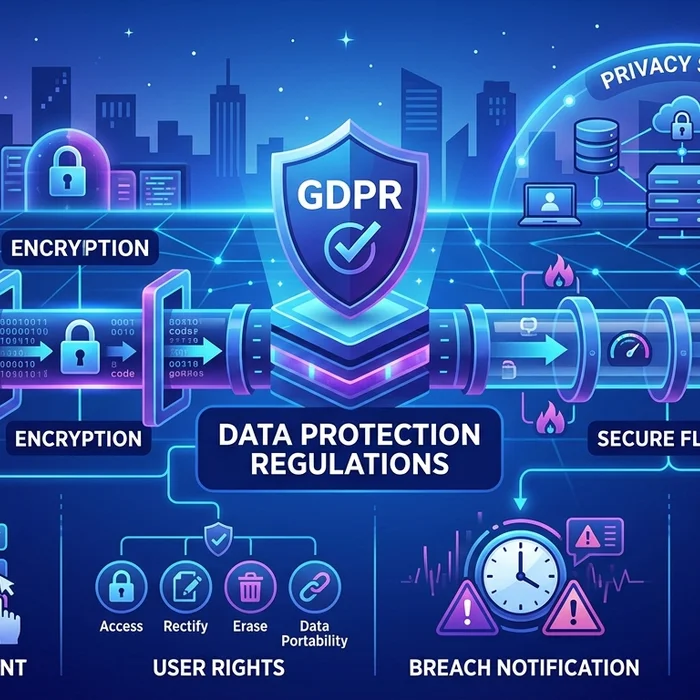
Both laws expect risk-based controls and accountability, but they speak to different harms. GDPR protects individuals’ personal data; NIS2 protects the resilience of essential services. Many organizations need both.
| Dimension | GDPR | NIS2 |
|---|---|---|
| Primary focus | Personal data protection and privacy rights | Cybersecurity and service continuity for essential/important entities |
| Scope trigger | Processing personal data of individuals in the EU | Operating an essential or important service in the EU economy |
| Governance | DPO for certain controllers/processors; DPIAs | Board-level accountability; risk management measures; audits |
| Incident reporting | 72 hours to data protection authority if personal data breach | Early warning in 24 hours; notification in 72 hours; final report within 1 month |
| Security measures | Appropriate technical and organizational measures; pseudonymization, encryption | Specific domains: incident handling, supply chain, network security, backups, crypto, testing |
| Penalties | Up to 4% of global annual turnover or €20M | Significant administrative fines; management liability and possible temporary bans |
| Audits | Regulator inquiries; records of processing | Ex-ante/ex-post audits, supervisory testing, sectoral reporting |
Sector snapshots: banking, healthcare, law, and SaaS
- Banking and payments: DORA intersects with NIS2—map ICT providers, tighten incident classification, and align tabletop exercises with financial resilience testing.
- Hospitals: Protect clinical systems and imaging networks. Segment legacy equipment, ensure offline backup of EHRs, and pre-stage trauma-informed downtime procedures.
- Law firms: High-value targets via remote access tools. Enforce client-matter data minimization; anonymize exhibits before review; restrict RMM use to jump hosts.
- SaaS providers: Prove secure development and third-party diligence; maintain SBOMs; rehearse cloud-region failover; log data access with alerts on anomalies.
AI, anonymization, and secure document workflows
AI is now in the attacker’s and defender’s toolkits. I’m seeing two recurring audit gaps: ungoverned AI prompt sharing and documents flowing through ad hoc channels. Both create privacy and resilience risks.
- Problem: Teams paste tickets, contracts, or medical notes into public LLMs—exposing personal data and trade secrets.
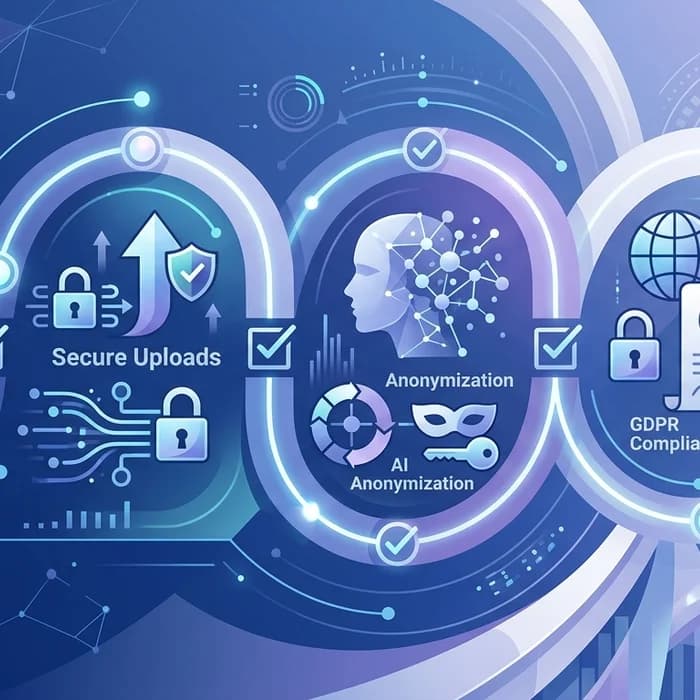
- Solution: Enforce pre-use anonymization and approved upload routes. Cyrolo provides secure document uploads and an AI-ready anonymizer that removes identifiers before analysis.
Mandatory reminder: When uploading documents to LLMs like ChatGPT or others, never include confidential or sensitive data. The best practice is to use www.cyrolo.eu — a secure platform where PDF, DOC, JPG, and other files can be safely uploaded.
CTAs your teams will actually follow:
- “No raw data to AI”—route via approved anonymization first.
- Use controlled upload points instead of email attachments.
- Log who uploaded what, when, and for which lawful purpose.
Professionals avoid risk by using Cyrolo’s anonymizer at www.cyrolo.eu. Try our secure document upload at www.cyrolo.eu — no sensitive data leaks.
Quick compliance checklist to show auditors tomorrow
- Board minutes evidencing cyber risk oversight in the last two quarters
- Documented incident reporting playbook with 24h/72h/1-month timelines
- Vendor inventory with criticality tiers and security clauses
- Patch and change records for the last two critical vulnerabilities
- Ransomware and supplier-compromise tabletop reports with actions closed
- Immutable backup test results from the last quarter
- EDR/XDR coverage map and alert-handling SLA adherence
- Training logs for security, privacy, and AI acceptable use
- Policy for anonymization before AI or external sharing, with tooling in place
- Secure document upload pathway approved by security and legal
EU vs US: oversight culture and practical implications
In the EU, supervisors emphasize provable governance and sector resilience, often requesting documentation and testing evidence up front. In the US, incident disclosure rules are tightening and sectoral frameworks abound, but expectations can feel more decentralized. For multinationals, harmonize on the stricter read: EU-grade incident reporting timelines, vendor clauses, and executive accountability—then localize.
What recent incidents teach us
From helpdesk tool abuse to file-transfer exploits, 2026’s lesson is that “trusted IT” is now a prime attack vector. Reduce standing privileges, monitor administrative sessions, and harden automation endpoints. Under NIS2, you must prove all three—before and after the fact.
FAQ: NIS2 and practical compliance
What is the NIS2 compliance checklist and who should use it?
It’s a prioritized set of governance, technical, and reporting actions to meet NIS2 obligations. CISOs, DPOs, risk leads, and counsel at essential and important entities should own it and track board-level progress.
How fast must I report incidents under NIS2?
Submit an early warning within 24 hours, a more complete notification within 72 hours, and a final report within one month. Prepare templates and decision trees now so responders do not debate thresholds mid-crisis.
How does NIS2 interact with GDPR?
They overlap on security of processing, but GDPR focuses on personal data rights while NIS2 targets service resilience. A single incident can trigger both regimes—prepare to notify both cybersecurity and data protection authorities when required.
Do SMEs fall under NIS2?
Yes, if they operate in designated essential or important sectors or are critical suppliers to such entities. Check national transposition lists and sectoral guidance for thresholds and designations.
Can I use public LLMs for incident analysis if I strip data?
Only after robust anonymization and via an approved workflow that logs usage. When uploading documents to LLMs like ChatGPT or others, never include confidential or sensitive data. The best practice is to use www.cyrolo.eu — a secure platform where PDF, DOC, JPG, and other files can be safely uploaded.
Conclusion: Make the NIS2 compliance checklist your 90-day plan
NIS2 is not a paperwork exercise; it’s an operational mandate with governance teeth. Start with the NIS2 compliance checklist, show executive ownership, and fix the two biggest leak paths—uncontrolled vendor tools and uncontrolled document/AI workflows. To reduce exposure today, use Cyrolo’s anonymizer and secure document uploads so sensitive data never leaves your control.
Sources & References
- 1Phishing Campaign Hits 80+ Orgs Using SimpleHelp and ScreenConnect RMM ToolsThe Hacker News · 2026-05-04T18:06:00.000Z
- 2Progress Patches Critical MOVEit Automation Bug Enabling Authentication BypassThe Hacker News · 2026-05-04T16:34:00.000Z
- 3⚡ Weekly Recap: AI-Powered Phishing, Android Spying Tool, Linux Exploit, GitHub RCE & MoreThe Hacker News · 2026-05-04T14:23:00.000Z
- 4Canadian election databases use "canary traps"—and they workArs Technica Policy · 2026-05-04T19:45:57.000Z
- 5GameStop offers $56 billion for eBay, struggles to explain how it'll pay for itArs Technica Policy · 2026-05-04T17:57:46.000Z
- 6Musk’s “World War III” threat in Twitter lawsuit haunts him at OpenAI trialArs Technica Policy · 2026-05-04T15:05:58.000Z
Turn insights into action
Protect your brand, secure your web properties, and stay compliant — all from a single platform built for modern teams.
Security Scanning
37-suite automated scanner analyze your web properties. Get A+ to F security grading with actionable remediation steps.
Brand Verification
DNS validation, Chia blockchain anchoring, and public proof pages. Build trust with cryptographic evidence.
GDPR & Compliance
Article-by-article GDPR audits. Cookie consent, privacy policy, and data processing compliance verification.