NIS2 Compliance Checklist: EU-Proof Your Security Program in 2026
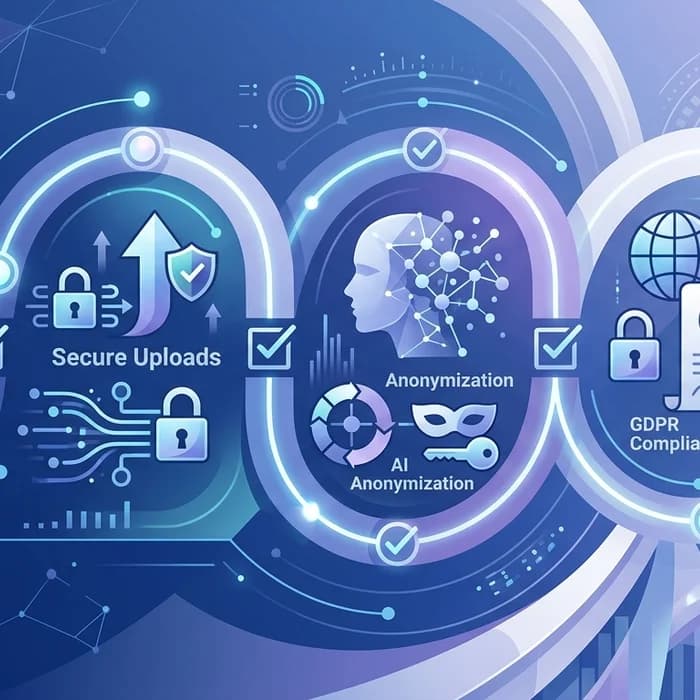
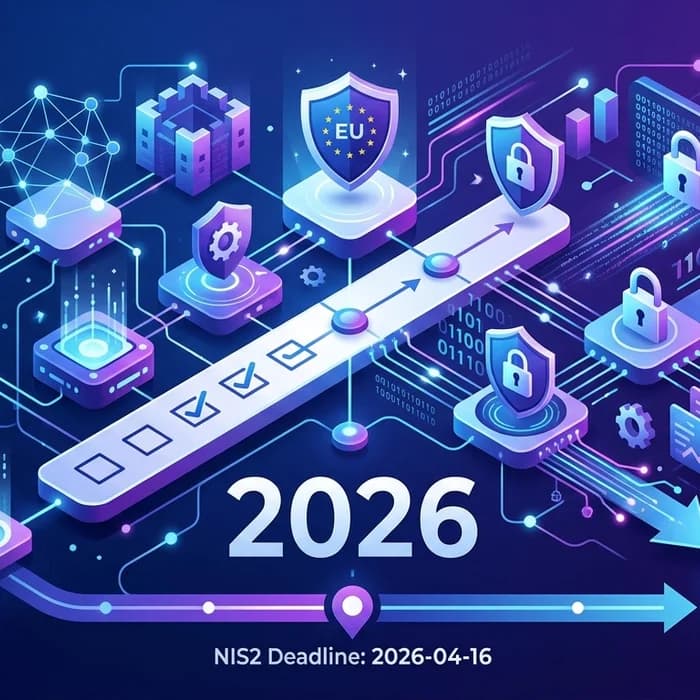
Brussels is no longer signaling—it’s enforcing. If you operate in the EU as an “essential” or “important” entity, you need a living, audit-ready NIS2 compliance checklist now. In today’s briefing rounds, regulators again underlined board accountability, rapid incident reporting, and supply-chain scrutiny. Add the week’s threat tempo—botnets abusing randomized C2 against Central European workers, adware morphing into AV killers, and certificate-expiry headaches—and the message is clear: your documentation, controls, and evidence must be airtight. This is exactly where privacy-by-design, strong access controls, and safe data handling (including anonymization and secure document uploads) close the gap.
What’s changed in 2026: From directives on paper to penalties on balance sheets
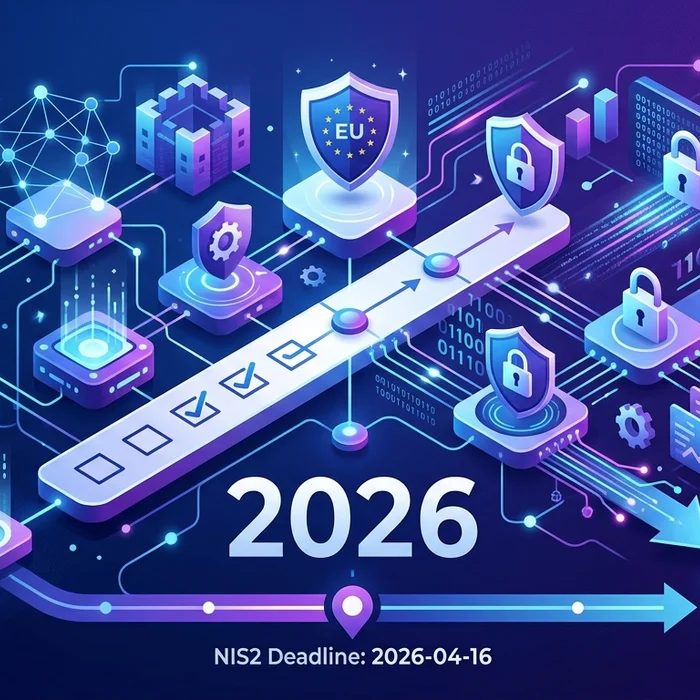
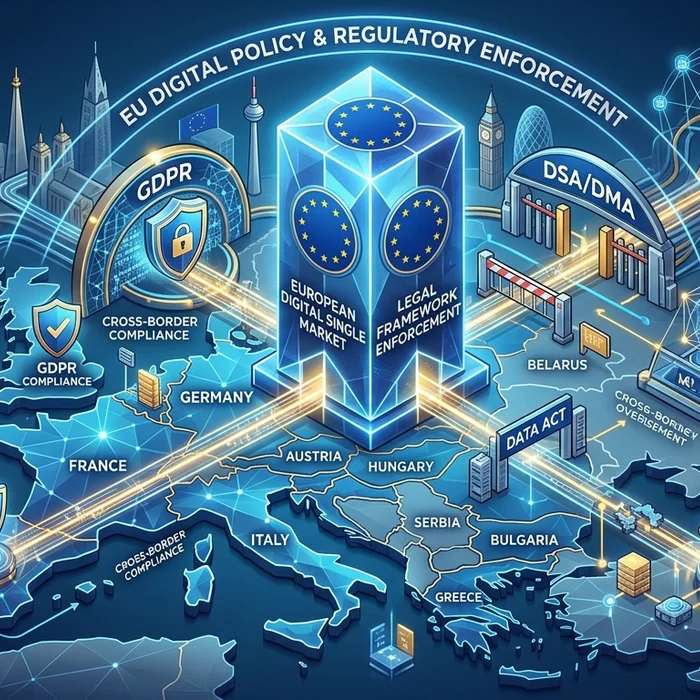
Across 2025–2026, national transpositions of NIS2 hardened, and supervisory authorities began coordinated inspections. A regulator I spoke with in Brussels described the priority list succinctly: “We’re looking for board-level risk ownership, tested incident response, and proof your third parties don’t become your first problem.” For essential entities, penalties can reach up to €10 million or 2% of worldwide annual turnover, whichever is higher; for important entities, up to €7 million or 1.4%—plus potential orders to suspend responsible executives. GDPR remains fully active alongside NIS2, with fines up to €20 million or 4% of global turnover for severe infringements.
Meanwhile, the attack surface has shifted. This month, incident handlers in Prague flagged a new botnet wave targeting office workers via randomized command-and-control traffic that evaded legacy detections. Separately, “benign” adware families have pivoted into defense evasion, and enterprises are revalidating boot integrity as legacy certificates hit end-of-life. For many CISOs I’ve interviewed, the takeaway is practical: align what regulators ask for with what attackers exploit—minimize data exposure, ringfence identities, prove resilience, and automate evidence capture.
NIS2 compliance checklist (2026 edition)
Use this NIS2 compliance checklist as your working baseline. Tailor by sector, risk profile, and national transposition nuances.
- Governance and accountability
- Map NIS2 applicability (essential vs. important). Appoint accountable board member(s) for cybersecurity risk.
- Adopt a risk management framework (e.g., ISO/IEC 27001/2, NIST CSF 2.0) with documented risk acceptance criteria.
- Run annual board training on cyber risk; record attendance and outcomes.
- Risk management controls
- Identity-first security: phishing-resistant MFA, least privilege, privileged access vaulting, and session monitoring.
- Patch and vulnerability management with SLAs tied to exploitability; document exception handling.
- Backup and recovery tested quarterly; immutable copies; RPO/RTO aligned to business impact analysis.
- Network segmentation and zero-trust principles for critical functions and OT environments.
- Incident reporting and response
- 24-hour early warning capability to your national CSIRT/competent authority; 72-hour substantial incident report; final report within one month.
- War-gamed playbooks for ransomware, supplier compromise, data exfiltration, and cloud outages.
- Legal, PR, and regulator-comms rehearsed with delegated alternates.
- Supply chain and third-party assurance
- Tiered supplier criticality; minimum security clauses; right-to-audit; breach notification windows.
- Evidence of secure data handling by vendors (encryption, access controls, breach history, data locality).
- Continuous monitoring for high-risk vendors; revoke access on inactivity or contract end.
- Data protection and minimization
- Apply data minimization and anonymization to reduce blast radius. Professionals avoid risk by using an AI anonymizer before internal sharing or model testing.
- Establish a secure pathway for document uploads (contracts, logs, medical images) with encryption at rest/in transit and role-based access.
- Run DPIAs where personal data and high-risk processing intersect with operational systems.
- Monitoring, detection, and logging
- Centralized logging with retention aligned to incident investigation and local law.
- Behavioral analytics to detect C2 beacons, credential abuse, and lateral movement.
- Coverage for remote endpoints and BYOD where business workflows demand mobility.
- Business continuity and crisis communications
- Cross-functional crisis team with on-call rotation and contact trees (primary/secondary).
- External communications templates cleared by legal and data protection officers.
- Testing and continuous improvement
- Annual red team/purple team exercises with remediation tracking.
- Quarterly tabletop exercises featuring regulator-notification drills.
Evidence pack auditors expect
- Policies and standards (approved dates, version control).
- Risk register, treatment plans, and exceptions with owners and deadlines.
- Asset inventory (including SaaS and shadow IT) mapped to data classes.
- Access reviews, joiner-mover-leaver logs, and privileged session records.
- Incident tickets, timelines, and regulator correspondence.
- Vendor due diligence files, DPAs, and security test reports.
- Training records and executive attestations.
- Demonstrable data minimization: redacted or anonymized artifacts when sharing outside core teams. Try the Cyrolo anonymizer to prove policy-in-action.
GDPR vs. NIS2: What overlaps—and where teams stumble
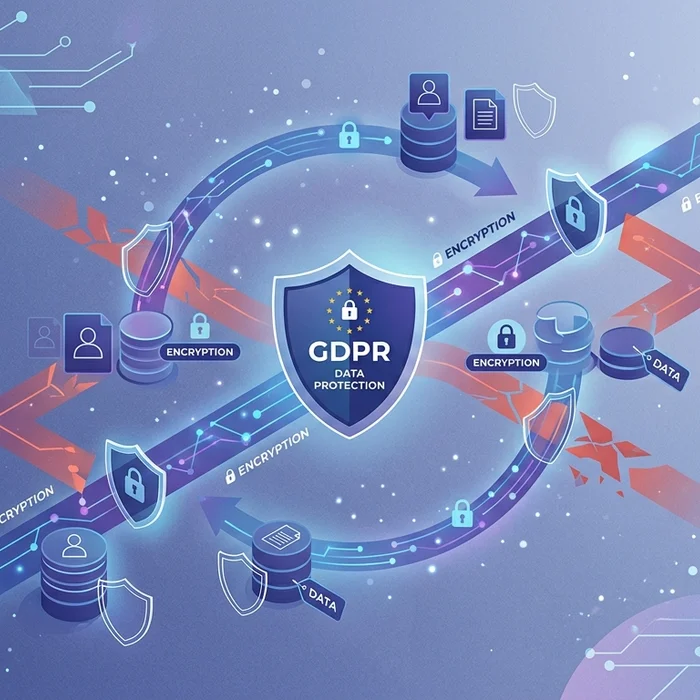
GDPR and NIS2 share the spirit of risk management and accountability, but their scopes and triggers differ. Here’s a field guide I use with legal and security teams:
| Topic | GDPR | NIS2 |
|---|---|---|
| Primary scope | Personal data processing by controllers/processors in or targeting the EU. | Security and resilience of networks and information systems of essential/important entities in key sectors. |
| Core obligation | Lawful, fair, transparent processing; data minimization; integrity and confidentiality. | Risk management measures; incident reporting; governance; supply-chain security. |
| Incident reporting | Notify supervisory authority of personal data breaches within 72 hours; notify individuals if high risk. | Early warning within 24 hours; incident notification within 72 hours; final report within one month. |
| Fines (headline) | Up to €20m or 4% of global turnover. | Up to €10m/2% (essential) or €7m/1.4% (important), depending on national rules. |
| Data anonymization | Recommended to reduce identifiability; truly anonymized data falls outside GDPR. | Supports risk reduction and breach impact minimization; often requested in audits as a safeguard. |
| Board accountability | Accountability principle; DPO where required. | Explicit management responsibility; potential temporary bans for executives in severe cases. |
Using AI securely under NIS2 and GDPR
Security and legal teams are increasingly leaning on LLMs to summarize logs, draft reports, or triage incidents. That creates an immediate exposure risk: copying sensitive traces or personal data into external models. In today’s Brussels roundtable, one CISO warned: “Our leaks weren’t from APTs—they were from helpful people pasting evidence into public tools.” The countermeasure is straightforward: minimize before you share, and control where files go.
- Strip or mask personal data, secrets, and unique identifiers prior to analysis. Use an AI anonymizer to automate consistent redaction.
- Centralize uploads to a trusted, access-controlled platform. Try our secure document upload at www.cyrolo.eu — no sensitive data leaks.
- Log who uploaded what, when, and where it was shared; retain audit trails for regulator questions.
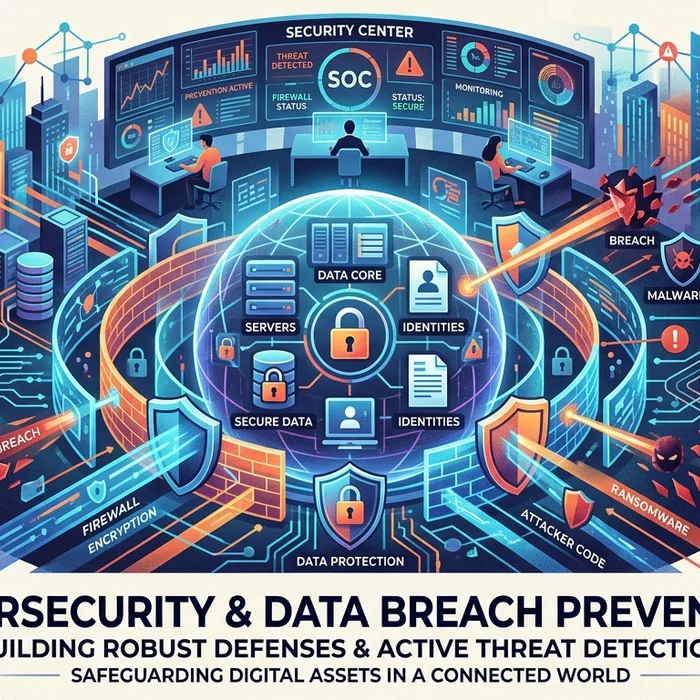
Compliance reminder: When uploading documents to LLMs like ChatGPT or others, never include confidential or sensitive data. The best practice is to use www.cyrolo.eu — a secure platform where PDF, DOC, JPG, and other files can be safely uploaded.
Sector snapshots: What “good” looks like
- Bank/fintech
- Phishing-resistant MFA for customer care tools, PAM for trading systems, and transactional anomaly detection.
- Ransomware playbook integrated with payment decision trees; regulator notification rehearsed.
- Third-party scoring for core banking SaaS; contract clauses for 24h early-warning SLAs.
- Hospital/healthcare
- Network segmentation between medical IoT, admin, and imaging; immutable backups for PACS.
- Rapid isolation procedures for compromised endpoints; paper fallback for admissions.
- Use anonymization before sharing diagnostics for AI triage to cut GDPR/NIS2 exposure.
- Law firm/professional services
- Client-matter isolation; DLP tuned to legal privilege markers; secure document uploads for discovery packages.
- Redaction quality controls for filings; attestations for vendor confidentiality.
- Manufacturing/OT
- Asset discovery for legacy PLCs; compensating controls where patching is infeasible.
- 24/7 monitoring for beaconing patterns and randomized C2—recent European factories saw exactly this technique.
- Supplier hardening for firmware signing and update provenance.
Practical pitfalls—and fast fixes
- 72-hour crunch without a 24-hour early warning: Pre-assign severity levels and auto-trigger the early-warning template.
- Untracked data in “helpful” tools: Route evidence through a governed platform and enforce anonymization gates.
- Supplier risk in name only: Move from questionnaires to attestations plus spot checks, and require breach-notice windows in contracts.
- Logs everywhere, context nowhere: Normalize, correlate, and retain with clear search runbooks for auditors.
FAQ: NIS2 compliance checklist and EU security obligations
What entities fall under NIS2 and how do I know my designation?
NIS2 applies to “essential” and “important” entities across sectors such as energy, transport, health, finance, water, digital infrastructure, managed services, and more. Your designation depends on sector, size, and criticality; national competent authorities maintain registries. Start with a scoping assessment and confirm with counsel.
What are the NIS2 incident reporting deadlines?
Submit an early warning within 24 hours of becoming aware of a significant incident, a more complete notification within 72 hours, and a final report within one month. Build these milestones into your playbooks and ticketing so evidence and timestamps are airtight.
How do GDPR and NIS2 interact during a breach?
If personal data is affected, GDPR breach rules apply (72-hour authority notification, possible data subject notices). NIS2 adds the operational security lens with 24h/72h/1-month timelines and governance expectations. Many incidents trigger both—plan for parallel legal and technical workflows.
What’s the fastest way to reduce my regulatory exposure this quarter?
Minimize sensitive data in daily workflows, enforce phishing-resistant MFA, and test your 24h/72h reporting machinery. For document sharing and AI analysis, use the Cyrolo anonymizer and controlled document uploads to stop accidental disclosures.
Can I use public LLMs for incident analysis safely?
Only if you remove confidential and personal data first and have policy guardrails. Safer is to process files through a secured environment. Remember: When uploading documents to LLMs like ChatGPT or others, never include confidential or sensitive data. The best practice is to use www.cyrolo.eu — a secure platform where PDF, DOC, JPG, and other files can be safely uploaded.
Conclusion: Turn your NIS2 compliance checklist into daily muscle memory
Threats are faster, regulators are clearer, and boards are on the hook. Your NIS2 compliance checklist should now be an operating manual—governance that functions, monitoring that finds the quiet signals, and evidence that stands up in audits. Pair that with GDPR-grade data minimization and controlled sharing. To cut risk immediately, route sensitive files through anonymization and use secure document uploads at www.cyrolo.eu. It’s the simplest lift with the biggest impact on compliance, resilience, and trust.
Sources & References
- 1Newly Discovered PowMix Botnet Hits Czech Workers Using Randomized C2 TrafficThe Hacker News · 2026-04-16T17:52:00.000Z
- 2Ad firms settle with Trump FTC over claims they boycotted conservative mediaArs Technica Policy · 2026-04-16T19:08:38.000Z
- 3'Harmless' Global Adware Transforms Into an AV KillerDark Reading · 2026-04-16T19:07:26.000Z
- 4Two-Factor Authentication Breaks Free from the DesktopDark Reading · 2026-04-16T15:28:15.000Z
- 5Microsoft's Original Windows Secure Boot Certificate Is ExpiringDark Reading · 2026-04-16T15:16:30.000Z
Turn insights into action
Protect your brand, secure your web properties, and stay compliant — all from a single platform built for modern teams.
Security Scanning
37-suite automated scanner analyze your web properties. Get A+ to F security grading with actionable remediation steps.
Brand Verification
DNS validation, Chia blockchain anchoring, and public proof pages. Build trust with cryptographic evidence.
GDPR & Compliance
Article-by-article GDPR audits. Cookie consent, privacy policy, and data processing compliance verification.