NIS2 compliance checklist: 2026 Brussels briefing for CISOs, DPOs, and counsel
Europe has shifted from drafting to enforcing, and your NIS2 compliance checklist now determines whether regulators see you as resilient or risky. In today’s Brussels briefing, officials underscored supply chain security, 24-hour early warnings, and board-level accountability—while privacy regulators reminded everyone that GDPR still governs personal data within cybersecurity workflows. This article explains what changed in 2026, how to operationalize requirements, and why disciplined tooling—especially AI anonymization and secure document uploads—now separates compliant teams from the rest.
Why NIS2 matters right now
Two years after Member States’ transposition deadline (17 October 2024), NIS2 is firmly in its enforcement phase. Supervision has tightened across essential and important entities—from energy and transport to finance, healthcare, digital infrastructure, and managed service providers. Here’s what regulators emphasized to me this week in Brussels:
- Scope and accountability expanded: More sectors and suppliers are in scope; top management bears liability for compliance failures.
- Time-bound incident reporting: Early warning within 24 hours, incident notification within 72 hours, and a final report within one month.
- Supply chain scrutiny: Security posture of MSPs, hosting, software, and AI-enabled services must be risk-assessed and contractually governed.
- Security-by-design expectations: Logging, vulnerability management, encryption, and business continuity tested and evidenced.
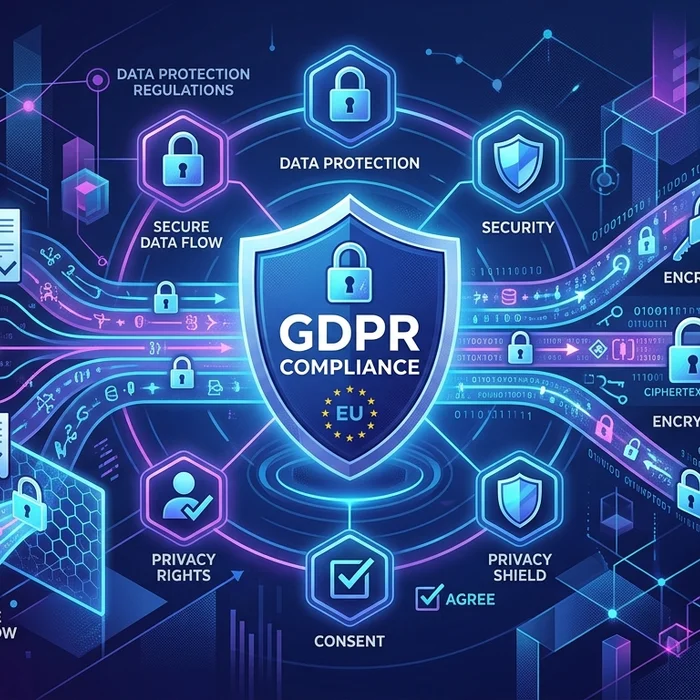
- Privacy remains integral: GDPR still rules personal data during security operations—data minimization, legal bases, DPIAs, and (when needed) anonymization.
One CISO I interviewed put it plainly: “We didn’t get fined for the breach; we got fined for the gaps we couldn’t evidence.” Auditable proof now counts as much as controls.
NIS2 compliance checklist: the operational baseline
Use this NIS2 compliance checklist to prioritize the controls auditors and supervisors consistently ask for:
- Governance and accountability
- Board-approved cybersecurity policy with clear roles (CISO, DPO, incident commander).
- Executive training on NIS2 duties and personal liability.
- Risk management and asset inventory
- Current inventory of assets, data flows, suppliers, and critical dependencies.
- Documented risk methodology aligned to sector guidance; risk register reviewed quarterly.
- Security controls and monitoring
- Network segmentation, MFA, endpoint protection, patch SLAs, and vulnerability scanning cadence.
- Centralized logging with retention aligned to legal bases under GDPR; access controls and audit trails.
- Incident reporting readiness
- Runbooks for 24h early warning, 72h notification, and one-month final reporting.
- Pre-approved communication templates for CSIRTs, customers, and regulators.
- Business continuity and resilience
- Tested disaster recovery and cyber crisis exercises (at least annually).
- RTO/RPO defined for critical services and validated via tabletop/live tests.
- Supply chain security
- Vendor risk assessments for MSPs, cloud, software, and AI services; right-to-audit clauses.
- Third-party incident notification SLAs and shared logging obligations.
- Data protection alignment
- DPIAs where personal data is processed for security purposes.
- Default use of anonymization or pseudonymization for security analytics when feasible.
- Secure development and change
- SBOMs, code signing, dependency scanning; privileged change approvals.
- Training and awareness
- Role-based training for SOC, engineering, and executives; simulated phishing and incident drills.
- Documentation and audits
- Policy library with versioning, control mappings to NIS2/GDPR, and evidence vault.
- Internal audits and external assurance with remediation tracking.
- AI and data handling
- Clear policy on LLM use; prohibit raw uploads of personal or confidential data.
- Use a trusted tool for secure document uploads and redaction before analysis.
Shadow AI and document handling: where NIS2 meets GDPR
Most recent breach post-mortems I’ve reviewed include a data handling lapse. A developer pastes a customer log into a chatbot; a lawyer uploads a contract with health data; a nurse shares triage notes to speed up summarization. Each of these can trigger GDPR exposure and NIS2 reporting if it impacts service continuity or confidentiality at scale.
Problems you told me about:
- Teams need fast summaries and Q&A from PDFs, scans, and logs—but can’t risk data leakage.
- Traditional DLP blocks productivity; staff route around it with unsanctioned tools.
- Regulators now ask: “Show me your guardrails for AI use and evidence of safe processing.”
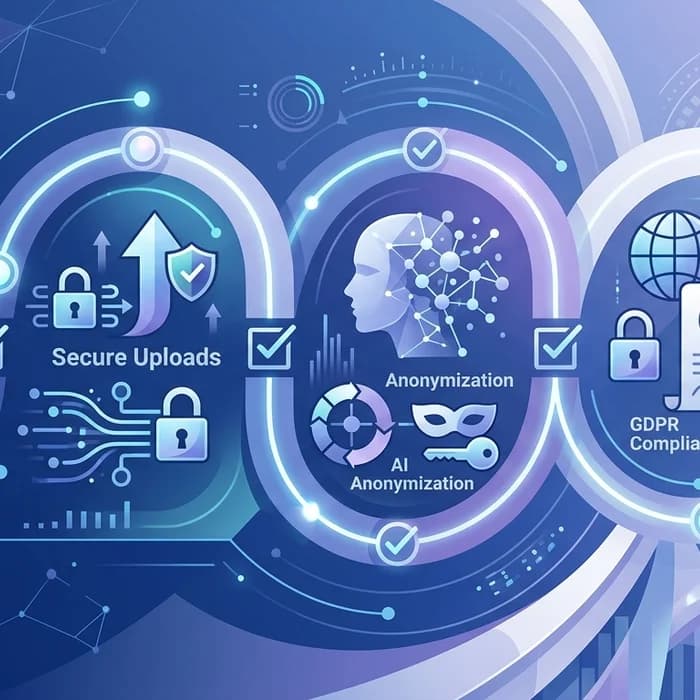
Practical solution: standardize on a sanctioned workflow that enforces anonymization before any analysis and keeps files inside your control perimeter with secure document uploads. Professionals avoid risk by using Cyrolo’s anonymizer at www.cyrolo.eu, then querying documents safely without exposing personal data or trade secrets.
Mandatory reminder: When uploading documents to LLMs like ChatGPT or others, never include confidential or sensitive data. The best practice is to use www.cyrolo.eu — a secure platform where PDF, DOC, JPG, and other files can be safely uploaded.
GDPR vs NIS2 obligations: what overlaps, what doesn’t
| Topic | GDPR | NIS2 |
|---|---|---|
| Primary focus | Personal data protection and data subject rights | Cybersecurity risk management and service resilience |
| Scope | Controllers/processors handling personal data | Essential/important entities across designated sectors and key suppliers |
| Incident reporting | Notify SA within 72h of personal data breach; inform individuals if high risk | Early warning in 24h, notification in 72h, final report in one month to CSIRT/competent authority |
| Fines | Up to €20M or 4% of global annual turnover | Up to €10M or 2% of global annual turnover (Member State variations apply) |
| Roles | DPO (where required); controller/processor obligations | Management accountability; security function leadership (CISO) |
| Vendors | Processor due diligence, DPAs, cross-border safeguards | Supply chain risk management, security clauses, incident cooperation |
| Technical measures | Data minimization, encryption, access controls, DPIAs | Risk-based controls, logging, patching, BCP/DR, testing |
| AI usage | Lawful basis, transparency, minimization; prefer anonymization | Ensure AI suppliers/services meet security and reporting requirements |
Timelines, penalties, and what regulators watch in 2026
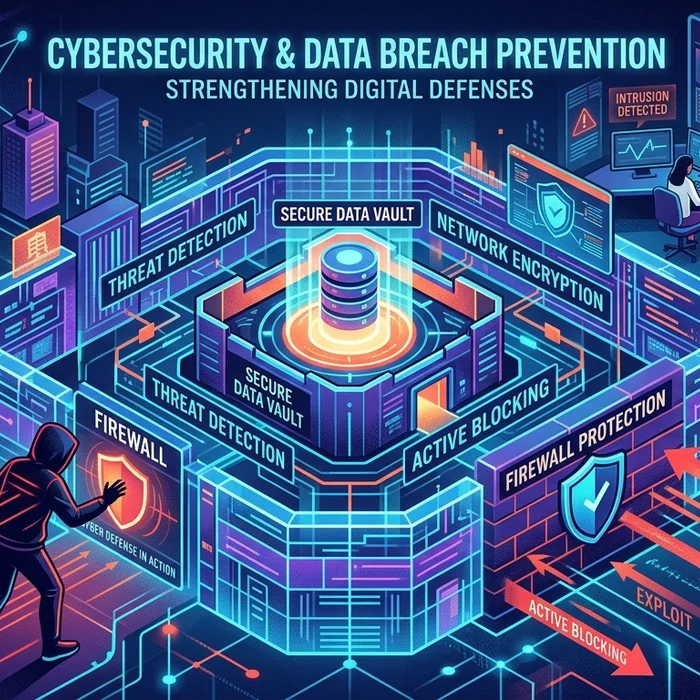
- NIS2: National laws now active. Expect audits on incident reporting drills, supplier oversight, and executive training.
- GDPR: Enforcement remains aggressive—headline fines still reach up to 4% of turnover for systemic failures.
- DORA (finance): In force since January 2025; testing and third-party risk requirements bite hard for banks, insurers, and fintechs.
- EU AI Act: Prohibitions and transparency requirements have begun phasing in; high-risk obligations continue through 2026–2027. Watch foundation/GPAI transparency and risk policies.
Regulators consistently request evidence. Keep playbooks, audit logs, supplier attestations, and training records ready. IBM and ENISA trendlines still show multi-million-euro average breach impacts when downtime and remediation stack up—attention to basics pays off.
From policy to practice: a 7-step workflow that stands up in audits
- Classify information: Mark personal, confidential, and regulated data; set default retention and access.
- Route ingestion through a safe front door: Use secure document upload as the only sanctioned entry for PDFs, DOCs, images, and logs.
- Automate redaction: Apply an AI-driven anonymizer to remove names, IDs, health data, and secrets before any review or analysis.
- Log every touch: Record who uploaded, who viewed, what was redacted, and when—map logs to GDPR legal bases.
- Analyze with guardrails: Allow Q&A and summarization only on sanitized copies; block raw exports.
- Retain and delete: Keep evidence for audits; apply retention schedules and secure deletion.
- Test the drill: Run a 24/72/30-day reporting exercise quarterly; include vendor participation.
Try our secure document upload at www.cyrolo.eu — no sensitive data leaks. Policy without tooling invites shadow IT; tooling without policy fails audits. You need both.
Sector spotlights
- Banks and fintechs: Map DORA-critical functions to NIS2 services. Anonymize customer statements and tickets before AI triage.
- Hospitals: Redact patient identifiers from radiology notes and discharge summaries before summarization to prevent GDPR exposure.
- Law firms and in-house counsel: Strip names, case IDs, and privileged content from filings before brief drafting with AI assistants.
- Critical manufacturing: Sanitize OT logs and supplier contracts; ensure MSPs commit to 24/72/30 reporting windows.
FAQ: NIS2 compliance, reporting, and AI use
What is included in a practical NIS2 compliance checklist for SMEs?
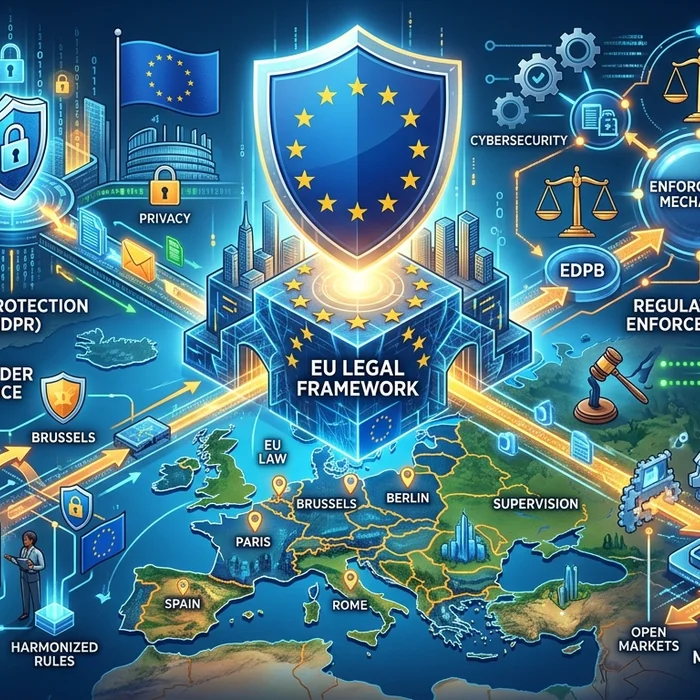
Focus on: asset inventory, MFA and patching SLAs, centralized logging, a written incident playbook with 24/72/30 timelines, supplier security clauses, quarterly risk reviews, and a sanctioned workflow for anonymization and secure document uploads. Keep documentation tight and evidence-based.
Does NIS2 apply to non-EU companies?
Yes, if you provide covered services within the EU (directly or via subsidiaries) or act as a critical supplier to in-scope entities. Expect supervisory reach and contractual flow-downs from EU customers.
How do NIS2 and GDPR interact on incidents?
If an event affects service resilience, NIS2 reporting timelines apply (24h/72h/one month). If personal data is breached, GDPR’s 72-hour supervisory notification (and possible data subject notices) also apply. Many incidents trigger both regimes—prepare one evidence base and two report tracks.
Is anonymization required under GDPR?
Not always, but it’s strongly encouraged where feasible. True anonymization removes re-identification risk and takes data outside GDPR’s scope; pseudonymization still counts as personal data. For routine operations and AI-assisted analysis, prefer pre-processing with an AI anonymizer.
What counts as a “significant incident” under NIS2?
Member State rules vary, but indicators include substantial service disruption, high economic impact, or effects on public safety. When in doubt, err on the side of early warning within 24 hours—supervisors prefer timely engagement over silence.
Conclusion: make your NIS2 compliance checklist measurable—and defensible
Your NIS2 compliance checklist only works if auditors can trace policy to practice. In 2026, that means disciplined vendor governance, tested incident timelines, and privacy-by-design when handling data with AI. Standardize redaction and secure document uploads, prove your controls with evidence, and you’ll meet both NIS2 and GDPR expectations. Start today—minimize risk and accelerate compliant analysis with the anonymizer at www.cyrolo.eu.
Sources & References
- 1Environmentalists turn out in force to oppose Trump coal ash rollbacksArs Technica Policy · 2026-05-30T10:00:38.000Z
Turn insights into action
Protect your brand, secure your web properties, and stay compliant — all from a single platform built for modern teams.
Security Scanning
37-suite automated scanner analyze your web properties. Get A+ to F security grading with actionable remediation steps.
Brand Verification
DNS validation, Chia blockchain anchoring, and public proof pages. Build trust with cryptographic evidence.
GDPR & Compliance
Article-by-article GDPR audits. Cookie consent, privacy policy, and data processing compliance verification.