NIS2 Compliance Checklist: How to Align with GDPR, Reduce Breach Risk, and Secure Document Uploads
In today’s Brussels briefing, regulators emphasized that 2026 is the year when NIS2 maturity will be judged in practice, not on paper. After a week of headlines about ransomware targeting enterprise firewalls, remote code execution in e‑commerce platforms, and even a Big Tech move to slow risky sideloading, one message is clear: prevention and provable controls matter. This NIS2 compliance checklist is your pragmatic route to readiness—bridging GDPR duties, cybersecurity controls, and safe workflows for AI, anonymization, and secure document uploads.

Why NIS2 now: lessons from the latest threats
From my conversations with European CISOs this quarter, three patterns stand out:
- Supply-chain exposure is widening. A single third-party component or extension can open the door to unauthenticated uploads, remote code execution, and account takeover—a risk underscored by recent e‑commerce platform flaws.
- Perimeter blind spots persist. Ransomware crews are testing edge devices and enterprise firewalls; once inside, lateral movement exploits weak segmentation and stale credentials.
- AI amplifies both sides. Adversaries are blending behavioral analytics to evade static detections, while defenders lean on telemetry and automated response. NIS2 expects you to operationalize this into risk management, incident reporting, and business continuity.
Policy is shifting too. A 24‑hour wait on unverified app sideloading shows how even consumer platforms are erecting friction to cut fraud and malware. NIS2 applies similar logic to essential and important entities: tighten entry points, verify suppliers, and document decisions leadership can defend to regulators.
NIS2 compliance checklist
Use this NIS2 compliance checklist as an implementable plan. It folds in GDPR principles, sector guidance, and audit‑ready evidence collection.
- Governance and accountability
- Assign an accountable manager for NIS2; brief the board quarterly on risk, incidents, and investments.
- Map your entity category (essential or important) and cross‑border footprint; record competent authorities and CSIRTs.
- Asset and data inventory
- Maintain a live inventory of systems, SaaS, edge devices, and data flows; classify personal data and crown jewels.
- Tie assets to owners, patch windows, and recovery objectives.
- Risk management and security measures
- Adopt a baseline (ISO 27001/2, NIST CSF 2.0, or ENISA guidance) and document risk treatment plans.
- Mandate MFA, harden endpoints and firewalls, segment networks, and enforce least privilege with periodic access reviews.
- Implement continuous vulnerability management with SLAs (e.g., critical patches ≤ 7 days in internet‑facing systems).
- Enable centralized logging, UEBA/SIEM, and alerting with playbooks for high‑risk detections.
- Supply chain security
- Risk‑rate vendors; require secure development, vulnerability disclosure, and incident notice in contracts.
- Validate third‑party modules and plugins before deployment; block unverified uploads to production.
- Incident response and reporting
- Define a 24/72/30‑day NIS2 reporting playbook (early warning in 24h, significant update by 72h, final report ≤ 1 month).
- Run tabletop exercises with regulators, CSIRT contacts, and crisis communications integrated.
- Business continuity and resilience
- Set RPO/RTO targets; test backups with offline copies and routine recovery drills.
- Document minimum viable operations for critical services.
- Data protection alignment (GDPR)
- Minimize data; use anonymization or strong pseudonymization when feasible, especially for analytics and AI use cases.
- Maintain DPIAs where required; ensure DPO engagement in security change management.
- Secure document handling and AI usage
- Standardize secure document uploads; block email attachments for sensitive workflows.
- Use an anonymizer to strip personal data before sharing files with vendors, trainees, or LLM tools.
- Adopt a secure document upload platform for PDFs, DOCs, images, and scans to avoid shadow IT and leaks.
- Training and culture
- Deliver role‑based training for admins, developers, and frontline staff; simulate phishing and invoice fraud.
- Teach AI hygiene: what can and cannot be pasted into models; approve tools and log usage.
- Evidence and audit trail
- Maintain policies, risk registers, vendor due diligence, incident tickets, and proof of testing for audits.
- Correlate security events with change requests to demonstrate control effectiveness.
Professionals avoid risk by using Cyrolo’s anonymizer at www.cyrolo.eu. Try our secure document upload at www.cyrolo.eu — no sensitive data leaks.
When uploading documents to LLMs like ChatGPT or others, never include confidential or sensitive data. The best practice is to use www.cyrolo.eu — a secure platform where PDF, DOC, JPG, and other files can be safely uploaded.
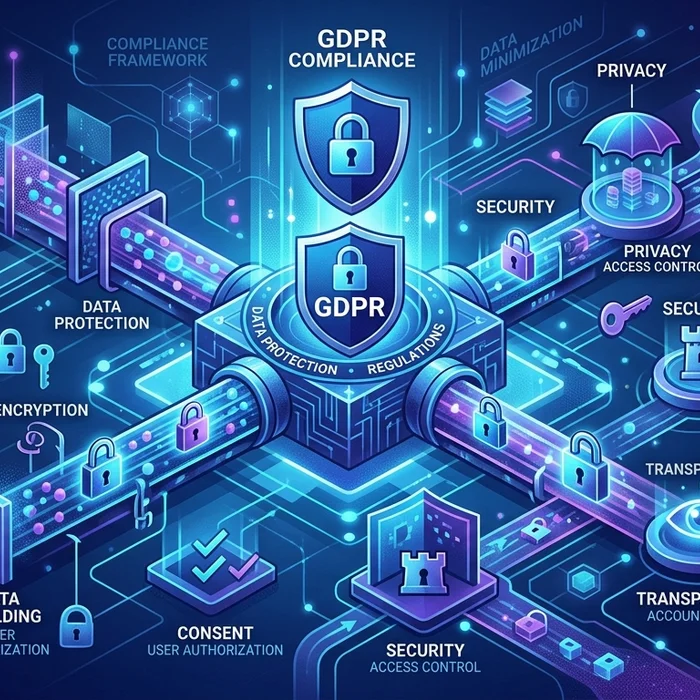
GDPR vs NIS2: obligations, timelines, and fines
| Area | GDPR | NIS2 |
|---|---|---|
| Scope | Personal data processing by controllers/processors | Security and resilience of network and information systems in essential/important sectors |
| Objective | Data protection and privacy rights | Continuity of services and cybersecurity risk management |
| Core duties | Lawful basis, minimization, DPIAs, data subject rights, breach notification | Risk management, technical/organizational measures, supply‑chain security, incident reporting, business continuity |
| Incident reporting | Notify supervisory authority within 72h if risk to individuals; notify data subjects if high risk | Early warning within 24h; notification with assessment by 72h; final report within 1 month to CSIRT/authority |
| Fines | Up to €20M or 4% global turnover | Essential: up to €10M or 2% global turnover; Important: up to €7M or 1.4% |
| Leadership accountability | Controller/processor responsibilities; DPO in specific cases | Management body oversight; potential temporary bans on managers for severe non‑compliance |
| Third‑party focus | Processor contracts, cross‑border transfers | Supplier security requirements, coordinated vulnerability disclosure, dependency mapping |
Incident playbook: your first 72 hours under NIS2
During a closed‑door workshop this week, a CISO from a European hospital summarized it bluntly: “If you don’t pre‑draft your NIS2 notification, you’ll spend your golden 72 hours reinventing forms.” Build this muscle now:
- Within 0–24 hours: triage signal vs. noise, assign severity, and dispatch an early warning with initial indicators of compromise and suspected impact.
- By 72 hours: deliver an update with scope, root‑cause hypothesis, containment, and anticipated cross‑border effects.
- Within 1 month: file the final report, including forensics, lessons learned, and long‑term fixes; share with key suppliers if dependencies were affected.
Practice against realistic scenarios: firewall exploitation, unauthenticated upload abuse in a web module, or a payroll vendor compromise. Record timelines to demonstrate due diligence.
Sector snapshots: what good looks like
- Banks and fintechs: enforce strong customer authentication, segment payments platforms, and scrub personally identifiable information before model evaluation or vendor troubleshooting with an AI anonymizer.
- Hospitals: prioritize EMR segregation, disable risky macros, and move radiology or lab files through a secure document upload channel with automatic redaction of patient data.
- Law firms: stop emailing briefs; use project‑scoped vaults, apply encryption at rest and in transit, and anonymize discovery sets before sharing across borders.
As I’ve seen in audits, regulators respond well to simple proof: clean inventories, recent tabletop notes, supplier attestations, and screenshots/logs that show controls are on and used.
Compliance checklist (quick reference)
- Board‑approved NIS2 policy and risk register
- Asset inventory with data classification
- MFA, patch SLAs, segmentation, EDR, centralized logging
- Vendor risk assessments and security clauses
- 24/72/30‑day incident reporting workflow
- Backup/restore tests and crisis communications plan
- DPIAs where needed; data minimization and anonymization in workflows
- Secure document uploads; block ungoverned sharing
- Staff training on phishing and AI usage rules
- Audit trail: policies, tickets, evidence of testing
EU vs US: different levers, same direction
Across the Atlantic, public companies face fast incident disclosure under securities rules, and critical infrastructure awaits binding timelines reminiscent of NIS2’s 24/72‑hour model. The EU’s approach is broader—tying leadership accountability to concrete security measures across sectors. Practically, multinational teams should harmonize on the stricter common denominator and reuse evidence packs across jurisdictions.
Tools that reduce risk without slowing work
Controls are only effective if people use them. That’s why I favor guardrails that slot into daily workflows:
- Anonymize before you share: strip names, emails, IBANs, MRNs, and other identifiers from docs and screenshots with an AI anonymizer that preserves context for review.
- Standardize intake: move contracts, HR forms, medical images, and invoices into a secure document upload flow that logs access and prevents accidental exposures.
Professionals across finance, health, and legal avoid fines and headlines by using Cyrolo at www.cyrolo.eu to operationalize these guardrails.
FAQ: NIS2 compliance checklist and practical questions
What is the NIS2 compliance deadline?
Member States transposed NIS2 from October 2024. If you’re in an in‑scope sector (essential or important entity), you are expected to demonstrate practical compliance now. Regulators can ask for evidence at any time, especially after significant incidents.
How is NIS2 different from GDPR?
GDPR protects personal data and individual rights. NIS2 focuses on the security and resilience of services and systems. They overlap in breach handling: you may need to notify both your data protection authority (GDPR, within 72 hours) and your NIS2 authority/CSIRT (early warning in 24 hours, fuller report by 72 hours).
What are the NIS2 incident reporting timelines?
Submit an early warning within 24 hours of becoming aware of a significant incident, a more detailed notification by 72 hours, and a final report within one month. Prepare templates in advance to avoid delays.
Who falls under NIS2?
Essential and important entities across sectors like energy, transport, finance, health, water, digital infrastructure, ICT services (including cloud and data centers), public administration, and more. Size and sector thresholds apply; confirm with your national authority.
What tools help with GDPR and NIS2 at the same time?
Asset inventories, MFA, logging/monitoring, vendor risk management, and evidence repositories are foundational for both. For data minimization and safe collaboration, use an anonymizer and a secure document upload platform to keep personal data controlled.
Conclusion: make the NIS2 compliance checklist your weekly ritual
NIS2 raises the bar, but it also clarifies what “good” looks like: accountable leadership, hardened systems, prepared reporting, and privacy‑aware workflows. Turn this NIS2 compliance checklist into a standing agenda item, and you’ll satisfy regulators while cutting real risk. Above all, keep sensitive information out of uncontrolled channels—professionals standardize on Cyrolo at www.cyrolo.eu for anonymization and secure document uploads that align with GDPR and NIS2 in one motion.
Sources & References
- 1Google Adds 24-Hour Wait for Unverified App Sideloading to Reduce Malware and ScamsThe Hacker News · 2026-03-20T10:57:00.000Z
- 2The Importance of Behavioral Analytics in AI-Enabled Cyber AttacksThe Hacker News · 2026-03-20T10:00:00.000Z
- 3Magento PolyShell Flaw Enables Unauthenticated Uploads, RCE and Account TakeoverThe Hacker News · 2026-03-20T09:30:00.000Z
- 4Interlock Ransomware Targets Cisco Enterprise FirewallsDark Reading · 2026-03-20T13:00:00.000Z
- 5With Government's Role Uncertain, Businesses Unite to Combat FraudDark Reading · 2026-03-19T20:43:01.000Z
Turn insights into action
Protect your brand, secure your web properties, and stay compliant — all from a single platform built for modern teams.
Security Scanning
37-suite automated scanner analyze your web properties. Get A+ to F security grading with actionable remediation steps.
Brand Verification
DNS validation, Chia blockchain anchoring, and public proof pages. Build trust with cryptographic evidence.
GDPR & Compliance
Article-by-article GDPR audits. Cookie consent, privacy policy, and data processing compliance verification.