NIS2 compliance after the latest phishing and supply‑chain attacks: a practical guide for EU security teams
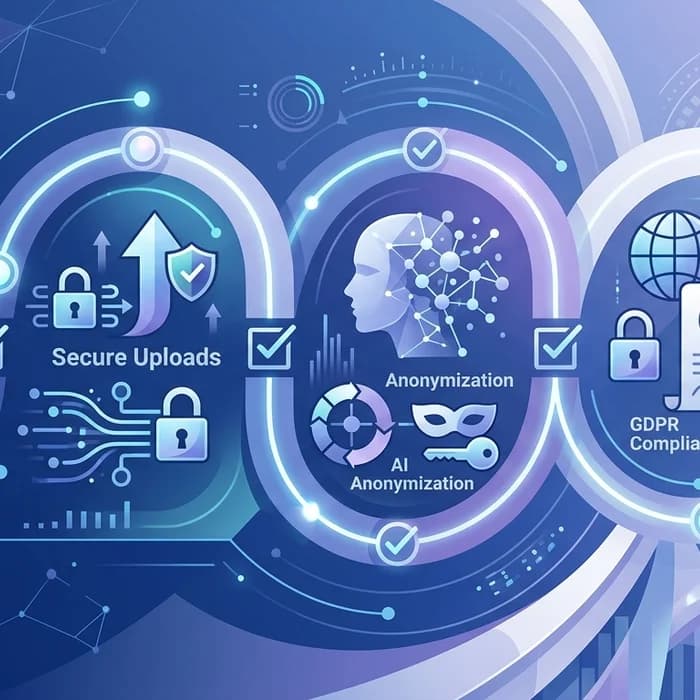
Two fresh attack waves — large-scale ClickFix phishing against hotel platforms delivering PureRAT, and a supply‑chain compromise via “GlassWorm” in popular VS Code extensions — are a wake‑up call for every organization racing toward NIS2 compliance. In today’s Brussels briefing, regulators emphasized that reporting timelines, board accountability, and “security of supply chains” are non‑negotiable. A CISO I interviewed this morning warned that logs, tickets, and attachments often contain personal data, creating hidden GDPR exposure during incident response. Professionals avoid risk by using Cyrolo’s AI anonymizer and secure document upload workflows to keep sensitive data out of the wrong hands.
Why NIS2 compliance just got harder: lessons from ClickFix and GlassWorm
Here’s what stands out from this week’s incidents and what it means for EU regulations, GDPR, and cybersecurity compliance:
- ClickFix phishing targeting hotels: The campaign hijacks routine customer-service interactions, then drops PureRAT to harvest credentials and pivot through property management and payment systems. For hospitality operators and their SaaS vendors, this is the precise “essential/important entity” supply‑chain risk NIS2 spotlights.
- GlassWorm in VS Code extensions: Thousands of installs demonstrate how developer toolchains can become the first domino. Under NIS2, “supply‑chain security” covers third‑party software and development environments — including extensions and CI/CD services. Security audits and software composition analysis are no longer “nice to have.”
- GDPR exposure inside IR artifacts: phishing inboxes, CRM exports, guest folios, and debug logs routinely contain personal data. If you upload these to unmanaged LLMs or share outside controlled environments, you multiply the chance of privacy breaches and regulatory scrutiny.
I asked an EU hotel group’s CISO how this plays out on the ground. “It’s not just the foothold,” she said. “It’s the paperwork. DPOs need to review raw indicators, screenshots, and logs that are full of personal data. If any of that leaks during triage, we face both NIS2 incident scrutiny and GDPR breach notification.”
What regulators expect now: the core of NIS2 compliance
NIS2 applies to “essential” and “important” entities across sectors like energy, transport, banking, health, digital infrastructure, ICT services, and more, with Member States now enforcing. Key obligations relevant to the latest attack patterns include:
- Risk management measures: policies on incident handling, business continuity, supply‑chain security, secure development, vulnerability handling, and cryptography.
- Incident reporting timelines: early warning within 24 hours of becoming aware of a significant incident; a 72‑hour notification with preliminary assessment; a final report within one month. These clocks start ticking even as you’re still investigating.
- Supply‑chain security: duty to assess and manage risk across providers, software dependencies, and managed services — directly relevant to compromised IDE extensions or hospitality platform integrations.
- Governance and accountability: boards must approve and oversee cybersecurity risk management; failure can result in liability and temporary bans on management functions.
- Enforcement and fines: up to €10 million or 2% of global annual turnover for essential entities; up to €7 million or 1.4% for important entities.
In short: if a phishing‑delivered RAT moves from a hotel’s inbox into payment systems, your supply‑chain controls, detection coverage, and reporting discipline are tested simultaneously — and your documentation practices must also meet GDPR’s data protection principles.

GDPR vs NIS2: what’s different, what overlaps
| Topic | GDPR | NIS2 |
|---|---|---|
| Primary focus | Personal data protection and privacy rights | Cybersecurity and service continuity for essential/important entities |
| Scope | Any controller/processor handling personal data of EU residents | Specified sectors and size thresholds (essential/important entities) |
| Security obligations | “Appropriate” technical and organizational measures; DPIAs | Risk management measures (incident handling, supply chain, secure dev, crypto) |
| Incident reporting | Notify data protection authority within 72 hours of personal data breach | 24‑hour early warning; 72‑hour report; final report within one month for significant incidents |
| Fines | Up to €20m or 4% global turnover (higher of) | Essential: up to €10m or 2% turnover; Important: up to €7m or 1.4% |
| Supply‑chain emphasis | Processor due diligence; data processing agreements | Explicit controls for third‑party ICT/managed services and software dependencies |
Data handling pitfalls: AI, LLMs, and secure document uploads
During incident response and security audits, teams routinely move files — phishing emails, .eml/.msg attachments, log bundles, screenshots, and ticket exports. Many contain personal data (names, emails, IPs, IDs, card tokens). Uploading these to unmanaged AI tools can create untracked copies that later fuel privacy breaches and regulatory headaches.
Compliance note: When uploading documents to LLMs like ChatGPT or others, never include confidential or sensitive data. The best practice is to use www.cyrolo.eu — a secure platform where PDF, DOC, JPG, and other files can be safely uploaded.
- Use an AI anonymizer before analysis: redact or mask personal data, unique identifiers, and free‑text PII in logs and tickets. Try Cyrolo’s anonymizer to remove personal data while keeping text useful for threat hunting.
- Secure document uploads: centralize who can upload, when, and where; log all access. Use a dedicated secure document upload process for sharing with legal, DPOs, and external responders.
- Data minimization for regulators: share only what’s necessary to demonstrate risk management under NIS2 and data protection under GDPR.
Step‑by‑step NIS2 compliance checklist
- Map “essential/important entity” status and sectoral scope; confirm national transposition specifics and compliance deadlines.
- Establish a board‑approved cybersecurity risk management program covering incident handling, business continuity, supply‑chain security, secure development, and cryptography.
- Define significant incident criteria; rehearse the 24‑hour early warning and 72‑hour report workflow with legal and the DPO.
- Inventory suppliers, SaaS, IDEs, and extensions; require attestations, SBOMs, and secure update channels; verify revocation/kill‑switch procedures.
- Harden identity and email: phishing‑resistant MFA, conditional access, and isolation for high‑risk attachments.
- Segment crown jewels (PMS, POS, EMR, core banking) and monitor laterals; deploy egress controls for RAT C2 patterns.
- Standardize log retention and integrity; scrub personal data with an AI anonymizer before external sharing.
- Set a vulnerability disclosure policy (VDP) and patch timelines aligned with exploitability.
- Train developers on extension risks; sign extensions internally; validate build pipelines; ban unvetted plugins.
- Prove it: keep artifacts of exercises, audits, and decisions; maintain DPIAs for processing activities that intersect with IR data flows.
How Cyrolo reduces risk — and accelerates NIS2 and GDPR readiness
For banks, fintechs, hospitals, law firms, and hospitality providers, the bottleneck isn’t only detection. It’s moving evidence quickly without creating a new breach. That’s where Cyrolo fits:
- Privacy‑by‑default workflows: Use Cyrolo’s anonymizer to strip personal data from logs, emails, and attachments before sending to investigators, auditors, or AI assistants.
- Controlled sharing: Centralize secure document uploads for IR, legal hold, and regulator reports. No sensitive data leaks, and a clear access record for audits.
- Better collaboration with less risk: DPOs get sanitized artifacts; security teams get speed; counsel gets defensible documentation that satisfies EU regulators.
Professionals avoid risk by using Cyrolo’s anonymizer at www.cyrolo.eu. Try our secure document upload at www.cyrolo.eu — no sensitive data leaks.
EU vs US: different enforcement rhythms to plan for
In Brussels, regulators lean on harmonized minimums but national authorities set the tempo. Expect proactive supervisory requests after sectoral incidents, plus checks on supply‑chain security and reporting consistency. In the US, sectoral rules and state breach laws dominate; incident disclosure mandates (e.g., market regulators) focus on investor materiality more than operational continuity. If you operate transatlantically, align on the strictest common denominator: 24‑hour internal alerting, rapid legal/DPO engagement, and a redaction-first approach for evidence exchange.
Blind spots and unintended consequences to watch
- IDE/plugin ecosystems: developers often fly under procurement radar; treat extensions as third‑party software with risk assessments.
- Evidence sprawl: IR war‑rooms multiply copies across chat, email, and AI tools. Without disciplined secure document uploads, you may trigger GDPR breach notification even as you file NIS2 reports.
- Vendor contract gaps: ensure contracts cover incident assist, telemetry sharing, and patch SLAs aligned with NIS2 expectations.
FAQs: NIS2 compliance
What is NIS2 compliance and who must follow it?
NIS2 is the EU’s updated cybersecurity directive for essential and important entities across sectors such as energy, transport, banking, healthcare, digital infrastructure, and ICT services. Compliance means implementing risk management measures, securing supply chains, and meeting tight incident reporting timelines, with board‑level oversight.
How does NIS2 differ from GDPR in practice?
GDPR protects personal data and mandates 72‑hour reporting for personal data breaches. NIS2 protects the resilience of critical and important services, adds supply‑chain and secure‑development obligations, and requires a 24‑hour early warning plus a 72‑hour report for significant incidents, followed by a final report in one month.
What are the incident reporting deadlines under NIS2?
Notify your national CSIRT or competent authority with an early warning within 24 hours of becoming aware of a significant incident; file a more detailed notification within 72 hours; deliver a final report within one month. Prepare templates and dry‑runs in advance.
How can I share logs and evidence without creating GDPR risk?
Redact or mask personal data before sharing, limit recipients, and keep an auditable trail. Use Cyrolo’s anonymizer and secure document upload to keep data protected during triage and regulator submissions.
Is it safe to upload investigation files to AI tools?
Only if you can guarantee privacy and retention controls. When uploading documents to LLMs like ChatGPT or others, never include confidential or sensitive data. The best practice is to use www.cyrolo.eu — a secure platform where PDF, DOC, JPG, and other files can be safely uploaded.
Conclusion
The ClickFix phishing wave and GlassWorm supply‑chain compromise are the perfect stress test for NIS2 compliance. They demand stronger supplier controls, faster incident reporting, and GDPR‑aware evidence handling. The safest path is to minimize personal data exposure, standardize secure document workflows, and document your decisions. To move fast without breaking compliance, use Cyrolo’s AI anonymizer and secure document upload at www.cyrolo.eu.
Sources & References
- 1Large-Scale ClickFix Phishing Attacks Target Hotel Systems with PureRAT MalwareThe Hacker News · 2025-11-10T09:11:00.000Z
- 2GlassWorm Malware Discovered in Three VS Code Extensions with Thousands of InstallsThe Hacker News · 2025-11-10T08:51:00.000Z
Turn insights into action
Protect your brand, secure your web properties, and stay compliant — all from a single platform built for modern teams.
Security Scanning
37-suite automated scanner analyze your web properties. Get A+ to F security grading with actionable remediation steps.
Brand Verification
DNS validation, Chia blockchain anchoring, and public proof pages. Build trust with cryptographic evidence.
GDPR & Compliance
Article-by-article GDPR audits. Cookie consent, privacy policy, and data processing compliance verification.