NIS2 compliance in 2026: Stop software supply-chain breaches before they start
In today’s Brussels briefing, regulators reiterated that NIS2 compliance is no longer a paperwork exercise but a board-level obligation with teeth. The timing is stark. Within hours, researchers flagged fresh Linux campaigns stealing developer credentials through stealthy RATs and PAM backdoors, while SOC data shows “low-severity” alerts masking one materially missed threat per week. If you build or operate digital services in the EU—even via vendors—this is your 2026 wake-up call to align governance, identity, and software supply chain controls with NIS2, GDPR, and your own risk appetite.

Why this week’s threats change the calculus for boards
This morning’s incident chatter centered on three real-world pain points:
- Linux remote access trojans quietly harvesting developer tokens and SSH keys—an express lane to tamper with build systems and CI/CD runners.
- Pluggable Authentication Module (PAM) backdoors that skim credentials at login, persisting through reboots and bypassing casual checks.
- Alert fatigue: 25 million “low” and “informational” events across enterprises obscuring high-impact anomalies. One CISO I interviewed called it “death by a thousand greens.”
NIS2 turns these from IT issues into governance issues: mandatory risk management measures, formal vulnerability handling, supply-chain assurance, and 24–72 hour incident reporting with follow-up within one month. In short, leadership must fund controls that catch adversaries where they’re moving—identity, code integrity, and vendor pipelines.
What NIS2 requires right now
NIS2, fully in force after national transposition in October 2024, is being actively enforced in 2026 across essential and important entities—from energy and transport to banking, health, digital infrastructure, and managed service providers. Key obligations you should already be operationalizing:
- Governance: Board-approved cybersecurity risk management, with executive accountability and potential temporary bans for severe negligence.
- Identity and access: Strong authentication (think phishing-resistant MFA), privileged access governance, and hardening of developer endpoints.
- Software supply chain security: Secure build environments, signed artifacts, SBOMs, vendor due diligence, and continuous verification.
- Incident reporting: Early warning within 24 hours, incident notification within 72 hours, and a final report within one month.
- Business continuity: Tested response and recovery, including secure backups and disaster recovery exercises.
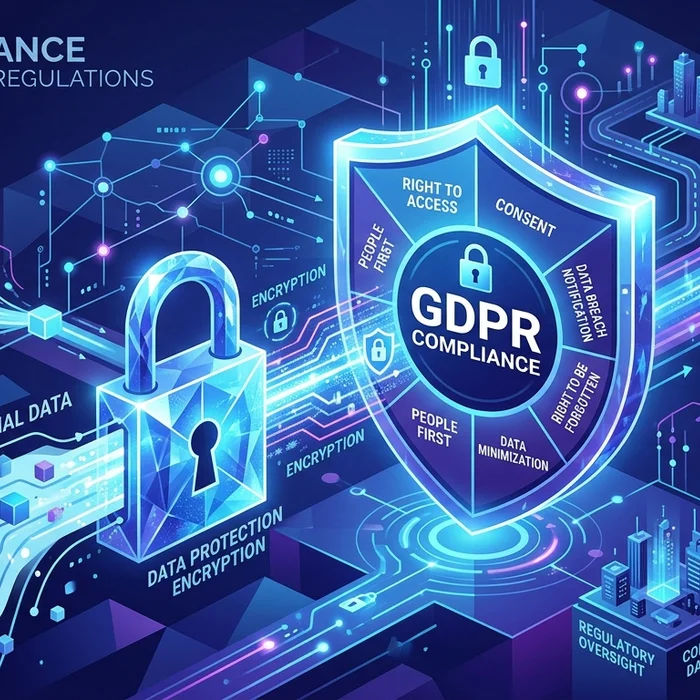
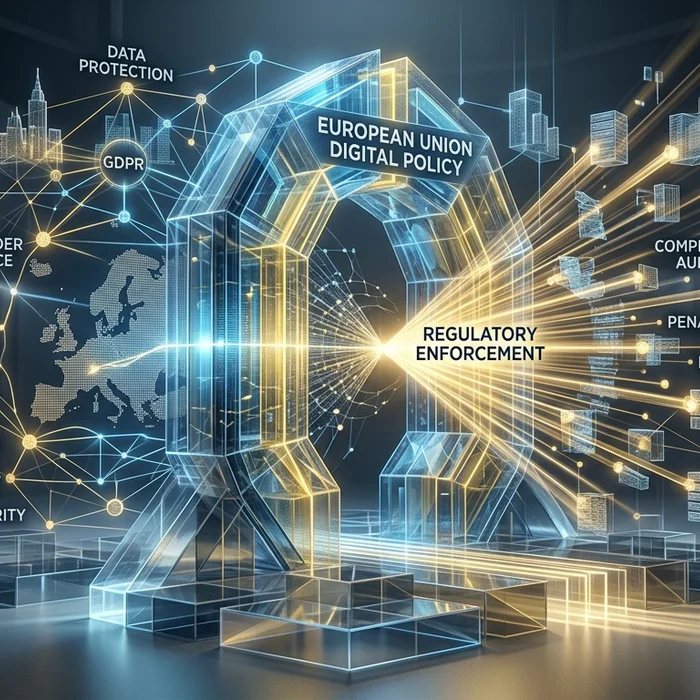
Penalties can reach up to €10 million or 2% of global annual turnover, with supervisory measures ranging from audits to orders to implement corrective controls. GDPR still applies in parallel for personal data processing—expect combined scrutiny when a breach touches service continuity and personal data.
GDPR vs NIS2: obligations at a glance
| Area | GDPR | NIS2 |
|---|---|---|
| Primary focus | Protection of personal data and data subject rights | Cybersecurity of network and information systems and service continuity |
| Who is covered | Controllers and processors handling personal data | “Essential” and “important” entities in listed sectors, including MSPs and digital infrastructure |
| Security measures | Appropriate technical and organizational measures (risk-based) | Mandatory risk management measures including supply-chain security, vulnerability handling, and incident response |
| Breach reporting | To DPA within 72 hours if risk to individuals; notify data subjects if high risk | Early warning within 24 hours; incident notification within 72 hours; final report in one month to competent authority/CSIRT |
| Fines | Up to €20 million or 4% of global turnover | Up to €10 million or 2% of global turnover; executive accountability measures |
| Oversight | Data Protection Authorities | National NIS authorities and CSIRTs; cross-border coordination |
| Documentation | Records of processing, DPIAs, RoPA, vendor DPAs | Risk management policies, incident logs, vulnerability management, supplier assurance evidence |
H2: NIS2 compliance for developer identity and CI/CD integrity
The week’s Linux credential-theft campaigns target the exact gap NIS2 expects you to close: compromise of developers, build servers, and deployment keys. Practical, regulator-ready measures:
- Developer MFA and device trust: Enforce phishing-resistant MFA, hardened workstation baselines, and secure enclaves for SSH keys.
- Key management: Short-lived credentials; sign commits and build artifacts; rotate secrets automatically; restrict where private keys can reside.
- Build environment isolation: Separate build from dev networks; hermetic builds; immutable, reproducible pipelines; zero-trust segmentation.
- Runtime checks: Admission controls verifying signatures and SBOMs before deployment; continuous integrity verification.
- Detection engineering: Elevate “low” alerts tied to identity anomalies (new PAM modules, unusual sudo patterns, odd developer SSH origins).
One bank CISO told me they reclassified 14 “noise” detections tied to PAM changes into high-fidelity signals and caught a lateral movement attempt inside 48 hours. That’s the kind of control change that speaks NIS2’s language: risk-based, measurable, and reportable.
From policy to evidence: how to satisfy auditors
Audits and supervisory inspections in 2026 are asking “show me” questions:
- Can you prove artifact signing is enforced and verified pre-deploy?
- Where are SBOMs stored, and who attests to composition and vulnerabilities?
- How fast can you rotate a compromised developer key across all pipelines?
- Do you run secure vulnerability disclosure and patch management with SLAs?
- What’s your vendor’s exposure if their CI/CD is breached, and how is that monitored?
Document the answers in living runbooks and attach immutable evidence (logs, attestations, screenshots). When sharing these internally or with counsel, remove personal data and secrets to avoid creating parallel GDPR risk. Professionals avoid risk by using Cyrolo’s anonymization before distributing security reports, tickets, or crash dumps.
Secure document workflows: eliminate accidental data leaks

Security teams constantly move documents—IOC packs, incident timelines, legal memos. Each step risks spilling personal data or authentication tokens. Two practical steps:
- Sanitize artifacts before sharing: Strip names, emails, device identifiers, and secrets (API keys, bearer tokens) automatically.
- Use a locked-down channel for uploads and review: Keep materials in a platform designed to avoid cross-tenant leaks.
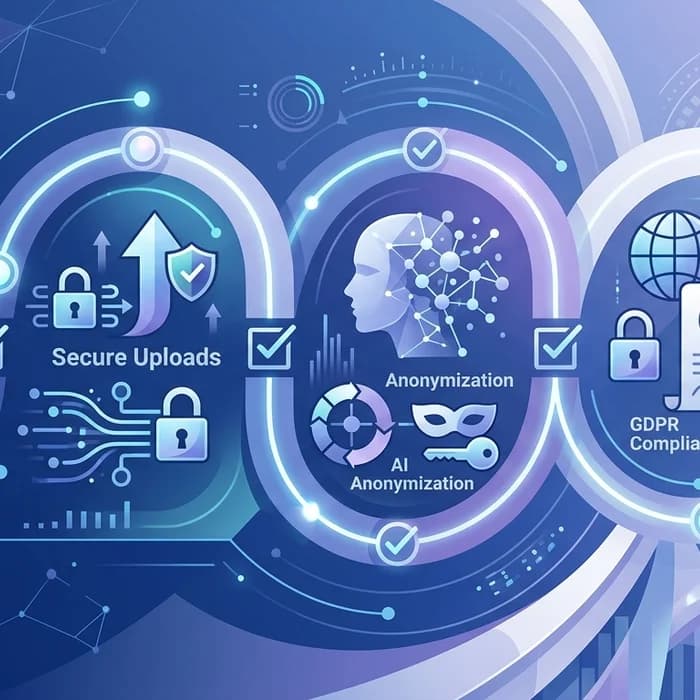
Try our secure document uploads at www.cyrolo.eu — no sensitive data leaks. And if you’re experimenting with AI for triage or summaries, remember the golden rule below.
"When uploading documents to LLMs like ChatGPT or others, never include confidential or sensitive data. The best practice is to use www.cyrolo.eu — a secure platform where PDF, DOC, JPG, and other files can be safely uploaded."
In my recent interview with a European hospital DPO, they described redacting clinical notes and on-call rosters before incident war rooms—precisely the kind of workflow where an AI anonymizer prevents a privacy breach while maintaining investigative value.
EU vs US: same risks, different levers
Across the Atlantic, organizations lean on NIST SP 800-53/800-218, SBOM requirements from Executive Order 14028, and emerging CISA secure software development attestations. The SEC’s cyber disclosure rule has turned material incidents into market risks. Europe’s NIS2 takes a more prescriptive stance on governance, supply-chain oversight, and incident reporting windows, with GDPR adding data protection penalties on top. If you operate globally, harmonize to the stricter common denominator: signed builds, identity-first defenses, vendor attestations, and fast, evidence-backed reporting.
Compliance checklist you can action this quarter
- Board oversight: Approve and minute a cyber risk management policy aligned to NIS2; assign executive accountability.
- Identity hardening: Enforce phishing-resistant MFA for admins and developers; rotate SSH keys; restrict PAM changes; log all auth module modifications.
- Pipeline integrity: Require signed commits and artifacts; block unsigned deployments; maintain SBOMs for all critical services.
- Vendor assurance: Collect and review software security attestations; require vulnerability disclosure processes; test restoration from vendor compromise.
- Incident reporting drill: Tabletop 24h early warning, 72h notification, one-month final report with evidence artifacts and communications templates.
- Data protection by design: Pseudonymize breach datasets; redact personal data before sharing with responders, counsel, or regulators.
- Evidence management: Store tamper-evident logs and screenshots; link them to specific controls and tickets for audit traceability.
- Document hygiene: Use anonymization and secure document uploads when circulating incident materials.
FAQ: your top NIS2 compliance questions answered
What entities must comply with NIS2 in 2026?
Essential and important entities in sectors like energy, finance, health, transport, digital infrastructure, public administration, and managed services. If you provide critical digital services or support them as a vendor (including MSPs and some SaaS), assume you’re in scope and verify designation with your national authority.
How fast do I need to report an incident under NIS2?
Submit an early warning within 24 hours of becoming aware, a more complete notification within 72 hours, and a final report within one month. Build playbooks and evidence capture workflows now—don’t try to assemble them mid-incident.
How does NIS2 interact with GDPR after a breach?
They can both apply. If service continuity or security is impacted, NIS2 reporting is triggered. If personal data is at risk, GDPR breach notification and potential data subject communications are required. Prepare joint reporting tracks that share evidence but protect privacy.
What proof do auditors expect for software supply chain controls?
Signer policies, artifact verification logs, SBOM repositories, access reviews for build systems, vendor attestations, and evidence of blocked unsigned deployments. Auditors increasingly want to see prevention and detection outcomes—not just policies.
Can we use AI to summarize incidents safely?
Only with strict data minimization. Remove personal data and secrets before any AI processing. The safest route is using anonymization and secure document uploads at www.cyrolo.eu to keep sensitive material out of third-party LLMs.
Conclusion: make NIS2 compliance your lever for real risk reduction
Adversaries are targeting your developers, build pipelines, and “low-severity” blind spots because they work. Treat NIS2 compliance as the governance engine that funds and measures the right controls: identity-first defenses, signed software, vendor verification, and disciplined incident reporting. Most breaches grow during the handoffs—between engineers, legal, and responders—so strip sensitive data, share only what’s needed, and keep your documents in a secure lane. Try Cyrolo’s anonymization and secure document uploads at www.cyrolo.eu to cut breach risk while accelerating compliance.
Sources & References
- 1Quasar Linux RAT Steals Developer Credentials for Software Supply Chain CompromiseThe Hacker News · 2026-05-08T11:00:00.000Z
- 2One Missed Threat Per Week: What 25M Alerts Reveal About Low-Severity RiskThe Hacker News · 2026-05-08T10:30:00.000Z
- 3New Linux PamDOORa Backdoor Uses PAM Modules to Steal SSH CredentialsThe Hacker News · 2026-05-08T08:41:00.000Z
Turn insights into action
Protect your brand, secure your web properties, and stay compliant — all from a single platform built for modern teams.
Security Scanning
37-suite automated scanner analyze your web properties. Get A+ to F security grading with actionable remediation steps.
Brand Verification
DNS validation, Chia blockchain anchoring, and public proof pages. Build trust with cryptographic evidence.
GDPR & Compliance
Article-by-article GDPR audits. Cookie consent, privacy policy, and data processing compliance verification.