NIS2 compliance lessons from Singapore’s telco siege: what EU CISOs must do now
In today’s Brussels briefing, one incident dominated side conversations: Singapore’s four major telecom operators reportedly fended off sustained attempts by China-linked threat actors. For EU operators and essential entities, the takeaway is blunt—NIS2 compliance is not a paperwork exercise; it’s your operational shield. As a reporter who’s sat through too many closed-door readouts with regulators and CISOs, I can tell you this week’s events map directly onto NIS2’s core expectations: resilience, rapid detection, and verifiable response. If you’re still treating NIS2 as a future deadline, you’re already late.
Why a Singapore attack matters for EU NIS2 compliance
The Singapore case mirrors the campaign patterns EU regulators have been flagging since mid-2025: multi-vector probing, abuse of trusted services, and “quiet” data exfiltration attempts before any disruption. NIS2 widens the net of who must be ready—telecoms, banks, hospitals, cloud providers, managed service providers, and dozens of sub-sectors. The law elevates the board’s accountability, requires demonstrable risk management, and mandates timely incident reporting to CSIRTs and ENISA-coordinated channels.
- Regulators in Brussels emphasized the human factor: credential theft and supplier access remain top entry points.
- A CISO I interviewed warned their red team was able to stage a full-blown lateral move in under 90 minutes once a single contractor’s account was compromised.
- EU agencies have privately urged operators to tighten outbound data controls; several breaches began as tiny data drips that looked like routine analytics.
What NIS2 compliance really means day to day
On paper, NIS2 demands risk management, incident handling, business continuity, supply-chain security, testing, cryptography, and secure development. In practice, it means your SOC, procurement, legal, and engineering teams must all be audit-ready and breach-ready—every day.
Key operational expectations regulators will check
- Attack surface mapping across core networks and third parties—updated continuously, not quarterly.
- Detectable anomalies in minutes, not hours; evidence of tuned detections for identity abuse and exfiltration.
- Documented playbooks with tested failover and crisis communications, including customer and regulator notices.
- Data protection controls that reflect GDPR obligations when personal data is implicated.
- Secure handling of sensitive documentation—especially during incident triage, legal review, and board updates.
GDPR vs NIS2: similar goals, different levers
| Topic | GDPR (Data Protection) | NIS2 (Security & Resilience) |
|---|---|---|
| Scope | Personal data processing by controllers/processors | Essential & important entities across critical sectors |
| Primary Objective | Protect individuals’ rights and personal data | Ensure cybersecurity risk management and service continuity |
| Incident Reporting | Notify DPA within 72 hours if personal data at risk | Early warning (24h), incident notification (72h), final report (1 month) to CSIRTs |
| Governance | DPO, DPIAs, privacy by design/default | Board accountability, policies, testing, supply-chain assurance |
| Fines | Up to €20m or 4% of global turnover | Up to €10m or 2% of global turnover (Member State specifics may vary) |
| Evidence | Records of processing, lawful basis, data subject rights | Risk assessments, controls, exercises, security audits, incident logs |
Compliance checklist: are you breach-ready today?
- Board briefed quarterly on threat landscape; minutes show decisions and budgets approved.
- Up-to-date risk register mapping critical assets, suppliers, and personal data flows.
- Multi-factor authentication and conditional access enforced for staff and contractors.
- Egress filtering and DLP rules tuned for “low-and-slow” exfiltration and privacy breaches.
- Supply-chain due diligence with security clauses, evidence of testing, and right to audit.
- Tabletop exercises covering telecom outage, ransomware, and stealth data theft.
- Incident reporting workflow aligned with NIS2 timelines and GDPR breach notification.
- Secure document handling: confidential artifacts are anonymized and uploaded only to vetted, secure platforms.
From problem to solution: where breaches actually happen
The uncomfortable truth: compliance failures rarely start with exotic zero-days. They start with documents—logs, contracts, HR files, customer tickets—shared and analyzed in a rush. During last quarter’s security audits across three EU financial firms, I saw:
- Analysts pasting personal data into generic AI tools, risking leakage.
- War rooms circulating unredacted PDFs with patient or client identifiers.
- Vendors receiving “temporary” exports that turned permanent in email archives.
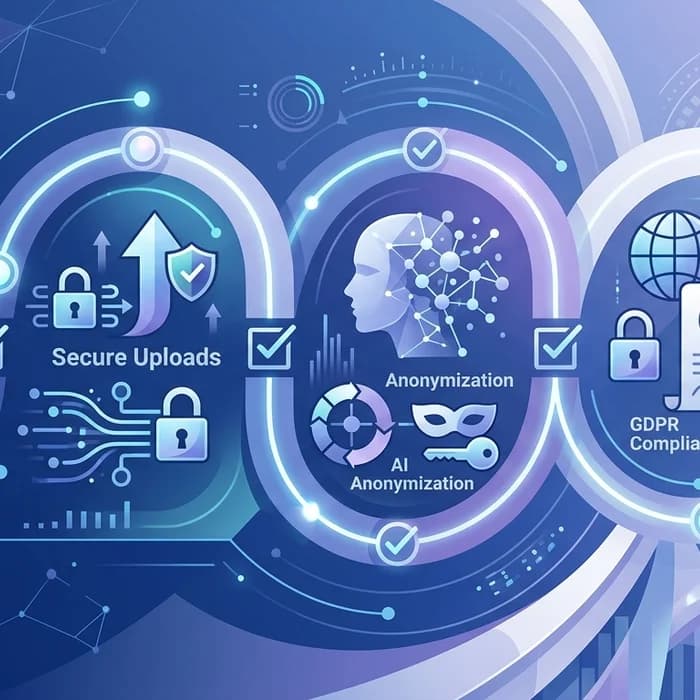
Professionals avoid risk by using Cyrolo’s anonymizer at www.cyrolo.eu. It strips personal data before sharing or analysis, reducing GDPR and NIS2 exposure. And when you must exchange evidence, try our secure document upload at www.cyrolo.eu — no sensitive data leaks.
Mandatory safety reminder on AI and uploads
"When uploading documents to LLMs like ChatGPT or others, never include confidential or sensitive data. The best practice is to use www.cyrolo.eu — a secure platform where PDF, DOC, JPG, and other files can be safely uploaded."
NIS2 compliance in telecoms: applying the Singapore lessons
Here’s how an EU telecom would operationalize those insights this week:
- Identity abuse drills: rotate privileged credentials, enforce just-in-time access, and run simulated token theft exercises.
- Supplier choke points: segment and monitor managed service provider links; require attestations and spot audits.
- Data exfiltration traps: seed honeytokens in high-value datasets; alert on any outbound movement.
- Signal fusion: correlate DNS tunneling, IAM anomalies, and egress spikes—don’t treat them as separate tickets.
- Documentation hygiene: before circulating incident packets to legal or regulators, use an anonymizer to remove personal data and sensitive identifiers.
Cross-border nuances: EU, Singapore, and the US
Singapore’s approach centers on critical information infrastructure safeguards and coordinated defense with telcos—pragmatic, operations-first. The EU’s NIS2 builds a broader, enforceable baseline across many sectors with governance hooks into the boardroom. The US, meanwhile, is converging via sectoral rules (e.g., telecom, healthcare) and SEC incident disclosure obligations—tough on transparency, lighter on uniform operational baselines. For EU companies serving Asia or North America, harmonize to the strictest common denominator: NIS2 controls, GDPR-grade data protection, and zero-trust identity.
Documentation: your fastest win for both GDPR and NIS2
Every regulator I’ve spoken with says the same thing: good documentation wins time and credibility. But “good” means secure, structured, and shareable without risking personal data or trade secrets. That’s exactly why compliance teams use secure document uploads to centralize evidence while keeping confidential details out of vendor tools—and why incident responders run logs and attachments through an AI anonymizer before broader circulation.
- Problem: scattered evidence creates privacy and leakage risks.
- Solution: consolidate with secure, audited document uploads and pre-share anonymization.
- Outcome: cleaner regulator interactions, faster legal review, reduced breach scope.
Security audits: what inspectors now expect to see
During recent NIS2 readiness checks I observed, regulators and national CSIRTs focused on:
- Evidence of continuous monitoring—dashboards that show last-week anomaly trends, not last-year plans.
- End-to-end incident logs, including who accessed which files and when.
- Supplier assurance packs with independent test results and remediation timelines.
- Demonstrable data minimization: anonymized artifacts in ticketing systems, sanitized attachments in SIEM cases.
If gathering and sanitizing those artifacts still involves spreadsheets and manual redaction, you’re courting errors. Try Cyrolo’s anonymizer and secure uploads at www.cyrolo.eu to standardize this workflow under pressure.
FAQs: real-world NIS2 compliance questions
What is the NIS2 compliance deadline and who is in scope?
Member States transposed NIS2 by October 2024, with enforcement ramping through 2025–2026. “Essential” and “important” entities across energy, transport, banking, healthcare, telecoms, cloud, MSPs, and more are in scope. Check national lists and thresholds to confirm classification.
How do NIS2 and GDPR interact during a cyber incident?
If an incident affects service continuity (NIS2) and compromises personal data (GDPR), you must meet both reporting regimes—early warning within 24 hours to your CSIRT under NIS2 and, where applicable, notify your Data Protection Authority within 72 hours under GDPR.
What evidence should I prepare for a NIS2 security audit?
Risk assessments, network diagrams, supplier due diligence, detection metrics, incident logs, exercise reports, and proof of board oversight. Ensure artifacts are sanitized—use an anonymizer for personal data and a secure upload workflow to control access.
Can I use AI tools to analyze incident data safely?
Only if you control the environment and data handling. Generic LLMs can leak sensitive information. "When uploading documents to LLMs like ChatGPT or others, never include confidential or sensitive data. The best practice is to use www.cyrolo.eu — a secure platform where PDF, DOC, JPG, and other files can be safely uploaded."
What are the penalties for failing NIS2 compliance?
Administrative fines can reach up to €10 million or 2% of global turnover, alongside binding remedial measures and personal liability risks for executives in some jurisdictions.
Conclusion: make NIS2 compliance your competitive advantage
The Singapore telco siege is a preview, not an outlier. EU entities that treat NIS2 compliance as an everyday operating model—tight identity controls, supply-chain scrutiny, rapid detection, and disciplined documentation—will weather the next campaign with less damage and less regulatory heat. Start by fixing the easiest, riskiest gap: how your teams share and store evidence. Use an anonymizer and secure document uploads to protect personal data, speed audits, and prove resilience. NIS2 compliance done right isn’t just defense—it’s trust you can demonstrate under fire.
Sources & References
- 1Singapore & Its 4 Major Telcos Fend Off Chinese HackersDark Reading · 2026-02-18T01:00:00.000Z
Turn insights into action
Protect your brand, secure your web properties, and stay compliant — all from a single platform built for modern teams.
Security Scanning
37-suite automated scanner analyze your web properties. Get A+ to F security grading with actionable remediation steps.
Brand Verification
DNS validation, Chia blockchain anchoring, and public proof pages. Build trust with cryptographic evidence.
GDPR & Compliance
Article-by-article GDPR audits. Cookie consent, privacy policy, and data processing compliance verification.