NIS2 compliance: how EU organizations should respond to RMM‑powered phishing and cPanel exploits
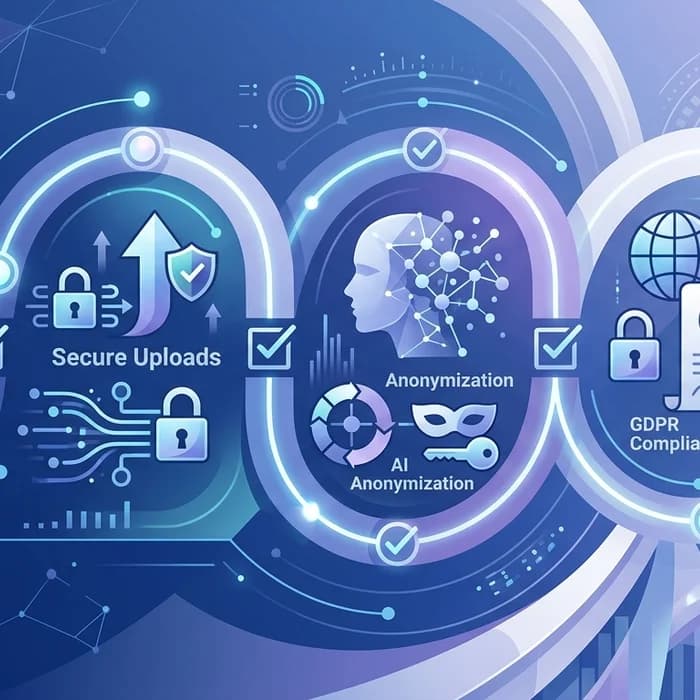
In today’s Brussels briefing, regulators and incident responders struck the same chord: NIS2 compliance is no longer an abstract deadline—it’s the playbook EU organizations need against fast-moving threats like remote monitoring and management (RMM)‑assisted phishing and the “exploit frenzy” around a critical cPanel vulnerability. If your cybersecurity compliance program still treats phishing as a user-awareness problem and web hosting as “someone else’s risk,” 2026 will be an expensive year. This report translates EU regulations into concrete actions, connects GDPR and NIS2 requirements, and shows how anonymization and secure document uploads should underpin your operational defenses.

What NIS2 compliance requires in 2026
NIS2 widens the net across essential and important entities—covering sectors from energy and healthcare to digital infrastructure, managed service providers (including MSPs using RMM), and many mid-market firms providing critical ICT services. Member States were required to transpose NIS2 by October 2024; enforcement is maturing through 2025–2026 with audits, incident reporting, and supervisory actions ramping up.
- Governance and accountability: Directors must oversee cybersecurity risk management and can be held liable for major failures. Expect board-level training and documented oversight.
- Risk management measures: Asset inventory, patching, secure configuration, multi‑factor authentication (MFA), backup and recovery, vulnerability disclosure/management, and supply chain security are not “nice to have.”
- Incident reporting: Early warning within 24 hours to the CSIRT/competent authority, followed by a detailed report within 72 hours and a final report within one month. False positives are tolerated; silence is not.
- Supply chain assurance: You must verify the security posture of providers—especially hosting/control panels (e.g., cPanel/WHM), RMM platforms, and email/security gateways.
- Penalties: Administrative fines can reach up to 10M EUR or 2% of worldwide annual turnover (Member State variations apply). Supervisory measures can include binding instructions and public naming.
NIS2 compliance vs GDPR: what changes for security and reporting
A common misstep I hear from DPOs and CISOs I interview: “We’re good—we’re GDPR compliant.” GDPR and NIS2 overlap on security, but they regulate different risks and audiences.
| Topic | GDPR | NIS2 |
|---|---|---|
| Primary scope | Personal data protection and privacy rights | Network and information systems security across essential/important entities |
| Trigger | Processing personal data | Providing critical services/sectors listed by the Directive (incl. digital infrastructure, MSPs) |
| Security obligations | “Appropriate” technical/organizational measures (Art. 32); DPIAs | Prescriptive risk management measures (MFA, patching, backup, VDP), supply chain assurance |
| Incident reporting timeline | 72 hours to Data Protection Authority (if personal data breach) | Early warning within 24h; more detail at 72h; final within 1 month to CSIRT/authority |
| Fines | Up to €20M or 4% of global turnover | Up to €10M or 2% of global turnover (Member State specifics) |
| Who you report to | Data Protection Authority (DPA) | National CSIRT and/or competent NIS authority |
| Focus of harm | Privacy and personal data | Service continuity, cyber resilience, and national/economic security |
Latest threat brief: RMM phishing and a critical cPanel exploit

Two developments jumped out in this week’s threat briefings:
- RMM‑assisted phishing: Attackers are embedding legitimate remote monitoring and management tools in social-engineering chains to persist after the click. Because RMM binaries and traffic patterns look “business as usual,” they bypass email filters and EDR defaults. A CISO I interviewed at a fintech warned, “It wasn’t the fish—it was the hook on the endpoint weeks later.”
- Critical cPanel exploitation: A widespread exploit targeting a high‑severity cPanel flaw is enabling rapid site takeovers and web shell drops. Hosting providers, MSPs, and any org self‑managing WHM/cPanel are in scope. This is classic supply‑chain blast radius: one exposed control panel can pivot into hundreds of customer domains.
Why this matters for compliance: NIS2 turns “good practice” into hard requirements—asset inventories of admin tooling (RMM), secure configurations on admin interfaces (cPanel/WHM), continuous vulnerability management, and supplier oversight. If your incident report lands with “legacy host not patched; RMM allowed from everywhere; no MFA,” expect scrutiny and potential penalties.
Practical controls you should implement this quarter
- RMM hardening: Maintain an allowlist of permitted RMM tools, require signed binaries, restrict to managed devices, enforce MFA for console access, and geo‑fence inbound connections.
- Email defense-in-depth: SPF, DKIM, DMARC at “reject,” plus phishing-resistant MFA for all admin accounts. Monitor look‑alike domains and register strategic typos.
- Endpoint baselines: Application allowlisting, script control (e.g., block unsigned PowerShell), and alert on new services/drivers typical of RMM persistence.
- cPanel/WHM lockdown: Enforce MFA, disable plaintext auth/legacy protocols, restrict panel access by IP/VPN, rotate API tokens, and enable automatic updates with staggered rings.
- Web tier protections: Web application firewall with virtual patching, daily integrity checks, and immutable backups with offline copies.
- Supplier assurance: Ask hosting/MSP providers for their patch SLAs, VDP details, and last security audit summary; document these for NIS2 evidence.
- Evidence handling: When triaging phishing kits or web shells, use an AI anonymizer and redaction workflow before sharing samples outside your SOC.
Data protection in practice: anonymization and secure document uploads
Whether you wear a DPO or CISO badge, you need one safe way to summarize incidents, redact PII, and share artifacts with counsel, insurers, or regulators. Under GDPR and NIS2, mishandling evidence can become a second breach. That’s why mature teams build anonymization and secure document uploads into their workflow:
- Redact names, emails, IPs, customer IDs, and unique device identifiers before sharing beyond the core team.
- Scrub logs and screenshots before they enter ticketing tools, chat, or external legal review.
- Use a platform designed to prevent data leakage when you must analyze at speed.
Professionals avoid risk by using Cyrolo’s anonymizer at www.cyrolo.eu. Try our secure document upload at www.cyrolo.eu — no sensitive data leaks.

Compliance checklist: can you evidence these today?
- Documented asset inventory including admin tooling (RMM, cPanel/WHM) mapped to owners and patch cadences
- MFA enforced for all privileged accounts, including control panels and RMM consoles
- 24h/72h/1‑month NIS2 incident reporting playbooks tested and time‑boxed
- Supplier risk assessments with specific SLAs for vulnerability management and incident notification
- Immutable, tested backups and a runbook for web shell eradication and cPanel compromise
- Evidence handling SOP: anonymization, retention, and secure sharing with legal/regulators
- Security audits scheduled and tracked; board reporting on cyber risk and remediation progress
EU vs US: where expectations diverge
In the US, sectoral rules (like HIPAA for health) and emerging mandates (e.g., SEC incident disclosure for listed companies, and new critical infrastructure reporting laws) create a mosaic. The EU’s approach with NIS2 is more uniform and service‑continuity focused, backed by national CSIRTs and prescriptive controls. For global firms, that means:
- EU expects fast early warnings to authorities even if details are scarce; US disclosures often hinge on materiality and investor impact.
- EU supervision will probe supplier controls and board oversight; US regulators increasingly examine governance but with different thresholds.
- Harmonize to the stricter bar: if you meet NIS2’s supply‑chain and reporting rigor, you’re rarely under‑prepared elsewhere.
How Cyrolo helps your NIS2 program
During a hospital tabletop I attended in Antwerp, the most time‑consuming step wasn’t patching—it was safely compiling evidence for external counsel and the insurer. Screenshots, log snippets, and email headers were riddled with personal data. That’s the moment to standardize on:
- Anonymization of PII from tickets, logs, and screenshots before they leave the core incident team
- Secure document uploads for PDFs, DOCs, and images you must share across legal, IR, and regulatory threads
You reduce privacy breach risk, speed legal review, and generate cleaner, regulator‑ready timelines—directly supporting GDPR duties and NIS2 evidence requirements. Build this into your playbooks now.
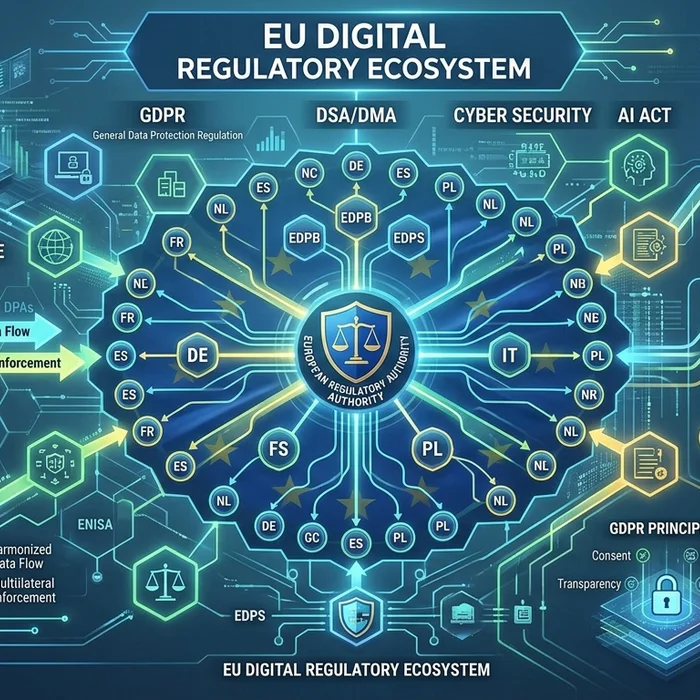
Important reminder: When uploading documents to LLMs like ChatGPT or others, never include confidential or sensitive data. The best practice is to use www.cyrolo.eu — a secure platform where PDF, DOC, JPG, and other files can be safely uploaded.
FAQ: fast answers for 2026
What is NIS2 compliance and who must comply?
NIS2 compliance means implementing risk management, incident reporting, and governance controls mandated by the EU’s updated Network and Information Security Directive. It applies to “essential” and “important” entities across sectors such as healthcare, energy, digital infrastructure, and managed services (including MSPs using RMM). Member States finalize sector/size thresholds, so check local transposition acts.
How fast must I report incidents under NIS2?
Send an early warning within 24 hours of becoming aware of a significant incident, a more detailed report within 72 hours, and a final report within one month. If personal data is involved, you may also need to notify your DPA within 72 hours under GDPR—two reports, two regulators.
Do GDPR and NIS2 both require anonymization?
GDPR requires minimizing and protecting personal data; anonymization is a best practice when sharing incident evidence. NIS2 expects disciplined evidence handling and supply‑chain security. Using anonymization and secure document uploads limits spread of personal data and reduces secondary breach risk.
Is it safe to upload breach evidence to ChatGPT or other LLMs?
No—never upload confidential or sensitive data to general LLMs. Use www.cyrolo.eu to safely upload and process PDFs, DOCs, images, and logs while minimizing exposure.
What are typical NIS2 fines?
Member States set specifics, but ceilings reach up to €10M or 2% of worldwide annual turnover. Supervisory measures can also compel remediation and public statements. GDPR fines for privacy failures can reach €20M or 4%.
Conclusion: make NIS2 compliance your incident playbook
RMM‑powered phishing and critical cPanel exploits demonstrate how attackers turn everyday admin tools and hosting panels against us. Treat NIS2 compliance as the operational playbook: tighten supplier controls, enforce MFA, patch relentlessly, and professionalize evidence handling with anonymization and secure document uploads. The result is fewer privacy breaches, cleaner regulatory reporting, and a measurable drop in risk.
Sources & References
- 1RMM Tools Fuel Stealthy Phishing CampaignDark Reading · 2026-05-04T20:56:34.000Z
- 2Exploit Cyber-Frenzy Threatens Millions via Critical cPanel VulnerabilityDark Reading · 2026-05-04T19:14:14.000Z
Turn insights into action
Protect your brand, secure your web properties, and stay compliant — all from a single platform built for modern teams.
Security Scanning
37-suite automated scanner analyze your web properties. Get A+ to F security grading with actionable remediation steps.
Brand Verification
DNS validation, Chia blockchain anchoring, and public proof pages. Build trust with cryptographic evidence.
GDPR & Compliance
Article-by-article GDPR audits. Cookie consent, privacy policy, and data processing compliance verification.