Personal Data Breach Awareness: What Brussels’ PATRICIA 2025 Exercise Means for GDPR, NIS2, and Your Incident Handling
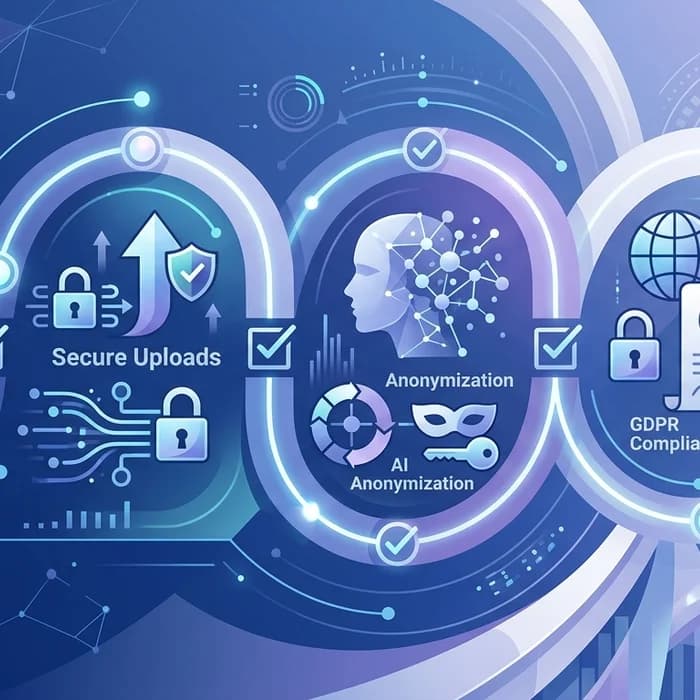
In Brussels this week, regulators shifted the spotlight squarely onto personal data breach awareness. The European Data Protection Supervisor (EDPS) launched the PATRICIA 2025 exercise—Personal dATa bReach awareness In Cybersecurity Incident handling—underscoring the real-world skills organizations need to detect, triage, and report incidents fast. In parallel, Internal Market (IMCO) lawmakers discussed consumer and platform risk, reminding firms that GDPR, NIS2, and sectoral rules now converge on one expectation: prove you can handle a breach. If you ingest documents into AI systems, anonymize first and use secure uploads—professionals avoid risk by using Cyrolo’s anonymizer and secure document upload at www.cyrolo.eu.

Why personal data breach awareness is rising in the EU
During Tuesday’s Brussels briefing, regulators emphasized that “awareness” is not a poster campaign; it’s measurable competence in incident handling. The EDPS’s PATRICIA 2025 exercise simulates real response: detection, evidence preservation, notifying controllers/processors, and coordinated reports to competent authorities. An IMCO member warned that incomplete internal playbooks are now a board-level liability.
- Financial exposure is non-trivial: GDPR fines can reach €20 million or 4% of global turnover; NIS2 administrative fines can reach €10 million or 2% of global turnover, alongside corrective orders.
- The average cost of a breach remains measured in the millions when you factor in response, legal, regulatory, and reputational fallout.
- Compliance deadlines shrink operational slack: GDPR requires notifying the DPA within 72 hours “where feasible”; NIS2 pushes Essential/Important entities to report early indicators and final reports within defined windows.
I asked a CISO at a pan-EU fintech what keeps them up at night. Their answer: “It’s not the zero-day; it’s whether our analysts will know, within the hour, what is personal data, what is service-impacting, and who exactly to notify—DPAs, CSIRTs, clients.” That is the core of personal data breach awareness.
GDPR vs NIS2: obligations you must harmonize
GDPR and NIS2 overlap, but they’re not the same. GDPR is about personal data protection and privacy. NIS2 focuses on essential and important services and their resilience. Most mid-to-large organizations must live in both worlds.
| Area | GDPR | NIS2 |
|---|---|---|
| Who is covered | Controllers and processors of personal data | Essential and Important entities in listed sectors (e.g., energy, finance, health, digital infrastructure, MSPs) |
| Trigger | Personal data breach likely to result in risk to rights and freedoms | Cyber incident with significant impact on service, security, or operations |
| Notification deadline | DPA within 72 hours of becoming aware; affected individuals without undue delay if high risk | Early warning “without undue delay” (often within 24 hours), followed by detailed incident and final reports |
| Supervisory body | National Data Protection Authorities (DPAs) | National competent authorities and CSIRTs |
| Sanctions | Up to €20m or 4% of global turnover | Up to €10m or 2% of global turnover; security measures orders |
| Focus | Personal data and privacy | Network and information systems security and resilience |
| Proof expected | Records of processing, DPIAs, breach logs, notification evidence | Risk management, technical and organizational measures, incident reporting, audits |
The 72-hour playbook: from breach indicator to regulator-ready
Awareness must translate into a sequence you can execute under pressure. In PATRICIA-style drills and real incidents, teams that succeed follow a simple, repeatable flow.

- Detect and confirm: Triage alerts; classify the event (confidentiality, integrity, availability, or mixed).
- Contain and preserve evidence: Isolate affected systems; snapshot logs; maintain chain-of-custody.
- Classify impact: Identify personal data involved, affected data subjects, and the likelihood of harm; assess service impact for NIS2.
- Decide notifications: DPA within 72 hours if GDPR risk threshold is met; early warning to NIS2 authorities/CSIRTs for significant incidents; inform customers/partners where required.
- Draft artifacts: Facts, timeline, data categories, mitigation, residual risk, and contact points.
- Remediate and monitor: Patch, reset credentials, rotate keys, harden controls; monitor for secondary compromise.
- Post-incident review: Root cause, policy/process updates, training, documentation.
Compliance checklist you can run today
- Map data flows: what personal data you hold, where it lives, lawful bases, processors.
- Define severity tiers that align to GDPR risk and NIS2 significant impact criteria.
- Pre-draft regulator templates and stakeholder comms (DPA, CSIRT, customers).
- Run quarterly breach simulations, include after-hours and multi-jurisdiction scenarios.
- Enable least-privilege, MFA, robust logging, and evidence retention.
- Anonymize documents before uploading to AI tools; restrict who can export datasets.
- Use a secure document upload workflow with audit trails and access controls.
- Vendor governance: ensure processors can support your 72-hour clock.
If your team shares case files or exports with AI, deploy anonymization and safe reading workflows now. Try an AI anonymizer and secure document upload with auditability at www.cyrolo.eu.
AI, anonymization, and safe document handling
IMCO members signaled ongoing scrutiny of consumer harms tied to algorithmic tools. In practice, that means your AI experimentation must not create new breach vectors. Lawyers, clinicians, and bankers increasingly paste sensitive excerpts into LLMs to summarize or draft—an invisible risk until a breach occurs or a regulator asks for logs.
- Before sharing any case, claim, or customer file with an LLM or third-party contractor, strip out direct and indirect identifiers.
- Keep uploads inside a zero-trust perimeter with access controls and logging.
- Ensure reversible anonymization is handled carefully and only where justified; default to irreversible techniques for external processing.
Professionals avoid risk by using Cyrolo’s anonymizer to redact personal data and its secure document uploads to control who sees what, when. Try our secure document upload at www.cyrolo.eu — no sensitive data leaks.
Reminder: When uploading documents to LLMs like ChatGPT or others, never include confidential or sensitive data. The best practice is to use www.cyrolo.eu — a secure platform where PDF, DOC, JPG, and other files can be safely uploaded.
Sector snapshots: how awareness plays out in practice
Banks and fintechs
A payment processor detects suspicious exfiltration of transaction logs that include masked PANs but unmasked names and emails. GDPR risk is likely; NIS2 may apply if services degrade. The CISO I interviewed last quarter stressed that “the first 30 minutes decide your 72 hours”—they auto-generate DPA report drafts from incident fields and rely on an AI-enabled document reader to quickly scan contracts and SLAs. They anonymize customer excerpts before any AI-assisted analysis via www.cyrolo.eu.
Hospitals and clinics
An imaging workstation is compromised; DICOM files may include embedded identifiers. Healthcare providers must assume high-risk to data subjects and expedite notification. A privacy officer told me their lesson learned: “If staff can upload medical images anywhere, someone will. We now enforce a secure reader that only allows uploads through a vetted flow and automatic anonymization.”
Law firms
Litigation teams receive mixed bundles of emails, PDFs, and photos. Associates want summaries from LLMs. The managing partner approved a policy: documents must be anonymized and uploaded via a secure internal gateway. This compresses review time without exposing client identities. A tool like Cyrolo’s anonymizer and document reader at www.cyrolo.eu fits this workflow.
Operationalizing awareness: process, tooling, culture
- Process: Align your incident taxonomy with GDPR and NIS2 triggers; define who signs off on notifications.
- Tooling: Implement secure document intake, AI anonymization, DLP and EDR, and a ticketing bridge to legal and privacy.
- Culture: Run red-team style table-tops where legal drives the 72-hour narrative; rotate on-call with privacy officers.
In my discussions with regulators, one theme stands out: “Show us you’re learning.” That means evidence of continuous improvement—post-mortems, updated SOPs, retraining. It also means reducing unnecessary data exposure in day-to-day work. Cyrolo helps on that front: anonymize files before analysis and centralize secure document uploads so you can prove control.
FAQs: quick answers for your next audit
What counts as a personal data breach under GDPR?
Any security incident leading to accidental or unlawful destruction, loss, alteration, unauthorized disclosure of, or access to personal data. It’s not just exfiltration; misdirected emails and misconfigured storage can qualify.
How do GDPR and NIS2 notifications interact?
If an incident involves personal data and impacts services, you may have to notify both your DPA (GDPR) and your national NIS2 authority/CSIRT. Prepare distinct but consistent reports; keep facts synchronized.
Do we have to notify individuals?
Yes, when the breach is likely to result in a high risk to individuals’ rights and freedoms. Provide clear mitigation advice, not just legal boilerplate.
Can we use LLMs to investigate breaches?
Only with extreme caution and after anonymization. Never paste raw logs or case files containing identifiers into public tools. Use a secure, controlled workflow and anonymize first via www.cyrolo.eu.
What should we document for audits?
Incident timeline, scope, data categories, risk assessment, containment and mitigation, notification decisions and evidence, and the post-incident improvement plan.
Reporting from Brussels: policy signals you should act on now
From the PATRICIA 2025 exercise to this morning’s IMCO debate, policymakers are aligning practice with principle: demonstrate competence, not just compliance. Expect more joint inspections that examine whether your SOC, privacy office, and legal team can execute under 72-hour pressure. Expect tighter scrutiny of “shadow AI” uploads. And expect auditors to ask how you prevent privacy breaches in daily workflows, not just in crisis mode.
The easiest win? Remove sensitive data from documents before they travel. Professionals avoid risk by using Cyrolo’s anonymizer and secure document uploads for controlled, audited handling.
Conclusion: embed personal data breach awareness into daily operations
Personal data breach awareness is no longer a training module; it’s the operating system of modern compliance. With GDPR and NIS2 raising the bar, organizations that can detect, decide, and document within hours will avoid fines, protect customers, and preserve trust. Start by hardening your workflows: anonymize before analysis and route files through secure, logged uploads at www.cyrolo.eu. That is how you turn awareness into resilience.
Sources & References
- 1PATRICIA Exercise 2025- Personal dATa bReach awareness In Cybersecurity Incident handlingEDPS · 2025-11-10T10:24:06.000Z
- 2Video of a committee meeting - Tuesday, 11 November 2025 - 08:00 - Committee on the Internal Market and Consumer ProtectionEU Parliament IMCO · 2025-11-11T09:40:08.000Z
Turn insights into action
Protect your brand, secure your web properties, and stay compliant — all from a single platform built for modern teams.
Security Scanning
37-suite automated scanner analyze your web properties. Get A+ to F security grading with actionable remediation steps.
Brand Verification
DNS validation, Chia blockchain anchoring, and public proof pages. Build trust with cryptographic evidence.
GDPR & Compliance
Article-by-article GDPR audits. Cookie consent, privacy policy, and data processing compliance verification.