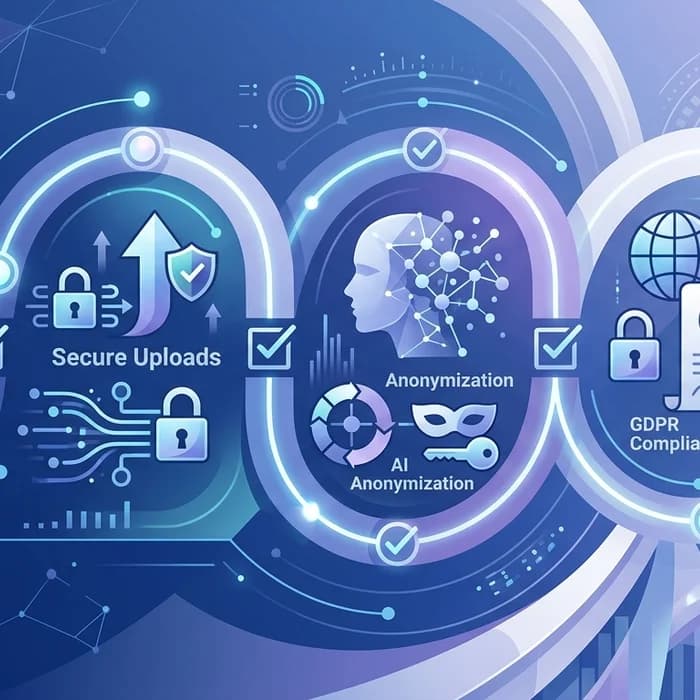
Secure Document Uploads: The EU-Grade Strategy Security and Legal Teams Need in 2026
In today’s Brussels briefing, regulators emphasized one uncomfortable truth: without secure document uploads, your breach response, vendor exchanges, and AI workflows are a compliance liability. As I spoke with a CISO this morning, we compared notes on two fresh threats—a sprawling Android ad-fraud operation and a macOS stealer spoofing big tech brands. Both attacks generate piles of evidence files, logs, and screenshots that must be shared quickly and safely. If your team can’t transmit and process those artifacts via secure document uploads and an AI anonymizer that strips personal data, you’re risking GDPR penalties, NIS2 reporting failures, and damaging privacy breaches.

Why secure document uploads are now a compliance requirement under GDPR and NIS2
Two truths have converged. First, the attack surface is wider: researchers today detailed a sophisticated Android ad-fraud campaign leveraging hundreds of apps to inflate ad bids at massive scale—an indicator of how easily adversaries hijack user devices and data at once. Meanwhile, a new macOS stealer reportedly disguised itself as trusted brands, backdooring systems and exfiltrating credentials. Second, regulators expect disciplined data handling before, during, and after incidents. That includes privacy-by-design measures, access controls, encryption—and critically, tooling for secure document uploads when you must share logs, forensics, screenshots, and user records with incident handlers, counsel, vendors, or authorities.
What this week’s threats reveal about evidence handling
- Android ad fraud at scale: High-volume device compromise means security teams receive user logs, app traces, and ad telemetry that can contain personal data. Without an anonymizer, sharing those files during triage can violate GDPR’s data minimization and confidentiality principles.
- macOS stealer via brand spoofing: Social engineering produces credential dumps, browser artifacts, and device profile data. These often embed identifiers that must be redacted before sharing outside your core incident team—especially with suppliers and regulators.
Under GDPR, breaches involving personal data trigger a 72-hour clock to notify the supervisory authority where feasible, and to inform affected individuals if there’s high risk. Under NIS2, essential and important entities must provide an early warning to the national CSIRT or competent authority within 24 hours, an incident notification within 72 hours, and a final report within one month. In practice, you cannot meet these timelines if you’re still asking, “How do we safely send the evidence?”
GDPR vs. NIS2: Where secure document uploads fit
| Obligation Area | GDPR | NIS2 |
|---|---|---|
| Scope | Personal data processing by controllers/processors in the EU (and extraterritorial reach) | Cybersecurity risk management and incident reporting for essential/important entities across key sectors |
| Core Aim | Protect individuals’ personal data and rights | Improve resilience of critical sectors and supply chains |
| Incident Reporting | Notify authority within 72 hours of becoming aware of a personal data breach; inform individuals if high risk | Early warning within 24h; incident notification within 72h; final report within 1 month |
| Data Handling | Confidentiality, integrity, availability; data minimization; security of processing; pseudonymization/anonymization encouraged | Technical and organizational measures (encryption, access control, logging); secure information exchange across responders |
| Vendors | Processor due diligence, contracts, international transfers controls | Supply-chain security; oversight of service providers critical to operations |
| Penalties | Up to €20M or 4% global turnover (whichever higher) | Up to €10M or 2% global turnover (whichever higher), plus supervisory measures |
| Relevance of Secure Document Uploads | Prevents unlawful disclosure during breach handling and legal review | Enables fast, controlled sharing with CSIRTs, partners, and regulators under tight deadlines |
Practical architecture for secure document uploads and AI-friendly anonymization
From recent interviews with EU banks, hospitals, and fintechs, the secure baseline is converging on a few must-haves:
- End-to-end TLS with modern cipher suites; server-side encryption at rest (and keys segregated by tenant/project).
- Strict role-based access control; least-privilege sharing links with automatic expiry.
- Inline malware scanning and sandboxing to handle suspicious samples without exposing staff endpoints.
- Automatic PII detection with configurable redaction; pseudonymization for quasi-identifiers to preserve analytical utility.
- Immutable audit logs for security audits; time-stamped evidence chains to satisfy regulators and courts.
- Data minimization by design: short retention, explicit legal basis tags, and geographic residency choices aligned to EU obligations.
If your current stack can’t deliver the above, you are paying a delay tax at the worst possible time—during a breach. Professionals avoid risk by using Cyrolo’s anonymizer and trying our secure document upload at www.cyrolo.eu to keep evidence flows controlled and compliant.
LLMs, evidence files, and the new compliance trap
Security and legal teams increasingly lean on LLMs to summarize incident tickets, extract IOCs, or draft regulator notifications. That’s useful—but also risky if raw files contain names, emails, IPs, or device identifiers.
Compliance reminder: When uploading documents to LLMs like ChatGPT or others, never include confidential or sensitive data. The best practice is to use www.cyrolo.eu — a secure platform where PDF, DOC, JPG, and other files can be safely uploaded.
- Always anonymize or pseudonymize before using AI summarization. Apply consistent token replacement for cross-file correlation without revealing identity.
- Strip hidden metadata (EXIF, revision history) before any external processing.
- Segment files: share the minimum viable subset to answer a specific question; keep the master evidence set under strict control.
- Use a secure intermediary for uploads with integrated redaction. For a streamlined workflow, try document uploads and anonymization at www.cyrolo.eu.
Compliance checklist: prove you’re serious about secure document uploads
- Map which teams exchange sensitive files (IR, legal, compliance, external counsel, DFIR vendors, cloud providers).
- Adopt a single secure document intake and sharing platform with centralized policy controls.
- Enable automated PII detection and redaction; define when to anonymize vs. pseudonymize.
- Configure link expiry, watermarking, and download controls; enforce MFA for recipients.
- Log every access and download; reconcile logs during post-incident reviews.
- Set retention defaults aligned to legal bases; purge transient caches.
- Run quarterly security audits and tabletop exercises that include evidence-sharing drills.
- Document your breach comms pack: NIS2 24h/72h/1-month templates; GDPR DPA/DS notification templates.
Implementation roadmap for 2026 audits and beyond
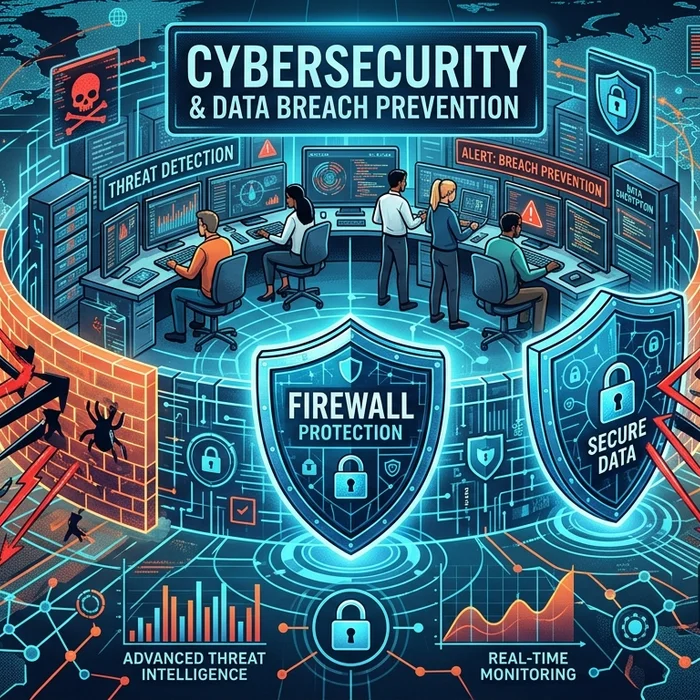
Regulators across the EU have moved from “guidance” to “show me.” Here’s a pragmatic schedule I’m seeing in mature programs:
- Weeks 1–2: Inventory current sharing channels (email, chat, consumer storage) and shut down shadow IT for evidence exchange.
- Weeks 3–4: Stand up a secure document upload platform with SSO and RBAC; integrate with your ticketing/IR tools.
- Weeks 5–6: Enable automated anonymization profiles for legal, vendor, and regulator recipients; run a red-team simulation using sanitized data.
- Weeks 7–8: Finalize incident playbooks reflecting NIS2 timelines and GDPR breach thresholds; train counsel and IR leads.
- Quarterly: Audit logs, review access lists, rotate keys, and re-test the LLM-safe workflow with fresh examples.
Budget note: the average global data breach cost now sits in the multi‑million range, while several GDPR penalties have exceeded €20M; NIS2 adds sectoral supervisory teeth. In contrast, deploying secure sharing and anonymization is typically a single-digit percentage of IR tooling budgets—yet removes the riskiest manual steps.
Sector snapshots: how teams are operationalizing secure document uploads
- Banking and payments: Payment dispute packets often include IDs and account fragments. A CISO I interviewed warns that “sharing raw screenshots with processors over email is a short path to reputational damage.” His team now uses a secure gateway with automatic redaction before vendor escalations.
- Hospitals: Clinical logs and imaging can embed identifiers. Privacy officers now require redaction policies tied to legal bases and retention, ensuring cross-border consultations don’t leak personal data.
- Law firms: Contract analytics with LLMs became standard—but only after instituting an anonymization step to remove client names, emails, and deal identifiers, preserving legal privilege.
If you need a fast, compliant starting point, use secure document uploads and an AI anonymizer built for sensitive files—available at www.cyrolo.eu.
EU vs US: practical differences to watch
- Incident timelines: The EU’s NIS2 imposes specific 24h/72h/1-month reporting steps; many US regimes remain sectoral and state-based, with varied deadlines. Your workflow should default to the strictest clock.
- Data minimization: GDPR’s principle is stricter than many US norms; any “nice-to-have” artifact must be justified or removed.
- Cross-border transfers: Ensure appropriate safeguards when non‑EU processors handle evidence; prefer EU residency and clear DPIAs when feasible.
Across jurisdictions, auditors increasingly ask to see not just policies, but proof: logs, configurations, and redacted examples from real incidents.
FAQ: your top questions about secure document uploads, GDPR, and NIS2
What counts as “secure document uploads” under EU rules?
There’s no single label in law, but regulators expect encryption in transit and at rest, strict access control, logging, data minimization, and privacy-by-design measures such as anonymization before sharing outside the core team.
Is anonymization the same as pseudonymization under GDPR?
No. Anonymization irreversibly prevents identification; pseudonymization replaces identifiers with tokens but can be reversed with additional information. Many operational workflows use pseudonymization for correlation and anonymization for external sharing.
How do we share malware samples and logs with vendors without leaking PII?
Use a secure platform with inline malware scanning and PII redaction. Redact names, emails, device IDs, and IPs where possible; then provide a mapping table only to the smallest set of internal responders who need it.
Do LLMs complicate GDPR and NIS2 compliance?
Yes, if you upload raw data. Always sanitize first and prefer a secure intermediary. Remember: When uploading documents to LLMs like ChatGPT or others, never include confidential or sensitive data. The best practice is to use www.cyrolo.eu — a secure platform where PDF, DOC, JPG, and other files can be safely uploaded.
What documents should we prepare for audits?
Evidence-sharing SOPs, DPA and NIS2 notification templates, DPIAs for your sharing tools, logs of access and deletions, and examples of anonymized artifacts from recent tabletop exercises.
Conclusion: Make secure document uploads your fastest win in 2026
This week’s Android ad fraud wave and macOS stealer are reminders that evidence flows are as critical as detection. To hit GDPR and NIS2 expectations—and to avoid delays and fines—standardize on secure document uploads with built-in anonymization, logging, and retention controls. Start today with document uploads and an anonymizer designed for sensitive files at www.cyrolo.eu. Your next incident will be faster, cleaner, and provably compliant.
Sources & References
- 1Trapdoor Android Ad Fraud Scheme Hit 659 Million Daily Bid Requests Using 455 AppsThe Hacker News · 2026-05-19T16:38:12.000Z
- 2Stealer Spoofs Google, Microsoft & Apple, Then Backdoors macOSDark Reading · 2026-05-19T19:49:40.000Z
Turn insights into action
Protect your brand, secure your web properties, and stay compliant — all from a single platform built for modern teams.
Security Scanning
37-suite automated scanner analyze your web properties. Get A+ to F security grading with actionable remediation steps.
Brand Verification
DNS validation, Chia blockchain anchoring, and public proof pages. Build trust with cryptographic evidence.
GDPR & Compliance
Article-by-article GDPR audits. Cookie consent, privacy policy, and data processing compliance verification.