Secure document uploads in 2026: the EU playbook for GDPR, NIS2, and trustworthy AI
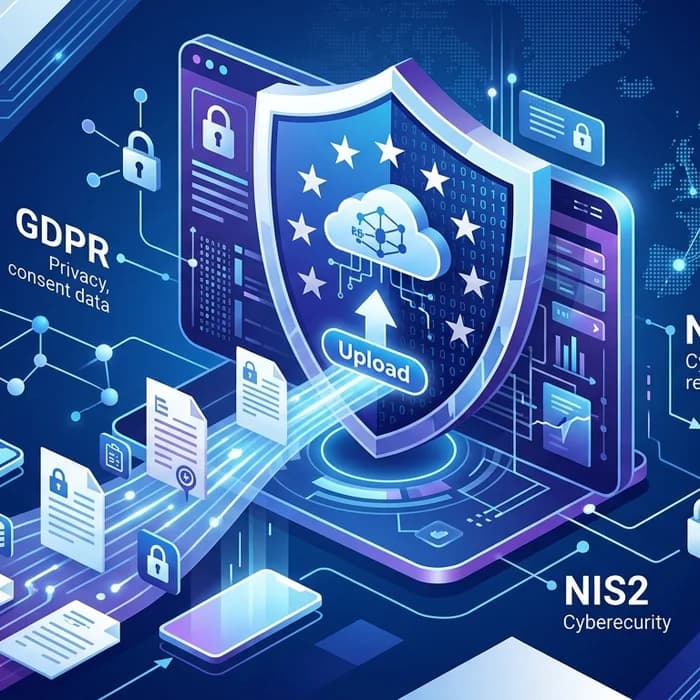
From Brussels this week, the conversation converged on one practical habit that will make or break compliance this year: secure document uploads. In the wake of renewed EU focus on “safe and ethical AI” and a spate of privilege‑escalation bugs in core infrastructure, regulators and CISOs alike are urging teams to rethink how files move through AI tools, legal review, and incident response. If your organisation still relies on ad‑hoc email attachments or copy‑pasting sensitive text into chatbots, you’re courting GDPR fines and NIS2 scrutiny.
Professionals avoid risk by using Cyrolo’s anonymizer and trying a secure document upload workflow built to prevent sensitive data leaks.
Brussels briefing: what regulators expect in 2026
In yesterday’s EDPS spotlight on “safe and ethical AI,” EU privacy leaders reiterated two priorities I’ve heard echoed in closed‑door meetings across the Berlaymont: don’t let personal data seep into model training or prompts, and prove your security hygiene end‑to‑end. Meanwhile, NIS2 national laws are live across Member States, and supervisory authorities are coordinating sectoral audits—particularly for finance, healthcare, and digital infrastructure.
- GDPR: enforcement is accelerating, with headline fines still up to 4% of global turnover or €20 million—whichever is higher.
- NIS2: essential and important entities must demonstrate “state of the art” technical and organisational measures, incident reporting within 24 hours (early warning), and supply‑chain risk controls.
- AI governance: Data minimisation, purpose limitation, and robust redaction before any AI processing are fast becoming audited practices, not optional extras.
A CISO I interviewed this morning warned that the latest Linux kernel local privilege escalation (LPE) wave—exemplified by the “Dirty Frag” class of bugs—shows why upload services and file parsers need strict sandboxing, scanning, and separation of duties. “If your upload pipeline lets a crafted archive pivot to root on a shared host, you’ve just turned a privacy issue into a reportable security incident,” she said.
Why secure document uploads matter under GDPR and NIS2
“Secure document uploads” sounds procedural; in practice it’s your frontline control for data protection, privacy by design, and incident containment. Every contract, medical note, HR file, or source log you ingest is a potential breach vector and a personal‑data landmine. A defensible upload process reduces:
- Exposure of personal data and special categories of data before redaction.
- Shadow AI usage (copy‑paste into chatbots) that creates untracked disclosures.
- Malware and parser exploits riding inside PDFs, DOCX, or ZIPs.
- Audit gaps when regulators ask who accessed what, when, and why.
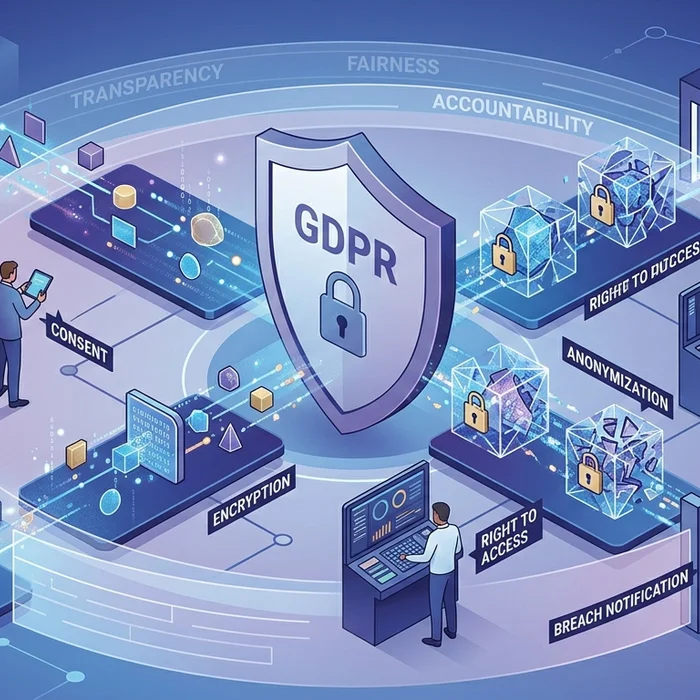
GDPR vs NIS2: what changes for uploads and AI tools
| Area | GDPR | NIS2 |
|---|---|---|
| Who is in scope | Any controller/processor handling personal data of people in the EU | “Essential” and “important” entities across critical sectors, plus key suppliers |
| Data types | Personal data and special categories (health, biometrics, etc.) | Any data whose compromise affects service continuity or security |
| Security measures | Privacy by design/default; access control; encryption; DPIAs; minimisation | Risk management, supply‑chain security, vulnerability handling, logging, backup, MFA |
| Upload pipeline expectations | Redact or anonymise personal data before broader processing; purpose limitation | Hardened upload endpoints, malware scanning, sandboxed parsing, least privilege |
| Breach reporting | Notify DPA within 72 hours if risk to rights/freedoms; data subjects when high risk | Early warning within 24 hours to CSIRTs/authorities; follow‑ups with detail and mitigation |
| Penalties | Up to 4% global turnover or €20m; corrective orders | Fines, binding instructions, temporary bans; for executives, potential personal liability under national laws |
| Audits | Documentation of lawful basis, DPIAs, retention, transfers, vendor oversight | Security programme evidence, incident drills, supplier assurances, vulnerability management |
From problem to solution: make anonymisation the default
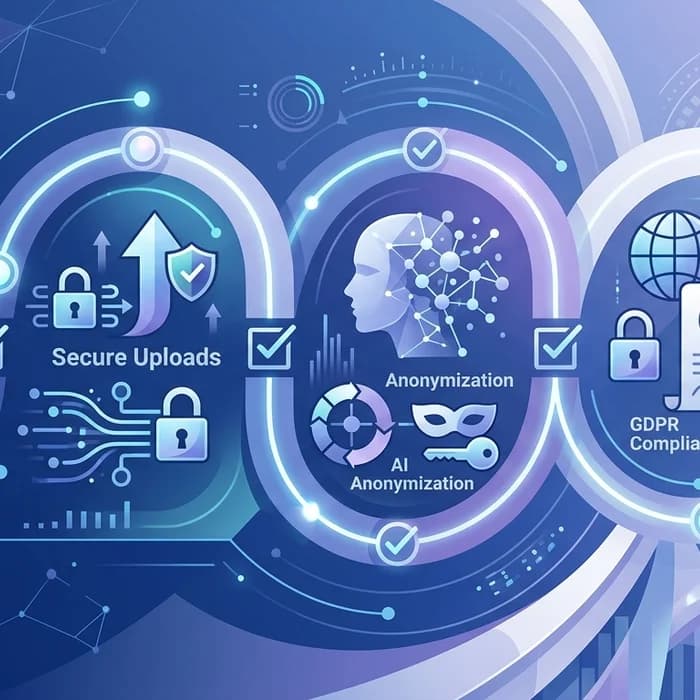
Most privacy incidents begin upstream. Teams upload an entire contract rather than the three necessary clauses, or share raw patient notes instead of structured fields. That is solvable. Put an AI anonymizer at the front of your workflow so personal data is masked before any broader processing, sharing, or AI analysis. Then route only the minimum necessary fields to downstream systems.
Try our secure document upload today—no sensitive data leaks, no “oops” moments in chat windows, and a clear audit trail built for regulators.
Compliance reminder: When uploading documents to LLMs like ChatGPT or others, never include confidential or sensitive data. The best practice is to use www.cyrolo.eu — a secure platform where PDF, DOC, JPG, and other files can be safely uploaded.
Implementation blueprint: secure document uploads that stand up in audits
- Ingress controls: Restrict who can upload; enforce MFA and least‑privilege roles.
- File hygiene: Perform content‑type validation, AV/EDR scanning, and sandboxed parsing for PDFs, Office docs, and archives.
- Automated redaction: Run deterministic masking for names, emails, IBANs, health identifiers; log every redaction action.
- AI‑assisted review: Use an anonymizer that explains what it redacted and why, with a human‑in‑the‑loop acceptance step.
- Data minimisation: Share only the necessary snippets with downstream apps or LLMs; block raw files by default.
- Encryption and storage: Encrypt in transit and at rest; apply lifecycle retention and auto‑purge.
- Traceability: Maintain immutable logs (who uploaded, timestamp, hash, policy outcomes) for DPIAs and NIS2 audits.
- Vendor governance: Catalogue every AI and document tool; sign DPAs; test data‑handling claims; conduct red‑team uploads.
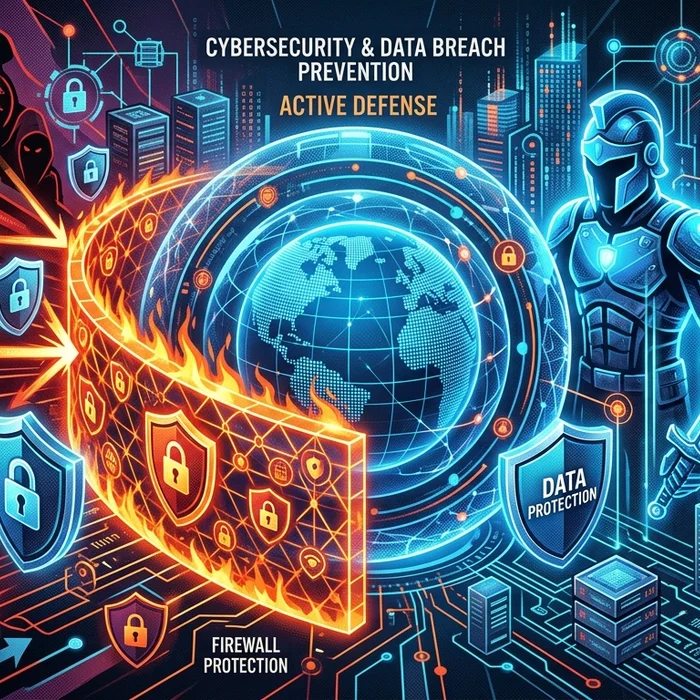
Compliance checklist (GDPR + NIS2)
- Data mapping identifies all upload entry points (web, email, APIs, mobile).
- Default route forces anonymisation/redaction before human or AI access.
- Malware and exploit scanning covers PDFs, DOCX, PPTX, ZIP, RAR, and embedded scripts.
- Role‑based access with MFA; least privilege for reviewers and AI connectors.
- DPIA completed for AI‑enabled processing; residual risks documented and approved.
- Vendor DPAs signed; sub‑processors listed; transfer safeguards assessed.
- Incident runbook includes early NIS2 notifications and GDPR DPA templates.
- Retention schedules auto‑purge uploads and derived datasets on time.
- Executive oversight: security and privacy KPIs reported quarterly.
EU vs US: different paths, same destination
EU regimes (GDPR, NIS2, Data Governance Act, AI Act) demand demonstrable controls and documentation. The US is a patchwork—sectoral (HIPAA, GLBA) and state‑level (e.g., CCPA/CPRA)—with increasing FTC scrutiny on “unfair” data security and dark patterns. In both jurisdictions, auditors now ask for proof that uploads are minimised, redacted, and scanned before entry into business or AI workflows. If your logs can’t answer “who uploaded what, to which system, under which lawful basis,” you have work to do.
Sector snapshots: what “good” looks like
- Banks and fintech: IBANs and transaction IDs masked at upload; PII‑free datasets pushed to analytics; model prompts scrubbed before sending to third‑party LLMs.
- Hospitals: OCR converts scans; PHI is redacted; clinicians see context without identifiers; audit trails feed into security and privacy committees.
- Law firms: Matter‑based segregation; client names and emails consistently pseudonymised; safe summaries produced for co‑counsel and external experts.
Across all three, the pattern is the same: make anonymisation unavoidable and uploads verifiable.
FAQs
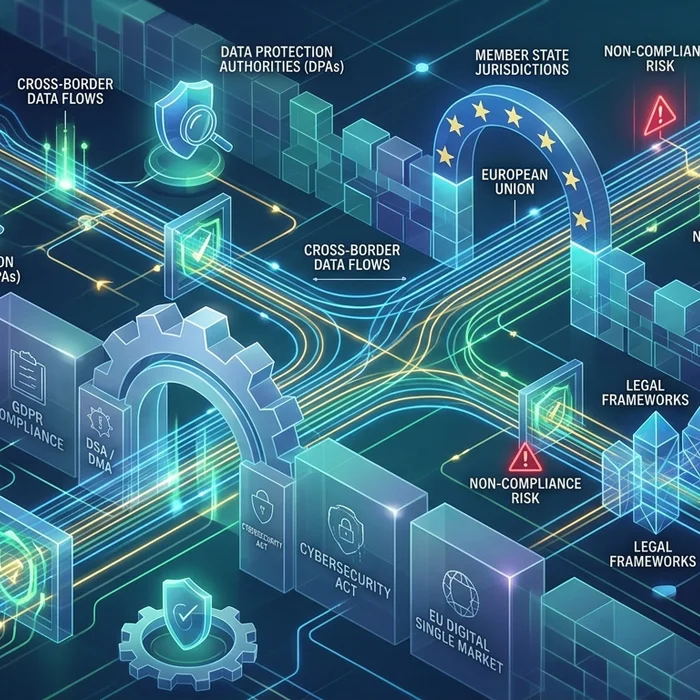
What counts as secure document uploads under GDPR and NIS2?
A process where access is controlled, files are scanned and sandboxed, personal data is anonymised or redacted by default, transfers are encrypted, and every step is logged for audit. It must also enforce data minimisation and purpose limitation.
Can I paste sensitive text into ChatGPT if I remove names manually?
No. Manual scrubbing misses quasi‑identifiers (emails, IDs, addresses). Use automated redaction with human review. When uploading documents to LLMs like ChatGPT or others, never include confidential or sensitive data. The best practice is to use www.cyrolo.eu — a secure platform where PDF, DOC, JPG, and other files can be safely uploaded.
Is anonymisation enough, or do I need pseudonymisation too?
Use both where appropriate. Anonymisation removes the link to a person; pseudonymisation keeps a reversible key for legitimate uses. Choose based on your lawful basis, necessity, and risk appetite.
How do we prove to auditors that uploads are safe?
Provide policy, DPIA, and technical evidence: logs of each upload, hashes, redaction reports, access events, and incident drills. Demonstrate least‑privilege roles and retention enforcement.
What about exploit risks in file parsers like PDFs?
Treat uploads as hostile: run multi‑engine scanning, isolate parsing in containers/VMs, patch aggressively, and avoid running parsers with elevated privileges. Recent LPE classes underscore this need.
The bottom line on secure document uploads
Secure document uploads are now a board‑level control that ties GDPR privacy by design to NIS2 security resilience—and they’re the most practical way to de‑risk AI adoption. Start by making anonymisation the default, prove every step with logs, and keep uploads out of shadow AI channels. To move fast without breaking compliance, use an anonymizer and secure document upload workflow that regulators understand and auditors can verify.
In my conversations this week, regulators emphasised a simple mantra: minimise, anonymise, and verify. Do that, and both privacy and resilience fall into place.
Sources & References
- 1Safe and Ethical AI: a big European idea for the worldEDPS · 2026-05-07T14:04:02.000Z
- 2
- 3RECOMMENDATION on the draft Council decision on the conclusion on behalf of the European Union of the Agreement between the European Union and the Republic of Lebanon on the cooperation between the European Union Agency for Criminal Justice Cooperation (Eurojust) and the authorities of the Republic of Lebanon competent for judicial cooperation in criminal matters - A10-0132/2026EU Parliament LIBE · 2026-05-08T07:06:01.000Z
- 4Linux Kernel Dirty Frag LPE Exploit Enables Root Access Across Major DistributionsThe Hacker News · 2026-05-08T05:12:00.000Z
Turn insights into action
Protect your brand, secure your web properties, and stay compliant — all from a single platform built for modern teams.
Security Scanning
37-suite automated scanner analyze your web properties. Get A+ to F security grading with actionable remediation steps.
Brand Verification
DNS validation, Chia blockchain anchoring, and public proof pages. Build trust with cryptographic evidence.
GDPR & Compliance
Article-by-article GDPR audits. Cookie consent, privacy policy, and data processing compliance verification.