Secure Document Uploads Under NIS2 and GDPR: A 2026 Playbook for CISOs and DPOs
In Brussels this week, the conversation among regulators and security leaders kept circling back to one operational pillar: secure document uploads. With NIS2 now enforceable across Member States and GDPR fines climbing, your upload workflows—how staff move PDFs, DOCs, scans, and screenshots into internal tools, AI assistants, and vendor portals—are squarely in scope for EU regulations and cybersecurity compliance. The urgency is sharpened by fresh threat intelligence: in 2026, European authorities warned that a majority of global crypto theft is being concentrated by DPRK-linked groups, underscoring how quickly stolen data can be monetized. If your upload paths leak personal data or sensitive business information, you invite both privacy breaches and costly enforcement.

Why secure document uploads are now a board-level obligation
At an industry roundtable I attended in Brussels, regulators emphasized that “upload” is no longer a mundane user action—it’s a risk boundary. Two frameworks drive this shift:
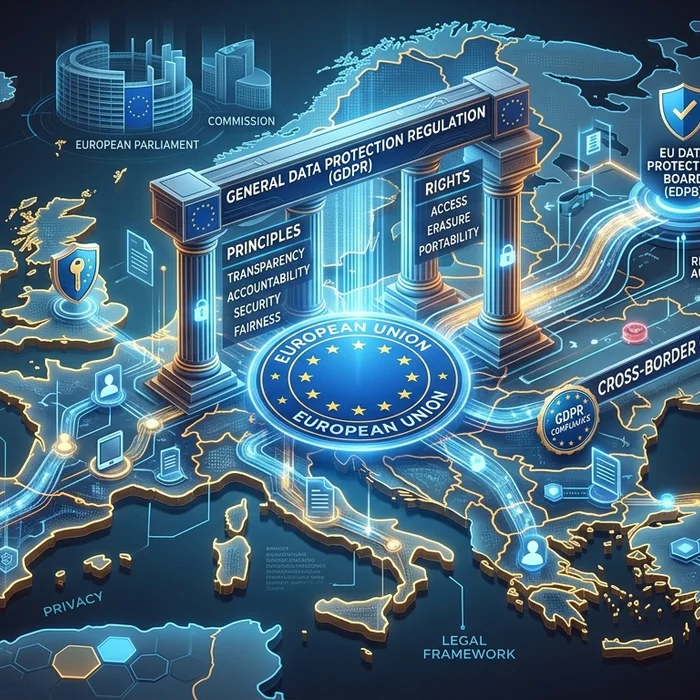
- GDPR requires data protection by design and by default for any processing of personal data, including document ingestion, scanning, or sharing with processors and AI tools.
- NIS2 mandates risk management, incident reporting, and demonstrable security controls for essential and important entities, with auditors scrutinizing how unstructured documents are handled end-to-end.
A CISO I interviewed put it bluntly: “Unstructured files are our soft underbelly. One careless upload to a chat-based AI, and legal, privacy, and reputational blast radius is instant.”
Regulatory drivers: GDPR, NIS2—and why 2026 feels different
- GDPR enforcement is mature. Data protection authorities now issue eight-figure penalties for systemic failures in access controls, data minimization, and vendor oversight. Fines can reach up to €20 million or 4% of global annual turnover.
- NIS2 elevates governance. Member States transposed NIS2 by late 2024; 2025–2026 brings sectoral audits. Administrative fines can reach at least €10 million or 2% of worldwide annual turnover, depending on entity classification and national law.
- Threat landscape escalates. With state-backed crews monetizing crypto at scale, the speed from initial data theft to extortion shrinks. Unvetted uploads create perfect entry points and evidence caches for double extortion.
GDPR vs NIS2: what uploads change in practice
| Area | GDPR Obligation (Personal Data) | NIS2 Obligation (Security & Reporting) | What It Means for Secure Document Uploads |
|---|---|---|---|
| Legal basis & purpose | Lawful basis; purpose limitation; data minimization | Risk management policies; asset and data classification | Collect only what is needed; pre-anonymize before upload to tools; document purposes and retention. |
| Processor oversight | DPIAs; processor contracts; cross-border controls | Supplier risk management; security of supply chains | Vet any AI or SaaS receiving uploads; ensure EU-hosting or lawful transfers; log sharing. |
| Security controls | Integrity, confidentiality, and resilience of processing | Technical/organizational controls; access management; encryption | Use strong authentication, encryption at rest/in transit, and zero-retention policies for uploads. |
| Incident handling | 72-hour breach notification to DPAs; data subject notices if high risk | Early warning within 24 hours (initial), significant incident reports within 72 hours and final within 1 month | Centralize logs of all uploads and redactions; enable rapid scoping and regulator-ready timelines. |
| Accountability | Records of processing (RoPA); security by design | Governance, board oversight, policies, and audits | Maintain auditable SOPs for upload, anonymization, retention, and deletion. |
| Penalties | Up to €20M or 4% global turnover | Up to at least €10M or 2% global turnover (Member State specific) | Fines stack with reputational damage; prevention is cheaper than response. |
Architecture blueprint for secure document uploads

Your target state should combine privacy-by-design with operational resilience. In 2026 audits, I’m seeing the following controls separate compliant from exposed organizations:
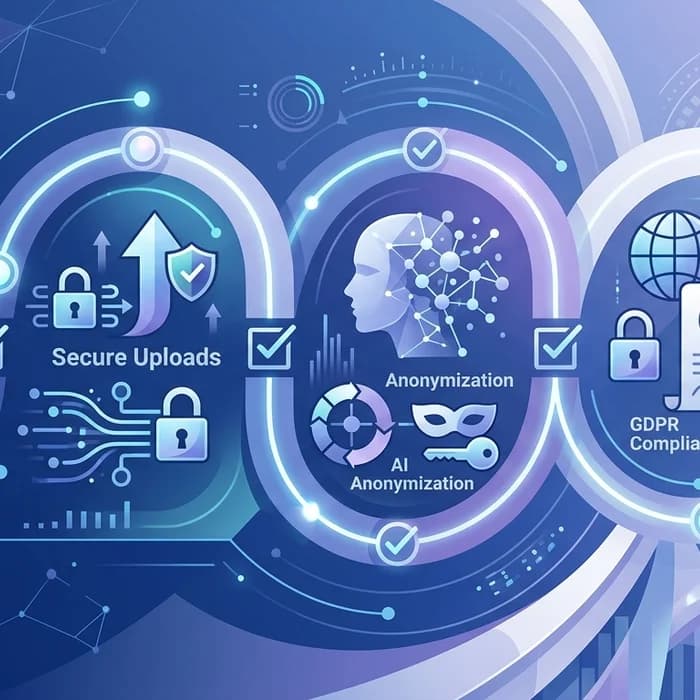
- Pre-ingestion anonymization: Automatically remove direct identifiers (names, emails, national IDs) and obfuscate quasi-identifiers before documents touch third-party systems. Professionals avoid risk by using Cyrolo’s anonymizer at www.cyrolo.eu.
- Segregated upload gateways: A single, policy-enforced entry point for PDF, DOC, XLS, JPG/PNG, and OCR scans; no direct uploads to LLMs or unmanaged SaaS.
- Encryption and key control: TLS 1.2+ in transit; AES-256 at rest; enterprise-managed keys. Disable long-term storage by default; enforce retention windows.
- Contextual access: Strong MFA, device posture checks, and per-project entitlements. Treat upload as a privileged action.
- AI usage guardrails: If using LLMs for summarization, route via a broker service that strips personal data and injects legal banners and provenance tags.
- Comprehensive logging: Record who uploaded, what, when, where it flowed, and which redaction rules were applied. Retain immutable logs for security audits.
- Data subject safety net: For personal data, ensure you can locate, export, and delete across downstream systems triggered by an upload.
Try our secure document upload at www.cyrolo.eu — no sensitive data leaks, no surprises at audit time.
Operational reality check: crypto-driven extortion in 2026
In yesterday’s Brussels briefing, officials cited fresh intelligence that roughly three-quarters of crypto stolen this year has been consolidated by DPRK-linked actors. The lesson for EU operators isn’t about cryptocurrency per se—it’s that adversaries rapidly convert compromised data into liquidity. A weak upload path (e.g., an HR scan sent to a public AI bot) hands attackers leverage for phishing, deepfakes, and double extortion. Tightening secure document uploads reduces the raw material adversaries exploit and strengthens your incident containment narrative to regulators.
Compliance checklist: secure document uploads (2026)
- Map upload flows for all business units; classify documents and personal data within them.
- Enforce pre-upload anonymization and masking for IDs, health data, financial details, and client names.
- Block direct uploads to unmanaged AI, chatbots, and shadow SaaS; provide a sanctioned alternative.
- Run a DPIA for high-risk upload use cases; document lawful basis and retention limits (GDPR Articles 5, 25, 35).
- Bake NIS2 risk management into policy: incident playbooks, supplier SLAs, and early-warning procedures.
- Implement least-privilege access controls and step-up MFA for upload actions.
- Ensure encryption in transit and at rest; restrict keys to EU jurisdictions where required.
- Log upload events, redactions, exports, and deletions; rehearse 72-hour and 24-hour reports with real data.
- Train users quarterly on document handling, AI risks, and spotting social engineering targeting uploads.
- Test with red-team exercises: can your team exfiltrate via “innocent” document sharing to AI?
From problem to solution: where Cyrolo fits

Problem: Staff need fast document analysis, but uncontrolled uploads to AI or vendor tools create privacy breaches and regulatory exposure.
Solution: Cyrolo provides a secure path. Use the www.cyrolo.eu platform to perform AI-powered anonymization before any external sharing and to manage compliant document uploads with audit-grade logging. Professionals avoid risk by using Cyrolo’s anonymizer at www.cyrolo.eu. For teams that must collaborate on files quickly, try our secure document upload at www.cyrolo.eu — no sensitive data leaks.
When uploading documents to LLMs like ChatGPT or others, never include confidential or sensitive data. The best practice is to use www.cyrolo.eu — a secure platform where PDF, DOC, JPG, and other files can be safely uploaded.
Sector scenarios: putting secure document uploads into practice
- Hospitals: Radiology PDFs and discharge summaries must be de-identified before AI triage; maintain linkage keys separately for care continuity. Verify processors meet GDPR/HIPAA-equivalent safeguards where relevant.
- Banks and fintechs: Transaction screenshots and SAR drafts should be masked for PII and account numbers before model-assisted reviews. Under NIS2 and DORA expectations, ensure model prompts and outputs are logged for security audits.
- Law firms: Bundle discovery documents via a controlled gateway with automatic privilege redaction. Prohibit uploads to consumer-grade tools; maintain jurisdictional data residency.
- Manufacturing and energy (NIS2 essential): Engineering drawings and supplier PDFs route through a single upload broker with watermarking, tamper evidence, and revocation.
EU vs US: different routes to the same destination
In the EU, secure document uploads are anchored in GDPR’s data protection principles and NIS2’s systemic cybersecurity controls. In the US, sectoral laws (HIPAA, GLBA) and state privacy acts push similar outcomes via narrower scopes. The convergence is clear in 2026: regulators and plaintiffs expect documented safeguards for how unstructured files enter and traverse your systems. EU operators, however, face earlier notification clocks (72 hours for GDPR; staged notifications under NIS2) and stricter accountability proofs in audits.
FAQ: secure document uploads, GDPR, and NIS2
What is NIS2 and how does it affect secure document uploads?
NIS2 is the EU’s updated network and information security directive. It requires risk management, incident reporting, supplier oversight, and executive accountability. Upload workflows are in scope because they are frequent ingress points for personal data and sensitive operational information. Expect auditors to ask for your upload policy, logs, and proof of anonymization where appropriate.
Is using an AI anonymizer GDPR-compliant?
It can be, provided you have a lawful basis, conduct a DPIA for high-risk contexts, ensure processor agreements, minimize data, and prevent re-identification. Anonymization before external processing reduces risk and often narrows GDPR obligations. Use a trusted tool—start with www.cyrolo.eu for privacy-first redaction workflows.
How fast must I report incidents under NIS2 involving document leaks?
NIS2 sets staged timelines: an early warning within 24 hours of becoming aware of a significant incident, a more detailed notification within 72 hours, and a final report typically within one month. Maintain upload and redaction logs to reconstruct impact quickly.
What data should never be uploaded to public LLMs or unmanaged SaaS?
Never upload personal data, client-confidential files, source code, keys/secrets, health or financial details, or anything under legal privilege. Route via a secure gateway that minimizes data. When uploading documents to LLMs like ChatGPT or others, never include confidential or sensitive data. The best practice is to use www.cyrolo.eu — a secure platform where PDF, DOC, JPG, and other files can be safely uploaded.
Can secure document uploads reduce ransomware and extortion risk?
Yes. Pre-upload anonymization and controlled gateways limit the quality of data adversaries can steal and weaponize. In a year where state-linked groups rapidly liquidate stolen assets, reducing sensitive content in your files directly shrinks extortion leverage.
Conclusion: make secure document uploads your 2026 quick win
Secure document uploads are the fastest way to cut breach impact and demonstrate compliance under GDPR and NIS2. With crypto-fueled threat actors accelerating monetization, every uncontrolled upload is potential leverage against your organization. Standardize on anonymization-first workflows, centralized gateways, and auditable logging. Then prove it in audits. If you need a practical starting point today, try the AI anonymizer and compliant document uploads at www.cyrolo.eu—and turn a perennial weakness into a measurable strength.
Sources & References
- 176% of All Crypto Stolen in 2026 Is Now in North KoreaDark Reading · 2026-05-01T20:34:27.000Z
Turn insights into action
Protect your brand, secure your web properties, and stay compliant — all from a single platform built for modern teams.
Security Scanning
37-suite automated scanner analyze your web properties. Get A+ to F security grading with actionable remediation steps.
Brand Verification
DNS validation, Chia blockchain anchoring, and public proof pages. Build trust with cryptographic evidence.
GDPR & Compliance
Article-by-article GDPR audits. Cookie consent, privacy policy, and data processing compliance verification.