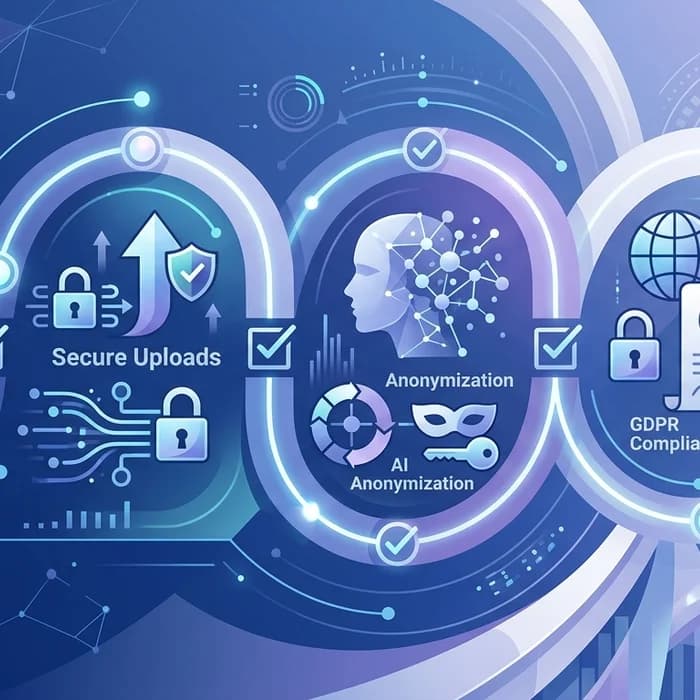
Secure document uploads in 2026: How EU teams meet NIS2, GDPR, and APT-grade threats
Two fresh threat bulletins crossed my desk this morning: one about an APT hijacking consumer routers, another about spies blending into enterprise cloud tools. If your organization still moves incident notes, HR records, or legal memos around by email or unsanitized chat, you’ve already widened the blast radius. In 2026, secure document uploads aren’t a “nice to have” — they’re a frontline control for NIS2, GDPR, and real-world APT tradecraft.

From Brussels briefings to hallway conversations with CISOs, the message is consistent: EU regulations now expect verifiable data protection hygiene across the entire information lifecycle — from the home router of a remote analyst to the cloud service where your PDFs are processed. Below is your practical, compliance-first playbook.
Why secure document uploads now sit at the heart of NIS2 and GDPR
Under NIS2, essential and important entities must enforce “appropriate and proportionate” technical and organizational measures. Regulators increasingly interpret that to include tight control over how staff and third parties ingest, store, and share files. GDPR has always demanded data protection by design and by default — and in 2026, that explicitly covers uploads, redaction, and auditability of handling personal data.
- APT reality check: Threat actors pivot through home routers and repurpose cloud collaboration tools, quietly siphoning files and metadata. Loose upload paths are low-hanging fruit.
- Regulatory reality check: NIS2 fines can reach €10 million or 2% of global turnover for essential entities (€7 million or 1.4% for important entities). GDPR can reach €20 million or 4% for the most severe infringements. “We emailed it because the portal was annoying” won’t fly in an audit.
- Boardroom reality check: Security audits now probe where documents land, what’s redacted before sharing, and whether evidence logs exist. Without these, privacy breaches become reportable incidents with tight deadlines.
From living-room routers to cloud consoles: the new breach path
In recent EU briefings, regulators emphasized that hybrid work turned consumer-grade equipment into enterprise perimeters. Add modern APT tactics — router hijacking for stealthy man-in-the-middle and abuse of legitimate cloud tools — and poorly governed document flows become exfiltration highways.
A CISO I interviewed last week put it bluntly: “We didn’t get popped via a zero-day in our EDR. We lost ground because an analyst uploaded a raw HR export into an unvetted AI tool and then shared the link.” That’s the compliance nightmare: one casual upload, multiple obligations triggered.
Compliance checklist: secure document uploads that stand up to scrutiny
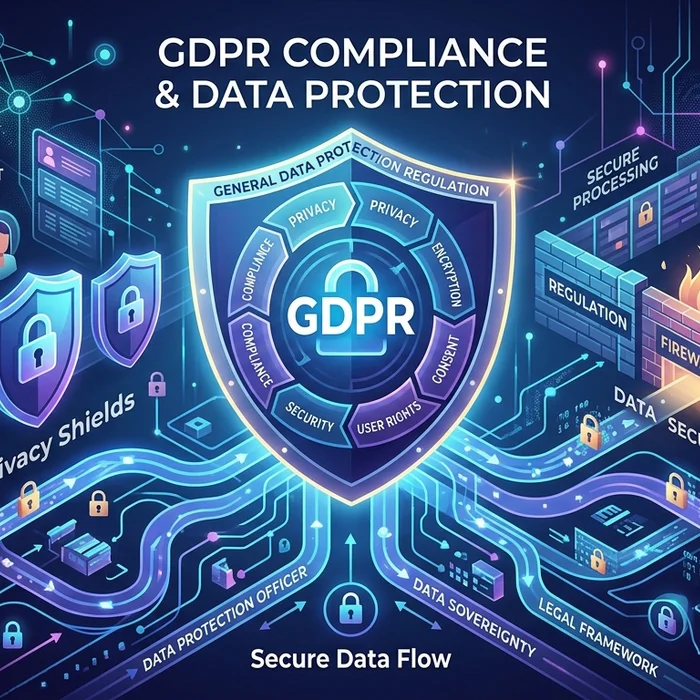
- Use a vetted upload endpoint with end-to-end encryption in transit and at rest; ban ad‑hoc email attachments for sensitive content.
- Apply an AI anonymizer before any sharing: automatically remove or mask names, emails, phone numbers, national IDs, health indicators, IBANs, and free‑text identifiers.
- Log every upload, redaction, view, and download; retain immutable audit trails aligned to NIS2 security audits and GDPR accountability.
- Enforce role‑based access and least privilege; integrate with corporate identity for revocation on role change or exit.
- Run content classification at ingestion; auto‑block uploads that contain forbidden data types or route them through enhanced anonymization.
- Segment storage per business unit and data residency requirements; document your data protection impact assessments (DPIAs).
- Test disaster recovery for your document platform; include your upload pipeline in incident response runbooks.
- Vendor assurance: review processor/sub‑processor chains and contractual clauses; verify breach notification SLAs.
GDPR vs NIS2 obligations: what changes for secure document uploads
| Area | GDPR (Data protection) | NIS2 (Cybersecurity resilience) | Implication for secure document uploads |
|---|---|---|---|
| Scope | Personal data processing by controllers/processors | Network and information systems of essential/important entities | Uploads that include personal data trigger GDPR; platform security and continuity trigger NIS2 |
| Core duty | Lawful basis, minimization, integrity, confidentiality, accountability | Risk management, incident handling, supply‑chain security, auditability | Redact before share; prove risk controls at the upload endpoint and storage tier |
| Incident timelines | Notify SA within 72 hours for personal data breaches | Prompt reporting to CSIRTs/competent authority; sector rules may tighten | Unified playbook: monitoring on uploads to detect and report breaches fast |
| Fines (upper tier) | €20M or 4% of global turnover | €10M or 2% (essential); €7M or 1.4% (important) | Dual exposure if a leak involves personal data and systemic control failures |
| Third parties | Processor due diligence, DPAs, cross‑border safeguards | Supplier risk management, contractual security requirements | Choose upload/anonymization vendors with verifiable controls and EU residency options |
Designing a defensible workflow: secure document uploads plus AI anonymization
Let’s translate policy into a simple, auditable architecture:
- Users send files through a single, hardened secure document upload gateway with encryption and malware scanning.
- An integrated AI anonymizer automatically detects and redacts personal data before team sharing or external disclosure.
- Only anonymized outputs flow into collaboration tools or analyst sandboxes; original files remain in a restricted vault with strict access controls.
- Every action gets logged (who uploaded, which fields were redacted, when it was shared), feeding your NIS2 risk management and GDPR accountability reports.
Professionals avoid risk by using Cyrolo's anonymizer — built to remove sensitive fields before a file ever reaches wider systems. Try our secure document upload at www.cyrolo.eu — no sensitive data leaks.
Compliance reminder: When uploading documents to LLMs like ChatGPT or others, never include confidential or sensitive data. The best practice is to use www.cyrolo.eu — a secure platform where PDF, DOC, JPG, and other files can be safely uploaded.
What auditors, DPOs, and CISOs will ask
- DPO: Show me the DPIA covering uploads and anonymization. Where is data minimized by design?
- CISO: Prove encryption, RBAC, and tamper‑proof logging on the upload path. How do we block shadow uploads?
- Legal/Compliance: Produce vendor assessments, data processing terms, and cross‑border safeguards for any external tooling.
- Internal Audit: Reconstruct a specific incident from logs. Who accessed the unredacted file and when?
APT lessons for EU teams: practical takeaways
- Router exploitation means home networks are in scope: require VPNs, DNS filtering, and posture checks before allowing uploads.
- Cloud abuse means “it’s in our tenant” is not a control: apply content safeguards pre‑cloud, not post‑share.
- Living off the land means attacker TTPs blend into normal traffic: rely on strong process gates (anonymization and controlled uploads) as well as detection.
- Supply‑chain spillover: treat external counsel, auditors, and vendors as part of your document perimeter; extend your upload/anonymization standards to them.
30‑day implementation plan
- Week 1 — Map flows: Inventory every path where staff or partners upload files (email, chat, portals, AI tools). Classify by sensitivity and business owner.
- Week 2 — Standardize: Roll out a single secure document upload entry point; block high‑risk alternatives via email/DLP and access policies.
- Week 3 — Automate: Enable AI anonymizer policies for common document types (HR, legal, medical, finance). Set default redaction profiles.
- Week 4 — Prove it: Turn on immutable logging, run a tabletop incident, and prepare evidence packs for NIS2 security audits and GDPR accountability.
You can do this without heavy lift. Start with a hardened upload and anonymization layer that your users actually like. Try www.cyrolo.eu to consolidate document intake and automate redaction before files spread.
EU vs US: different levers, same direction
EU regulators (GDPR, NIS2) push formal accountability and penalties for weak process controls. The US lacks a single GDPR‑style federal law, but sectoral rules and incident reporting obligations are tightening. In practice, if you solve for the EU standard — encryption, access control, secure document uploads, automated anonymization, auditable logs — you’re ahead on both sides of the Atlantic.
FAQ: your real‑world questions answered
Do we need secure document uploads if we already use encrypted email?
Yes. Email is hard to govern at scale: you can’t reliably enforce anonymization, track downstream sharing, or maintain clean audit trails. A dedicated upload and redaction layer centralizes controls and evidence for audits.
Is anonymization required by GDPR or NIS2?
Both frameworks require data minimization and appropriate safeguards. While not always mandated verbatim, automated anonymization is a defensible way to meet “by design and by default” expectations and to reduce breach impact and notification scope.
How do we stop staff from pasting sensitive text into AI tools?
Set policy, block known endpoints, and provide a safe alternative. Route content through a governed pipeline that applies redaction first. And remember: When uploading documents to LLMs like ChatGPT or others, never include confidential or sensitive data. The best practice is to use www.cyrolo.eu — a secure platform where PDF, DOC, JPG, and other files can be safely uploaded.
What evidence should we prepare for NIS2 security audits?
Risk policies for document handling, logs of uploads/redactions/access, vendor due diligence, DPIAs, incident response records, and proof of user training — all mapped to your risk register and controls catalogue.
We’re a law firm/clinic/fintech. Does this apply to us?
Yes. Professional services and regulated sectors process high‑risk personal data. Clients increasingly demand demonstrable controls — especially for uploads and disclosures. Secure intake and anonymization make compliance simpler and reduce contractual risk.
Conclusion: secure document uploads are your shortest path to resilience
APT actors won’t stop abusing home routers or hiding in cloud tools. EU regulators won’t relax expectations on risk management and accountability. Meeting both realities starts with one controllable chokepoint: secure document uploads paired with automated anonymization and clean audit trails. If you need a fast, defensible rollout, test the approach today — use Cyrolo’s anonymization and secure document uploads to cut exposure, satisfy auditors, and keep data where it belongs.
Sources & References
- 1Tropic Trooper APT Takes Aim at Home Routers, Japanese TargetsDark Reading · 2026-04-24T01:00:00.000Z
- 2Chinese APT Abuses Multiple Cloud Tools to Spy on MongoliaDark Reading · 2026-04-24T01:00:00.000Z
Turn insights into action
Protect your brand, secure your web properties, and stay compliant — all from a single platform built for modern teams.
Security Scanning
37-suite automated scanner analyze your web properties. Get A+ to F security grading with actionable remediation steps.
Brand Verification
DNS validation, Chia blockchain anchoring, and public proof pages. Build trust with cryptographic evidence.
GDPR & Compliance
Article-by-article GDPR audits. Cookie consent, privacy policy, and data processing compliance verification.