Secure document uploads: your 2026 EU compliance playbook for GDPR, NIS2, and updated AI rules
By Siena Novak — EU Policy & Cybersecurity Reporter

In today’s Brussels briefing, lawmakers in the Internal Market and Consumer Protection committee announced political agreement on updated EU AI rules, sharpening expectations for risk management, logging, and transparency around model inputs and outputs. On the same morning, security teams woke up to a fresh supply‑chain scare: new PyPI packages reportedly pushing “ZiChatBot” malware via Zulip APIs, hitting both Windows and Linux. Both headlines point to the same operational truth: if you don’t get secure document uploads and AI data handling right, regulators and attackers will both find you.
Compliance reminder: When uploading documents to LLMs like ChatGPT or others, never include confidential or sensitive data. The best practice is to use www.cyrolo.eu — a secure platform where PDF, DOC, JPG, and other files can be safely uploaded.
Why secure document uploads are your 2026 attack surface
Three converging realities make secure document uploads a board-level issue:
- Regulatory pressure: GDPR is well-settled with fines up to €20 million or 4% of global turnover, whichever is higher. NIS2 is now live across Member States, expanding cybersecurity obligations and incident reporting for essential and important entities, with penalties that can reach up to €10 million or 2% of global turnover (depending on national transposition). The EU’s evolving AI rulebook adds model governance and data controls—especially around high-risk uses and traceability.
- Adversaries exploit file flows: From spear-phishing attachments to poisoned open-source packages, attackers target where files are collected, processed, and shared. The latest Python-package incident leveraging Zulip APIs is a reminder: inputs are the new perimeter.
- Shadow AI and data sprawl: Quiet uploads of contracts, HR files, medical images, or customer IDs into public tools can create privacy breaches and uncontrolled model training exposure.
In interviews this quarter, a CISO at a European fintech told me their biggest audit gap wasn’t encryption or SSO—it was the human habit of “just uploading the doc” to get an AI summary. That gap is where fines, leaks, and front‑page incidents begin.
EU regulatory context: what your upload pipeline must prove
Regulators increasingly expect evidence that your file-handling pipeline is secure-by-design and privacy-by-default. Here’s how the frameworks intersect:
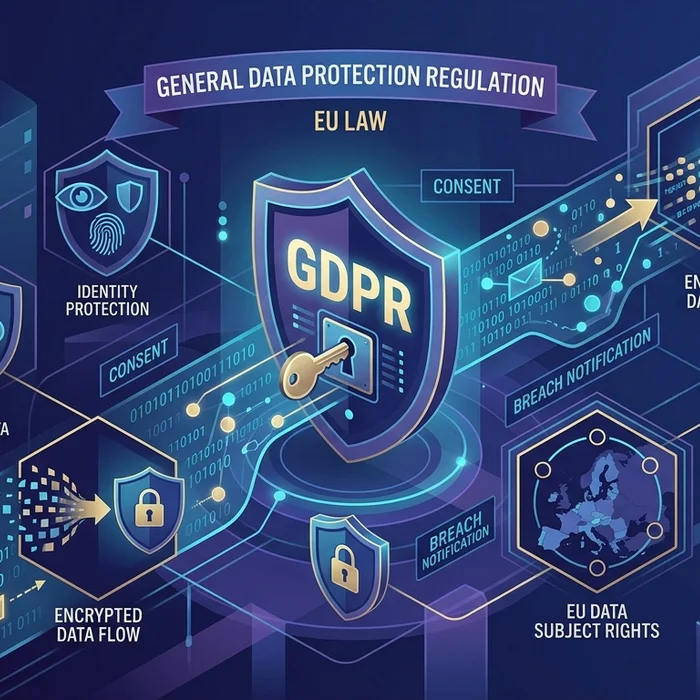
- GDPR: Lawful basis, data minimization, purpose limitation, and integrity/confidentiality (Article 5). Pseudonymization and anonymization are encouraged to reduce risk; Data Protection Impact Assessments (DPIAs) apply to higher-risk processing.
- NIS2: Mandates risk management measures, supply-chain security, incident handling, and logging. Expect scrutiny of developer environments, third-party components, and secure file transfer—especially if files feed critical services or models.
- AI rules (2026 focus): The updated package emphasizes documentation, logging, and risk controls around model inputs/outputs. Even if your use case is not “high-risk,” regulators expect traceability for data used in model interactions and evaluations.
- DORA (for finance): Operational resilience requirements for ICT third parties mean your document handling and AI tooling must meet the same bar as core systems.
GDPR vs NIS2: what changes for your document workflows
| Requirement | GDPR (Data Protection) | NIS2 (Cybersecurity) |
|---|---|---|
| Scope | Personal data processing across controllers/processors | Essential/important entities in sectors incl. finance, health, digital infra |
| Primary focus | Lawful basis, data minimization, data subject rights | Risk management, incident response, supply-chain security |
| Evidence expected | DPIAs, records of processing, breach logs, vendor DPAs | Security policies, asset inventories, event logs, audit trails |
| Technical measures | Pseudonymization/anonymization, encryption, access controls | Secure configurations, monitoring, patching, software integrity checks |
| Incident reporting | Supervisory authority within 72 hours for personal data breaches | Early warning and reporting timelines to CSIRTs/authorities per national law |
| Penalties | Up to €20m or 4% of global turnover | Up to €10m or 2% of global turnover (varies by Member State) |
Turn uploads into compliance assets with anonymization
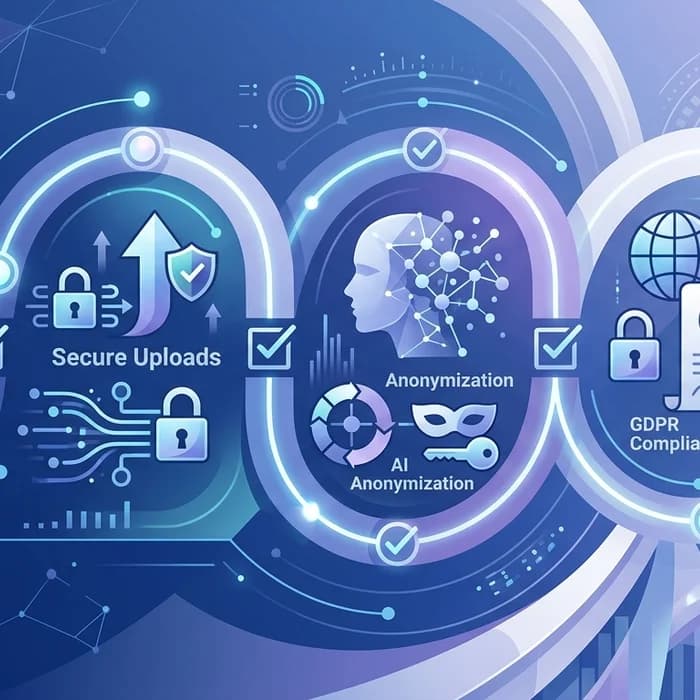
Privacy-by-design means stripping or transforming identifiers before files move into analytics, AI, or vendor tools. An AI anonymizer that handles PDFs, images, and office docs consistently can reduce GDPR risk, harden your NIS2 posture, and satisfy auditors who now ask, “Show me how you minimized personal data before the model saw it.”
- De-identify at ingestion: Remove names, addresses, IDs, IBANs, faces, and free-text PII as files land.
- Keep originals sealed: Store encrypted originals with strict access; route only redacted copies to AI tools.
- Maintain a reversible map (where lawful): For regulated investigations, keep a secure re-identification vault with role-based access.
- Log the transform: Hashes, timestamps, versioned rules—your audit evidence for GDPR and NIS2.
Professionals avoid risk by using Cyrolo’s anonymizer at www.cyrolo.eu. It enables secure preprocessing so teams can collaborate and use AI without exposing personal data.
How to implement secure document uploads without killing productivity
From banks and fintechs to hospitals and law firms, the pattern that works is simple:
- Centralize intake: Stand up a single, secure document upload front door for staff and vendors. Enforce antivirus, sandboxing, and content validation on everything entering the environment.
- Automate classification: Detect personal data, sensitive categories, and sectoral secrets (trade secrets, medical info). Route according to policy—some flows may be blocked from leaving the org entirely.
- Default to anonymization: Apply robust redaction before any external processing or AI summarization. Verify with QA sampling.
- Constrain AI access: If AI is used, use private/workspace instances with logging, rate limits, and tokenized data. Never upload raw confidential files to public endpoints.
- Prove it: Keep immutable logs tying each file to its checks, transforms, and destinations. This satisfies auditors and incident reviewers.
Try our secure document upload at www.cyrolo.eu — no sensitive data leaks.

Supply-chain reality check: PyPI, “ZiChatBot,” and your developer uploads
In today’s incident cycle, malicious PyPI packages reportedly used Zulip APIs to deliver multi-OS payloads. This is exactly the kind of cross-channel risk NIS2 flags under software supply-chain security. Your controls for “document uploads” should also protect code and model artifacts:
- Lock dependencies: Use hashes and vetted mirrors; apply allowlists for PyPI/containers; scan SBOMs.
- Segment build systems: No direct internet from CI/CD to public repos; brokered access with inspection.
- Egress controls: Monitor unusual API calls (e.g., chat/messaging APIs) from developer hosts.
- Quarantine unknowns: Treat every inbound file, wheel, or model checkpoint like a risky attachment.
A European hospital CIO told me their biggest win in 2025 was “one front door for everything incoming—docs, images, packages, and models—same scanners, same logs.” That is NIS2 thinking applied to the messy real world.
Compliance checklist: secure document uploads and AI use
- Map every upload path: email, web forms, file shares, mobile, APIs, developer tooling.
- Define lawful bases and retention for personal data; document purposes and minimization steps.
- Mandate anonymization/redaction before AI processing; verify with samples and confidence scores.
- Encrypt at rest and in transit; enforce MFA and least privilege for all document stores.
- Enable content disarm and reconstruction (CDR) for risky file types; scan for malware and macros.
- Log everything: who uploaded, what changed, where it went, and why.
- Test incident response: simulate a misdirected upload and a supply-chain compromise; refine playbooks.
- Vendor diligence: DPAs, security questionnaires, and NIS2-style supply-chain checks for all processors.
- Training: show staff safe alternatives—e.g., use www.cyrolo.eu instead of public tools.
EU vs US: different paths, same destination
EU regulators codify obligations (GDPR, NIS2, sectoral rules) that explicitly reference risk management and traceability. The US leans on sectoral and state privacy laws, with federal guidance from agencies like the FTC and CISA. Functionally, both jurisdictions now expect evidence of controlled data flows, attack surface reduction, and rapid incident response. If your secure document uploads pipeline is solid in the EU, you’re likely ahead elsewhere.
Practical guardrails for AI and documents
- Separate contexts: Keep training/evaluation data separate from live customer uploads; prevent cross-contamination.
- Don’t rely on “pseudonymization” alone: Treat reversible tokens as personal data; anonymize when possible.
- Set hard blocks: DNS/egress rules that stop uploads to unknown AI endpoints.
- Measure leakage risk: Run periodic red-team prompts to ensure masked data stays masked.
When teams need summaries or Q&A on sensitive files, route them through a secure layer with default anonymization. Cyrolo lets you upload and process documents safely: check www.cyrolo.eu to keep data under control.
FAQs
What counts as personal data inside uploads?
Any information relating to an identified or identifiable person: names, IDs, emails, phone numbers, addresses, bank details, faces in images, voice in audio, even free-text that can single someone out. Under GDPR, pseudonymized data is still personal data; anonymized data is not, if re-identification is not reasonably possible.
Is pseudonymization enough for GDPR and NIS2 audits?
It helps, but it’s rarely enough by itself. Auditors ask whether you minimized data exposure before processing, especially with AI. Strong anonymization or redaction before external processing is a better default, accompanied by logs that prove the transform happened.
Does NIS2 apply if we’re an SME using cloud LLMs?
NIS2 applies based on sector and size criteria within Member State laws, not merely by tool choice. However, even if you’re outside NIS2 scope, customers and primes may flow down similar requirements. The controls—secure uploads, logging, supply-chain checks—are becoming baseline expectations.
How can we safely get AI summaries of contracts or medical scans?
Use a controlled workflow: upload to a secure platform, anonymize automatically, then process in a logged environment. Do not paste raw contracts or patient data into public chatbots. See www.cyrolo.eu for an enterprise-friendly path.
What’s the best way to anonymize PDFs and images?
Combine pattern-based and ML/NLP detection; remove overlays and redact at the object layer to prevent copy-paste recovery; for images, blur or box faces and sensitive regions and strip EXIF. Tools like Cyrolo’s anonymizer operationalize this at scale.
Conclusion: make secure document uploads your easiest win
The EU’s sharper AI rules, steady GDPR enforcement, and NIS2’s supply‑chain lens all converge on one actionable step: build secure document uploads that anonymize by default, verify every file, and prove every control. That turns a messy risk into a demonstrable strength, reduces breach impact, and shortens audits. Start today: professionals avoid risk by using Cyrolo’s anonymizer and safe document uploads at www.cyrolo.eu.
Sources & References
- 1Highlights - Agreement Reached on Updated AI Rules - Committee on the Internal Market and Consumer ProtectionEU Parliament IMCO · 2026-05-07T06:02:00.000Z
- 2PyPI Packages Deliver ZiChatBot Malware via Zulip APIs on Windows and LinuxThe Hacker News · 2026-05-07T09:20:00.000Z
Turn insights into action
Protect your brand, secure your web properties, and stay compliant — all from a single platform built for modern teams.
Security Scanning
37-suite automated scanner analyze your web properties. Get A+ to F security grading with actionable remediation steps.
Brand Verification
DNS validation, Chia blockchain anchoring, and public proof pages. Build trust with cryptographic evidence.
GDPR & Compliance
Article-by-article GDPR audits. Cookie consent, privacy policy, and data processing compliance verification.