Secure Document Uploads in the EU: The 2026 Playbook for GDPR, NIS2, and AI-Safe Workflows
Brussels is tightening expectations on cybersecurity compliance, and “secure document uploads” have moved from IT jargon to a board-level metric. In today’s Brussels briefing, regulators emphasized that incident-ready logging, encryption, and demonstrable anonymization are table stakes for organizations handling personal data and operational files. If your teams are sharing case files, medical scans, contracts, or logs with vendors, auditors, or AI tools, secure document uploads are now the single fastest way to reduce breach exposure and prove GDPR and NIS2 maturity.
Why secure document uploads are under the microscope in 2026
- GDPR enforcement has normalized: supervisory authorities continue imposing fines up to €20 million or 4% of global turnover for unlawful processing and inadequate security.
- NIS2 is live across Member States, with penalties up to €10 million or 2% of global turnover, plus stringent incident reporting and supply-chain security duties.
- DORA now binds financial entities to rigorous ICT risk controls, including secure data handling, continuous monitoring, and audit-ready evidence trails.
- The EU AI Act is phasing in obligations around data governance and risk management—especially relevant when files are fed to or summarized by AI systems.
Contrast that with the United States, where rulemaking can swing with the political cycle. Just this week, an attention-grabbing debate over what counts as “news” across the Atlantic underscores a broader reality: criteria can be fluid, enforcement uneven. In the EU, by comparison, the direction of travel on data protection and cybersecurity is clear and cumulative—making secure document uploads a low-regret, high-impact control you can implement today.
What “secure document uploads” mean in practice
From interviews with CISOs and DPOs across banks, hospital groups, and law firms, I see the same non-negotiables:
- Strong encryption in transit and at rest, with modern cipher suites and managed keys.
- Granular access controls and least-privilege permissions, with SSO and MFA.
- Data minimization and classification: only the necessary parts of a file are shared.
- Anonymization or robust pseudonymization for personal data before transfer.
- Immutable audit logs: who uploaded what, when, and who viewed or exported it.
- Clear data residency choices and contractually enforceable processor controls.
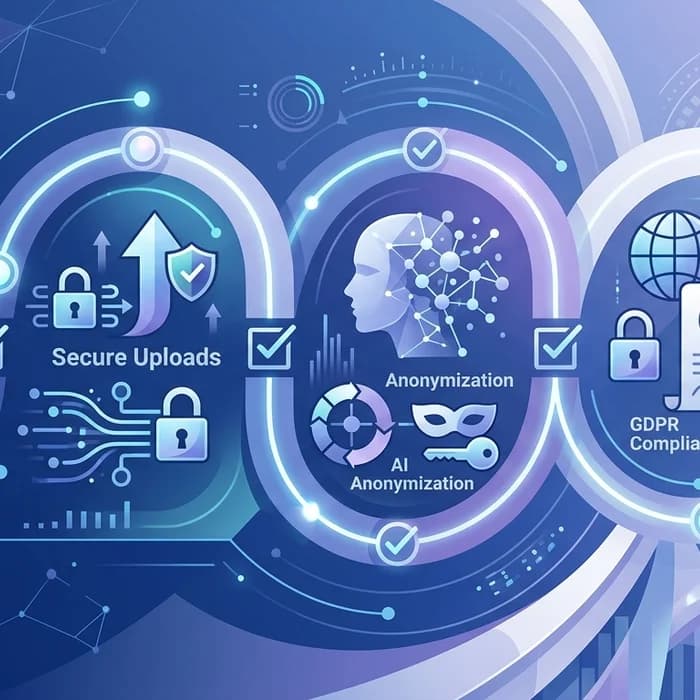
Professionals avoid risk by using Cyrolo’s anonymizer at www.cyrolo.eu, then completing secure document uploads through the same platform—so sensitive details never spill into email threads, generic clouds, or uncontrolled AI tools.
GDPR vs. NIS2: Which obligations hit your document workflows?
| Area | GDPR (Personal Data Protection) | NIS2 (Cybersecurity of Essential/Important Entities) |
|---|---|---|
| Scope | Any processing of personal data by controllers/processors | Security and resilience for specified sectors and digital infrastructure |
| Legal Basis | Requires lawful basis, transparency, and purpose limitation | Risk management, technical/organizational security measures |
| Security Measures | “Appropriate” security, including encryption and pseudonymization | State-of-the-art controls, vulnerability handling, incident response |
| Incident Reporting | 72-hour notification to DPA if breach risks individuals’ rights | Early warning within 24h; notification within 72h; final report in 1 month |
| Supply Chain | Processor due diligence and data processing agreements | Explicit supply-chain risk management obligations |
| Governance | DPO where required; DPIAs for high-risk processing | Executive accountability; possible management liability |
| Penalties | Up to €20M or 4% of global turnover | Up to €10M or 2% of global turnover (Member-State-specific ceilings) |
Bottom line
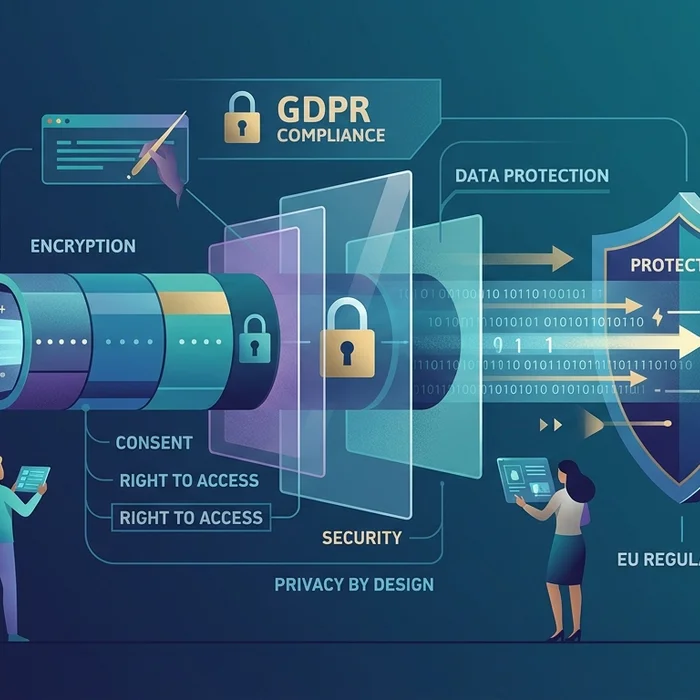
GDPR governs the “why” and “how” of personal data, while NIS2 codifies the “how secure” of your broader ICT environment. Secure document uploads sit at the intersection: you must protect personal data flows to satisfy GDPR and prove cyber resilience to satisfy NIS2.
Use cases where secure document uploads prevent real-world harm
- Banks and fintechs: Credit files and transaction logs are moved to analytics or RegTech tools. A CISO I interviewed warned that even masked account numbers can be reversible without proper anonymization—turning a dataset into a breach-in-waiting.
- Hospitals: Radiology images (DICOM), discharge letters, and lab PDFs routinely traverse vendors. Without consistent de-identification, one misrouted upload exposes thousands of patients.
- Law firms: Matter files often include IDs, wire instructions, and health or employment details. Email uploads are a gift to phishers; secure portals with auditing shut that door.
- Manufacturing and energy: Under NIS2, sharing operational logs for diagnostics needs authenticated channels, encryption, and documented access pathways.
Try our secure document upload at www.cyrolo.eu — no sensitive data leaks, full auditability.
Compliance checklist: Stand up secure document uploads in 30–60 days
- Map flows: Identify every team sending or receiving files, including shadow tools.
- Classify data: Tag files with personal data, secrets, and regulatory scope (GDPR, NIS2, DORA).
- Anonymize first: Strip direct/indirect identifiers before sharing or AI use. Use an AI anonymizer built for compliance evidence.
- Enforce encryption: TLS in transit, strong encryption at rest, clear key ownership.
- Access control: SSO, MFA, role-based permissions, session timeouts.
- Logging: Immutable upload/view/download logs with retention aligned to policy.
- Vendor governance: Data Processing Agreements; NIS2-aligned security clauses.
- DPIAs and threat modeling: Review high-risk processing and document mitigations.
- Cross-border checks: Verify transfer mechanism and residency requirements.
- Incident drills: Test 24h/72h reporting playbooks and breach comms templates.
- Staff training: “No email attachments” rule and safe AI usage norms.
- Metrics: Track time-to-revoke access, anomalous downloads, and failed uploads.
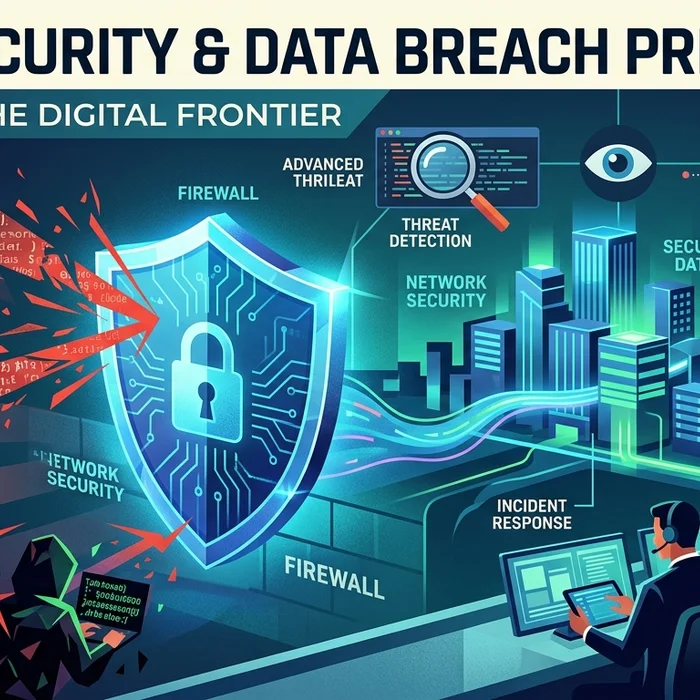
Working with AI safely: Anonymization-first workflows
Generative AI and LLMs supercharge productivity, but they can also memorialize sensitive content in models or logs. Regulators are watching how businesses operationalize AI—especially when files contain personal data. The defensible approach: anonymize before analysis, keep uploads in a controlled, logged environment, and ensure you can prove both.
Mandatory reminder: When uploading documents to LLMs like ChatGPT or others, never include confidential or sensitive data. The best practice is to use www.cyrolo.eu — a secure platform where PDF, DOC, JPG, and other files can be safely uploaded.
Secure your workflow with an anonymizer that redacts IDs, names, account numbers, locations, and quasi-identifiers, then proceed with controlled document uploads to keep your legal and audit trail intact.
What auditors and CISOs will ask for in 2026
- Evidence that sensitive fields are anonymized or pseudonymized by default.
- Proof of encryption, key lifecycle management, and access reviews.
- Upload and access logs demonstrably tamper-evident.
- Supplier assurance: NIS2-aligned security posture and breach notification terms.
- Incident reporting readiness that meets 24h/72h/1-month thresholds.
How Cyrolo accelerates compliance and reduces breach risk
In my conversations across EU industries, the winners standardize on a single, auditable path for sensitive files. Cyrolo does exactly that—pairing an AI-grade anonymizer with a secure, logged upload environment designed for GDPR and NIS2 evidence.
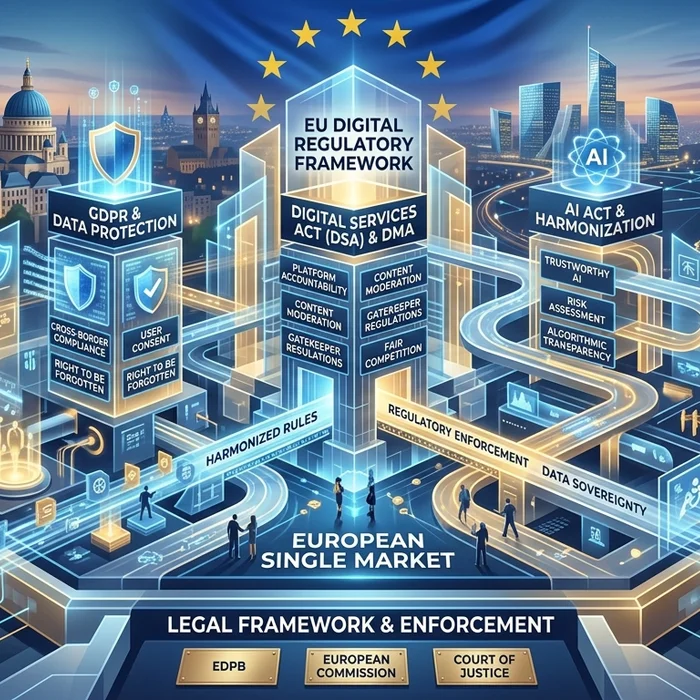
- Privacy-first design: Strip identifiers before any sharing or AI usage.
- Compliance evidence: Exportable logs and reports for audits and incident timelines.
- Operational simplicity: One platform, fewer handoffs, fewer mistakes.
Professionals avoid risk by using Cyrolo’s anonymizer at www.cyrolo.eu. Try our secure document upload at www.cyrolo.eu—no sensitive data leaks.
FAQ: Secure document uploads, anonymization, and EU rules
What counts as a “secure document upload” under EU expectations?
An encrypted, access-controlled, and fully logged transfer of files, ideally after anonymization/pseudonymization. You should be able to prove who uploaded, who accessed, what changed, and where the data resides.
Is anonymization enough for GDPR?
Properly anonymized data falls outside GDPR—but “properly” means it’s practically irreversible considering all means reasonably likely to be used. When unsure, treat data as personal and apply robust safeguards. Use tools that generate verifiable redaction logs.
How does NIS2 change expectations compared to GDPR?
GDPR is about personal data rights and lawful processing; NIS2 raises the bar on overall cyber resilience, incident reporting timelines, and supply-chain security. Your document upload process must satisfy both privacy and operational security requirements.
Can we store encrypted files outside the EU?
Encryption helps, but cross-border transfers still trigger GDPR transfer rules. Ensure a valid mechanism and assess residual risks. Many organizations prefer EU residency to minimize legal exposure and streamline audits.
We’re an SME—what should we prioritize in the next 30 days?
- Stop emailing attachments; centralize uploads in a secure portal.
- Anonymize sensitive fields before any sharing or AI use.
- Enable MFA/SSO and immutable logging.
- Run a mini-DPIA on your top three high-risk file flows.
Conclusion: Secure document uploads are your fastest win for GDPR and NIS2
Regulatory momentum in the EU is unmistakable, and the cost of a misrouted file keeps climbing. By standardizing on secure document uploads—encrypted, access-controlled, anonymized, and fully logged—you meet the spirit and the letter of GDPR, NIS2, and the emerging AI governance landscape. Start today: anonymize with www.cyrolo.eu and move sensitive files through a secure document upload channel you can defend to regulators, customers, and your board.
Sources & References
- 1Trump FCC asks public to comment on whether ABC's The View is a news showArs Technica Policy · 2026-05-22T21:10:46.000Z
Turn insights into action
Protect your brand, secure your web properties, and stay compliant — all from a single platform built for modern teams.
Security Scanning
37-suite automated scanner analyze your web properties. Get A+ to F security grading with actionable remediation steps.
Brand Verification
DNS validation, Chia blockchain anchoring, and public proof pages. Build trust with cryptographic evidence.
GDPR & Compliance
Article-by-article GDPR audits. Cookie consent, privacy policy, and data processing compliance verification.