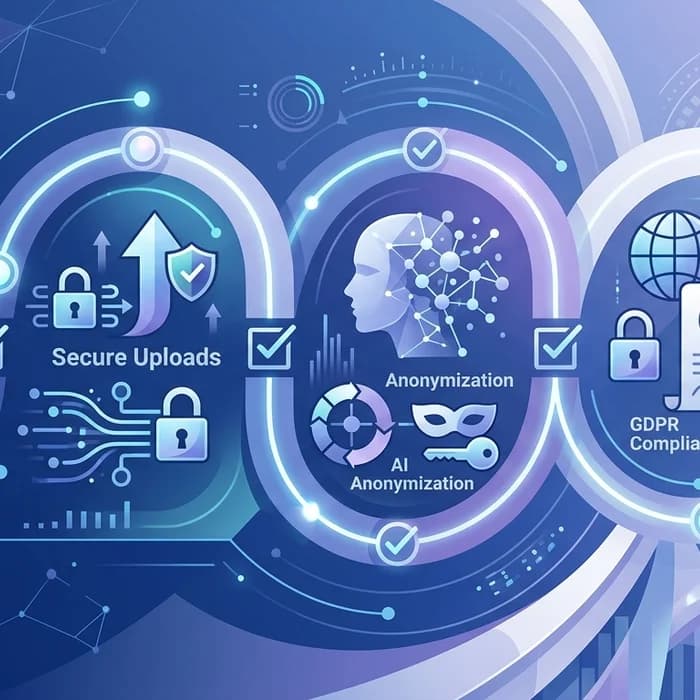
Secure document uploads in the EU: Your 2026 compliance playbook for zero-leak workflows
In today’s Brussels briefing, regulators emphasized a point that should be on every CIO’s agenda: secure document uploads are now a frontline control for GDPR, NIS2, and data protection programs. After a month of supply chain scares—from tampered AI model packages to package registry abuse and a fresh Exim flaw—boards are asking a simple question: how do we stop sensitive files from leaking when staff interact with SaaS, AI tools, and partners?
As a reporter who’s spent years decoding EU regulations for CISOs and GCs, I’ve seen the same failure mode in hospitals, banks, and law firms: documents move faster than policies. This playbook shows how to anchor secure document uploads in your cybersecurity compliance strategy—and how to implement guardrails without slowing the business.
Why secure document uploads are now a board-level risk
Three trends collide in 2026:
- Attackers are pivoting to software supply chains. Security teams reported poisoned AI model artifacts and malicious open-source packages slipping past routine checks—an echo of the week’s headlines about tampered repositories and weaponized model hubs.
- Exposed infrastructure creates quick wins for adversaries. A new Exim BDAT parsing issue affecting GnuTLS-linked builds reminded teams that one unpatched mail relay can become the ingress point for data exfiltration.
- Post-termination sabotage and insider threats persist. A cautionary tale: disgruntled admins can still wipe, siphon, or plant backdoors within minutes if upload paths, logging, and access controls aren’t hardened.
The result is predictable: privacy breaches, security audits that expand in scope, and regulators asking pointed questions about how personal data and confidential documents were uploaded, where they transited, and which AI services processed them.
What EU law requires in 2026: GDPR, NIS2, and DORA
GDPR: Data protection by design for files and forms
- Legal basis, minimization, and purpose limitation apply to every upload of personal data.
- Data protection by design means applying default measures: encryption, access control, and—critically—anonymization or pseudonymization before sharing with third parties or AI tools.
- Fines can reach €20 million or 4% of global annual turnover, whichever is higher, and regulators increasingly scrutinize file handling paths and retention.
NIS2: Risk management and incident reporting now include upload workflows
- Essential and Important Entities must implement proportionate technical and organizational measures, including secure processing, supply chain risk management, and vulnerability handling.
- Breach notification and incident reporting timeframes force visibility into where sensitive files were uploaded and processed.
- Administrative fines: up to €10 million or 2% of worldwide turnover for Essential Entities; up to €7 million or 1.4% for Important Entities (Member State enforcement varies).
DORA (for financial entities): Operational resilience across ICT vendors
- From 2025 onward, financial entities must inventory critical ICT services, test resilience, and govern third-party risk—including document ingestion tools and AI helpers.
- Evidence of secure document uploads becomes part of audit trails and scenario testing.
GDPR vs NIS2: What changes for secure document uploads?
| Requirement | GDPR (personal data focus) | NIS2 (service resilience focus) |
|---|---|---|
| Scope | Any processing of personal data, including file uploads and sharing | Network and information systems supporting essential/important services |
| Key control for uploads | Data minimization, encryption, anonymization/pseudonymization | Risk management, supply chain security, vulnerability handling, logging |
| Third-party/AI tools | DPAs, transfer safeguards, vendor due diligence | Supplier assurance, contractual security requirements, incident playbooks |
| Reporting | 72-hour personal data breach notification (to authority) | Prompt incident reporting to CSIRTs/competent authorities per national rules |
| Sanctions | Up to €20M or 4% global turnover | Up to €10M/2% (Essential) or €7M/1.4% (Important) |
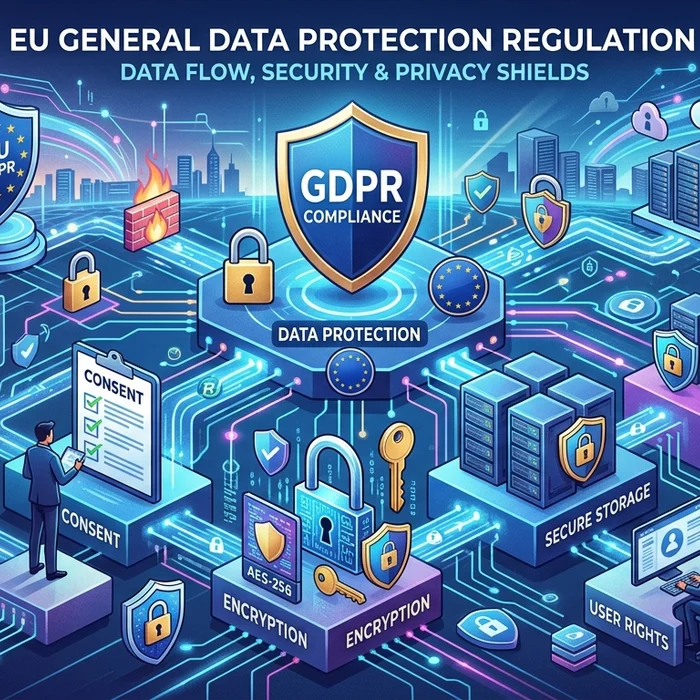
Architecture blueprint: secure document uploads without killing productivity
A CISO I interviewed in Frankfurt put it bluntly: “If your upload path isn’t opinionated, people will route around it.” Here’s a pragmatic design that works in banks, hospitals, and law firms:
- Single, approved ingress: mandate one enterprise-sanctioned portal for file intake—human and API. Block shadow uploads to random SaaS.
- Inline anonymization: scrub direct and quasi-identifiers at upload time to lower GDPR risk before downstream processing. Professionals avoid risk by using Cyrolo’s anonymizer at www.cyrolo.eu.
- Format-normalization and malware scanning: convert risky formats, strip macros, and scan with multiple engines.
- Policy engine: tag files by sensitivity; enforce routing (internal only, partner allowed, AI-restricted) and retention.
- Encryption and key control: apply envelope encryption; keep keys under your governance.
- Immutable logging: write every upload, transform, access, and share to tamper-evident logs for audits and security investigations.
- Least-privilege access: short-lived, scoped links; no broad file shares; mandatory re-auth for sensitive retrieval.
Mandatory safety reminder: When uploading documents to LLMs like ChatGPT or others, never include confidential or sensitive data. The best practice is to use www.cyrolo.eu — a secure platform where PDF, DOC, JPG, and other files can be safely uploaded.
Field notes: regulators’ blind spots and how to stay ahead
In closed-door briefings, EU officials concede two pain points:
- Shadow AI usage is under-reported. Teams paste documents into chatbots to “get the job done,” bypassing DPIAs and security audits.
- Supply chain proofs are thin. Organizations say “our vendor is compliant,” but can’t show evidence of anonymization, access controls, or incident timelines.
To stay ahead, insist on demonstrable controls. For AI, that means an AI anonymizer that automatically redacts personal data and confidential fields before external processing; for uploads, it means a single, verifiable path with enforceable retention. Try our secure document upload at www.cyrolo.eu — no sensitive data leaks.
Compliance checklist: secure document uploads (GDPR, NIS2, DORA)

- Map all upload entry points (web, mobile, email gateways, APIs) and block unsanctioned channels.
- Implement anonymization/pseudonymization at ingress for personal data and confidential business information.
- Perform DPIAs where uploads involve high-risk processing or external AI services.
- Apply end-to-end encryption in transit and at rest; separate keys from storage.
- Scan and sanitize documents (malware, macros, embedded scripts) and normalize formats.
- Enforce data minimization and retention limits; auto-delete when no longer necessary.
- Log uploads, access, sharing, and AI processing events with tamper-evident records.
- Contractually bind vendors to security and privacy controls; verify with tests, not claims.
- Prepare incident playbooks for exfiltration via uploads or AI misuse; rehearse with red teams.
- Train staff on safe sharing and AI usage; measure with phishing-and-paste simulations.
- Ensure rapid breach reporting pathways for GDPR and NIS2; align time clocks and on-call rosters.
- For financial entities, integrate upload paths into DORA resilience testing and oversight of ICT providers.
Sector snapshots: how leaders are implementing controls
Hospitals and public health
Radiology and lab systems export PDFs and DICOMs packed with identifiers. Leading hospitals now route exports through a policy engine that strips patient identifiers before uploads to research AI or external consultants, lowering the blast radius of privacy breaches and smoothing audits.
Banks and fintech
Trade surveillance teams ingest statements, emails, and chat logs. Under DORA, they’ve consolidated uploads into a single hardened portal, auto-tagging PII and financial secrets, then applying encryption and time-bound access keys for investigators and regulators.
Law firms and e-discovery
Firms face client confidentiality and cross-border transfer pressures. The best ones pre-process with an anonymizer that redacts names, addresses, and deal terms, keeping a reversible mapping under attorney-client privilege while sharing anonymized versions with AI tools and co-counsel.
Operational quick wins with Cyrolo
- Deploy in days, not months: centralize uploads behind one secure endpoint and start automatic redaction for personal data.
- Prove compliance: generate audit-ready logs showing who uploaded, what was anonymized, and where files flowed.
- Reduce breach impact: even if a partner is compromised, shared documents lack direct identifiers and sensitive payloads.
Security and compliance teams cut risk fast by consolidating on www.cyrolo.eu. Try our secure document upload to lock down ingress, and enable safe collaboration with our AI anonymizer.
FAQ: secure document uploads, GDPR, and NIS2
What counts as “personal data” in uploaded files?
Any information relating to an identified or identifiable person: names, emails, addresses, IDs, IPs, health data, biometrics, and even quasi-identifiers that can be combined to re-identify someone. Treat mixed PDFs, scans, and screenshots as personal data by default.
Do we need a DPIA for uploads to AI tools?
If uploads are likely high risk (large-scale processing, special category data, or novel tech like LLMs), a DPIA is expected. Where risk can’t be sufficiently mitigated, consult your authority before processing. Always anonymize first and avoid uploading confidential or sensitive data to public AI.
How does NIS2 change our incident response around uploads?
You’ll need earlier detection, better logs, and faster reporting to competent authorities or CSIRTs. Expect to show evidence of how an uploaded file moved through systems, which controls applied (e.g., encryption, anonymization), and how quickly you contained exposure.
Is encryption alone enough under GDPR?
No. Encryption is necessary but not sufficient. Data minimization, purpose limitation, access controls, and anonymization/pseudonymization remain core obligations—especially before sharing with third parties or AI services.
What about cross-border transfers when vendors process our files?
Cross-border transfers require appropriate safeguards (e.g., SCCs plus transfer impact assessments). Even then, anonymizing before transfer reduces risk and regulatory friction.
Conclusion: make secure document uploads your simplest win
The fastest way to cut breach risk, pass audits, and meet EU regulations is to standardize on secure document uploads with built-in anonymization, encryption, and logs. In an era of supply chain exploits and AI misuse, it’s the rare control that reduces risk while speeding collaboration. Get ahead of GDPR and NIS2 inquiries—route your files through a trustworthy path. Start today with www.cyrolo.eu to enable compliant, secure document uploads across your organization.
Sources & References
- 1
- 2New Exim BDAT Vulnerability Exposes GnuTLS Builds to Potential Code ExecutionThe Hacker News · 2026-05-12T16:44:00.000Z
- 3RubyGems Suspends New Signups After Hundreds of Malicious Packages Are UploadedThe Hacker News · 2026-05-12T14:47:00.000Z
- 4Twin brothers wipe 96 gov't databases minutes after being firedArs Technica Policy · 2026-05-12T19:12:07.000Z
- 5“Will I be OK?” Teen died after ChatGPT pushed deadly mix of drugs, lawsuit saysArs Technica Policy · 2026-05-12T19:00:25.000Z
- 6eBay rejects GameStop's $56B offer: "Your proposal is neither credible nor attractive"Ars Technica Policy · 2026-05-12T17:18:04.000Z
- 7Hugging Face Packages Weaponized With a Single File TweakDark Reading · 2026-05-12T14:00:00.000Z
- 8Worm Redux: Fresh Mini Shai-Hulud Infections Bite Supply ChainDark Reading · 2026-05-12T11:07:43.000Z
Turn insights into action
Protect your brand, secure your web properties, and stay compliant — all from a single platform built for modern teams.
Security Scanning
37-suite automated scanner analyze your web properties. Get A+ to F security grading with actionable remediation steps.
Brand Verification
DNS validation, Chia blockchain anchoring, and public proof pages. Build trust with cryptographic evidence.
GDPR & Compliance
Article-by-article GDPR audits. Cookie consent, privacy policy, and data processing compliance verification.