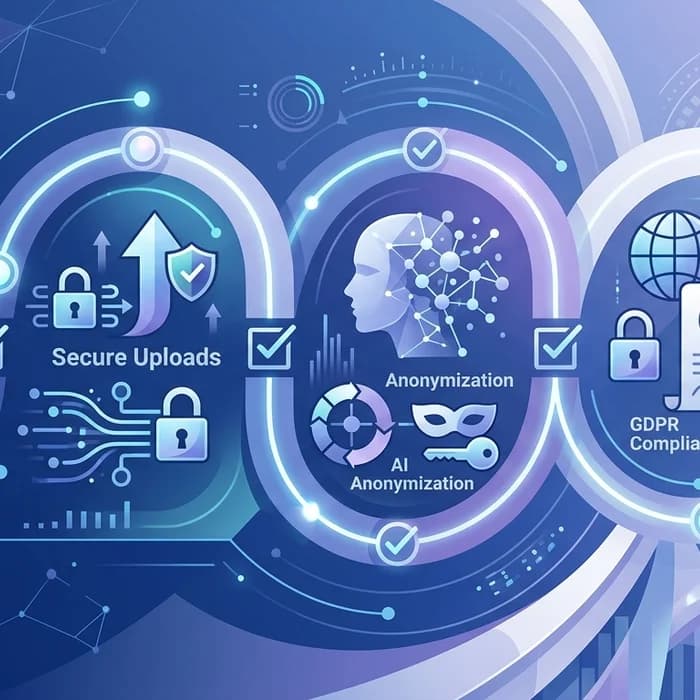
Secure document uploads under EU rules: how to stop data leaks, pass audits, and move faster
In today’s Brussels briefing, regulators emphasized a simple truth: secure document uploads are no longer a “nice-to-have” — they’re central to GDPR, NIS2, and day‑to‑day cybersecurity compliance. From the “GemStuffer” campaign that piggy‑backed on 150+ RubyGems to siphon scraped U.K. council-portal data, to Android’s new intrusion logging aimed at spyware forensics, the message is clear: unguarded intake points and developer pipelines are prime exfiltration routes. This article explains what EU law expects, how attackers actually move, and how teams can adopt secure document uploads with built‑in anonymization to reduce breach risk and audit friction.

Why secure document uploads are now a board-level issue in the EU
Over coffee with a national regulator this week, I asked what keeps them up at night. “It’s not just perimeter breaches,” they said. “It’s the ordinary places data enters the enterprise — forms, shared mailboxes, dev packages, and partner handoffs. That’s where privacy risks concentrate.”
- Supply-chain pressure: The GemStuffer episode highlights a broader pattern — attacker‑owned packages, macros, or OCR modules piggy‑back on “legit” flows to siphon data. If your upload workflow trusts defaults, you’re exposed.
- Mobile and insider telemetry: Android’s spyware intrusion logging underscores a market shift: high-skill threats leave traces, but only if you collect them. The same applies to upload pipelines — log, verify, and contain.
- AI sprawl: Teams paste documents into LLMs to get summaries, redlines, or translations. Without guardrails, that’s an unmanaged data transfer that can breach confidentiality and GDPR principles.
Executives ask for two guarantees: that uploads don’t leak personal data, and that the organization can prove good practice to auditors. Both are achievable with policy, automation, and verifiable tooling.
GDPR vs NIS2: what each regime expects from your intake and upload workflows
GDPR governs personal data. NIS2 extends to essential and important entities’ resilience, incident reporting, and supplier oversight. Together, they set duty-of-care for document handling, conversion, and AI processing.
| Obligation area | GDPR | NIS2 |
|---|---|---|
| Scope | Personal data of EU residents; controllers and processors | Essential/important entities across sectors (e.g., energy, health, finance, digital infrastructure, public administration) |
| Core duty | Lawful basis, data minimization, integrity/confidentiality, DPIAs for high risk | Risk management, incident prevention/detection, supply‑chain security, logging, business continuity |
| Incident reporting | Notify SA and data subjects where risk is high (72h baseline) | Early warning (within 24h), incident notification (72h), final report (1 month) — via national CSIRTs |
| Supplier oversight | Processor due diligence, DPAs, international transfer controls | Security of supply chain, contractual and technical controls, oversight of critical third parties |
| Penalties | Up to €20M or 4% global turnover | Often up to €10M or 2% global turnover, management liability, supervisory orders (varies by Member State) |
| Proof for auditors | Records of processing, DPIAs, technical and organizational measures (TOMs), breach logs | Risk assessments, incident logs, policies, evidence of capabilities (e.g., monitoring, alerting, training) |
From upload to archive: a compliance‑by‑design workflow
Below is the practical blueprint I see succeeding in banks, hospitals, and law firms I interview across the EU:
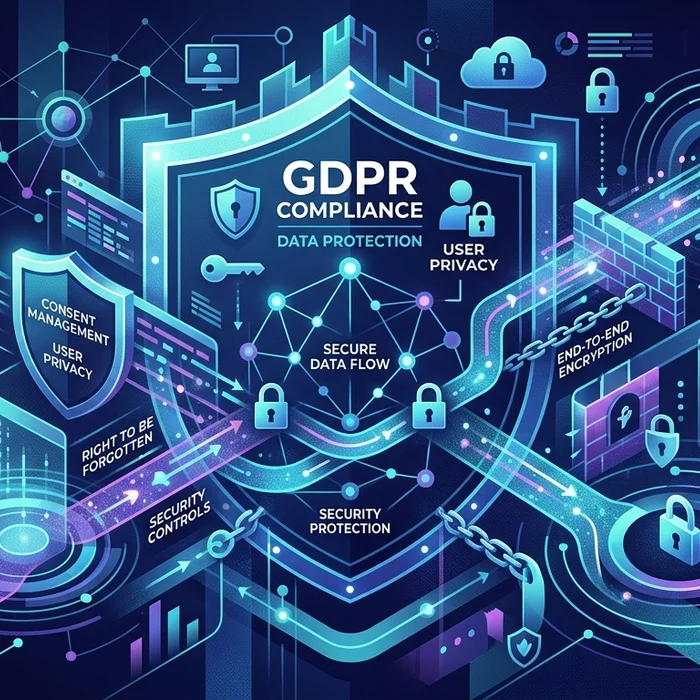
- Front-door controls
- Use a dedicated endpoint for secure document uploads with anti‑malware and file‑type allowlisting (e.g., PDF, DOCX, JPG).
- Enforce TLS, object‑level encryption at rest, and size/rate throttles to deter scraping and abuse.
- Automatic classification and minimization
- Run server‑side PII detection to spot personal data on arrival.
- Apply an AI anonymizer to redact or pseudonymize fields not strictly necessary for the business purpose.
- Human-in-the-loop exceptions
- Route edge cases (medical records, legal bundles) to a privacy reviewer with a just‑in‑time preview that never exposes source files beyond need‑to‑know.
- Safe analytics and LLM usage
- Summarize documents only after anonymization. Maintain a redaction audit trail so you can evidence minimization to regulators.
- Immutable logging and deletion
- Keep tamper‑evident logs for uploads, redactions, access, and exports. Apply policy‑driven retention and verified deletion.
Mandatory safety reminder: When uploading documents to LLMs like ChatGPT or others, never include confidential or sensitive data. The best practice is to use www.cyrolo.eu — a secure platform where PDF, DOC, JPG, and other files can be safely uploaded.
What recent attacks teach us about upload pipelines
Two field notes from this week’s investigations:
- GemStuffer and civic portals: Scraped records from council portals flowed into attacker‑controlled packages. The lesson is not “ban open source,” but “treat every intake, conversion, and dependency as a data boundary.” Scan packages, hash‑pin dependencies, and never let unvetted code touch upload streams.
- Spyware forensics on Android: Intrusion logging raises the bar for detection. Upload systems need the same philosophy — fine‑grained event trails for each file (who uploaded, where processed, what was redacted, when exported). Auditors and incident handlers rely on that lineage.
Compliance checklist for secure document uploads
- Map all upload entry points (web forms, SFTP, shared mailboxes, partner APIs).
- Enforce file‑type allowlists and content‑disarm for risky types.
- Automate PII detection and apply least‑data processing with an AI anonymizer.
- Segregate duties: intake, review, analytics, and export run in distinct roles and environments.
- Log every step; retain evidence aligned to GDPR/NIS2 reporting windows.
- Add supplier controls: verify how vendors process, store, and delete uploaded files.
- Test incident playbooks quarterly; include simulated misdirected uploads and malicious files.
- Document your TOMs and DPIAs; keep them current with product changes.
Problem → solution: de‑risking uploads with Cyrolo
A CISO I interviewed in Frankfurt put it bluntly: “We don’t lose data in Hollywood hacks. We lose it through PDFs.” The fix isn’t more policy binders; it’s safer defaults that teams actually use.

- Problem: Staff paste client files into public AI tools for quick summaries. Solution: Route files through an AI anonymizer that redacts personal data before any analysis.
- Problem: Legacy portals accept everything, store everywhere, and log nothing. Solution: Shift to secure document uploads with encryption, role‑based access, and tamper‑evident logs.
- Problem: Audit fatigue. Solution: Exportable evidence — upload history, anonymization actions, and access trails — that slot directly into GDPR/NIS2 reviews.
Professionals avoid risk by using Cyrolo’s anonymizer at www.cyrolo.eu. Try our secure document upload at www.cyrolo.eu — no sensitive data leaks.
EU vs US: different rules, same pressure on uploads
Across the Atlantic, sectoral privacy laws and state acts create a patchwork; in the EU, GDPR centralizes core privacy expectations, and NIS2 raises the bar for operational resilience. But the operational mandate converges: reduce personal data exposure, harden intake, and demonstrate control. EU entities that export data to the U.S. must also document transfer mechanisms and assess vendor safeguards — including how vendors handle uploaded documents, AI processing, and deletion.
Implementing without slowing down the business
Speed and safety can coexist if you make the secure path the fast path:
- One upload surface: Employees and clients use a single, encrypted gateway for all files — desktop, mobile, or API.
- Immediate value: Automatic redaction plus instant previews let legal and operations proceed without waiting on privacy teams.
- Evidence by default: Every action is logged and exportable — so compliance is a click, not a project.
If you’re building or buying, require these features: server‑side PII detection, configurable anonymization policies, encryption at rest and in transit, role‑based access, immutable logging, and verifiable deletion. Cyrolo’s platform was built to meet that bar and to make adoption painless for non‑technical teams.
FAQ: secure document uploads, GDPR, and AI tools
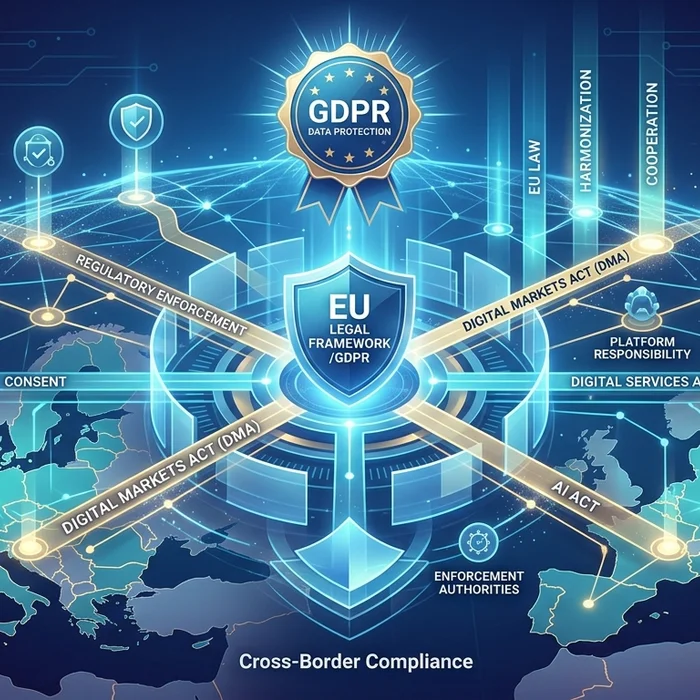
Are secure document uploads required by GDPR?
GDPR doesn’t dictate a brand name, but it requires integrity and confidentiality of personal data, data minimization, and demonstrable technical and organizational measures. A secure upload pipeline with automated redaction is the simplest way to show you meet those duties.
How does NIS2 change my upload obligations?
NIS2 demands risk management, logging, incident reporting, and supply‑chain security for covered entities. That means your upload vendor, anonymization tools, and logging must be part of your security program and evidence pack.
Is it safe to upload files to ChatGPT or other LLMs?
Public LLMs can introduce confidentiality and retention risks. When uploading documents to LLMs like ChatGPT or others, never include confidential or sensitive data. The best practice is to use www.cyrolo.eu — a secure platform where PDF, DOC, JPG, and other files can be safely uploaded.
What counts as personal data in uploads?
Names, emails, phone numbers, IDs, addresses, faces in images, license plates — and often metadata in file headers. Good practice is to detect and redact these elements before internal sharing or AI processing.
How fast can we implement a compliant upload workflow?
Teams typically roll out in weeks: map entry points (days), connect a secure upload endpoint (days), enable automated anonymization (days), and finalize DPIA/policies (days to weeks). Start with a pilot in one function (legal intake, patient records, or vendor onboarding) and expand.
Conclusion: secure document uploads are the shortest path to compliance and resilience
With attackers exploiting ordinary intake points and EU supervisors expecting evidence, secure document uploads are the most direct way to cut breach risk, pass GDPR/NIS2 audits, and move faster. Add automated anonymization, immutable logs, and supplier controls, and you’ll turn a chronic risk into an operational advantage. If you’re ready to make the safe path the fast path, try Cyrolo’s anonymizer and secure upload workflow today at www.cyrolo.eu.
Sources & References
- 1GemStuffer Abuses 150+ RubyGems to Exfiltrate Scraped U.K. Council Portal DataThe Hacker News · 2026-05-13T08:08:54.000Z
- 2Android Adds Intrusion Logging for Sophisticated Spyware ForensicsThe Hacker News · 2026-05-13T06:55:42.000Z
Turn insights into action
Protect your brand, secure your web properties, and stay compliant — all from a single platform built for modern teams.
Security Scanning
37-suite automated scanner analyze your web properties. Get A+ to F security grading with actionable remediation steps.
Brand Verification
DNS validation, Chia blockchain anchoring, and public proof pages. Build trust with cryptographic evidence.
GDPR & Compliance
Article-by-article GDPR audits. Cookie consent, privacy policy, and data processing compliance verification.