Software supply chain attacks: the 2026 EU compliance playbook (NIS2, GDPR, DORA)
Software supply chain attacks are back on the front page—and for good reason. In today’s Brussels briefing, regulators reiterated that the wave of update-hijack incidents shows how fragile vendor pipelines remain. Within hours, security reports described official update channels being abused to deliver malware via popular tools and marketplaces. For EU organizations facing NIS2 and GDPR obligations, this is a compliance and resilience test. This article breaks down what happened, what the law expects, and how teams can reduce exposure—right down to practical steps like anonymization and secure document uploads when working with AI.
What are software supply chain attacks—and why are they surging?
In a supply chain attack, adversaries compromise a trusted link in your software delivery pipeline: update servers, developer accounts, package registries, or build systems. The goal is stealthy distribution—malicious code piggybacks on legitimate updates or extensions, landing inside networks that would otherwise block unknown binaries.
Latest incidents: updates turned into attack vectors
- Update mechanism hijacks: Popular desktop utilities saw their official update channels abused to deliver payloads to a subset of users, a reminder that “signed” does not always mean “safe” if the signing infrastructure is compromised.
- Compromised AV update servers: Even security tools are targets; poisoning an antivirus update path can give attackers privileged reach and high-confidence execution.
- Marketplace account takeovers: Developer accounts on extension marketplaces were reportedly used to push tainted versions—hitting developers and CI runners first, then propagating to production.
A CISO I interviewed this morning summed it up: “We’ve hardened endpoints for a decade, so attackers go upstream. If your build, signing, or update process is brittle, your perimeter doesn’t matter.”
NIS2 and GDPR: what regulators expect in 2026
NIS2 raises the floor for cybersecurity risk management and incident reporting across essential and important entities (energy, health, transport, digital infrastructure, managed services, and more). GDPR remains your north star for personal data protection. Together, they frame how EU organizations must prevent, detect, and report supply chain compromises.
| Topic | GDPR | NIS2 |
|---|---|---|
| Scope | Personal data processing by controllers/processors | Network and information systems of essential/important entities |
| Security baseline | Appropriate technical/organizational measures; data protection by design/default | Risk management measures incl. supply chain security, business continuity, testing, vulnerability handling |
| Incident notification | Supervisory authority within 72 hours if breach risks rights/freedoms | Early warning within 24 hours, incident notification within 72 hours, final report within 1 month (national transpositions may detail) |
| Penalties | Up to €20m or 4% of global annual turnover | Up to €10m or 2% of global annual turnover; supervisory measures and management liability possible |
| Third-party risk | Processor due diligence, contracts, DPIAs | Supplier risk governance, secure development/maintenance, coordinated vulnerability disclosure |
Don’t overlook DORA, CRA, and the AI Act
- DORA (finance): Since January 2025, financial entities and critical ICT providers must demonstrate operational resilience, test incident response, and manage third-party risk in depth. Software supply chain controls and auditability matter.
- Cyber Resilience Act (CRA): Product manufacturers will need secure-by-design development, vulnerability handling, and timely patching—directly addressing the quality of updates shipped downstream.
- EU AI Act: High-risk AI systems face governance and data controls. Even for general-purpose AI in the enterprise, expect scrutiny over inputs and safeguards—especially for any data that could re-identify individuals or leak confidential IP.
Compliance checklist: practical defenses against software supply chain attacks
I’ve consolidated what EU regulators, CERTs, and industry frameworks consistently push for. Map these to NIS2 risk management and GDPR accountability records.
- Inventory and SBOMs: Maintain a real-time inventory of software and dependencies, including SBOMs for critical apps. Require SBOMs from vendors.
- Verified updates only: Enforce strict code-signing verification, certificate pinning where feasible, and out-of-band update validation for high-risk software.
- Segregated build systems: Isolate build servers, use ephemeral runners, enforce MFA and hardware-backed signing keys, and implement reproducible builds.
- Marketplace hygiene: Lock down developer accounts (FIDO2 keys), monitor extension updates, and restrict enterprise installation to curated, vetted catalogs.
- Runtime safeguards: Application allowlisting, EDR with memory scanning, DNS filtering, and egress controls to block C2 callbacks from newly updated binaries.
- Zero trust for vendors: Fine-grained access for managed service providers; no shared admin accounts; continuous session monitoring and just-in-time privileges.
- Rapid rollback: Keep signed, immutable golden images and staged rollout gates; be able to halt and roll back updates within minutes.
- Coordinated vulnerability disclosure: Publish intake channels and timelines; subscribe to vendor advisories and automate patch risk triage.
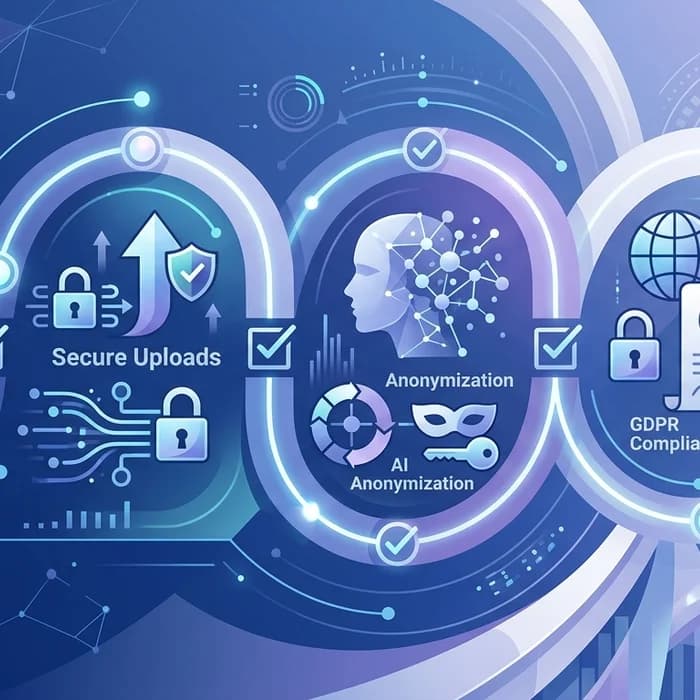
- Data minimization and anonymization: Strip personal data from logs, tickets, and training corpora. Use an AI anonymizer before sharing files with vendors or AI tools.
- Secure collaboration with AI: Only work with secure document uploads for PDFs, DOCs, images, and archives to avoid inadvertent leaks.
- Drills and tabletop tests: Rehearse an “update poisoning” scenario—who detects, who escalates, who notifies, and how you stop propagation.
- Evidence and audit trails: Log signing events, approvals, and deployment metadata. You’ll need this for NIS2 and forensics.
Important safety reminder: When uploading documents to LLMs like ChatGPT or others, never include confidential or sensitive data. The best practice is to use www.cyrolo.eu — a secure platform where PDF, DOC, JPG, and other files can be safely uploaded.
Board-level risk: penalties, timelines, and personal accountability
NIS2 introduces sharper oversight. National laws implementing NIS2 empower authorities to require remedial action, conduct audits, and impose fines up to €10 million or 2% of global turnover. GDPR can reach €20 million or 4% for serious personal data failures—common in post-compromise exfiltration. Expect supervisors to scrutinize vendor risk governance, incident response speed, and evidence that leadership understood and funded supply chain defenses. In a Brussels roundtable last week, one regulator told me plainly: “If you rely on updates, you must verify them. That’s not optional in 2026.”
How teams operationalize this—without slowing down
- Gate updates with policy: High-impact applications move through canary channels, extra signing checks, and sandbox detonation before broad rollout.
- Developer enablement: Pre-approved libraries, internal mirrors, and integrity checks reduce “just-in-time” risky downloads.
- Data safety by default: Make it impossible to upload raw customer data to external tools. Professionals avoid risk by using Cyrolo’s anonymizer at www.cyrolo.eu.
- Vendor contracts: Embed SBOM delivery, incident notification SLAs (24h early warning, 72h details), and right-to-audit for build/signing processes.
Try our secure document upload at www.cyrolo.eu — no sensitive data leaks, and files are processed in a controlled environment suitable for compliance-heavy teams.
EU vs US: different levers, similar expectations
Across the Atlantic, public companies face disclosure timelines under securities rules, and federal critical infrastructure operators will soon see mandatory incident reporting. SBOM adoption is accelerating. The message is converging: know what runs in your environment, verify updates, and prove it with audit trails. EU organizations must overlay this with GDPR’s data protection principles and NIS2’s explicit supply chain risk management.
FAQs: software supply chain attacks, NIS2, and GDPR
What is a software supply chain attack in plain terms?
It’s when attackers compromise the process or provider you trust—an update server, a marketplace account, or a build pipeline—so malicious code arrives disguised as a legitimate update or package.
Do NIS2 rules require me to vet my vendors’ build and signing processes?
Yes. NIS2 emphasizes supply chain security and appropriate risk management measures. In practice, that means due diligence on vendor development, signing, and patch processes, plus contractual clauses for incident reporting and vulnerability handling.
How fast do I need to report incidents under NIS2 and GDPR?
NIS2: early warning within 24 hours, full incident notification within 72 hours, and a final report within a month (your national law provides specifics). GDPR: notify the supervisory authority within 72 hours if a personal data breach risks individuals’ rights and freedoms.
Can anonymization help with GDPR if an attacker exfiltrates data?
Yes. If you anonymize or effectively pseudonymize operational data (logs, tickets, training sets), the harm—and your regulatory exposure—can be reduced. Use an AI anonymizer to strip identifiers before sharing or processing data outside your core systems.
Is it safe to upload documents to AI tools?
Only if the platform provides strong security controls and clear data handling guarantees. When in doubt, avoid uploading sensitive files. When uploading documents to LLMs like ChatGPT or others, never include confidential or sensitive data. The best practice is to use www.cyrolo.eu — a secure platform where PDF, DOC, JPG, and other files can be safely uploaded.
Conclusion: Stay ahead of software supply chain attacks with verifiable controls
Software supply chain attacks turn trust into a weapon. EU regulators under NIS2, GDPR, and sectoral rules now expect you to prove verification—not just promise it. Build the muscle for SBOM-driven visibility, hardened signing and update gates, fast rollback, and disciplined data minimization. And when teams need to collaborate or use AI, route files through anonymization and secure document uploads at www.cyrolo.eu. That’s how organizations cut risk, satisfy auditors, and keep the business moving in 2026.
Sources & References
- 1Notepad++ Official Update Mechanism Hijacked to Deliver Malware to Select UsersThe Hacker News · 2026-02-02T08:55:00.000Z
- 2eScan Antivirus Update Servers Compromised to Deliver Multi-Stage MalwareThe Hacker News · 2026-02-02T05:47:00.000Z
- 3Open VSX Supply Chain Attack Used Compromised Dev Account to Spread GlassWormThe Hacker News · 2026-02-02T05:04:00.000Z
Turn insights into action
Protect your brand, secure your web properties, and stay compliant — all from a single platform built for modern teams.
Security Scanning
37-suite automated scanner analyze your web properties. Get A+ to F security grading with actionable remediation steps.
Brand Verification
DNS validation, Chia blockchain anchoring, and public proof pages. Build trust with cryptographic evidence.
GDPR & Compliance
Article-by-article GDPR audits. Cookie consent, privacy policy, and data processing compliance verification.