Software Supply Chain Attack: What “TrapDoor” Means for NIS2, GDPR, and Your Dev Pipeline
Today’s headlines warning of a widespread software supply chain attack across npm, PyPI, and Crates.io are more than an engineering fire drill—they’re a compliance stress test. In a Brussels briefing this morning, officials reiterated that NIS2 puts supply chain risk management front and center, while GDPR still governs what happens the moment credentials, tokens, or customer data are exposed. Below, I unpack what the TrapDoor campaign signals for EU organizations, how it intersects with NIS2 and GDPR, and the practical steps you can take this week to harden your pipelines—without slowing delivery.

What happened: a multi-ecosystem software supply chain attack
Security researchers have detailed a coordinated campaign—dubbed “TrapDoor”—that spreads credential-stealing malware via open-source package ecosystems including npm (JavaScript), PyPI (Python), and Crates.io (Rust). While each registry has different defenses, the playbook is familiar:
- Typosquatting and brandjacking of popular packages
- Maintainer account takeovers leading to malicious updates
- Obfuscated install scripts that exfiltrate environment variables, tokens, SSH keys, and cloud credentials
- CI/CD persistence through postinstall hooks and credential harvesting
A CISO I interviewed this afternoon put it bluntly: “You don’t need a zero-day if you can hijack the default package your build pulls.” That’s the danger of a modern software supply chain attack: one compromised dependency can seed dozens of downstream breaches before anyone notices.
Why this matters under NIS2 and GDPR
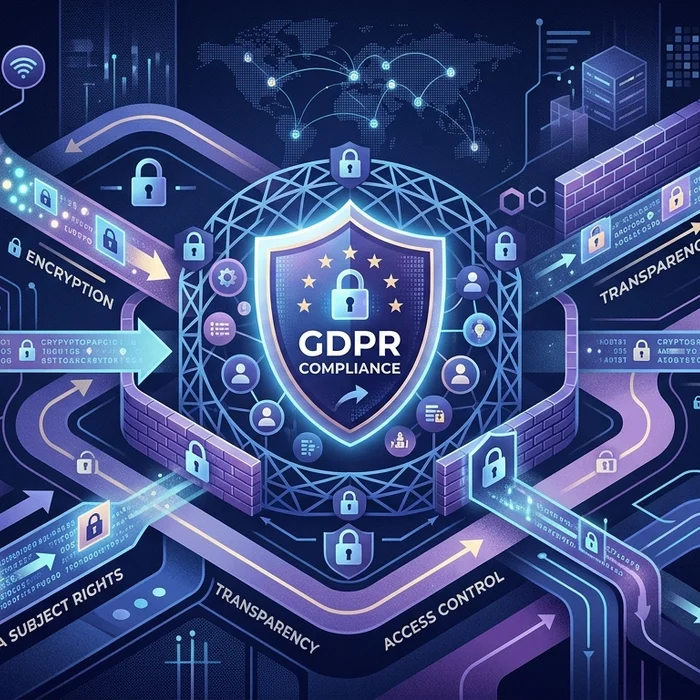
NIS2, fully in force across the EU, requires essential and important entities to implement proportionate technical and organizational measures—including supply chain security—and to report significant incidents rapidly. GDPR overlays a separate duty: if personal data is implicated, you have 72 hours to notify the relevant supervisory authority and, in some cases, the individuals affected.
| Aspect | GDPR | NIS2 |
|---|---|---|
| Scope | Processing of personal data | Network and information systems of essential/important entities |
| Trigger | Personal data breach likely to risk rights and freedoms | Significant incident impacting service availability, confidentiality, integrity, or continuity |
| Reporting timeline | Notify DPA within 72 hours; inform individuals without undue delay if high risk | Early warning within 24 hours; incident notification within 72 hours; final report within 1 month |
| Supply chain obligations | Due diligence on processors; data processing agreements | Assess supplier security; secure software acquisition; SBOM/code integrity measures expected |
| Maximum fines | Up to €20M or 4% of worldwide turnover | Up to €10M or 2% (essential) and €7M or 1.4% (important), plus supervisory measures |
Operational impact: engineering, security, legal need a single playbook
Engineering and DevOps
- Freeze and review: Pin versions, enable signature verification, and review recent dependency diffs, especially any with new install scripts.
- Credential hygiene: Rotate CI tokens, cloud keys, and Git credentials; enforce short-lived tokens and workload identity.
- Registry controls: Require 2FA for package publishing and leverage vetted mirrors or allowlists.
Security (CISO, SOC, IR)
- Telemetry sweep: Hunt for anomalous outbound traffic from build runners and developer workstations; check for known C2 patterns and exfiltrated env vars.
- Containment: Quarantine compromised agents, revoke secrets, and block identified malicious packages at the proxy/registry level.
- Evidence handling: Preserve logs, build artifacts, and ticket trails to support NIS2 incident reporting and any regulator queries.
DPO and Legal
- Data breach analysis: Determine whether personal data (e.g., tokens unlocking PII backends, customer records in test fixtures) could have been accessed.
- Regulatory notifications: Prepare GDPR and NIS2 filings; align on materiality thresholds, facts known, and remediation timelines.
- Vendor coordination: Confirm which suppliers or processors consumed affected packages; document actions and attestations.
Incident playbook in 72 hours (mapped to NIS2/GDPR)
- First 6–12 hours: Triage. Identify affected repos, builds, and endpoints. Lock package updates. Rotate credentials used on impacted runners.
- By 24 hours: Issue NIS2 early warning (if within scope). Share known indicators, suspected vectors, and initial containment steps with your national CSIRT/competent authority.
- By 48 hours: Complete forensic sweep of CI/CD logs and egress. Validate no lateral movement into data stores containing personal data.
- By 72 hours: File GDPR breach notification if personal data risk is non-negligible. Submit NIS2 incident notification with updated facts, impact assessment, and mitigation status.
- Within 1 month: Deliver NIS2 final report, including root cause, lessons learned, and long-term supply chain controls.
Reduce exposure right now without stalling the team
Two choke points drive breaches during a software supply chain attack: secret sprawl in documents and unsafe sharing of evidence. In the last year, I’ve watched banks, fintechs, hospitals, and law firms lose days sanitizing logs and screenshots before sending them to vendors, regulators, or AI assistants.
- Use an AI anonymizer to strip names, emails, account numbers, tokens, and secrets from incident notes, support tickets, and code snippets before they ever leave your environment. Professionals avoid risk by using Cyrolo’s anonymizer at www.cyrolo.eu.
- Centralize evidence handling with secure document uploads so PDFs, DOCs, screenshots (JPG/PNG), and logs can be shared internally and with counsel without copying data into risky tools. Try our secure document upload at www.cyrolo.eu — no sensitive data leaks.
Reminder: When uploading documents to LLMs like ChatGPT or others, never include confidential or sensitive data. The best practice is to use www.cyrolo.eu — a secure platform where PDF, DOC, JPG, and other files can be safely uploaded.
Compliance checklist: supply chain security under NIS2 and GDPR
- Inventory and lock dependencies (pin, verify signatures, hash checks); maintain an SBOM for all services.
- Enforce 2FA and signed releases for internal and third-party packages; restrict publish rights.
- Secrets management: no long-lived credentials in CI; auto-rotation and scoped, least-privileged access.
- Monitoring: alert on package changes, anomalous DNS/HTTP from build agents, and new privilege grants.
- Vendor governance: require attestations on secure development and incident reporting; test restores and rollback paths.
- Incident readiness: pre-drafted NIS2/GDPR templates; regulator contacts; counsel on-call.
- Data minimization: scrub personal data from logs and tickets by default using an anonymizer.
- Evidence handling: route all breach artifacts through secure document uploads to avoid uncontrolled sharing.
EU vs US: different levers, same pressure
European regulators (NIS2, GDPR) mandate risk-based controls, fast reporting, and measurable supplier governance—with fines and onsite inspections to back it up. In the US, sectoral rules and the SEC’s disclosure regime can create market pressure, while agencies push SBOM adoption and secure-by-design practices. For multinational teams, align to NIS2’s supply chain requirements; they generally raise the floor everywhere without hindering US obligations.
Blind spots TrapDoor exposed
- “Trusted” dev laptops: Developers often keep cloud credentials and SSH keys locally for speed. That convenience is now a prime exfil target.
- CI/CD as the crown jewels: Build runners typically have broad read privileges, wide egress, and weak isolation. Treat them like production.
- Documentation drift: Runbooks, Jira tickets, and Slack excerpts routinely contain personal data and secrets that trigger GDPR notification when leaked.
Regulatory outlook—and what I’m hearing in Brussels
Regulators I spoke to today emphasized two themes: verifiable software integrity (signing, reproducible builds, and SBOMs) and demonstrable supplier oversight. Expect more national guidance on secure package consumption and stronger expectations for executive accountability. For essential entities, supervisory authorities will ask not just “Did you patch?” but “How do you know your dependencies haven’t been poisoned?”
Conclusion: treat every software supply chain attack as both a security and compliance event
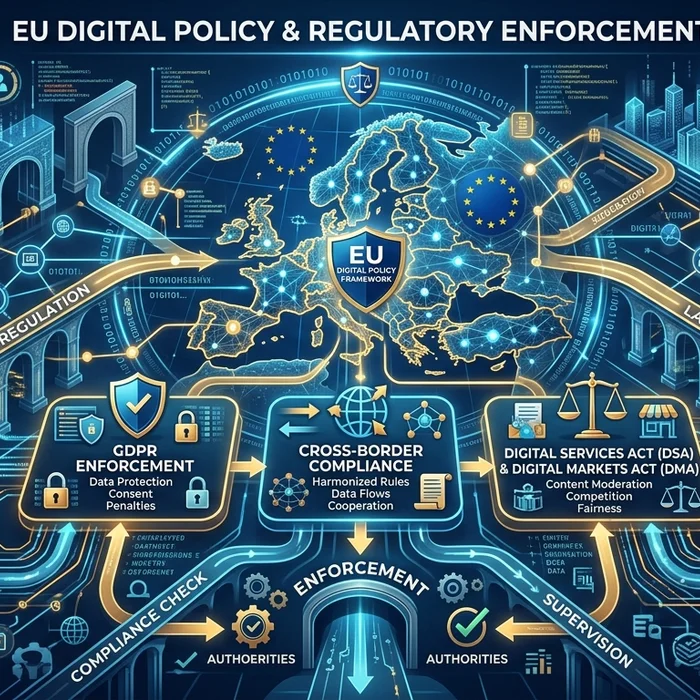
The TrapDoor campaign is a clear signal: a software supply chain attack isn’t isolated to engineering. It activates NIS2’s incident processes, may invoke GDPR’s breach rules, and puts executive accountability on the line. Tighten dependency controls, shorten credential lifetimes, and sanitize everything you share. And when you must move fast with evidence and collaboration, use tools built for the job—an anonymizer and secure document uploads at www.cyrolo.eu.
FAQ: real-world questions teams are asking today
What is a software supply chain attack in simple terms?
It’s when attackers compromise code or tools your software depends on—like open-source packages, build scripts, or registries—so malicious changes flow into your apps without directly hacking your own servers.
Does NIS2 apply to software developers or only operators of critical services?
NIS2 applies to “essential” and “important” entities across many sectors (including digital infrastructure and managed services). Even if you’re not directly in scope, your customers likely are—and they will flow down supply chain requirements to your development and CI/CD practices.
If tokens were stolen but no customer database was accessed, do we notify under GDPR?
It depends on risk. If the stolen credentials could plausibly enable access to personal data, many DPAs expect notification within 72 hours. Document your analysis and, when in doubt, consult counsel.
How do we safely share logs and screenshots with vendors or regulators during an incident?
Scrub personal data and secrets before sharing, and avoid ad hoc tools. Use an AI anonymizer and route artifacts through secure document uploads to ensure controlled access and auditability.
Should we freeze all package updates after news like TrapDoor?
Temporarily freezing can help while you assess exposure, but long freezes create other risks. Prefer pinning, integrity verification (signatures, hashes), and allowlists, combined with rapid review of recent package changes.
Sources & References
- 1TrapDoor Supply Chain Attack Spreads Credential-Stealing Malware via npm, PyPI, and CratesIOThe Hacker News · 2026-05-25T05:59:13.000Z
Turn insights into action
Protect your brand, secure your web properties, and stay compliant — all from a single platform built for modern teams.
Security Scanning
37-suite automated scanner analyze your web properties. Get A+ to F security grading with actionable remediation steps.
Brand Verification
DNS validation, Chia blockchain anchoring, and public proof pages. Build trust with cryptographic evidence.
GDPR & Compliance
Article-by-article GDPR audits. Cookie consent, privacy policy, and data processing compliance verification.