
Adtech surveillance: what the Webloc revelations mean for EU compliance in 2026
In today’s Brussels briefing, several regulators referenced the fresh Citizen Lab reporting that a law enforcement tool dubbed “Webloc” weaponized advertising data to track up to hundreds of millions of devices. The story has ricocheted through policy circles because it exposes a hard truth: adtech surveillance isn’t theoretical — it’s operational, commercialized, and now visibly intersecting with public-sector investigations. For EU companies, the compliance implications span GDPR, the ePrivacy regime, and NIS2 cybersecurity obligations, with real risks around personal data, vendor oversight, and incident reporting.

- Key point: Ad bidstreams and SDK telemetry can leak precise geolocation, device IDs, and behavioral signals — unquestionably personal data under EU law.
- Risk surface: Data brokers and ad partners you never directly contracted may still process and enrich your users’ data.
- Action now: Map adtech flows, run DPIAs, restrict SDKs, and enforce NIS2-grade vendor security — and anonymize internal documents before sharing.
What the Webloc case shows about adtech surveillance
Citizen Lab’s reporting — widely covered in the security press — details how “Webloc” aggregated advertising telemetry to track devices at planetary scale. Technically, this is unsurprising to engineers: programmatic advertising generates real-time bid requests that can include GPS-level coordinates, IP addresses, device identifiers (IDFA/AAID), app context, and timestamps. That dataset can be filtered, enriched, and linked for granular movement profiling.
From an EU-law vantage point:
- Location data is personal data when it can single out a device or an individual (which bidstream data typically can).
- Consent under the ePrivacy Directive (as implemented by national cookie rules) is generally required for placing/reading identifiers used for tracking; GDPR then governs the downstream processing.
- Under the Law Enforcement Directive (LED 2016/680), police processing has its own regime — but that does not legalize private-sector over-collection or sharing without a lawful basis.
A CISO I interviewed this morning put it plainly: “If your app’s SDKs are funneling location pings into the bidstream, you should assume they will be aggregated, repurposed, and possibly obtained by government buyers. That’s not a hypothetical; it’s the market.”
Adtech surveillance: controller, processor, and joint-responsibility pitfalls
The EU’s accountability model hinges on roles. For many app publishers and websites, embedding an analytics or monetization SDK makes you at least a joint controller for the initial collection and disclosure. That brings duties to:
- Identify the lawful basis (consent is typically needed for tracking across properties).
- Provide transparent disclosures naming categories of recipients (including demand-side platforms, exchanges, and data brokers), not just “partners.”
- Run a DPIA where systematic monitoring or large-scale processing of location data is involved — which, in adtech, it usually is.
- Implement data minimization (e.g., turn off precise GPS, remove persistent IDs, shorten retention) and support user rights.
Non-compliance isn’t academic. GDPR fines for unlawful tracking and opaque data-sharing have reached tens of millions for adtech actors, and DPAs are increasingly scrutinizing real-time bidding and SDK chains. The lesson from the Webloc story is that “downstream use” is not a defense — it’s a risk amplifier.
Where NIS2 meets adtech surveillance: supply-chain security and incident duties
NIS2 doesn’t regulate privacy per se — it sets cybersecurity risk management baselines for “essential” and “important” entities across sectors like finance, healthcare, digital infrastructure, managed services, and more. But in practice, adtech telemetry now straddles both compliance universes:

- Supply-chain controls: If your digital properties depend on third-party SDKs or tags, you must vet and continuously monitor those vendors’ security, access, and data-handling practices.
- Logging and detection: NIS2 expects meaningful monitoring. If an SDK exfiltrates sensitive telemetry, you should be able to detect anomalies.
- Incident reporting: A leak or compromise involving telemetry that creates significant operational or security impact may trigger NIS2 notification timelines, in addition to GDPR breach reporting.
In short, adtech risk is now also a security risk — not just a privacy one.
GDPR vs NIS2: what overlaps, what diverges
| Dimension | GDPR | NIS2 |
|---|---|---|
| Primary focus | Personal data protection and lawful processing | Cybersecurity risk management and incident resilience |
| Scope | Any controller/processor handling personal data in the EU | “Essential” and “important” entities in listed sectors, plus some digital services |
| Key obligations | Lawful basis, transparency, DPIAs, DPO (where required), data subject rights, breach notification | Risk management measures, supply-chain security, incident reporting, governance and accountability |
| Enforcement | Data Protection Authorities (DPAs), EDPB coordination | National competent authorities and CSIRTs |
| Penalties | Up to 4% of global annual turnover or €20M (whichever is higher) | Fines, binding orders, and potential management liability under national laws |
| Relevance to adtech | Directly governs ad tracking, consent, data sharing, and profiling | Impacts security of SDKs/tags, vendor oversight, and incident response for telemetry leaks |
Immediate actions: a compliance checklist for marketing, product, and security
- Inventory every SDK, tag, and API on your sites and apps; document what data each collects and where it flows.
- Turn off precise geolocation unless strictly necessary and consented; prefer coarse location or none.
- Eliminate persistent advertising IDs where feasible; rotate identifiers and shorten retention windows.
- Update your consent banner to granularly control adtech partners; block tags by default until opt-in.
- Run/refresh DPIAs for location tracking, cross-site profiling, or large-scale analytics.
- Contractually restrict downstream sharing; require sub-processor lists, security attestations, and audit rights.
- Integrate adtech telemetry into your NIS2 risk register; add SDKs/tags to your SBOM-like inventories.
- Instrument monitoring to detect unusual data egress from client-side components.
- Test breach playbooks that cover both GDPR and NIS2 timelines.
- Train marketing and product teams on privacy-by-design and secure vendor onboarding.
Practical data minimization: anonymization and safe document handling
One overlooked exposure: teams often collect screenshots, logs, and exports containing emails, device IDs, and IPs, then circulate them in tickets, chat, or to external vendors. Before sharing or uploading to AI tools, strip or mask personal data.
- Use an AI anonymizer to automatically redact emails, names, addresses, IDs, and free-text PII from documents, screenshots, and logs. Professionals avoid risk by using Cyrolo’s anonymizer at www.cyrolo.eu.
- Adopt a secure workflow for document uploads — contracts, DPIAs, and audit reports should not leak via consumer-grade tools. Try our secure document upload at www.cyrolo.eu — no sensitive data leaks.
Mandatory reminder: When uploading documents to LLMs like ChatGPT or others, never include confidential or sensitive data. The best practice is to use www.cyrolo.eu — a secure platform where PDF, DOC, JPG, and other files can be safely uploaded.
Sector snapshots: how different EU organizations should react now
Banks and fintechs

Most financial apps embed some analytics/marketing SDKs. Your exposure is twofold: (1) telemetry that could be repurposed for profiling, and (2) mobile supply-chain risk. A head of security at a payments provider told me they eliminated three SDKs in Q1 and replaced device IDs with short-lived tokens while tightening consent flows — a tangible, board-pleasing win.
Hospitals and digital health providers
Location plus app context can infer health status. Even if health data isn’t explicitly collected, the risk of sensitive inferences is high. Expect DPAs to scrutinize health-adjacent adtech more intensely. Disable third-party tracking on patient portals, isolate analytics, and document the rationale in DPIAs.
Law firms and professional services
Client confidentiality is paramount. Marketing pixels on client portals or data rooms are an easy own-goal. Move to first-party analytics with strong minimization and keep telemetry out of privileged areas. Use an anonymizer before sharing pleadings or evidence bundles externally.
Public sector and critical infrastructure
NIS2 scrutiny is sharpest here. Even innocuous-looking web tags can become supply-chain liabilities. Maintain an allowlist of vetted scripts, enforce SRI/integrity checks, and pre-approve telemetry schemas. Treat telemetry leaks as potential NIS2-reportable incidents.
EU vs US: different playbooks for the same surveillance reality
The US has seen “geofence” and “keyword” warrant controversies and a thriving market for commercial location data. The EU’s framework is stricter on consent and downstream use, but the Webloc story demonstrates that markets route around constraints unless companies tighten their own collection and sharing. The practical path in Europe is enforceable minimization, auditable vendor chains, and credible security controls — not boilerplate disclosures.
Governance and documentation that withstand audits
- Record-of-processing entries that explicitly name adtech partners and data categories (IDs, IPs, coarse/precise location).
- Versioned DPIAs that show mitigation over time: turning off precise GPS, removing bidstream fields, or migrating to contextual ads.
- Vendor files with sub-processor maps, security attestations, and exit plans.
- Testing evidence: consent gating verified, SDKs blocked by default, monitoring alerts for abnormal egress.
- Board updates linking privacy risk to NIS2 governance metrics.
Adtech surveillance risk mapping under GDPR and NIS2
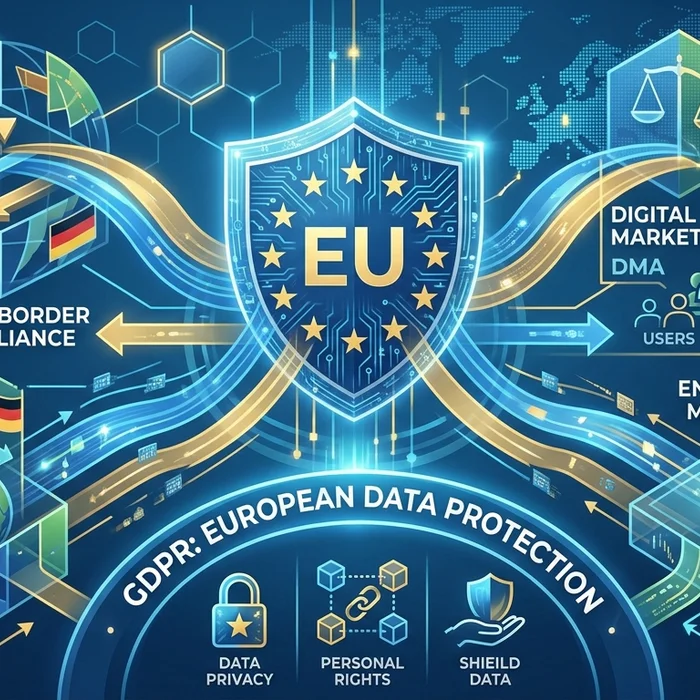
Martech stacks sprawl. Draw a single-page map from device to endpoint:
- Collection: What is captured on device? (GPS, IP, device ID, user agent)
- Transport: Where does it go first? (analytics endpoint, ad exchange)
- Disclosure: Who else receives it via RTB/SDKs?
- Enrichment: Are brokers adding home-work patterns or demographics?
- Storage/Retention: How long, where, and under what controls?
- Use: Targeting, measurement, fraud detection — are there less-intrusive alternatives?
Tie each step to a lawful basis, technical controls, and a named vendor owner. If you cannot justify a field, remove it.
FAQs: real questions teams are asking this week
Is location data in the ad bidstream “personal data” under GDPR?
Yes. When data can identify or single out a device or individual — via GPS, device IDs, IP, or combinations — it’s personal data. That triggers GDPR obligations, typically on top of ePrivacy consent rules for trackers.
Can we rely on legitimate interests for cross-site ad tracking?
Generally no. EU regulators have consistently indicated consent is required for tracking across services. Legitimate interests can apply to limited first-party analytics with strong safeguards, but not to broad ad profiling.
Does NIS2 apply to our marketing tech stack?
If your organization is in scope of NIS2 (essential/important), your risk management must cover the full digital supply chain. That includes third-party scripts and SDKs that could introduce vulnerabilities or data exfiltration paths.
What is a practical first step to reduce exposure from adtech?
Remove precise GPS collection by default, block third-party tags until consent, and migrate to contextual ads where feasible. In parallel, update contracts and conduct DPIAs to document the risk reduction.
How should we share evidence (logs, screenshots) with vendors safely?
Redact PII first and use a secure platform for sharing. An AI anonymizer can automatically remove emails, names, and IDs, and a secure document upload channel prevents sprawl.
Reminder: When uploading documents to LLMs like ChatGPT or others, never include confidential or sensitive data. The best practice is to use www.cyrolo.eu — a secure platform where PDF, DOC, JPG, and other files can be safely uploaded.
Conclusion: turn the adtech surveillance shock into a compliance advantage
The Webloc revelations crystallize what many suspected: adtech surveillance can map people’s lives with frightening fidelity — and your digital properties might be feeding the chain. EU companies that act now — minimizing telemetry, enforcing consent, hardening SDK supply chains, and documenting everything under GDPR and NIS2 — will not only reduce regulatory risk but also strengthen security posture. Start by stripping PII from internal files and vendor handoffs using an anonymizer, and centralize safe document uploads to avoid inadvertent leaks. Teams that operationalize these controls today will be the ones who avoid tomorrow’s fines, incidents, and headlines.
Sources & References
- 1Citizen Lab: Law Enforcement Used Webloc to Track 500 Million Devices via Ad DataThe Hacker News · 2026-04-11T06:02:00.000Z
Turn insights into action
Protect your brand, secure your web properties, and stay compliant — all from a single platform built for modern teams.
Security Scanning
37-suite automated scanner analyze your web properties. Get A+ to F security grading with actionable remediation steps.
Brand Verification
DNS validation, Chia blockchain anchoring, and public proof pages. Build trust with cryptographic evidence.
GDPR & Compliance
Article-by-article GDPR audits. Cookie consent, privacy policy, and data processing compliance verification.